
Translated material
Ant court
Who promotes the idea of judicial reform, who resists it and what will come of it as a result
Recently, the media from the filing of the Supreme Court again started talking about the “judicial reform”: the Plenum of the Armed Forces of the Russian Federation in 2017 approved two bills submitted to the Duma on January 26 and February 7, 2018. January involves the creation of appeal and cassation courts in districts that do not coincide with administrative division, it has already been adopted by the Duma in the first reading. February offers a simplification of judicial procedures for civil and administrative cases - this project, on the contrary, is criticized by experts and even the government, and in this form it is probably more correct to consider the stillborn.
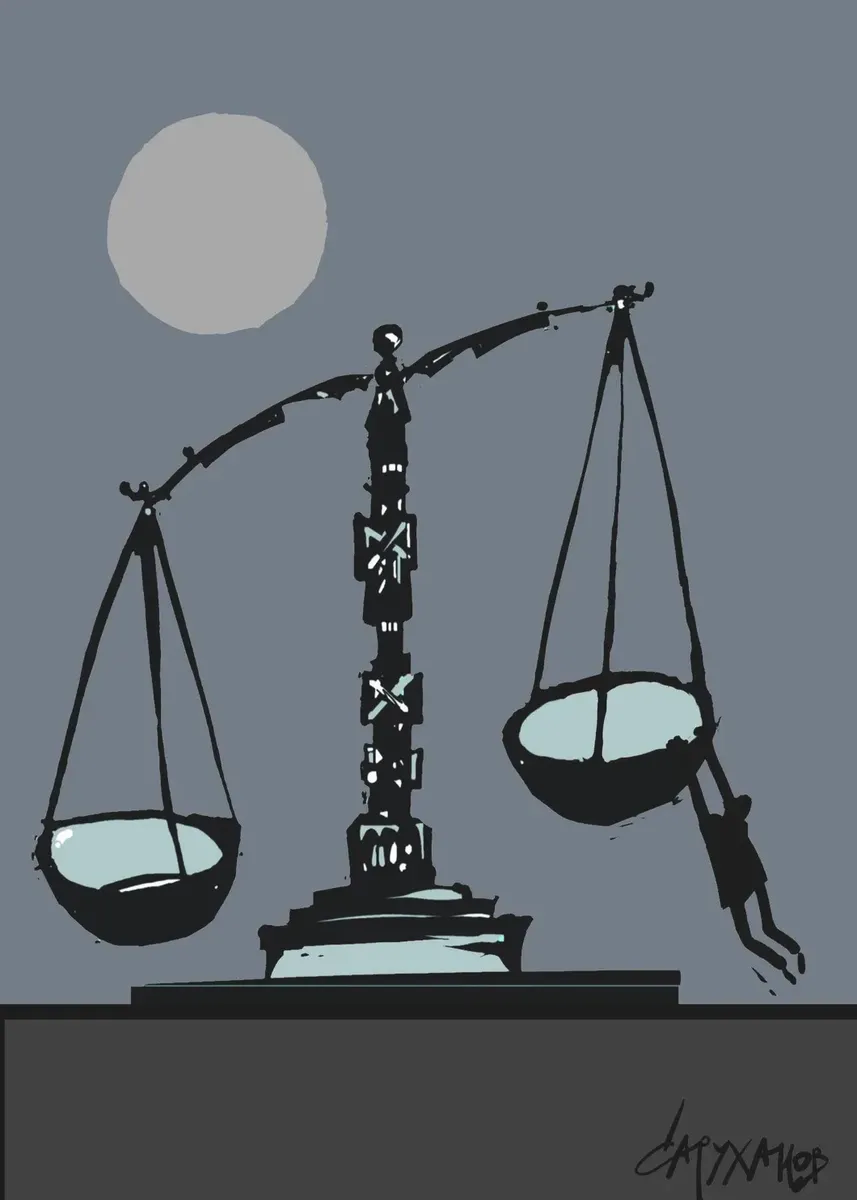
Citizens are interested in judicial reform no less than judges: in polls of the quite loyal fund “Public Opinion”, only 32% of respondents evaluate the activities of the courts positively, and 34 - negatively. In the fall of 2017, the Levada Center, on the instructions of the Kudrinsky Committee of Civil Initiatives, asked 1896 participants and experts of the All-Russian Civil Forum, which they consider the main goal of the alleged reforms. The respondents put the “democracy, an independent court, legal state” in the first place, and in the answers to the question about the priorities of state policy “Ensuring Independence of the Courts” took second place (more than a third of the votes), losing a bit only “the formation of an understandable strategy of socio-economic development”.
Numerous and various, although in many respects, and coinciding, proposals for reforming the judicial system have been floating into the three main centers of initiatives for many years: the Council for the development of civil society and human rights summarizes the proposals of human rights activists, lawyers and scientists; The Commissioner for the Protection of the Rights of Entrepreneurs collects the proposals of lawyers and entrepreneurs; The Institute for Law Problems of the European University in St. Petersburg (IPP) conducts mainly sociological studies of the judicial system. Based on these data, a report was prepared for the CSR - the Center for Strategic Development of Alexei Kudrin.
There is a common (quantitatively measurable) pressure on the part of society and elites on political power with the demand of judicial reform: the Supreme Court reacts to this challenge. But in our “controlled democracy”, the legislative initiative is also an ambivalent tool: those subjects that it formally belongs are more often interested in preserving everything as it was, and, on the contrary, carriers of this initiative rest on this filter, as against the wall. And the Supreme Court here acts on the principle of "if the revolution cannot be stopped, then it must be led."
Departmental science for budget funds as a whole supports the Supreme Court and the “power” groups associated with it, which does not exclude the work of scientists in their personal quality to other centers. In the Supreme Court, in accordance with the president’s order, a certain working group on judicial reform was created, but its composition and order of work for the company are opaque. It included representatives of the CSR (as a result of which his report became more “realistic”), but there were no representatives of the HRC there until recently.
The thickness of the judicial system
Sociological studies of the IPP (Vadim Volkov) give the most accurate idea of the judicial system. But from this point of view, the court is not at all in the fact that in a wider discourse it is discussed as political problems (for example, an indictment or bureaucracy when considering civil and administrative cases, etc.).
A citizen who is not related to the judicial system judges her in the image in which the judge appears on the television screen - but here, as in the press, they often talk about criminal cases with a shade of “horror”, pathology and corruption, or with political subtext. Meanwhile, in the total amount of cases considered in the courts, only 4% occupy criminal (although due to their duration their share in the “judicial load” is significantly higher).
But the courts annually consider about 16 million civil cases. In the framework of 3.6 million cases in the claims of tax authorities to citizens, they are satisfied by 98.5% (the average price of a lawsuit of 12 thousand rubles). Another half a million cases are claims of the Pension Fund (average price of 11 thousand rubles), which are satisfied in 99% of cases. 2.5 million cases - claims of banks against faulty borrowers, here the average price of the claim reaches 300 thousand rubles, but they are also satisfied by 99%. In general, and mainly due to the listed categories of cases, the plaintiffs win in 96 cases out of a hundred, and defendants in 99% of cases do not appear in court at all.
In criminal cases, two -thirds of the sentences are issued in a simplified manner based on the recognition of the defendants without evaluating other evidence, and this share is constantly growing. Nobody (including the judges) knows how many self -cargoes are there: the investigating authorities have already done all the work for the court, who really convinced them to the fact that it was better not to argue with them in truth.
We have a completely different picture and other problems than on TV. The word "court" is associated with the word "dispute", and here is another. If the judges “compete”, then only with each other: the load on the justice of the peace and district judge on average is six cases a day or more, which excludes even the very possibility of a dispute, this is a conveyor.
On the screen sometimes “generals” appear (also, however, not inclined to enter the discussion with society), but the “thickness” of the judicial system is formed by the lower workers - “ants of justice”. According to IPP, these are mainly young women with a high (about 50%) shares of absentee education. In 2013 (on the date of the study), among the newly appointed judges, there were already almost 60% of the immigrants from the apparatus of courts (against 19% in 2001), and if the trend continues, then by 2020 40% of judges will not have any other work experience except the judicial apparatus.
It is easy to lose the place of the judge: for example, for non -compliance with the terms of consideration of cases (which, under this regime, cannot be observed) or for the cancellation of decisions in a higher authority, which forces to focus on templates. Most often, the initiator of the punishment (as well as encouragement) is the chairman of the court, who, distributing the “load”, can always complain about not one, so to the other. Meanwhile, the main incentives are pulling this strap - a decent salary for the regions, a package of benefits and the ability to receive a pension (lifelong maintenance of a judge) in the amount of 80% of the salary in the last position after 20 years of length of service (with the offset of work in the court of the court and in law enforcement agencies).
Career ceiling for most of these, in fact, officials - after many years of hard work, the deputy chairman of the district court will become. To rush to the judge of the regional court, and even more than the deputy chairman (where some other life begins), incredible efforts are needed. Meanwhile, the “load” does not leave time for the family, self -education (almost all judges “unsubscribe” the decisions daily or several times a week), and in communication they are also limited to fear of being convicted of “violation of the Code of Judicial Ethics”.
In fact, we can talk about judicial ethics with the same reasons as, for example, about the "ethics of housing and communal services." Any bureaucracy can only have its own internal code, and it is simple: do not annoy the bosses, do not lean out (work on the template), please your own, but from citizens who interfere with the uninterrupted work of the “conveyor”, if possible, get off.
But we can hardly find hot supporters of the reform inside this pyramid: “tops” and so suits everything, and there is no time to think “nizam”. The “ants” of the judicial system, of course, deserve sympathy, but it is hardly worth hoping for return empathy: they are not up to us. But what kind of “socially useful product” does this judicial Leviathan produce?
"Unloading" or reboot?
Suggestions aimed at reducing the “judicial load” undoubtedly meet the interests of both the judges themselves and the company. However, the question is with what side to be harnessed to this topic.
The initiatives forming the February package of the Supreme Court, just about this. It was proposed: 1) to allow judges not to make a motivating part of the decisions in civil and administrative cases; 2) put on plaintiffs and defendants the burden on the movement of affairs independently; 3) prohibit representation in courts for persons who do not have a higher legal education; 4) to increase the price of claims considered in a simplified manner from 100 to 500 thousand rubles, replacing the open proceedings with written production without the participation of the parties (everything is a little simplified, as I already wrote about this in “New” in No. 16 and 21).
As soon as the Plenum of the Supreme Court formulated these proposals, the legal scientists compiled a “collective legal conclusion”, under which dozens of doctors and candidates of sciences representing different legal institutions and universities signed. They did not leave stone on stone from these proposals, and the initiator of the unprecedented rebellion was the grandson of the ex-chairman of the Constitutional Court V.A. Tumanova Dmitry Tumanov. Apparently, the “conclusion” played a role in the emergence of a negative review from the Ministry of Justice.
Meanwhile, to allow judges to “unsubscribe” the motivating part of the decisions only at the request of the parties were proposed by other scientists: from the SPP. Lawyers smashed the initiative from a legal position, and sociologists substantiated it with practice, which we spoke above in general terms. And this way of “unloading” would be even acceptable, and other proposals from this package could be discussed if ... if the trust in the judicial system had not fallen so low. Its restoration is not even a goal, but a necessary condition for the reform, and the initiative of the Supreme Court is just suspicious - from the point of view of protecting human rights.
Meanwhile, there were other proposals in the Report of the Central Executive Committee: to increase threshold amounts for claims of state bodies against citizens from three to ten thousand rubles, increase the fee for legal entities and differentiate it depending on the court, etc. But these proposals did not like the supreme court, since they would constrain the possibilities of state bodies, or they were not discussed there at all.
The Supreme Court delayed the reloading of the judicial system on the “unloading” proposals. It will happen earlier or later, but will question the prevailing relationship of judges with other structures and centers of power. Today, the court does not just serve, but, perhaps, serves other state bodies, and the “load” is formed primarily by this neglect of the interests of society and citizens.
The usual 0.2% of the acquittal of public accusations and the close to 95% satisfaction of the petition for detention suggests that the courts firmly protect the interests of the "law enforcement agencies". But is it at the same time the interests of society and citizens?
The indictments in criminal cases, approved by prosecutors and stuffed into the courts, often represent the volume of waste paper, "attached" for the sake of giving the visibility of validity. The protocols of administrative offenses are sucked out of the finger, but the courts almost invariably based their decisions on them. Countless examinations mean the unwillingness of judges to take the risk of understanding affairs on the merits. In the paper sea, the very function of sending justice drowned. Not scientists, but judges would have to rebel against this practice. But if in the Supreme Court they consider her “legal”, what then to murmur to the “judicial load”?
In terms of civil cases, the court turned into a fiscal authority, well, even into an agent of insurance companies and banks. Perhaps the rights of malicious non -payers should not always be protected, but is it possible to conclude that the courts protect the interests of state bodies with the efficiency close to 100%? In fact, this is also only visibility: the bailiff service manages to fulfill less than half, and in value terms - a third of these decisions. This is what the products of the courts are “at the exit”.
In fact, only one thing can radically change the pathetic situation: so that government agencies (including the charges of criminal and administrative cases) reduce the load “at the entrance” and less often turned to the courts, the judges must refuse to them more often.
The response citizens do not come to the courts in 99 cases out of a hundred, because they do not believe them. But the judges should not believe the state and banks for the word - in court it is necessary to check what measures were taken before the claim, whether the real possibilities of debtors were taken into account, whether the schedule of debts is possible, especially since otherwise they will still be “recovered” only by papers. The HRC has long formulated proposals for the development of pre -trial conciliation procedures and others, but they require real reform, and not creating its visibility.
The question of the load on judges is really closely related to their independence. But here, any initiative rests against the “thickness”, nurtured by years of inaction, except for the absorption, digestion and spitting in the judges adapted to the needs of any changes, as happened with world justice, with the “transaction” and with many others.
Instances against independence
Another (January) package of legislative initiatives of the Supreme Court of the Russian Federation as a whole copies for the courts of general jurisdiction (both in the criminal and civil and administrative processes) a structure that has been operating in the system of arbitration courts since 2003, when appeal courts in districts that do not coincide with administrative division were created here. The HRC also offered to do this back in 2012, but then his proposal was met with hostility.
With the current appeal of court decisions, they, as a rule, can be reviewed only within the same region and often even the same court (in its colleges and at the presidium). This poses a threat to the chairmen of the courts, and through them on all court decisions, primarily from the administration of those regions where these courts act and these judges live. According to the project, appeal courts will be created in five districts and cassation - in nine districts that do not coincide with administrative division, and the corresponding part of the functions sent today by republican, regional and regional courts will be transferred here.
The explanatory note to this project gives the calculations of the necessary costs: the federal budget will have to spend about 2.5 billion rubles for construction (rent) and the equipment of buildings of new courts, on the salary of new judges (almost 1000 people) and others. At least the approximate calculation of the costs that will have to be carried out by the participants of the proceedings if they want to perform in the new instances not in video conferences, but in person or personally or personally or personally or personally or personally or personally Through representatives, is not given. Meanwhile, tickets and hotels will fly into a penny, and in fact, for poor citizens, this will mean restriction of access to justice.
Nevertheless, according to most experts, these disadvantages are not covered by the advantages that a new procedure for reviewing decisions promises: he will make judges more independent and when making decisions (without looking at the authorities sitting nearby) in the first instance and reduce corruption risks. But this innovation will not affect the bulk of the decisions made against citizens by the justice and district judges: the appeal will remain within the same region on them, and it will be necessary to get to the cassation.
This project promises the Supreme Court and the Judicial Department to create new sites and the possibility of mastering significant financial resources, not to mention the fact that, according to the new scheme, the appeal will mainly be closed on district courts, and the supreme will be “unloaded” from it. Perhaps the senior judges, without recognizing this out loud, are concerned about the inaction of the mechanisms of correcting judicial errors and the abuse of the “local”, the number of which is magnitude higher than the court decisions. The opportunity in manual mode to control the passage of particularly significant cases will be preserved: after all, the chairmen and judges of new courts will be appointed in the general manner. Vertically built “law enforcement agencies will not lose the possibility of influence on decisions both on criminal and large civil affairs, which touches their interests.
In general, since the judicial “vertical” is built according to the model of the bureaucracy, we in Russia can not yet talk about the independence of the judiciary as such (in the form in which this principle is enshrined in the Constitution), but only about a certain extent “independence from”: judges from certain centers of influence. Most of all their careers and well-being depend on the chairmen of the courts, but in the package of the proposals of the Supreme Court there is nothing that would somehow weaken this addiction.
Meanwhile, all of the (at the beginning of these notes) centers that collect proposals to reform the judicial system from the civil society offer, for example: to introduce rotation and elections of the chairmen of courts, limiting the terms of their stay at the post; limit the possibility of chairmen to influence the appointment of judges and to remove them from office; расширить участие в этих процессах представителей общественности и др. Общим местом давно стало требование электронного распределения дел между судьями, однако в большинстве судов председатели по-прежнему держатся за этот инструмент влияния.
Есть и предложения, касающиеся прозрачности в работе кадровой комиссии при президенте (а по факту — его администрации) и ясности критериев, по которым она отклоняет те или иные кандидатуры судей. Предлагается учредить независимый центр подготовки судей, да много что еще предлагается, но…
Вскоре Верховный суд, наверное, уж согласится с обязательной аудиозаписью всех судебных заседаний и с приданием этим записям статуса протокола заседания — ведь надо отчитываться о миллиардах, потраченных на создание сначала системы аудиопротоколирования, а затем и излишней (по мнению практикующих юристов) системы видеозаписи судебных заседаний. Но все другие инициативы неизменно отсекаются фильтром «законодательной инициативы» Верховного суда.
СПЧ, который может позволить себе и более утопические предложения, ратует за возвращение в правосудие института народных (присяжных) заседателей, которые обеспечивали бы большую независимость судей, в том числе при даче согласия на заключение под стражу, при рассмотрении дел о привлечении к административной ответственности граждан и в других случаях.
Увы, к такой реформе (а только она и заслуживала бы этого названия) не готовы ни суды, ни большинство экспертов, ни тем более центры политической власти (они же, по сути, — цитадели «силовых структур»): их-то сложившаяся ситуация в общем и целом, похоже, устраивает. Значит, пока то, что обсуждается как «судебная реформа», на самом деле проходит под лозунгом «Пчелы против меда».