
Translated material
In the company of Christ - an outcast and dissident
Norwegian Henrik Ibsen, born 190 years ago, brought to the Russian scene the free -loving spirit of his ancestors of the Vikings
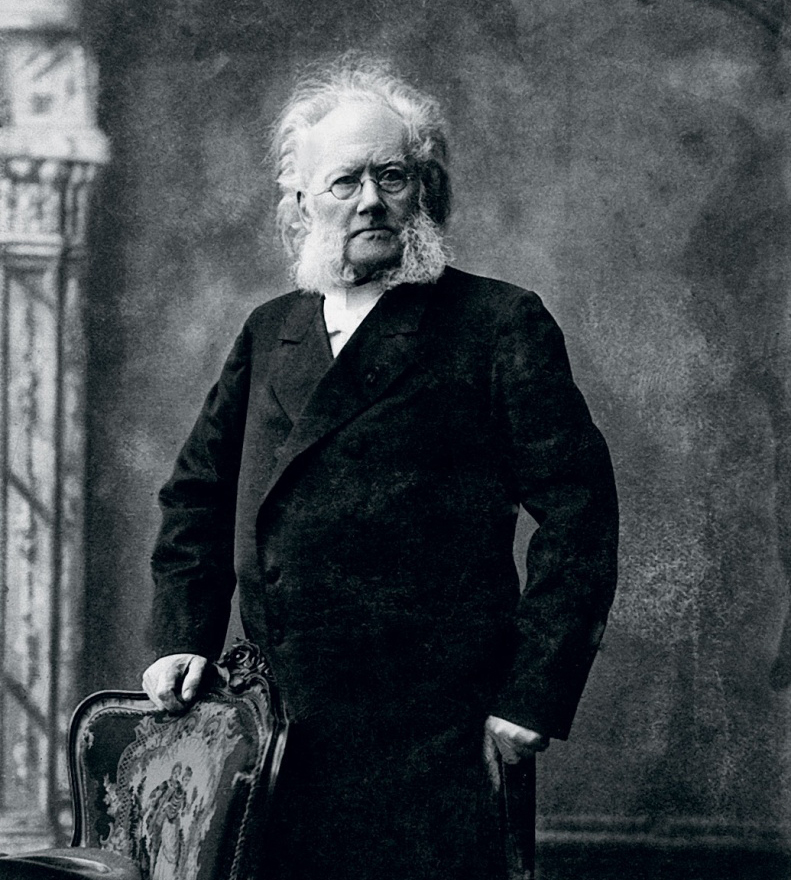
Poet and playwright photo: AFP
At the beginning of the 20th century, ibsen was much and willingly put in Russia. And it’s clear why. Ibsen was a free -thought, a frontier, an individualist with a nihilistic vein. And even a subversive element: all his life he advocated for the termination of the union with Sweden. Until 1814, Norway was ruled by Denmark, which the playwright was also not happy, judging by the play "Fru Inger from estrot." Norway was freed from the "fraternal assistance" of the Swedish crown only in 1905, a year before Ibsen's death.
Heinrik Ibsen is not a stranger for us. He went in 1850 to demonstrate a protest against the expulsion of the revolutionary writer Hugo Harring from the country; He admired the revolution of 1848 and even the Parisian commune. He was seduced by an incomprehensible, but directed in the person of his intelligentsia to the ideals of Russia.
But Ibsen was not so simple, he avoided the tenet and the networks of social democracy. He disdained social programs, not wanting a person to be attracted and captivated by “rye kalach” (according to Bulat Okudzhava) <...> his ancestors, the Varangians, once came to us in Rus' and brought a powerful individualistic tradition that insures from worship not only before the authorities, but also before the crowd.
Ibsen's books were not covered by a hundred -year dust. Here, say, his manifesto in the "enemy of the people" (1882). This happens today. The provincial doctor discovers that the waters in the local Aquarius are chemically contaminated. He is trying to publish this, but the hospital feeds the city, and it, according to the resolution of the city assembly, is officially announced by the enemy of the people, they are expelled from work, asking to free the apartment and generally leave the city. And I see the “ourselves”, standing with insulting slogans at the house of Alexander Podrabink; I see a toilet in the area for books by Sorokin and Erofeev; I hear how the Kremlin glues “foreign agents” on human rights activists. Dr. Stockman was beaten by windows, and portraits of democrats were trampled into asphalt or placed on targets for the shooting of the Putinier.
The answer of Dr. Stockman sounds extremely modern: “If only the whole world has failed, I will not include my neck under the yoke! If only the devil and his grandmother were against me! Never, never! "
We are scared by a majority that is not on our side. Ibsen was also scared. And here is what his doctor Stockman answers: “Most never is right. What kind of people are the majority in the country? From smart or stupid? Stupid people make up a terrible, vast majority on the entire globe. Black, mass, crowd is not the true core of the people! Black is nothing more than raw material from which the people should create a people. On the side of the majority, force, unfortunately, is not right. The minority is always right. "
Henrik Ibsen was extremely critical of religion as an institute. His Brand (Brand, 1865) rises against Probst (something like an Archpriest). His Rosmer loses faith (Rosmersholm, 1886). His Caesar Julian (Caesar and Galilean, 1873) fights the first Christians in order to return the world to the world's cheerful paganism and rid him of aschesis and dogma. Ibsen accepts only Christ in his company - an outcast, a dissident, an informal, a non -conformist.
Ibsena was supported by the might of bonds, free warriors and peasants of Norway all his life, who themselves elected Yarlov and Kings in the Ting, who created a birkebeiner party in the X century and built hocon (“Struggle for the throne”, 1863).
The words of the Ibsenovsky Brand are quite suitable for us in 2013: “Go, be sure to the end, you will not buy a deal of the crown. And you should in torment seek to pass the fire and cold of ice. What you could not, you will say goodbye that you do not want - never. ”
First published in NT No. 9 of March 18, 2013