
Translated material
Two terms
The prosecutor's office demanded to put the head of the Karelian Memorial for 9 years. Who benefits from it?
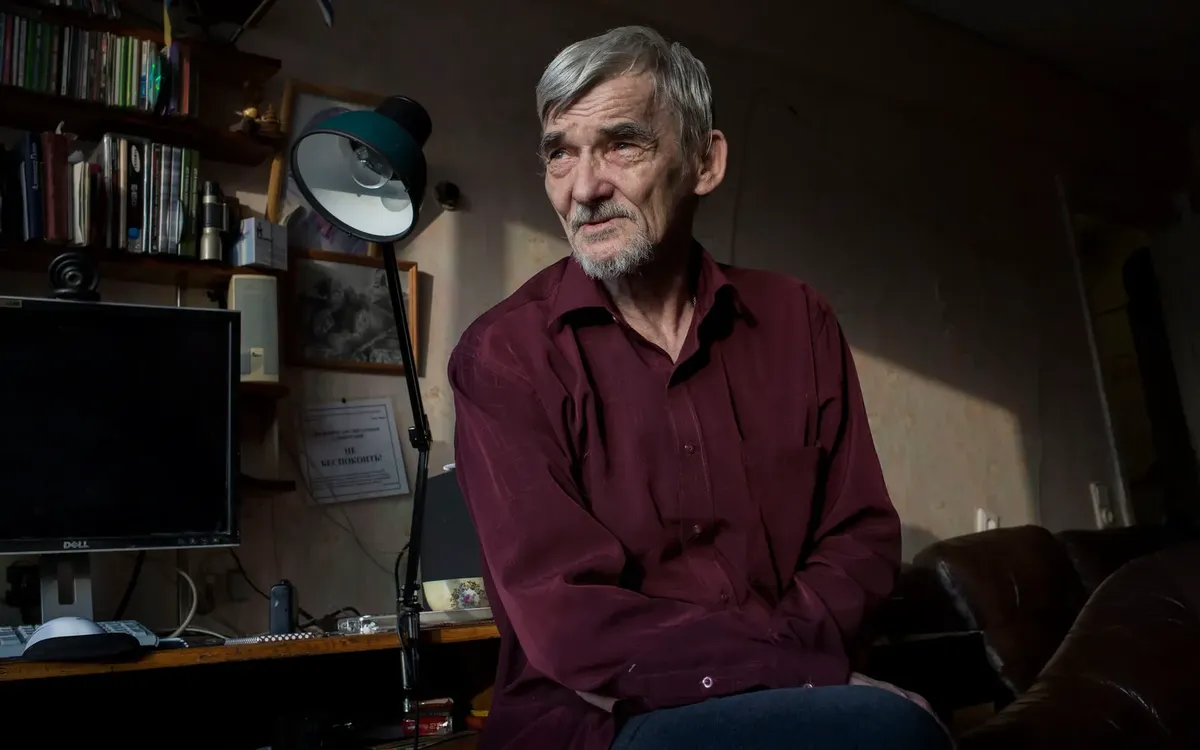
Two days after the presidential elections, the process resumed in Russia against the Karelian historian, the head of the local branch of the Memorial, Yuri Dmitriev. The authorities accuse him of using a minor adopted daughter for the manufacture of pornography.
Dmitriev spent a year under arrest in a pre -trial detention center, after which he was released under the recognizance not to leave. There are no evidence of Dmitriev’s guilt in the case, which is confirmed by several examinations, including those that were appointed by the investigation.
According to the general logic of Russian justice,
If a person is released from a pre -trial detention center before the court, this means that there is nothing at all. But when the prosecutor’s office then requires a strict regime for the accused of 9 years, we have a revenge attempt.
Someone in the Russian law enforcement agencies and special services decided to apply a response to the Dmitrieva defense society.
The new attack of the Karelian security forces can hardly be considered separately from the re -election of Vladimir Putin. Even if all the coincidences are accidental, people will see a clear causal relationship here. The president was elected, and the security forces are no longer afraid of people's indignation. It seems that the security forces believe that this is not Putin, and they themselves won these elections, and they give high results to them, and not the president, carte blanche for any manipulation with citizens.
But from a political point of view, everything can be directly opposite. In Putin’s victory, each group saw its capabilities. So, Ksenia Sobchak, representing the new generation of “system liberals”, having completed the campaign, gave the elected president a petition for a pardon of 16 political prisoners, including such significant and problematic figures for the authorities as Oleg Navalny and Oleg Sentsov. The Karelian security forces, respectively, decided to work in the opposite direction and act in accordance with their understanding of the current political moment.
And Putin is going on for the fourth term, and Dmitriev is the first.
The previous six years (if not more) Russian citizens preferred to distinguish between the president and his bureaucratic apparatus - the first, they say, often does not know what the second is busy. The boyars are bad, and it is necessary to convey this to the president. Direct lines and spokesman Peskov (“President are in the know”) worked according to this logic.
After the elections of March 18, perceived by the state apparatus as an unprecedented triumph, the gap between the president and his “boyars” will inevitably decrease.
76% of the vote “for” mean that the president today is more than ever, bears personal responsibility for everything that is happening in the country.
So with the historian Dmitriev’s security forces, perhaps, you should not show too much initiative.