
Translated material
Lev Gudkov: "This is in the strict sense not elections"
The head of the Levada Center, who was banned from publishing the results of election surveys, in an interview with The New Times compared the results of the campaign with the data of his sociological service
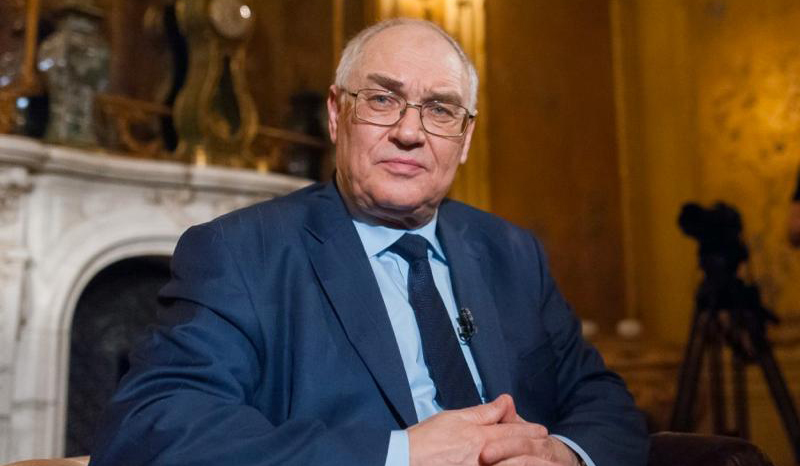
Photo: Politok.ru
Voting machine
NT: *Lev Dmitrievich, your sociological center was recorded in foreign agents, and then on these grounds it was first forbidden to publish polls about the electoral preferences of Russians before the elections. Does the lack of independent sociology help those who want to falsify the voting results? *
Lev Gudkov : The matter is not in sociology, it can only show fluctuations (voters' moods) in 5-10%. The point in the very nature of these ceremonies, which we call the elections, is in the strict sense not elections. There is no free registration, there is no competition and access to the media. Candidates are in an extremely unequal position. Putin has dominance on the air, the whole propaganda system and the entire political class work for it. The share of the remaining candidates is assigned a frivolous role - the role of the corps de ballet. Their function is to show the failure of the opposition, its frivolity and shade the figure of the main boss.
NT: *Did you conduct electoral studies during the campaign (you were forbidden to publish them, but not to conduct)? What did they show by the appearance and results of candidates and Putin? *
We really spent them, but still cannot publish them.
NT: *How much the results of the vote on March 18 correspond to the data you received-are there any obvious inconsistencies, and if there are still, how are they explained? *
In principle, the results fit into the parameters (the data that are obtained during election surveys). The results are believable with some exceptions: the turnout is clearly higher than the one expected based on polls. This can be explained in double. The first is strong administrative pressure on potential voters, dependent on the power of the categories of the population: civil servants, pensioners, students, military personnel and so on. So far I can not evaluate this degree of pressure. The post -election survey will show this. The second is the possibility of postscribes and manipulations with protocols that I also do not exclude, because some statements of the CEC representatives force me to doubt the quality of their statistics. In particular, 1.5 million voters increased in one night. Where did they come from and why such inaccurate lists?
“The turnout is clearly higher than the one that was expected based on polls. Administrative coercion and very intrusive agitation on television - these two factors raised a turnout "
NT: *What would you call the main factor in the success of the struggle of the authorities for a high turnout - due to which you managed to force the population to participate in the elections without intrigue? *
In my opinion, this is administrative coercion and very intrusive agitation on television. These two factors raised the turnout.
NT: *Are your data different from the results of specific candidates? *
In principle, all our calculations approximately corresponded to the results of the vote. I note that a little higher (as polls showed) was a vote for Putin and Grudinin. But the Grudinin trajectory grew: despite attempts to discredit it, he really gained popularity.
NT: *The latest data, when you could still publish them, recorded a significant fall in Putin's rating. Did you manage to turn this trend? *
The fall was not significant, about 4-5%. The attitude towards other authorities was really noticeably reduced, but the decrease in Putin’s support was still not so significant.
Grudinin and Sobchak results
NT: *Why, in your opinion, Grudinin acted as a whole worse than earlier other candidates from the Communist Party - Gennady Zyuganov and Nikolai Kharitonov? *
Zyuganov is a figure well known to the communist electorate, with understandable rhetoric. Since the electorate is conservative, these are very elderly people, for them this rhetoric is important as reinforcing their own ideas. Grudinin is not a member of the party, a demagogic campaign was conducted against him to discredit it. Some of the traditional voters of the Communists swayed and did not want to vote for Grudinin. He scored less than he was gaining Zyuganov, but not very much behind, within five percent. For him, this is a tremendous success, since he is a new and little -known figure. He managed to achieve recognition and success, attracting protest voices. He did what Sobchak could not do.
“The train of the negative rehearsal image stretched for Sobchak. In addition, its resource is Navalny’s voters, but he made an appeal to boycott these elections. And Sobchak was left without potential allies and voters "
NT: *Why couldn't she captivate any significant number of liberal voters? In the last election, Mikhail Prokhorov, also a new person in politics, scored almost 8%, receiving third place. *
A train of a negative reputation image stretched behind her. In addition, its resource is Navalny’s voters, but he made an appeal to boycott these elections. And Sobchak was left without potential allies and voters. Initially, she did not have a very large resource - 1.5%. So she stayed with him.
NT: *Does the country remain a statistically significant liberal electorate than it could be fascinated? Are there any chances of the new party Ksenia Sobchak and Dmitry Gudkov? *
Now it is very difficult to answer this question, since this party did not perform any action, it was only announced about its creation. The democratic and liberal electorate has two significant problems that liberal parties cannot solve for many years. This is the absence of the ability to consolidate different forces, as well as the inability to represent the interests of not only their narrow social layer, but also wider segments of the population - what can be done by a bulk . If they solve these problems and come out with a broader program, they will be able to combine different forces, then this party has a prospect.
NT: *Do you expect less predictable State Duma elections in 2021? *
The turnout in the parliamentary elections is always much lower than on the presidential. In addition, the degree of attention (authorities of all levels) and the use of administrative resources are much more limited than on the presidential campaign. Apparently, the economic situation will deteriorate, there is an uncertain foreign policy situation, so it is difficult to assume that it will be even in a year.