
Translated material
Constitution in Avoska
“We have our own laws here” is the only thing that lawyers and journalists hear in court in the case of Oyub Titiev
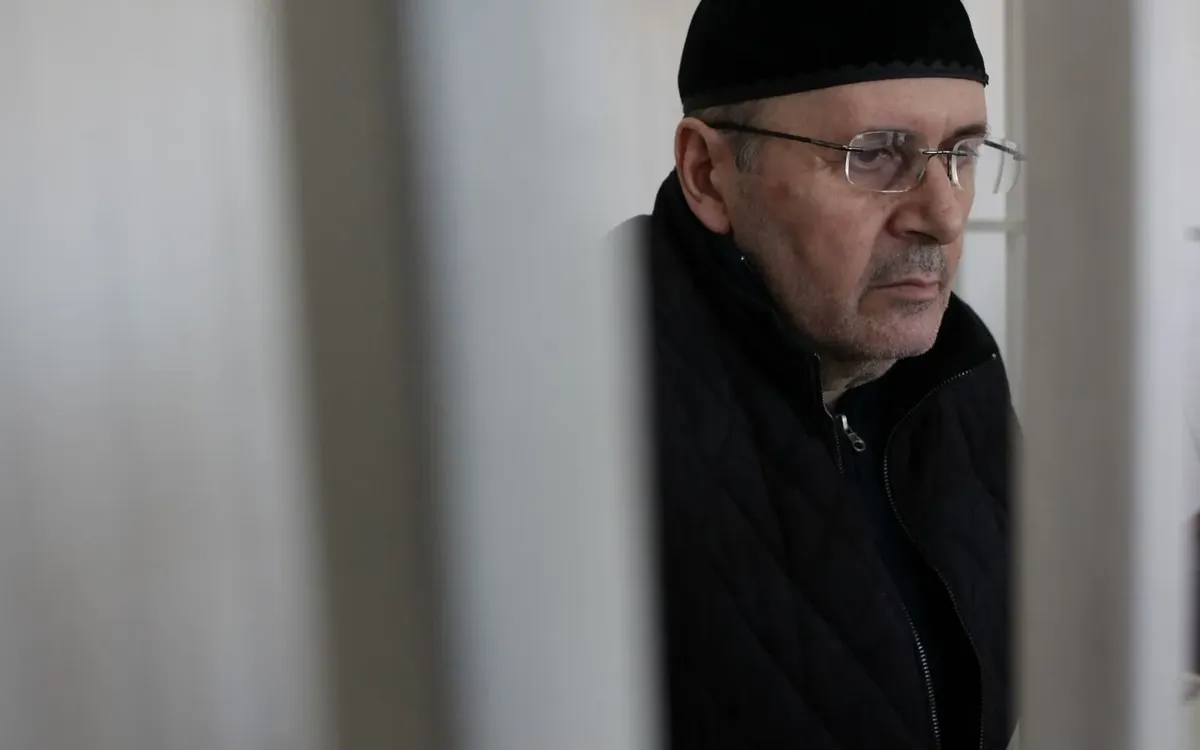
The phrase “we have our own laws” most often in Chechnya can be heard, oddly enough, in Chechen ships. These words, like a password, are repeated here: bailiffs, escorts, court workers, prosecutors, secretaries of judges ... About the Russian Federation, whose name in Chechnya seems to be ascended, only the judges themselves recall. And then only when the sentence is sentenced.
The courts in the “Mirny”, which have fought terrorism of Chechnya, are still impregnable fortresses, access to which ordinary citizens block several levels of protection. The buildings of Chechen ships, as a rule, are surrounded by a high brick fence equipped with a large number of video cameras.
Entrance to the territory is blocked by concrete blocks. To get to the Chechen court, you need to go at least two checkpoints. At the entrance, you will meet terribly bearded armed people in diverse camouflage form, by which it is impossible to determine belonging to any power structure.
Terribly long beards have become popular among Chechen security forces for the past few years. Model was introduced to them by Ramzan Kadyrov. And this fashion played a cruel joke with the Chechen police officers who look exactly like tooth armed militants from the times of Shamil Basayev and the dock Umarov. To see a purely shaved police officer in a standard police uniform of the Ministry of Internal Affairs of the Russian Federation in Chechnya is a rarity.
At the second stage of verification in Chechen courts, Russian citizens, as a rule, are forced to get rid of bags. It is not clear to the buildings of Chechen ships by whose internal order of the Second Chechen War it is still forbidden to carry even ladies' handbags. Things must be hidden in storage rooms, which in Russia are only in supermarkets. Chechens, accustomed to such orders, go to their courts lightly - only with a passport. Visitors, especially journalists, are much more difficult. “Unloading” helps a lot - a vest with many pockets on which you cany documents, equipment, handles and notebooks, and then put an empty backpack in the cell of the storage room.
The famous human rights activist Svetlana Alekseevna Gannushkina, who came to an appeal as her colleague and friend Oyub Titieva, the head of the Chechen representative office of the Memorial human rights center, opened a small handbag and put a small guard under the nose of the Supreme Court of the Chechen Republic.
- I have the keys, a phone, a wallet and the Constitution of the Russian Federation. Can't you go through?
- It is forbidden! - snapped the guard.
By showing us, showing a certificate, the prosecutor passed into the court. With a portfolio, the dimensions of which three times exceeded the handbag of Gannushkina. Following the prosecutor and at all without any identification of the personality through the passage, another terribly bearded person proceeded in a perfectly sewn and obviously expensive suit. Under the jacket, the outlines of the holster were guessed. And if there was a holster, then there was a gun. But no one became interested in this fact. The guard guarded the court from the handbag 76-year-old Svetlana Gannushkina. As a parrot, he insisted: “We have our own laws here. They gave us an order. We don’t care that this order is illegal. We have our own laws here. ” In the end, Svetlana Alekseevna abandoned this hopeless business - to appeal to the law of the Russian Federation and common sense, took out a string bag from her handbag and stuffed the Constitution of the Russian Federation into it. And in this form was admitted to the local temple of justice. The constitution in Avoska looked sorry.
The dressing room of the Supreme Court of the Chechen Republic, where the appeal was considered as Oyub Titiev was suppressed, served as a “drive”. The iron lattices to the ceiling limited a small space in which a crowd of journalists, friends and relatives who came to the court to support Oyub Titiev, spent mournfully while the secretary of the judge came and held us to the courtroom. The free passage to the building of the Supreme Court of the Czech Republic to citizens of Russia is strictly prohibited. The place of citizens in this court is in a cage. And in the literal sense of the word.
To all the arguments that Russian courts were created for Russian citizens, the bailiffs armed with machine guns answered with the same severe phrase: “We have our own laws here.”
Consideration of the appeal as Oyub Titiev, for two months under arrest in the pre -trial detention center of Grozny, began with the request of the lawyer Marina Dubrovina. She stated that the presence of Oyub Titiev in a cage in the courtroom during the process violates Article 3 of the European Convention on Human Rights, since it humiliates his human dignity (in the legal state human dignity, in general, is absolute value). Marina Dubrovina indicated to the judge Dmitry Gorbovtsov to a number of decisions of the European Court of Human Rights, which recognized such a vicious practice.
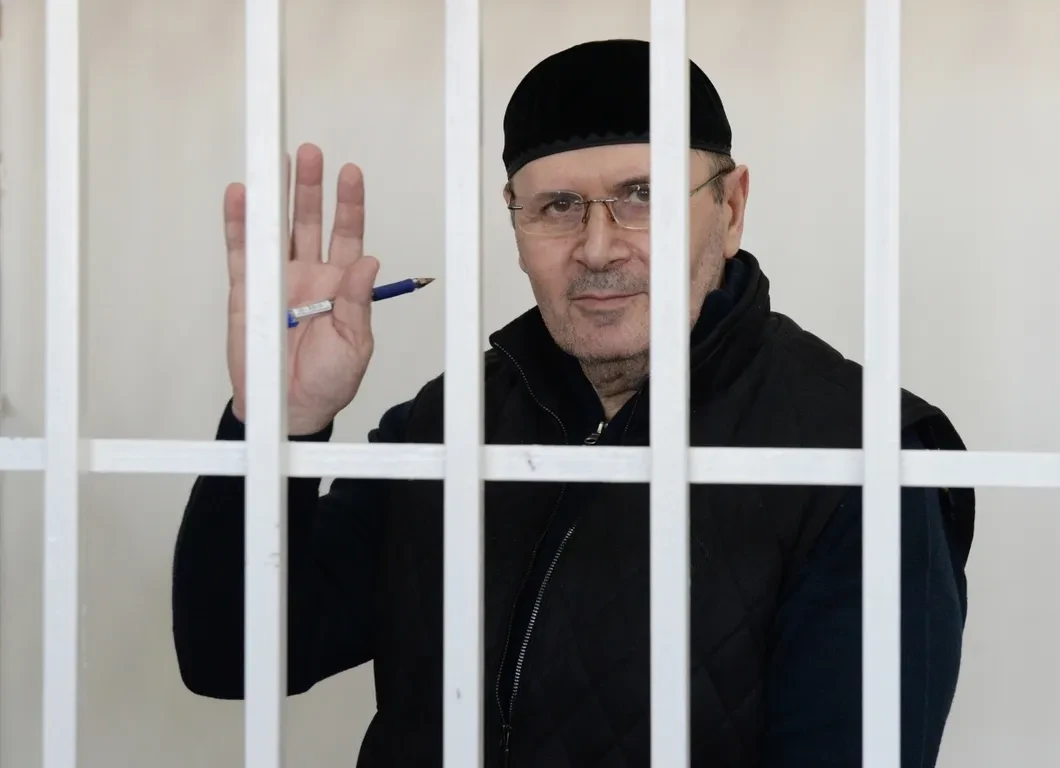
Each of these decisions cost Russian taxpayers at least 6 thousand euros and, as a result, in many Russian courts (at least in regional), cells were dismantled. Instead of cells, the so -called "aquariums" appeared - booths with transparent glasses. To the Supreme Court of Chechnya, who lives according to the rules of wartime and with his whole impregnable look refutes the “peaceful” achievements of Ramzan Kadyrov, this practice has not yet reached. This was evident in the expression on the face of the judge, who was sincerely confused by an unexpected petition.
- Your petition is only about transferring the accused from the cage to the table with lawyers, right? - said Gorbovtsov. - It's not about changing the preventive measure?
- That's right, your honor! - explained lawyer Petr Zaikin. - Oyub Titiev does not pose any physical threat. I do not quite understand why we have as many as four escorts armed with machine guns for one Oyub Titiev. But such an enhanced convoy and gratings on all windows of the courtroom is quite enough to ensure order, even if you allow the incredible one - that Titiev will try to break it.
- Do you think you could let out the accused from the cage? - asked the judge of the convoy.
“It depends on you, you are a judge here,” the senior escort answered rightly.
Judge Gorbovtsov confusedly turned to the prosecutor.
- And your opinion?
- I believe that this petition cannot be satisfied, since the court does not have the technical capabilities to ensure security while trying to escape to escape! - cut off the prosecutor.
The judge announced a break, and then practically the word in word repeated the arguments of the prosecutor and refused to satisfy the petition. Lawyer Marina Dubrovina shrugged. She just, in fact, received grounds for a complaint in the ECHR under the “torture” 3rd article.
Russian lawyers (if, of course, good lawyers) have long been appealing not to a person in a mantle who sits on a chair with the emblem of the Russian Federation and, in fact, decides anything, but to the European Convention on Human Rights and the Strasbourg Court.
For those two months that Oyub Titiev has been arrested by the falsified charges of drug storage, violations in his case have already been gained to several articles of the European Convention.
Each of them - from a violation of the right to protect and illegally detained to not justified by any evidence of the extension of the arrest and politically motivated persecution - will be appealed by Titiev’s lawyers separately and will cost the state several thousand euros.
The court, as it was stopped by Oyub Titiev, took place for the fourth time. Why should a 60-year-old human rights activist, who knows the whole world, previously not convicted, is not registered with a drug dispensary, not passing through the reports of the Ministry of Internal Affairs, who has a family, including a minor child, positively described not only by friends, but even the head of the city administration, who finally entrusted the well-known Russian politicians-Grigory-Grigory-Grigory. Yavlinsky and Ksenia Sobchak?
Why does the investigation not at all consider in this situation any alternative preventive measure (house arrest, non -departure subscription, personal guarantee, etc.)? The investigation argument in response to these issues rang only in the First Court on January 11. The investigation referred to the report of the police officer that Oyub Titiev "could hide from justice." By law, the report is not evidence. In order to become one, the investigation must verify and evaluate whether the Titiev’s intention of “hiding” was really received during the operational-search measures, or maybe the employee simply invented them?
Two months have passed. During this time, the investigation did not even bother to interrogate the author of the report. And this toilet paper, which this report is from the point of view of the Code of Criminal Procedure of the Russian Federation, the prosecutor’s office stubbornly submits to the court, justifying the extension of the arrest.
-Do you have at least some information that the accused, in respect of whom, in fact, according to the Law of the Russian Federation, the presumption of innocence applies, can hide? - The lawyer Zaikin asks the prosecutor.
The prosecutor is silent.
- You checked the report at least? For two months?
The prosecutor is silent.
- Do you think that a report of eight lines, which has not been checked for two months, is enough to keep a person in prison for another two months?
The prosecutor is silent.
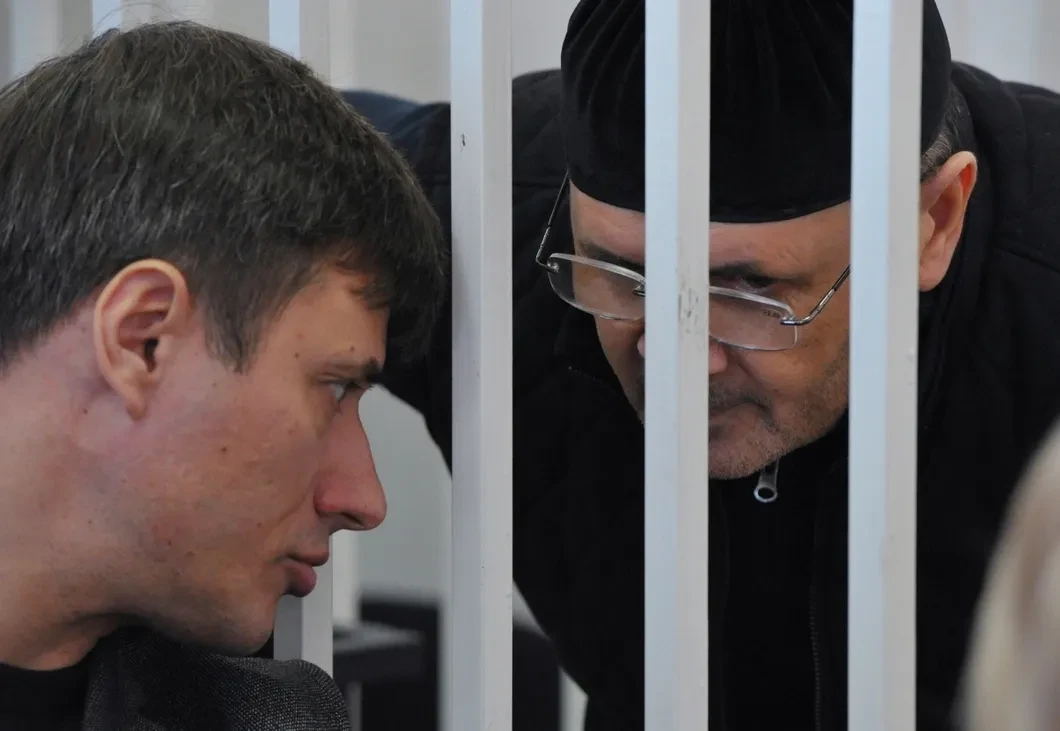
The court session was several hours. The prosecutor at the meeting was half a minute. The rest of the time, he brilliantly played the role of “partisan during interrogation”. Judge Gorbovtsov, obviously understanding the meaninglessness of everything that was happening, did not ask any questions at all. He made his decision quickly. Refuse the complaint, to extend the arrest for another two months.
But the politically motivated case of Oyub Titiev could be discontinued, not having time, in fact, to begin. Titiev was detained on January 9. And twice. The first time he was stopped by the employees of the operational response group, and it was they who threw a bag of marijuana into his car. Then they brought Oyub to the Kurchaloevsky police department and tried to force themselves. They threatened that they would initiate a criminal case against their son. When Oyub categorically abandoned the “confession”, he was taken to the place where he was detained for the first time, he was called an investigative group with witnesses and - now in accordance with the Code of Criminal Procedure of the Russian Federation - they again “found” a package with marijuana in the car.
The camcorders of the Kurchaloevsky police department and the wall adjacent to the wall of the FSB department in the Kurchaloevsky district should have been recorded by both “bits” of Oyub Titiev to the police department, as well as a Chechen police officer with a drug bag in their hands, accompanied by Titiev and answering the preservation of the main “material evidence”.
All this was Oyub Titiev on January 11, at the first meeting on the election of a preventive measure. It was enough the judge to request videos from the cameras of the Kurchaloevsky OMVD and the FSB department to make sure Titiev’s innocence. But neither the judge nor the investigator of the Chechnya Ministry of Internal Affairs in the Titiev case, nor the investigator of the Chechen Investigative Committee, checking the Titiev’s statement about the fabrication of the criminal case against him by the Chechen police officers - no one dared to consider and satisfy the lawyer’s petitions for the urgent seizure and introduction to the criminal case of the innocence of innocence.
Only two months later it became known that in the end happened to these videos. It follows from the response of the police chief of the Ministry of Internal Affairs of the Kurchaloevsky district that on January 9, not one of the video cameras of the police department entrusted to him worked.
In mid -March, the lawyer request received a response from the UFSB of Chechnya from the deputy chief of the Federal Security Service of the Federal Security Service P. Shuvalkin: “When checking the video archive on the hard magnetic disk of the video recording apparatus, it was found that the duration of the video information is 20 days, taking into account the rewriting. Thus, as of 01/29/2018, video information <...> for the period from 9 hours 00 minutes to 13 hours 00 minutes 01/09/2018 <...> was automatically rewritten <...> and it is not possible to ensure its safety. "