
Translated material
"The Taganka Theater was a real, but in the best sense of a robber gang."
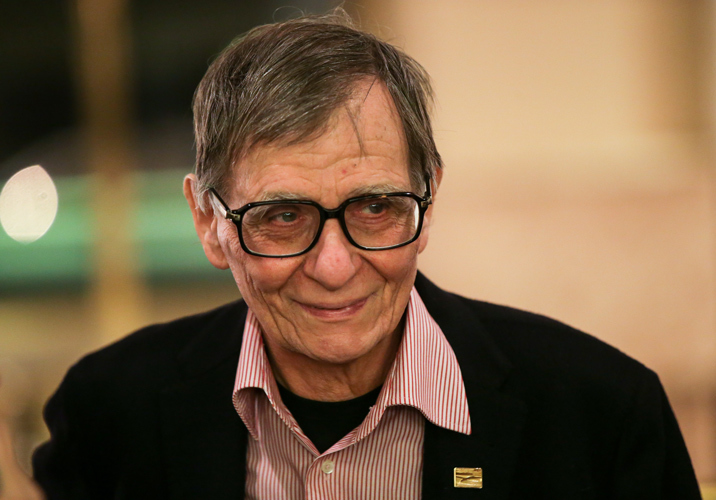
The Oral History project, with the support of the Mikhail Prokhorov Foundation, continues to digitize and publish archival and new conversations with representatives of science and culture of the 20th century. On January 15, 2016, an employee of Oral History - photographer Ekaterina Golitsyna talked with Alexei Vadimovich Bartoshevich - an outstanding historian of the theater, teacher, the largest researcher of Shakespeare's work, columnist Coleta.ru . Today we publish fragments of the memoirs of Alexei Vadimovich, the full text of the material is available on the website of "oral history" .
Admission to GITIS
Alexey Bartoshevich: After school, I decided to go to the theater. I find out that this year, sorry, in 1957, only people with work experience, no schoolchildren will recruit to theaters. What to do? Then my mother went to the Starokhatovites who worked in GITIS. They, in turn, went to the director of the famous, about whom I will tell you (this is an entertaining figure), and achieved that I was somehow allowed to examine through the ministry. Well, Vasily Ivanovich’s grandson. In the form of a special exception, they allowed the exam to take. But it turned out that we had one person in the entire course with the worker. Everyone else was like me.
I must say, from the young nails, from a very early age, he terribly loved to read about the theater of memoirs, books on the history of the theater, most of all - memoirs. And somehow it turned out that he knew quite a lot-not because he was going to be a theater department, but because it interested me. It was felt like its own, especially memoirs. I came to take the exam ...
Ekaterina Golitsyna: What were the exams?
Bartoshevich: The exam is absolutely the same as now. So in a few days I have to take this exam, which I passed fifty with a tail of years ago. So, the first exam is called “interview” - colllox when the commission sits and asks the person. The second exam is a written review, and then ordinary exams, that is, literature, language, in my opinion, or history.
Yes, this is also a funny story. 57th year-Leningrad celebrates the 250th anniversary of the founding. In fact, this is 1703, and it would be necessary to celebrate in the 53rd. But in the 53rd, as you know, there were completely different mourning events, and here not before the holidays, so this holiday was postponed for several years. And then the Moscow Art Theater, as the main theater in the Soviet Union, goes just on the most holidays on tour. And I and the Moscow Art Theater, with my mother, for the first time I get to Leningrad.
In Leningrad, the streets are illuminated, some kind of jewelry, some street festivities, performances, choirs sing some, Cossacks are dancing. Huge flotilla of ships on the Neva, illumination on masts. The holiday that the government is waiting for, led by Nikita Sergeyevich Khrushchev, but it does not go and does not go. Well, the holidays passed, the illumination was removed, the ships were taken away. Then it turned out that at that time the famous June Plenum of 1957 took place, when Khrushchev fought with those whom they later called the “anti -party group” - Molotov, Malenkov, Kaganovich and Shepilov, who joined them, won and came to Leningrad. And the holiday is already over. We go out into the street, look - the streets are illuminated, ships on the Neva. Everything is new to Nikita Sergeyevich. Well, that's okay, this is another story.
Yes, one is still such a story. A group of Mkhatovites went to Kronstadt to give a concert. Then Kronstadt, of course, was a purely closed zone. After the concert, the Moscow Art Theater and Mkhatovtsev is accepted by some main admiral. A huge office, portraits of members of the Politburo (or, as it was called, the Presidium of the Central Committee) hang. He accepts them: cognac, food. Some officer enters, says something to the admiral. The admiral gets up and says: “So. Remove this, remove it. ” Those were stunned, Mkhatovtsy: "What is it?" - "Tomorrow you will learn from the newspapers."
I was not there, it was simply told by the stunned actors who returned from there.
And right after Leningrad, I come to take exams and find out that they have already passed. This rector confused the dates, telling me, he accepted me, then he was not called the rector, but the director. I arrived, I say: "How?" He says: “Nothing, don't worry. A group of representatives of the Union republics arrived to act, here you will be with them. ” I come to the exam, indeed, there are representatives of different, mainly Central Asian, republics. And they are already announced - this is the very joy of those who acted, surrendered on time. I hear the conversations of those who acted, and I think: “God, how smart he is! Lord, where can I disgrace me. I’ll get up and go to hell. ” And then one girl from Tataria saved me, she also had to take the exam and passed, did, we were classmates. She asked me: do I know who Schepkin is? I thought: “Yeah, it means that there is some more hope” (laughs) . I enter the audience, the commission is sitting, I don’t know anyone who these people are solid, then I only found out. They say: "Well, have you read the list for applicants?" I say: "What list?" They looked at each other: "Well, insolent, well, insolent, a blanch, I didn’t even look at the list." And then they began to ask what I read, and it turned out that I read and knew quite a lot, and I acted. They also ask me: "What books did you read?" I am listing some books, and among the books that I read, I was one deadly boring, but I thought that I had to write books on the history of the theater, and I read it conscientiously. The book of such a Sergey Sergeyevich Ignatov was the History of the Western European Theater of the second half of the XIX century. Boredom mortal, in fact everything is correct, but bored. By the way, Ignatov is a completely completely fate, now is not the time and there is no place to talk about it, but here. So, here is the book of Ignatov, I look-some old gray-haired who slept at the table, suddenly started up and looked at me with amazed eyes. This is Ignatov, who, apparently, met the first and last reader. Life was not in vain.
Reality of memory
When you surrender to the memories - and I am already old enough for these memories to cover for many years - then in the memory of the faces of the people you met, the events whose witnessed you were very similar to old photos. If you look at the faces of people in these photographs (this applies to the memories too), then each time you are amazed at some special content of the eyes of these people. Then you understand that the point is not only that the previous generations were humanly more and more interesting, more intelligent and more educated than us. But the fact of the fact that every time you look at the faces of people of the old years, you involuntarily, subconsciously read, enter into their fate what they could not know about their future, and what we know.
We, looking at the faces of people of the old time, know how it will end for them. You look at family photos of some 1910 and think that seven years will pass and in their lives-such prosperous, so united, so lovely-everything will break, everything will change. Looking at old photos, you feel like some kind of supernatural being, some kind of god who knows the future, the future that these people do not know.
In the memory of the people you met, the events that you witnessed are very similar to old photos.
Let's say Chekhov’s “three sisters”. Heroes talk about what will happen in twenty -five years. Someone says that it will be in three hundred years, when life becomes unimaginably beautiful, someone says that in twenty-five years only life will change, they will wear jackets and fly on balloons, but life will remain the same and so on. And each time it comes to mind: but it will pass (“Three sisters” were written in 1901, and the heroes of the Chekhov play, in general, young people) are seventeen years old - this is what will happen to them or what will happen to the cherry garden. Lopakhin, who bought this sacred estate for him, of course, will cut down the cherry garden, will hand over this territory under the cottage in the expectation that time will pass, these expenses will pay off and it will get rich. But for some thirteen years will pass, the First World War will begin, when people will not be up to cottages, and then-the 17th year. In a word, people live, not suspecting that they actually expect them not only in twenty-five years, but also about.
Looking at the faces of people in old photographs, you feel the same. You know what awaits them, and you know that such and such changes await them in the life of the country, sometimes good, sometimes monstrous. A number of wonderful faces arise in my memory. And you know not only about how they lived the remaining time after the photographs were taken; You know how and when they die, but they do not know this. Akhmatova has a wonderful reasoning about how the faces of people change after death, how in photographs.
Alexander Anikst
Together with Boyajiev and Smirnov, another person worked, to whom I owe no less, and not only me. Russian philology and Russian theater studies are obliged to him. It was the largest Russian Shakespeared, Soviet Shakespeared Alexander Abramovich Anikst. He was my second teacher.
Anikst's life was very unusual. He was from a family of Russian revolutionaries: he was born either in Geneva, or in Zurich, where his parents, close to Lenin, were political emigrants. In the Soviet passport, his place of birth - Zurich - always caused some bewilderment among any officials. Upon his return, his parents became large figures of the Soviet economy, his father occupied some high posts. Then, as usual, the father was shot, and the mother was put. And then the young man Alexander Abramovich still remained to live as a son of the enemies of the people.
Alexander Abramovich from his youth was extremely good. After the war, when he began to teach at the Institute of Military Translators, he was given an officer rank and officer uniform. And when this breathtaking slender handsome man with the English type of humor and with such a beautiful face of the English aristocrat went to the students - there were few students then, after the war, still managed to study from the front - one of the students told me: these students, like ripe ears, were inclined to his feet.
Moreover, Boyajiev was glad. He had a somewhat oriental type of oratory with metaphors, with all kinds of beautiful, spectacular comparisons. Anikst did not have this at all, he conquered the clarity of thought, when one idea accurately stemmed from another, inner freedom and humor. What a humor of Aniksta was! His one article, which brought him glory, was printed in the magazine Theater in the 56th year, just at the very beginning of the thaw, was called "How to become Bernard Show?" And this is just a literary masterpiece. All this grace, wit and other spray of champagne did not prevent him from being a real scientist at all.
Anikst, perhaps, was the first to dare to rely on his research on what was done in the West. So before that, our Shakespeareds-both philologists and theaters-tried not to know what is happening behind the iron curtain: everything is bad there, everything is bad, there is a nightmare, we do not want to know this.
Mikhail Morozov
Moreover, this applied even to wonderful people: for example, Mikhail Mikhailovich Morozov. Now there is an exhibition of Serov in Moscow, there, of course, is hanged there of the most famous Serov portraits of Mika Morozov. This boy in a shirt with burning eyes, clinging to the armrests of the chair, all up ahead-this is Mika Morozov from the very, again, of the millionaire, from the same frost family, which later became the largest Russian Shakespeare's before the war and in the first years after the war, which, by the way, belongs to a wonderful merit. Shakespeare's studies were to Morozov to a sector of pure philology. Morozov connected it to the theater. He opened under the theater society, at the WTO, the Shakespearean office. If somewhere in some theater they put a “measure for the measure”, or “the end is the crown of the crown”, or, God forbid, “Hamlet”, then one of the Shakespearetes from this cabinet went there, gave lectures. I also found this and even did this in my youth. All this was organized by Morozov. He traveled around the province, watched Shakespeare's performances, wrote reviews on them.
The figure was very vivid-with a brilliant (not surprisingly: he studied, in my opinion, in Oxford before the revolution) English, a remarkable knowledge of the English culture of the Shakespearean and Nyshkispirov time. True, I did not find him and never saw him in my life. He died very early, he was fifty with a little years, but legends went about him. This was one of the main legends of GITIS. This is Mika Morozov. Everyone who saw him in maturity (you can’t say about old age, he did not live before old age), said that these eyes Miki Morozov, burning with some frantic flame, were preserved, despite the fact that he lived his life in fear. It is precisely to the number of those Shakespearers who tried not to know what was happening from colleagues, that is, they knew something, but pretended that this does not concern them. And who had to somehow survive, write articles against ...
“Shakespeare bourgeois falsifiers” is the name of one of Morozov’s articles, alas. It was printed in the very magazine Theater, in the issue where revealing articles were printed about these same unfortunate cosmopolitans. The article "The slander of the ideological sabotage of Yuzovsky." The article "Low -worship and cosmopolitan Malyugin." I don’t remember what the article was called about Boyadzhiev, but there was also nothing funny in the title. It is easy for us to read it now, we laugh at this idiocy, but what was the people of that time. Here is the article by Morozov about Shakespeare's bourgeois falsifiers, but it is impossible to condemn for this-the person was saved, it was necessary to live, somehow survive.
Sir Anikst
So Anikst is a completely different warehouse than frosts: he was a gentleman. Here, at the Institute of Art of Art, where he worked for many years before his death, he was called “Lord Anikst” or “Sir Anikst”, which completely contradicted the English rules, because if “sir”, then behind him is not a surname, but a name. "Sir Alexander" should be called; In general, everyone understood what was at stake. He was adored by the youth, he simply followed him on his heels, because with all his scientific achievements he was still the main director of the institute cap, and the cabbage at the institute was the main event of the year. By the way, there is still, although everything that is called, not that, is not. And yet, on January 31, each year, when the calendar year has already ended, when all the plans, the glory of you, are fulfilled when all the results are summed up, and people feel free and happy for a short time, until all sorts of scientific tasks are still in the end of this happy and free month were a cabbage, the main director of which was Anikst.
The point, of course, is not in the cabbage, but that Anikst was the first of our Shakespearean, who wrote not just a few books about Shakespeare, but a whole library. And not just the library, but this was the most universal publication about Shakespeare, because in all this complex of books and in all this set of research, he, in essence, studied different aspects of Shakespearean creativity. One book is just a book about Shakespeare's work, from and to. The second book is a book about Shakespeare's Theater. The third book is about the first edition of Shakespeare. The fourth book, which is called Wonderfully “Shakespeare. The craft of the playwright ”is about Shakespeare as the technique of drama. A whole library, but this is not enough. He was engaged not only in Shakespeare, he was engaged in Goethe, especially in recent years. He has a book about Goethe - a huge monograph, a book about Faust. He was the chairman of the two commissions of academic: Shakespearean and Getevskaya. But this is not enough. He was engaged in English literature of the XVIII century. He was one of the authors of the History of English Literature, but this is not enough. In the later years of his life, he undertook work, which simply has nothing to compare. He alone wrote a multi -volume “History of the Drama’s Study” - from Aristotle to the twentieth century, from Aristotle to Chekhov. This is either five, or six, I have already forgotten, volumes overgrown. This was written by one person. God grant that some institute to write such a work. However, he was not at all a cracker, some kind of academic pedant. He was a living, theater man, a friend of Yuri Petrovich Lyubimov.
The turntable is Lyubimov
He was one of those people who Lyubimov in his best, early years were surrounded by the theater. In this company, people close to Taganka, who were not there. There were the most brilliant historians of literature, philosophers. There were physicists, there was Kapitsa, the senior Kapitsa, from the specialelaph of which Lyubimov called the Kremlin, as they say. The so-called turntable is some kind of special phone on which a person can contact, I do not know, if not with Brezhnev, then with his assistant for sure. And they say that Yuri Petrovich either used this telephone from time to time, or rumors dissolved that he was doing this, so that those bosses who specifically commanded him and hated him were afraid: what if he really has an exit to Brezhnev. And I must say that Yuri Petrovich amazingly talentedly deceived them. Вообще говоря, это был род блистательного шантажа. Поди докажи! Не будет же какой-нибудь начальник или кто-нибудь звонить в Кремль и спрашивать: «А вот звонил ли Леониду Ильичу Юрий Петрович?» Конечно, они боятся. Они понимали, скорее всего, что вряд ли, но черт его знает, ну и так далее.
Аникст был среди этой настоящей в самом лучшем смысле слова элиты интеллигенции, которая выручала Любимова, помогала Любимову. Они участвовали в обсуждении. Например, когда закрыли «Бориса Годунова», когда устроили обсуждение «Бориса Годунова» любимовского с тем, чтобы его разгромить, я помню, что Александр Абрамович был одним из главных ораторов, и он с блеском сделал все, чтобы спасти спектакль. Дело другое, что спектакль он не спас и не мог спасти. Тем более что как раз после этого Юрий Петрович эмигрировал на несколько лет в Англию, где он остался, вы знаете, на какое-то время до перестройки, до того, как Губенко — страшно думать о том, что они потом стали смертельными врагами, — устроил его возвращение в Советский Союз.
Я помню, какая была встреча с ним. Только что он вернулся, встреча была в ВТО, в еще не сгоревшем доме на углу Тверской и Пушкинской площади, когда яблоку негде было упасть в этом старинном зале. В этом зале с барельефами актеров — старых русских — и проходила встреча с Любимовым. Любимов в каком-то умопомрачительном пиджаке, такой западный гость, но он был счастлив, и все таганцы были счастливы, что вот наш Юра, Юрий Петрович, наш Петрович — какой Юра — Петрович, Петрович вернулся, наш главный атаман.
Смерть Театра на Таганке
Конечно, Театр на Таганке был настоящей, но в самом лучшем смысле разбойничьей бандой. Они и ощущали себя как банда, но не бандиты, а разбойнички. Это были люди из компании, не знаю, Разина. И совсем не случайно, что центром этой компании и душой этого театра стал Высоцкий. Высоцкий, будучи прекрасным, тонким поэтом, вместе с тем поэзию свою строил на великом наследии русской блатной песни. Конечно, они были защитниками свободы, и все-таки это была не столько свобода в европейском понимании этого слова, сколько воля. В «Живом трупе» Федя Протасов, когда слушает цыганское пение, говорит о том, что здесь не свобода, здесь воля. Это разные вещи, это не то же самое, что английское liberty , или democracy , или freedom ; нет, это именно воля. Слово, которое невозможно перевести ни на какой язык Это русское понятие. Понятие, которое могло родиться только вот в этих событиях, в этих бескрайних просторах, в этих степях с кострами и прочее, прочее, прочее.
Этот дух вольности в воле, святой воли, святой злобы, потому что бывают моменты, когда злоба может, должна быть святой. Вот этот дух, лихой дух таганского вольномыслия, все определял в этом театре не только в спектаклях, но и в той атмосфере, которая его окружала, как только вы переступали порог этого театра; нет, как только вы переступали порог вагона метро на станции «Таганская кольцевая». Вы выходили, только делали первый шаг из вагона метро и уже видели на платформе толпы людей с жаждущими глазами, вопрошающими. Вы поднимались по эскалатору, а потом выходили на Таганскую площадь и видели эту площадь до театра, заполненную толпой с просительными лицами: а вдруг им достанутся билетики. И только узкий проход, по которому можно было пройти к подъезду, был освобожден для тех, кого всей душой ненавидели эти самые несчастливцы, — для этих самых счастливчиков. И вы переступали порог этого... У Пастернака есть в цикле стихов «Вакханалия» замечательное сравнение, правда, там идет речь о другой премьере — о премьере «Марии Стюарт» во МХАТе…
Все идут вереницей,
Как сквозь строй алебард,
Торопясь протесниться
На «Марию Стюарт».
Как сквозь строй алебард, вы проходили в Таганку и, сделавши этот шаг за порог Таганки, попадали в мир особого воздуха — воздуха свободы, воздуха, в котором дышалось замечательно. Вдруг вы чувствовали, что все — свои. Примерно одно поколение и уж точно люди одного склада мысли, которых объединяет неприязнь к власти, если не сказать — ненависть или презрение к власти, к этой самой Софье Власьевне, как тогда называли советскую власть.
Весело, но и печально, что когда исчезла эта самая Софья Власьевна, когда Софья Власьевна приказала долго жить, то умерла и Таганка. Умерла, потому что потеряла противника, потому что не в кого было бросать свои изумительной красоты отравленные стрелы. Юрий Петрович еще долгое время продолжал бросать свои камни в спины давно ушедших цековских начальников, которых уже дух простыл. Его уже особенно даже и не слушали: ну что он про какие-то старые дела рассказывает. Короче говоря, странная штука, но Таганка, главный оппозиционный театр страны, была по принципу обратной связи зависима от советской власти, с которой она всю жизнь воевала. Как только не стало предмета, мягко скажем, неприязни, так театр стал быстро, быстро, быстро умирать и умер. Умер раньше, чем следовало.
Театр на Таганке был настоящей, но в самом лучшем смысле разбойничьей бандой. Они и ощущали себя как банда, но не бандиты, а разбойнички.
Молодые люди нынешние, которые судят о Таганке по последнему спектаклю Любимова или по спектаклям, еще идущим со старых времен, удивляются, пожимают плечами, не могут понять, что такое, что в этом особенного, что это за очередная стариковская легенда, что это за кумир, которого вы выстроили на пустом месте. Они просто не знают, они не могут судить. Вероятно, может быть, это жестоко будет сказано, тем более что поди-ка послушайся самого себя и уйди, но уходить надо вовремя. Юрий Петрович жил очень долго, и слава тебе господи, но, с другой стороны, наступил момент, когда то, ради чего он был послан в наш мир, было сказано, исчерпано и началось какое-то досадное, нелепое, иногда даже малоинтересное топтание на месте, эксплуатация старых приемов. Если бы молодые люди обладали тем, чем, к сожалению, совершенно не обладает нынешнее молодое поколение, если бы они обладали историческим мышлением… А за отсутствием исторического мышления остается простая вещь — неумение и нежелание встать на точку зрения другого, уверенность в своей абсолютной правоте. Историческое мышление дает возможность взглянуть на человека другой эпохи с точки зрения этой эпохи, с точки зрения той публики, которая в этот театр приходила и которая теперь уже либо померла, по старости лет ушла, либо остались ее жалкие какие-то крохи.
Я возвращаюсь к Аниксту. Что-то я далеко отошел, с другой стороны, не очень далеко, потому что Аникст был человеком вот этой компании. Между прочим, это ведь он подсказал Любимову идею поставить «Хроники» Шекспира. И Любимов пошел к какому-то начальству в управление культуры и сказал, что хочет ставить «Хроники» Шекспира. Ему сказали: «Юрий Петрович, нет. Мы вам не дадим, потому что знаем, про что вы будете ставить». — «Как, вы против Шекспира?» Ему сказали: «Что вы, Юрий Петрович, как вы могли подумать? Мы — любую пьесу Шекспира. Да все, что хотите». И первое, что ему пришло в голову, — «Гамлет». «Пожалуйста, хорошо». И он его поставил, а вначале собирался «Хроники». Поставил «Хроники» уже после всего этого, и это было малоинтересно, потому что уже перегорело.
Театр способен перегорать. Таганка, к сожалению, перегорела. Когда-то Немирович считал, что максимальный срок жизни театра — десять лет, потом сказал, что ладно, двадцать пять. Все-таки срок последней черты приходит, и это неизбежно, как он пришел в «Современнике», как он пришел в любом другом театре.
Когда Олег Табаков пришел в Художественный театр, он поставил перед собой очень сложную и очень простую задачу. На одном собрании, где подводили итоги первого десятилетия работы Табакова во МХАТе, я вспомнил одну фразу Лоуренса Оливье. Оливье был тогда художественным руководителем Национального театра в Лондоне. Его спросили: «Как вы сформулируете концепцию вашей художественной политики?» Оливье сказал: «У меня простая концепция — сделать так, чтобы каждое кресло в зрительном зале было обеспечено своей задницей». Вот примерно такую же задачу поставил перед собой Олег Павлович и с блеском ее решил.
Дело другое — в какой степени спектакли нынешнего Художественного театра действительно отвечают вот этому самому словосочетанию «Художественный театр», сохранились ли традиции. Проще всего сказать: «А где традиции Художественного театра? Не сохранились. Где эти святыни, доставшиеся от Станиславского с Немировичем и от поколения Москвина, Качалова и прочих?» Такие вопросы задавать просто. Но театр — искусство временное, как и спектакли. Что толку сетовать на то, что нет Станиславского с Немировичем, что их традиции, по крайней мере, в Художественном театре куда-то испарились. Бессмысленно сетовать, тем более что есть в современном театре явление, которое прямо продолжает, только уже на другом уровне, на другом языке, идеи Художественного театра. Это, прежде всего, Малый драматический театр Льва Абрамовича Додина. Если кто-нибудь хочет понять, что такое Станиславский с Немировичем в современном мире, то идите смотреть «Трех сестер», или «Братьев и сестер», или «Чайку», или «Дядю Ваню» — все эти изумительные, утонченные додинские спектакли, которые свидетельствуют о том, что что бы ни говорили, а традиции русского психологического театра живы.