
Translated material
Consent to disagreement
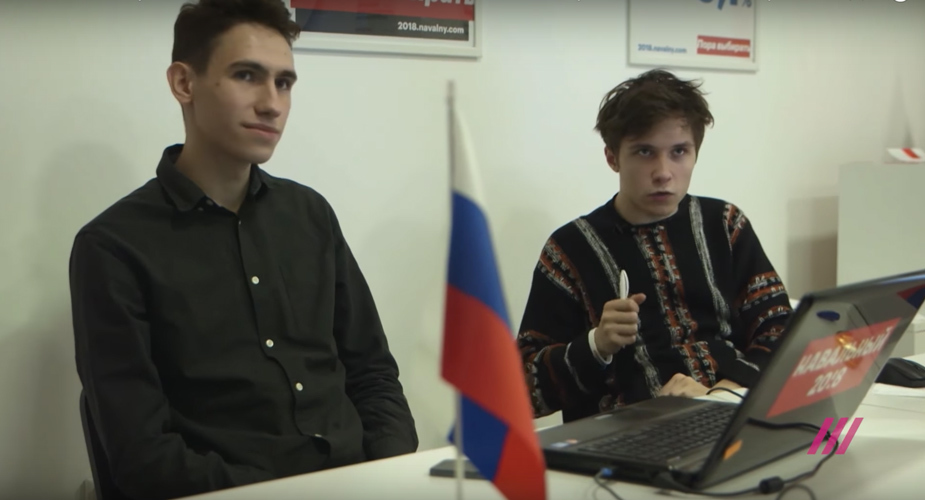
The Rain television channel showed the new documentary of Andrei Loshak “The age of disagreement” (available on the YouTube account of the television channel. -Ed.)-about young people who support the politics of Alexei Navalny. At the request of Colta.ru, Katerina Gordeeva watched all five episodes.
If you look at things simply, the “age of disagreement” is the history of the confrontation between the progressive part of the society, which supports the policy of Alexei Navalny, and the rest of the country, which is somehow for Putin.
The supporting part of the society is represented by young, talented and giving hoping children from different parts of the country. The camera loves them. The author too. In more or less, the audience capable of empathy to heroes immediately begins to sympathize. At the same time, the viewer 40+ usually says with a significant sigh: "All hope is on them."
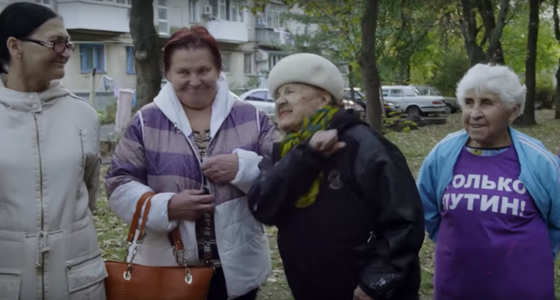
The “Plain” part of the society is the characters in the range from disgusting to miserable. Sometimes this is an notorious functionary from the youth headquarters with running eyes and a jacket not converging on the stomach. Sometimes - an anecdotal cop with an immortal phrase: "I forbid you to put my video on the Internet." But most often - the old people who were confused in dementia and loneliness, who really do not know, as they were in the next ridiculous situation, how they got into the frame and what the hell is everyone from them. Or them - from all.
 © Rain
If you look at the Horsk series just like that, straightforwardly, then it turns out that everything is old, shabby and distraught - for Putin. And for Navalny - youth, fresh breath and, therefore, the future.
But the horses are a brilliant social reporter. Five of his half -hour episodes must be watched slowly, calmly and thoughtfully. Not missing anything. Then the conflict configuration will be different.
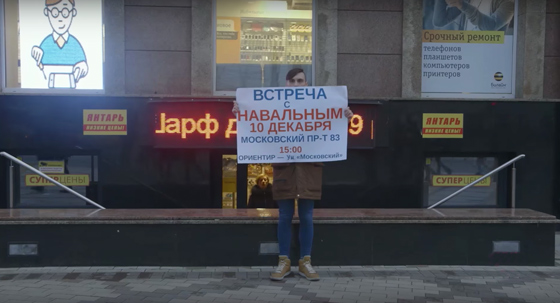
So, the main characters are young guys with posters “behind Navalny”, with colored rubber bracelets with his name on the wrist, with “AN” icons and stickers on smartphones. They seriously call him Alexei Anatolyevich and try to rely on his political theses in their statements. But when - quite quickly - politics ends, life begins. It turns out that almost all the heroes are from incomplete families, in which there is neither a crisis of generations, nor a crisis of acceptance, but there is a crisis of trust in the outside world and the general contagious, like flu, fatigue - children, fathers and even grandmothers - from life in shit, that is, survival. And to the fathers, and children, and even grandmothers are terrible to express a protest against their own helplessness, teenage, adult or senile, and win this life in shit. Is it possible to put an equal sign between this life and Putin? Is Putin the enemy of the heroes of the series? Or maybe enemies are those who are for him? None of the heroes talks about it. It seems to be in the air.
They are not crazy, not saints. And they are completely not ready to fight "for themselves and for that guy." At some point, one of the heroes is not just snapping-he simply warns: “We don’t have to lay our hopes on us.”
The "side of Putin" is represented inappropriately, not investigated in detail. Few interviews with the “Plainites” either make people in the frame make excuses, or turn out to be scraps of non -leading bickering in high colors. The inner world of these people is not interested in the author, nor spectators, nor the main characters of "age of disagreement." Yes, and the young “navalists” are fighting not with these grandparents, not with drunken passers -by, not with stupid newlywords with lean faces.
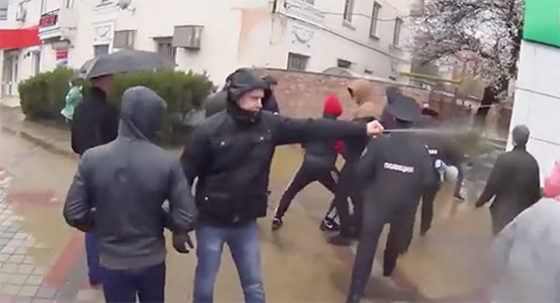
The main enemy is different. And, it seems, he is common for both sides. In his cinema, as in life, there is no face. Even the Later and his wonderful operators fail to consider this face. Each series has five or six moments when a journalist or one of the heroes approaches a car with darkened windows and asks a person sitting in it to show his face. And then the episode breaks. At each rally there are always several people with closed faces who beat the protesters, throw smoke bombs into the crowd, and then disappear with impunity. Next to each university leader, persuading the heroes of the film “Sit quietly” and “Do not go against the system”, there is always someone, inserting a word or two in the case, directing the conversation, but does not name his name. And we do not know who it is. Grayness. Taurus. Interference. “Gray” is pulled by people, changing optics, pushing their foreheads, depriving the smallest chance of unification.
 © Rain
In several episodes, the same is repeated - quite, however, dubious - a reproach of the parties to each other: you do not like Russia, you do all this for money. At the same time, neither those nor the others look very enriched. And the country is not so good: the facade of the house, against which in Murmansk, the first rally in the Navalny rally campaign, could bring into the human appearance and those who listen to the performance of Navalny, and those who protest against it. But he gapes the pothole against the backdrop of the lead sky.
To budge, you need a hero who will indicate where to go and give the command to move. The Central Russian longing for the leading and guide line, on the hero-to-cat-music, is spilled in all five episodes. In the third (perhaps the most interesting) there are short bayopics of the heroes of “age of disagreement”. Of these, it is clear: the one you can go for, each of them was looking for, if not long, then quite persistently. And it is very possible - it will continue to search.
These searches - with all understandable and expected loves and disappointments, oppression and liberation - are predictable and repeated, like a liturgical calendar. Previous generations from future are distinguished only by a hero: he can be from the world of music, literature, culture, counterculture, and finally, politicians. Now it is Navalny. But one by one, the most charming of the heroes of the hide, Yegor and Philip, say: "Could not be Navalny, but at the moment - he."
A generation, who believes that it has “gone through its chance” to change the course of history cannot shift this mission to their own children or younger brothers.
Looking for how to live their lives more and more productive, people are the driving power of any society. Those who are talking about horses are looking for this best life for both the country and for themselves equally. Against the general background, they look a bit of freaks: too smart, too free, too tolerant, too easily break off from their environment and roots. But they are not crazy, not saints. And they are completely not ready to fight "for themselves and for that guy." At some point, one of the heroes is not just snapping-he simply warns: “We don’t have to lay our hopes on us.”
It is interesting that before the older generation, as a rule, did not like the younger, considering it representatives less educated, less responsible, less conscious and so on. The current situation is pathologically opposite. "They are better than us!" - the peers of the horse confidently say and wait for this to win Putin to win the eyes of Navalny before their eyes.
Actually, the author of the series also speaks of this. Presenting the “age of disagreement” on his Facebook, Andrei Losk writes: “This is a very sad story about how we are all about *** and all (well, or almost everyone) for this ***.” He saw a glimpse of hope, according to Loshak , he saw in March 2017, "when, upon the call of Navalny, crowds of very young people came out against corruption on the streets of Russian cities."
 © Rain
Now, it turns out that exclusively this generation has a chance for the future: after all, it does not vote for Putin. The one that votes, therefore, deserves the previous life in shit. No changes.
But no one deserves illness, poverty, humiliation. Voting for anyone may not be a reason for a curse. And the generation, who believes that it has “packed its chance” to change the course of history, cannot shift this mission to their own children or younger brothers. No matter how convenient the position of the non-commissioned officer widow may seem: no obligations, no responsibility, a continuous post-traumatic syndrome and a mandatory requirement for it.
It is strange to call for move forward, bearing in mind that someone else will be rearranged for you. Even if this someone seemed to you pretty and suitable for the role of a real fighter for changes, at least due to age. The fact is that nodding to age about the same way as on the floor, religion and sexual orientation. And to live your life is sometimes more important than putting it on the altar of victory. He is already in blood.