
Translated material
Era (w?)
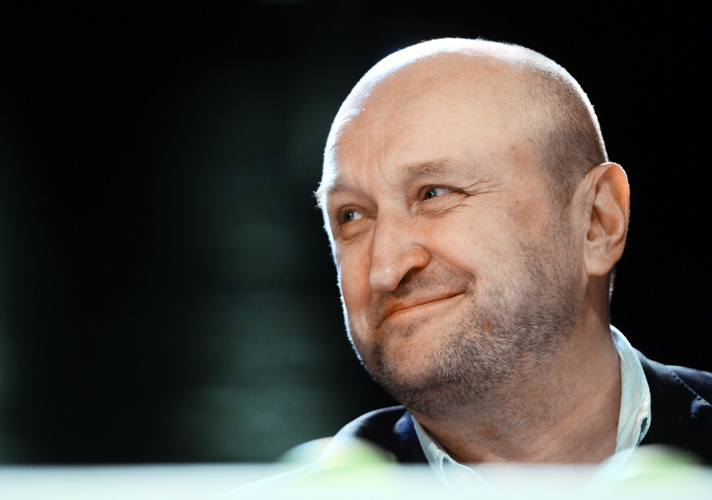
In the evening of last Friday, it became known that the post of artistic director of the Moscow Art Theater will be occupied by Sergey Zhenovach . The fact that the most paradoxical personnel in the theater sphere can mean, - Sofya Dymova.
1.
It is no secret that the discussion of the candidacy of the possible successor Oleg Tabakov both in the shelter and in the near -theatal circles lasted more than one year. In recent months, the top of the most likely applicants for the post of arts from the Moscow Art Theater, by a significant margin, was headed by Valery Fokin and Evgeny Mironov. The first is the reformer of Alexandrinka , perhaps the most authoritative in Russia theatrical manager, part -time, a loyalist with experience: a triumphal return to his native Moscow would become a long -awaited increase in the service, a sign of gratitude of the party and government. The second is Tabakov’s beloved student, the artistic director of the super -academic theater of nations, in the appointment of which there was also hidden potential for a spectacular multi -income: the theater in Petrovsky Lane is located in the building of the former branch of the Moscow Artistic, so that Mironov’s arrival in the Moscow Art Theater would allow you to unite two independent artistic organisms into a single structure, following the lovely Vladimir course of the Medical Course Optimization. In turn, the leadership of the Ministry of Culture, as they say, lobbied the figure of the head of the Moscow provincial theater Sergei Bezrukov, who did not receive support at the top.
The candidacy of the artistic director of the metropolitan studio of theatrical art Sergei Zhenovach, according to rumors, was made for discussion by Deputy Prime Minister Olga Golodets last Thursday. Further events developed lightning speed: on Friday morning, the elders of the theater workshop (Valery Fokin, Lev Dodin, Alexander Kalyagin) and the associates of Oleg Tabakov (Evgeny Pisarev, Vladimir Mashkov, Igor Zolotovitsky) were summoned to an emergency meeting in the Ministry of Culture. Until late in the evening of March 23, a representative meeting, chaired by Vladimir Medinsky, tried to convince Sergey Zhenovach hesitated to accept the proposal of the department. Closer to midnight, official information appeared that Zhenovach would enter into his new powers in a month. For the Moscow artistic, the very decision of the Ministry of Culture, and the harshness of its adoption was a complete surprise - the star troupe was put in an ultimatively to the fact of the appointment of a “person from the outside”, which was not genetically connected with the Moscow Art Theater, so that the news was perceived extremely nervously inside the theater. The discussion of the undergoing personnel changes was devoted to an extraordinary collection of the troupe, held on Saturday, March 24 - not only with closed doors, but also in the absence of Sergei Zhenovach himself.
2.
Zhenovach released his last performances on the side in the drama in 2004 (“White Guard” in the Moscow Art Theater) and 2005 (“Imaginary Patient” in the Maly Theater)-he set the last twelve years in his own theatrical art studio, based in 2006 and the entrepreneur Sergei Gordeev, and which received state funding last season and put into subordination of the Ministry of Culture. Like his teacher Pyotr Fomenko, Zhenovach always preferred a chamber scene, a studio format and work with Russian literary classics: the founder of the Epo embodied in his performances an idea of the theater as a department with which needs to be broadcast, mourn, preach, in a word, learn to live.
In the appointment by the artistic director of the Moscow Art Theater, whose name in recent years has become a synonym for enlightened conservatism, it is easy to make out the ideological abris of the future six -year -old.
The Zhenovach understood the metaphor “Theater-the Temple of Art”-and the metropolitan public really liked it: the 2000s saturated with the theatrical boom of the 2000s needed something like a cell, where they would show something very strict, spiritually, and most importantly, equal to the half-exhaust banner of the Russian psychological theater. Today, in the appointment of the MHT, the director of the Moscow Art Theater, whose name in recent years has become a synonym for enlightened conservatism, it is easy to make out the ideological alcohol of the future six -year -old: single pickets with the rhetorical slogan "Mkhat - Is this art or debauchery?" We took place last Saturday in the Camerger Lane by no means by chance.
Meanwhile, the apparent, at first glance, so logical personnel decision is difficult to recognize as far -sighted - both from a purely artistic and purely pragmatic point of view.
The outstanding director does not mean a good artistic director, and the theater art studio was and remains the author’s theater of one director: Zhenovach did not invite even his own students to cooperate, forced to earn a name with staging at other sites. Now he will have to nourish three scenes and a troupe of one and a half hundred people, and he is clearly not going to refuse the theater art studio - the Minister of Medinsky had already hastened to report that the style in the future could become a branch of the Moscow Art Theater. A candidate for the role of the leader of the Moscow Art Theater must have, first of all, outstanding managerial talent, but does Zhenovach have a big question: it is one thing to answer for the style with the main scene for 234 places and the only major premiere in the season and completely different to manage a giant multiplex, the audience of which is accustomed to the wide assortment of Moscow artistic. The key problem of the Paradox “Zhenovach in the Moscow Art Theater” was formulated in Facebook discussions producer Evgenia Shermenev: “It is strange to go to the public, all its [art] life, proclaiming the idea of elitism.”
3.
Oleg Tabakov turned the Moscow Art Theater into a profitable corporation from the theater outline with great history: three sites in the Camerger Lane, plus a branch under construction-a seven-story building at the intersection of the Nagatinskaya and Avenue of Andropov, plus a lot of business passing decoration workshops. Tabakov himself, as you know, combined the positions of the director and Khudruk; The Ministry of Culture has already announced the need to separate the creative and administrative leadership of the theater.
It is in this situation that the Zhenovach finally begins to trace the iron logic: with a deliberately hard -faint artistic artistic director, the director - the manager - the manager of all administrative processes and dispersing all financial flows becomes the main person in the Moscow Art Theater. In addition, Oleg Tabakov, Moscow art, - the protected territory of creative freedom - for too long remained a rynchka in the eye of the authorities: it would be strange if the Government of the Russian Federation missed the historical opportunity to establish full control over the status scene of the country. At the end of the last week, the deputy minister of culture of the Russian Federation Alexander Zhuravsky was called a potential candidate for the post of post -week director - the department, however, hastened to refute this information. One way or another, but the fog around the future legendary theater will be dissipated only when the following move will be made in a large game for the Moscow artistic, and it seems, no later than April 23.