
Translated material
What happened to us
Russia is a country of survivors, and this is one of the main explanations why on March 18 tens of millions voted for lack of freedom
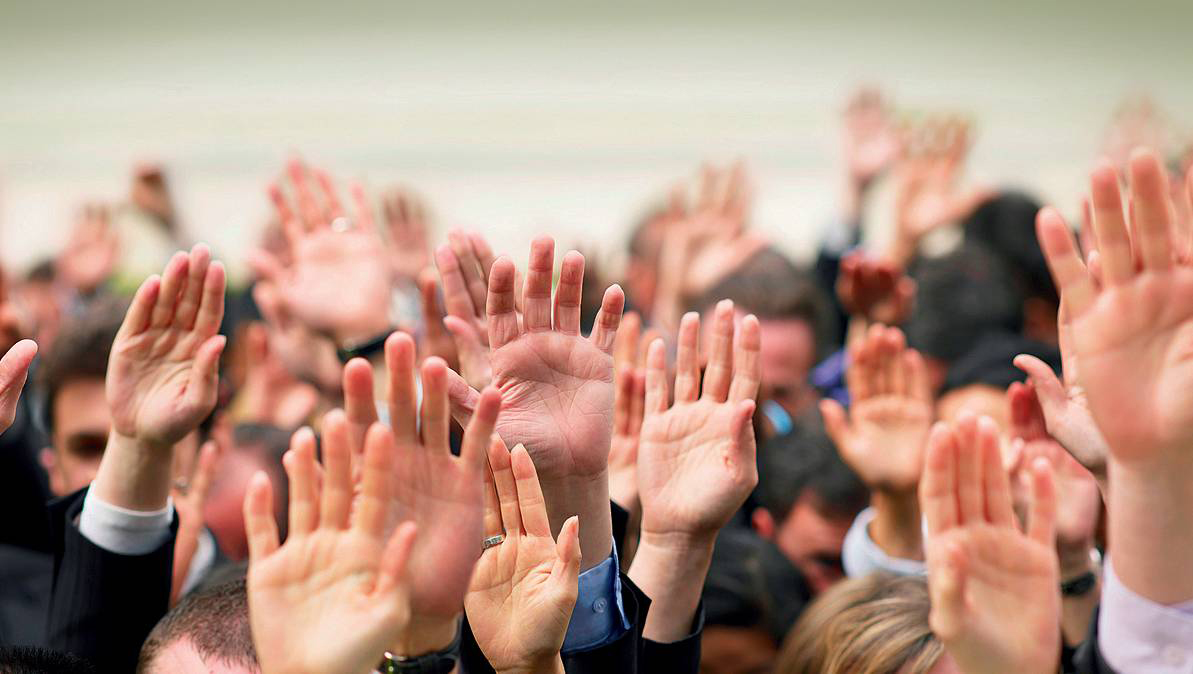
Photo: northerndailyleader.com
The fact that Putin will come out the main winner from the story that ended on March 18, there was no doubt either now, nor a year ago, nor two. This alone does not allow us to consider its result - a product of the democratic process. Democracy is instructive uncertainty, winners and losers are constantly changing (the shortest definition of a democratic form of government: “The party of power loses the elections and leaves”*), and it is these swings that are protection from the usurpation of power by one party, one clan, one person.
This (76.69%) unity around one candidate is impossible: this is a sign of an authoritarian regime when either a democratic process itself is disturbed at the stage of an elected campaign, or the result is falsified
There is no such result in the democratic elections: 76.69% of the vote was filed for the main candidate - neither theory nor practice allow this. Numerous comparative studies in different countries of the world show that, with the exception of the moments of special danger to the nation, such a unity around one candidate is impossible: this is a sign of an authoritarian regime, ever a democratic process itself at the stage of an elected campaign, or the result is falsified.
The preliminary data of mathematicians, in particular, Sergei Spilkin , show plus minus 10 million abnormal votes, that is, thrown out ballots for the victorious candidate. Accordingly, Putin, most likely, received not 56.4 million votes (more than half of all those who had the right to vote on March 18-this is 107 million), but 46 million with a small one, and the turnout was most likely not 67.47%, but less, apparently, less than in 2012 (65.34%).
Is it just changing?
In conditions when the economy stagnates, real income and pensions do not grow at best (they are at the level of 2012), Putin’s promises given to them by fellow citizens after being elected for the third term, in May 2012 (they are known as “May decrees”), most of the key indicators are not fulfilled, the war in Syria, which was completed three times, and continues, the number of “two -hundred” ones arriving in the morgues that arrives in the morgues. Rostov-on-Don, growing-in short, political theory, electoral practice and simple common sense say that the result of Putin with all the administrative resource and taking into account the Crimean votes (almost 1 million out of 1 million 493 thousand had the right to vote)-should have been lower than the protest 2012.
I had to. But he did not. Why?
The world has entered the non -Bural political cycle, when the democratic principle of development ceases to be fashionable, and authoritarianism seems to be a permissible or acceptable way to control
Fashion for authoritarianism
The latest Freedom House data , a monitoring organization that has been tracking the situation with freedom and human rights on our ball for several decades, show that the world has been experiencing a phase of deterioration in the situation with political freedoms and civil rights for the 12th year. In 71 countries of the world, including the United States, these indicators have worsened, and only in 35 countries their improvement was recorded. In other words, the world has entered the non -IBRIL POLITIC CYCLE, when the democratic principle of development ceases to be fashionable, and authoritarianism seems to be a permissible or acceptable way of management. The famous professor of Harvard University Samuel Huntington would call this cycle a “reverse wave”, which, as he thought **, follows each wave of democratization. So, Mussolini's arrival to power in Italy in 1922 marked the first such return wave - it continued until the end of World War II. Then there was a period of collapse of colonial systems and democratization, which (approximately from 1960-1962) was followed by a second reverse wave, which lasted until 1975, the revolution in Portugal, marked the beginning of the third wave of democratization, the peak of which became velvet revolutions in the countries of the communist system and the collapse of the USSR in 1991. The iconic events of the current non -IBRAL WARN was not what happened (with the exception of Tunisia) “Arab Spring” of 2011, the “White Naval Revolution” of 2011-2012 in Russia, protests of 2013 and then 5 years of repressions in Turkey, the victory of populists (BREXIT) in the UK and the USA (Trump). Countries where there are stable democratic institutions are more likely to retain from crawling into golemal authoritarianism than countries, where, as in Russia, the life of democratic institutions is small, the question of liberal values is no longer worth it - as it were, not to crawl to the dictatorship with all of it, the ensuing.
“Fashion for authoritarianism” - well, like a fashion for the length of the skirts, they were short, then long - the saving hypothesis for Russian vanity: we are in trend, regardless of the sign of this trend, and to a certain extent optimistic. The duration of the non -Iliberal wave of 15–20 years, autocrats around us are already middle -aged, they will be replaced by a generation of their children who have been educated at Western universities and prefer to keep money, to receive pleasure, to raise their children in Europe. Just as autocrats adopt each other's manners (permanent Lukashenko and Nazarbayev in Belarus and Kazakhstan, respectively; who canceled the rule of the two terms of Xi Jinping in China, who changed the constitution in his favor Erdogan in Turkey, the non -replaced Putin in Russia), and democracy are able to engage in their orbit - velvet and color revolutions that is an example.
Other hypotheses that explain the success of Putin are less pleasant for national consciousness, and they do not give hopes for fast changes.
There was no chance that Navalny would go around Putin’s elections, but he could come by a strong second and thereby help to destroy the stereotype in the heads of voters: “If not Putin, then who?”
Without an alternative
From the point of view of political theory, Russia in the 2010s was doomed to democracy: all the so-called democratization variables (literacy level, degree of urbanization, the presence of communications, including roads, a growing middle class with income that allowed to spend time on politics, etc.) was evident. It seemed that Putin’s charm was about to pass, besides, new and promising opposition leaders appeared in Russia-Boris Nemtsov, Harry Kasparov, Mikhail Kasyanov, and finally-from the young generation-Alexei Navalny, Sergey Udaltsov, Ilya Yashin. Nemtsov was killed. Kasparov, after a warning 5-day arrest, preferred to leave the country. Udaltsov was imprisoned. Kasyanov discredited. Navalny approached the new electoral cycle as the unconditional leader of the opposition, and not only for prosperous Moscow: 84 headquarters from Kaliningrad to Vladivostok, tens of thousands of volunteers, and the age category, when the autozaki is fan, and street shares are as natural as the Battles of Batter in YouTube. Plus - fatigue from propaganda channels, and the creation of political information sites on the Internet - like “Navalny.live” or “Vedud”. By the middle of the fall of 2017, Navalny was perceived as the only alternative to Putin. They felt this in the Kremlin. There was no chance that Navalny would have been going around Putin’s elections, but he could come by a strong second and thereby help to destroy the stereotype in the heads of voters: “If not Putin, then who?” Not allowing Navalny to the elections, that is, violating the democratic process itself, a democratic procedure that provides equal conditions for all candidates and competition between them, the authorities made a voting to the non -alternative - the elections turned into an interclam, into a referendum on the support of Putin. The latter did not participate in the debate or in the competition of election programs, based on the famous Orwell principle "all animals are equal, but some are more equal to others." Meanwhile, the election program is the basket of political goods from which the voter chooses what he, a specific voter, is more suitable. In 2018, the chief candidate and “baskets” did not suggest: take as it is. And - they took it.
Honor, ministry, duty, the benefit of the country are key concepts for the European elite and unknown - for Russian. Speak them in ear - laugh
White Africa
Ask what you took - they will not answer, except for "Putin is our president." The trouble is that not only grandmothers or state employees will not answer-those who voted for the Democrats or who already understood that President-Chairist is not just a native of the KGB at the head of state will not answer in previous years, this is a clan of people who have been trained in the KGB, who have captured all team heights in the country over the past 18 years.
I'm not about the people - for the most part he is busy with survival. I'm about the elite, the level of which is lower than the lower limit. Greed, vanity, servility, a complete lack of representation of common good are only the most neat of the epithets. Estes, gourmets, admirers of Dostoevsky and Kustodiev, the socially Russian elite is not much different from the tribal leaders of the most backward patriarchal Africa. Concepts - instead of laws, appeal to traditions - instead of institutions, the common fund - instead of cooperation of individuals, loyalty - instead of principles, nestedness and non -ism - instead of abilities, deception - instead of an honest deal. All these are the principles characteristic of traditionalist, backward societies, which, unlike Europe, have not passed through the period of education, and therefore gadgets and outskirts are modern, and everything that is under them is better not to look.
Today's Russia is the heirs of the survivors. The survivors are not looking for a better future: the main thing for them is that it is not worse
Honor, ministry, duty, the benefit of the country are key concepts for the European elite and unknown - for Russian. Speak them in ear - they will laugh.
Risking to seem politically incorrect, I will say: the main mistake of those in Europe and in the USA who believed that Russia was the beginning of the 1990s is a country ready to take on the rule of law and join the community of modern, civilized countries, consisted of deception of vision. They came to our country, saw pale -faced people quoting Dostoevsky, and believed that this was Europeans who were simply by the will of their unhappy history under the rule of usurpators. But no, everything is not so simple.
Today's Russia is a country of survivors, the children of those who managed not to die in the most impossible circumstances: in the barracks of Kolyma and Norilsk, in the trenches of a terrible war, in closed cities with increased levels of radiation, in conditions of developed socialism with space stations in orbit and deficiency for everything and all, to meat and toilet paper. Civil war, collectivization, hunger, camps, war, hunger after the war, camps - 50-60 million - this is the human price paid by the country in the 20th century.
The survivors are not looking for a better future: the main thing for them is that it is not worse. Do not kill, do not plant, pay for workdays, in stores the regiments are full - that's glorious, thanks to Putin for that. And thanks. On March 18, plus or minus 50 million voted to make no worse.
The conclusions are obvious.
* Adam Pysheorsky, democracy and market. Political and economic reforms in Eastern Europe and Latin America. Rosspen: 2000
** Samuel Huntington, The Third Wave: Democrationation in the Late Twentietich Century, 199 3