
Translated material
Do not grind the storm
Marks the 150th anniversary of the birth of Maxim Gorky - the Petrel of the Revolution, which became a mountaineous
Maxim Gorky, of course, had a literary gift, but they did not remember the country where from childhood they drove into the heads of schoolchildren the most mediocre, most harmful nonsense, in which he appears either by party organizer or demoniac: “Song about the Falcon”, “Song of the Bureuremnik”, “Mother”. A joke wandered around the USSR from that stupid opera: “Your mother ... Thy mother ... Your mother ... Isa-old!”
Damned many times as a revolutionary and arsonist of a Russian rebellion, Gorky can be justified as a human rights activist of the times of red terror, an intercessor and breadwinner of hungry writers and a fearless journalist of the “New Life”, closed by his relatives of the Bolsheviks in the summer of 1918. Then he became an exile, tried to be Herzen, but hunger and lack of demand drove him back to the USSR, where he became an accomplice in Stalin’s deeds, his court writer, and then his victim. Therefore, on March 28, on the writer’s birthday, we will start, cross and regret the poor fellow who realized his own nightmares.
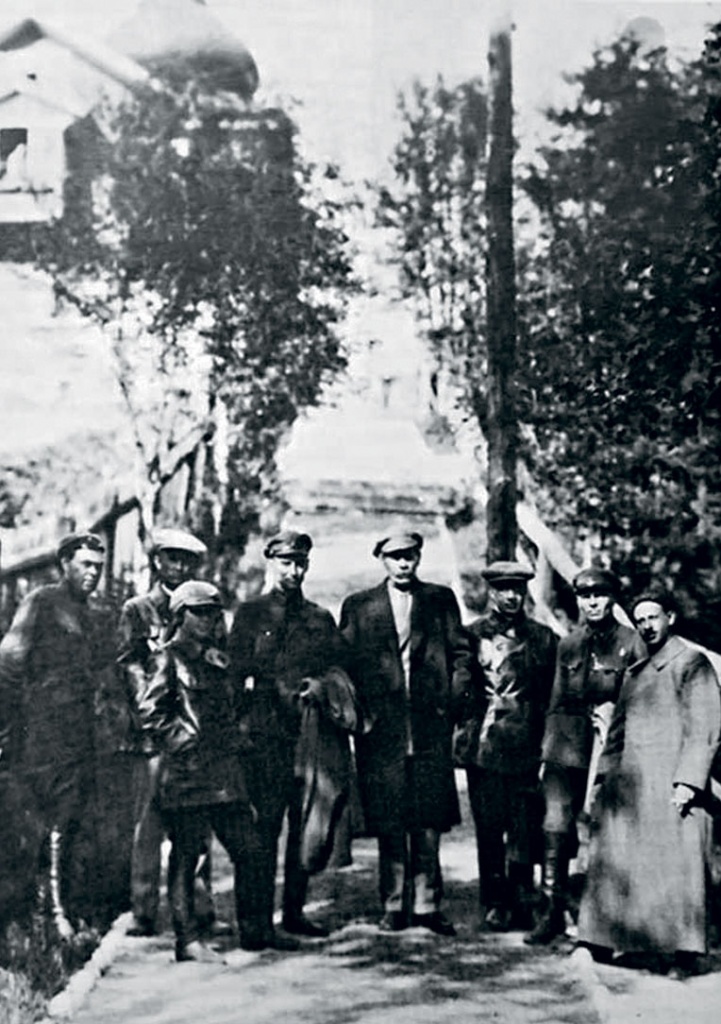
On Solovki. 1928
Alyosha Peshkov lived poorly, did not receive any education, and at the age of 11 the cruel grandfather sent him “to people”, to the black work. The boy became a victim of a vital struggle and everything that he found out, he learned from books, self -taught. He became the easy prey of the Esdec, who did not give him any education or craft, but they pressed Marx, Lavrov and Chernyshevsky and poured various vulgarities about the “class struggle”. But it was attended by Nizhny Novgorod lawyer Lanin and writer Korolenko. Gorky became a fashionable writer, and his black wide -brimmed hat was a brand. He wrote his best stories in 1897-1900: “Former people”, “Konovalov”, “The Wives of Orlov”, “Crime”, “The shake”, “Friends”, “Cain and Artem”. These are the stories of a good person suffering and compassionate. They are very terrible: their heroes, often either former, or future convicts, accumulate in themselves a terrible charge of social hatred, which will soon collapse on humble and hard -working peasants, skilled artisans and diligent “bourgeois”. Although what power lumpenizes and makes Grishka Orlov and Sashka Konovalov get drunk - neither they nor Gorky understand. Really Russian Handra? Then Gorky himself writes in a “new life” that Russian people do not know how and do not want to work and that the contrast between the pure houses of Finland and dirty Russian huts with cockroaches are not accidental. However, the Russian intellectual is also restless and out of work, which Gorky will begin to write already abroad. In 1925, he began to work on the "life of Klim Samghin" - his indisputable luck.
He became an exile, tried to be Herzen, but hunger and lack of demand drove him back to the USSR, where he became a court writer
And in 1918, Gorky saved from the hunger of Green and Blok and stood up, although in vain, for Gumilyov. In the newspaper "New Life", he insisted on "socialism with a human face", and, of course, only the intercession of Lenin saved him. "... It is necessary to understand that Lenin is not an omnipotent sorcerer, but a cold -blooded magician who does not spare either the honor or the life of the proletariat." And - “In our nightmare days, the conscience died. The innocent and honest people of Shingarev, Kokoshkin were killed, and our authorities do not have the strength or conscience to betray the killers to the court. ”
And then, in 1928, there was a trip to Solovki, and Gorky, learning the truth about the horrors of the concentration camp, said nothing. Having finally returned from Italy in 1931, he swam along the White Sea, “glorifying slave labor” (Alexander Solzhenitsyn). And then he was a pawn in Stalin's hands. In 1934, his son Maxim was poisoned, in 1936-quietly removed him himself.
I don't know what to outweigh. I only know that petrels are always burners and that in the position of snakes, penguins, gulls and gagar there is their own Sermmyag.
First published in NT No. 10 of March 25, 2013