
Translated material
"Shnitka has always a result in the final, Tishchenko has morality ..."
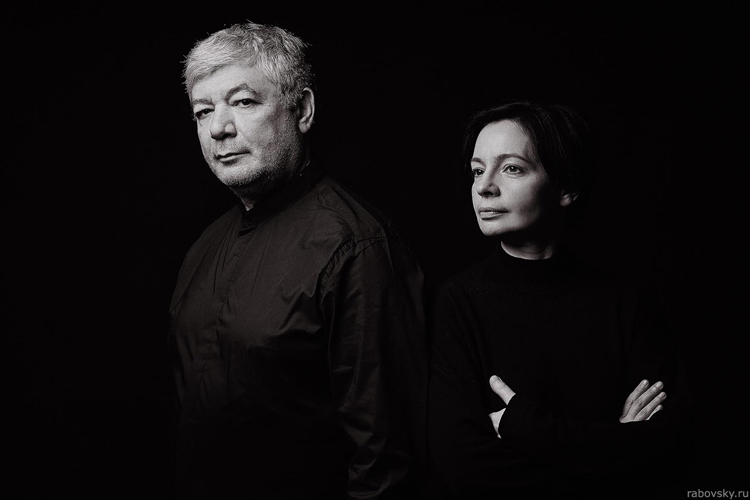
April 7 from 14:00 to 20:30 on the new stage of the Alexandrinsky Theater will host the second charity festival for the birthday of the Advita Foundation “One Day from Life ...”. The entire fee from the sale of tickets will go in favor of people who are treated for cancer. Information and tickets - here .
Within the framework of the festival, the Concerto Grosso No. 1 Alfred Schnita and a concert for violin, piano and string orchestra Boris Tishchenko will be performed. About the indirect dialogue of two great contemporaries and their masterpieces, one of which is performed too often, and the other almost never, the authors of the concept of the festival, the heads of the divertissement orchestra Ilya Ioff and Lidia Kovalenko told the coordinator of the ADVITA Foundation Elena Gracheva.
Elena Gracheva: A combination of the names of Alfred Shnitka and Boris Tishchenko for me how obvious, so paradoxical. On the one hand, they are contemporaries, who related to each other with great respect, experienced and completely fearless people in their work. On the other hand, in many ways, antipodes: Tishchenko is integrity, crystal, tightness, continuity, such an exemplary Leningrad intellectual. Schnitsky is a postmodernism, which he called polystilism: the combination of everything with everything, torn, openness of everything that is, complication; He is a man, rather, of European consciousness and well -being. But, when we listen to their works in a row, one after the other, we hear a lot in common: first of all, the stunning tension of the dialogue, even polylogs, when no one walks, but each tool, every voice has the opportunity not to get lost in a common choir.
Ilya IOFF: Let's start with the complication and supposedly confused music of SHNITO. The first time I recorded as a soloist of the Concerto Grosso No. 1 very many years ago, I was twenty and small. I remember how painful this process was and how complicated this composition seemed to me. When, after many years, I decided to play this great music with the “sabotage” and got the score, I was completely shocked by how transparent. Like crystal! Like Mozart, like Baroque geniuses. Nothing superfluous, no delights for the sake of sakes, a transparent workshop, it is clear where each note came from and where it leads. I can say the same about Tishchenko’s music, but his transparency is different. This is Shostakovich's transparency in that part of his work, where his statements border on minimalism. The variation of the “invasion” in the Leningrad Symphony is often compared with the “Bolero”, but Ravel’s music is compared to the absolutely stone block of Shostakovich - an exquisite eastern flower. Compared to Ravel in the “Invasion” there is nothing, absolutely nothing if you understand what I'm talking about. Just nothing. Repeat, repetition, repetition, repetition, clarity and mercilessness of a simple repetition, which works stronger than whatever. It is this “nothing” that is in the concert for the violin, piano and string Tishchenko, which will sound at our festival. This concert does not even begin with a motive: a violin mutters some note, then two blows are not clear in which register of the piano. This heartbeat of a living organism is like the paintings that we see on the screen of the ultrasound apparatus: something that pulsates, we do not understand what it is, but we understand that it is a living human body. In it, this body, there is a lot of everything, but everything is very necessary. It is impossible to cut something unnecessary or add something necessary without damage-this is Tishchenko's music.
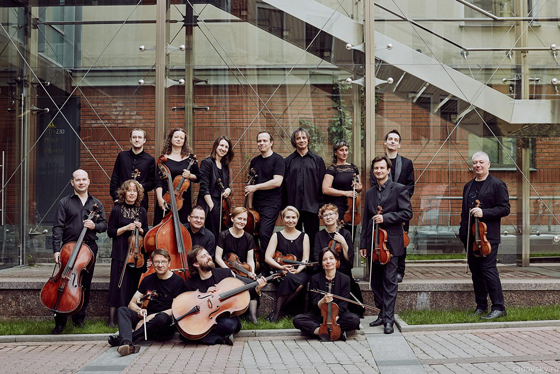 © Daniil slave "sabotage"
The concert was written in 2006, four years before the death of Boris Ivanovich. If you compare it with the famous first concert for the cello with an orchestra, which everyone knows according to the performance of Mstislav Rostropovich, he is completely different. The concert for the cello is much more verbose, it is clear that it was written by a young man, in the prime of his spiritual and creative forces. A concert for a violin, piano and strings is written by a person who is wise of life experience and this experience is tired. This essay develops through difficult composer solutions, through sarcasm and irony, rhythms appear in the windows of the second part there, almost gopnitsky motives, from the gateway, such Shostakovich could write. But it is permitted by perfect blessing, peacefulness - the late Shostakovich also has, for example, in a monstrously tense, traumatic block cycle, resolved by a city romance.
Gracheva: It seems that Schnita is in a completely opposite way to build the playwright of the First Concerto Grosso . It begins, rather, with hope - the carol, which was written for the picture “How Tsar Peter Arap married”, but did not enter the final installation. The text from which this topic has grown is exactly about hope: “Oh, a person, a short -lived century, is sad and is sorrowful sorrow. Be merciful, to good, it is zealous, the Lord will accept you for the bodies of bodily in the heavens. ” But Schnitsky gives this topic to the “prepared” piano - and this rattling, completely otherworldly sound of strings laid by Soviet (it is Soviet, all pianists know) with a penny, immediately doubts this small, fragile children's hope. Nadezhda is trying to return refrain, but she has very little strength.
Lidia Kovalenko: Tishchenko and Shnitka, it would seem, took place completely in their time: recognition of the public and colleagues, many years of teaching in the best conservatory of the country - Moscow and Leningrad, music for films that were watched by millions, full houses at concerts. But from many successful contemporaries they are distinguished by a hole inside. The hole, the door there, into the abyss is human, first of all. The first CONCERTO GROSSO SHNITO is not a battal of two violins, as it seems at first glance. This is the battle of a certain creature, created from two violins, either chimera, or androgin - against those who are played by the rest of the participants in this conversation: string orchestra, piano, harpsichord. We have been playing this play for many years, and with each performance it is getting worse and worse, the abyss is done deeper. To live to the end, until the result, almost the verdict, which ends his concert by Schnitka, is not so simple.
From many successful contemporaries they are distinguished by a hole inside.
Gracheva: For me, the seventies, when this concert was written, is the time from which the air was pumped out, very stuffy, dead, found its intonation in Yuri Trifonov’s novels. I have always heard in the Concerto Grosso No. 1 Schnitka this lack of air, despair and disbelief that something will change.
Kovalenko: For me, this story is not about time.
Gracheva: Not about time?
Kovalenko: No. This story is about man, and it is tragic as tragic as the life of any person is.
Gracheva: Like Dostoevsky, whom Schnitka loved so much?
Kovalenko: Yes, like Dostoevsky.
Gracheva: If you look from this point of view, Tishchenko thinks about a person more optimistic?
IOFF: Tishchenko, in principle, has a different way of saying. He does not evaluate a person, he is rather about what a person should be. Schnitka has a result in the final of the Concerto Grosso No. 1, as well as in the final of any other work, there is always a result. Tishchenko is not a result, but morality. He is a missionary, a teacher with a capital letter, guru, Sensei. He does not look into the abyss, he looks into his eyes and cuts the truth-uterus. He was generally such a person. I remember that at the anniversary of one of our colleagues, everyone in turn got up and called him ingenious, and Boris Ivanovich got up and said that he considered the man who played with the anniversary today, but, unfortunately, this cannot say this. Those who appreciated it appreciated for this intransigence. His disciples were difficult in every way. Another gurus of St. Petersburg composer pedagogy, Sergey Mikhailovich Slonimsky, was famous for the fact that he was a man of broad views and could accept any escapad from his students. Boris Ivanovich Tishchenko explained how to make it make sense, and waited for the appropriate result. If you went beyond the fact that Boris Ivanovich seemed permissible, you could be punished by a very poisonous comment expressed in a quiet voice, very politely, very intelligently, but completely ruthlessly.
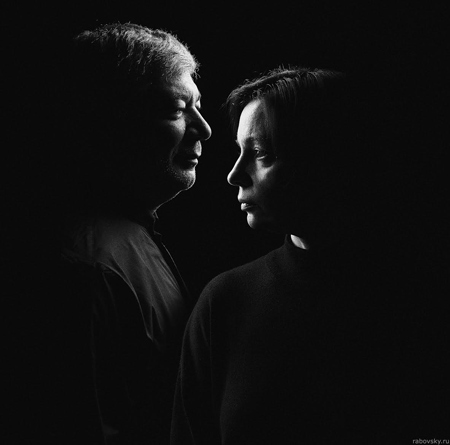 © Daniil Blagovsky Lidia Kovalenko and Ilya Ioff
Gracheva: At the same time, Tishchenko was not a conservative at all. He was the first in Russia and one of the first in the world to make the editorial office of Poppei's Coronations Monteverdi and fulfilled it - in 1967, when, if the USSR was heard about historically informed performing in the USSR, then the edge of his ear.
IOFF: Many years ago, we rehearsed with Boris Ivanovich Bach's pre-Minor sonata (he was supposed to perform a piano party). I came to his apartment in Rimsky-Korsakov, he went out and said that he was not in the mood today, but wants me to listen to one record. Boris Ivanovich had a huge Japanese system - a player with a fantastic sound quality, occupied the spontaneous. He put me a record and left. This was one of the first records of the authentic execution of Bach. I was completely shocked, I hadn’t heard this yet and did not understand anything: why half a ton lower, why such a strange articulation, why such a strange sound recovery and what it means at all. When the sonata ended, Boris Ivanovich went into the room and said: “In my opinion, there are a lot of interesting things here. Goodbye, ”and left again. Since I still remember this story and this performance, apparently, it was one of the best rehearsals in my life.
This was one of the first records of the authentic execution of Bach. I was completely shocked, I hadn’t heard this yet and did not understand anything: why half a ton lower, why such a strange articulation, why such a strange sound recovery and what it means at all.
Gracheva: Both concerts - both Shnitka and Tishchenko - at our festival will be preceded by performances, small, but real. Actors will read poetry and prose, but not just read: director Boris Pavlovich, production designer Masha Rykova and video artist Vika Omarra came up with completely incredible, very ascetic and very expressive solutions. The Concerto Grosso will be played by one of the most striking dialogs in the world literature from Dostovsky Dostoevsky performed by actress of the Alexandrinsky Theater Olga Belinskaya (Marya Timofeevna Lebyadkina), just nominated for the Golden Mask, and the actor of the Lensovite theater, the Golden Mask already awarded (probably you read it An open letter in support of Yuri Butusov). Dostoevsky and Schnittke create an additional context for each other, an additional semantic space - the selection of the work itself was prompted by the diaries of the shnita and its interview. Schnitsky directly says that Dostoevsky influenced him most from Russian literature (I quote “Conversations with Alfred Schnitka”), “Because it retains that the initial quality of the non -disclosure of his works and at the second, fifth and tenth reading. <...> It has something so high, ideal that it will never be exhausted by logic. ”
Tishchenko’s concert will be preceded by fragments of “Poem without a hero” Akhmatova, who will read the rock musician Svetlana Surganova and actress BDT Polina Tolstun. Tishchenko loved Akhmatova’s poetry very much, wrote several works on her poems, considered an acquaintance with Akhmatova one of the main events of his life - Brodsky introduced them, and Tishchenko took them to Komarovo. And then the beginning of this concert - the muttering of the violin and the strokes of the piano keys, like a knock on the door, that light that leaked into this one, echoes the beginning of the “poem without a hero”, with the advent of an unknown night guest. And just like the “Poem without a Hero”, the concert fills voices, voices from the past, alive.
Each of the concerts of the festival is unique: only once on the stage these actors, musicians and directors will unite. I am happy that the Advita Foundation can celebrate its sixteenth birthday with such an outstanding cultural event - and at the same time collect donations for the treatment of people who need help right now.