
Translated material
Ritual struggle against the Internet
On the confiscation of smartphones as an effective method of maintaining stability
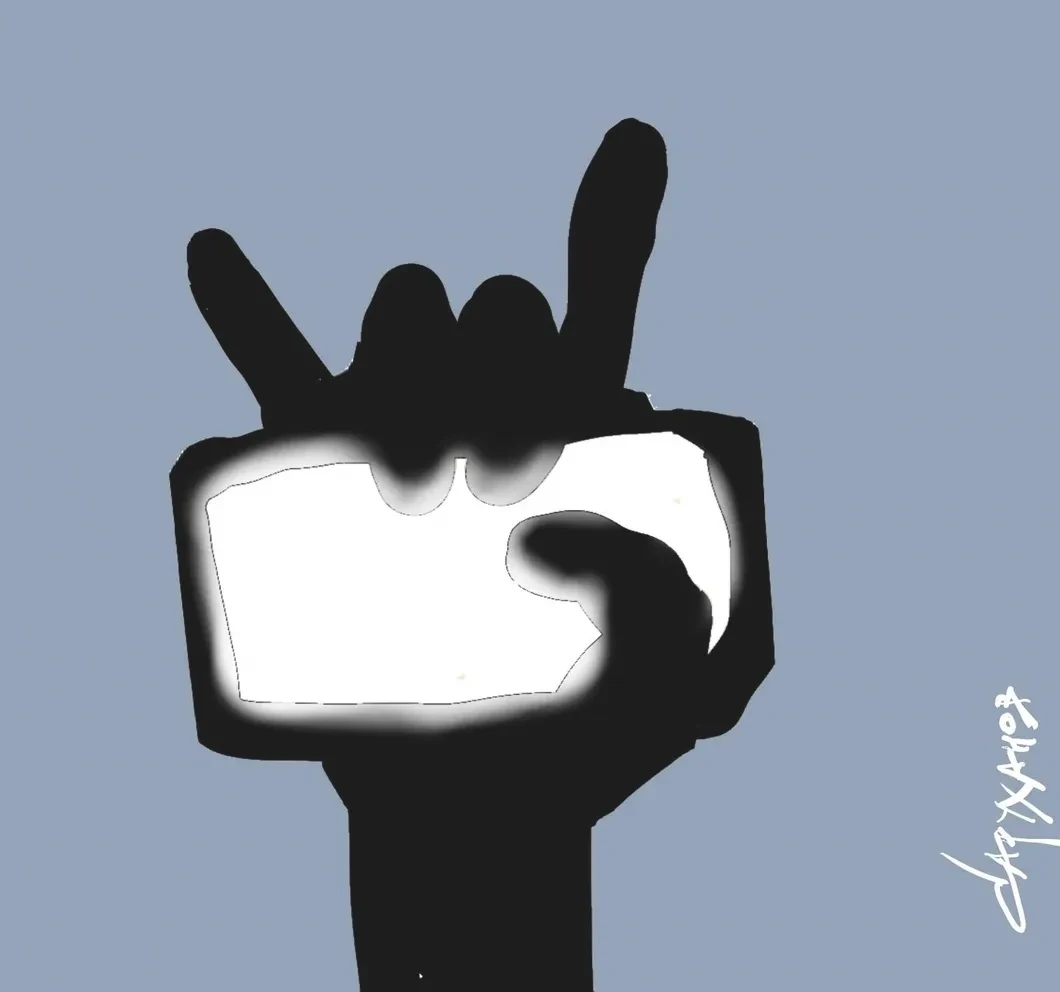
The other day I saw a message how in Magadan the police seized smartphones from two local residents on the grounds that accounts were registered to the mobile numbers of these Magadans in the group “For the Return of direct elections of the mayor” of the WhatsApp messenger. In this group, someone was frantically expressed against the mayor of Magadan, so they opened a criminal case under Art. 319 of the Criminal Code (insulting a representative of the authorities), and smartphones were seized like witnesses.
The regional government impressed me not at all by the absurdity of actions, but, on the contrary, resourcefulness, since it intuitively found the most effective way to deal with the Internet. From now on, whenever the telecom operator, it will become a noodles on the ears of the state of the state about the absence of the opportunity to “share encryption keys” on the basis, the basis that the exchange of these keys occurs directly between users, the state will sufferly remove smartphones and receive any “secret keys” on a saucer with a blue bucket.
In the context of the long -term struggle of the Russian authorities, there is a great temptation to calculate the “Magadan confiscat” with a certain climax, after which it remains only to wait for the decree on the voluntary delivery by citizens of “short -wave radio receivers”. I will risk, however, to assume that “Magadan confiscation” (regardless of whether it had a place in reality or not) is a phenomenon of a completely different order. Let's try to figure it out.
Since they started talking about many years of struggle, it will not hurt to remind the reader of its main milestones. Without going into details, I note that the Russian government today seeks to “prohibit” two phenomena:
seditious information
services that "refuse to cooperate"
Everything is obvious with information. As for the services, “cooperation” refers to the storage of data on Russian citizens on servers located on the territory of the Russian Federation, and the transfer of “Correlation encryption keys”.
Unwalted information is blocked by Roskomnadzor using “black lists”, mandatory for providers. Unwilling to cooperate services are blocked in the same way.
We will not discuss the bypass of the locks of Roskomnadzor, since this topic will only distract the reader from the design of the article. I will limit myself to one phrase: everyone who needs it continues to use “forbidden” sites, portals and Internet services with the same lightness and convenience as to state blocking.
Let's say more: the state about the real state of affairs is well aware and is not at all burdened by the technical ease of overcoming its prohibitions. For the reason that the “prohibitions” of the state pursue completely different goals. If the state really set the task of prohibiting citizens to conduct secret correspondence and visit seditious sites, it would not act through the “black lists” of Roskomnadzor, but as Magadan investigators. Only on a different scale.
The fact that the struggle of the Russian state with the Internet hides meanings, for the reason unknown to me, elusive the attention of the public and the media, you can guess by comparing the list of permitted and prohibited services.
Has anyone thought why the professional social network LinkedIn, belonging, by the way, Microsoft, has been “forbidden” in Russia since August 2016? Formally - for violation of the same law on the "storage of personal data of Russian users."
But, excuse me, why then is not “forbidden” by Facebook? Or Twitter? Both those and others safely store data where they consider it necessary, and not where the Russian government wants.
Why in the Russian Federation BlackBerry, Line, IMO and VChat messengers are “forbidden”, a telegram is not weakened for a day for a day, a booth around the “prohibition”, and the WhatsApp messenger has a calmly functioning without too much noise? ( The Minister of Communications Nikiforov said last week that his department has even more complaints about WhatsApp and Facebook than Telegram, but nothing followed. - Ed. ).
If my memory serves me, whatsApp a couple of years ago, it seems, “forbidden”. Why then today is it the most massive and popular messenger in Runet?
I can offer only one answer to the questions posed: problems with the interpretation of the Demarchs of the Russian authorities on the Internet arise due to a misunderstanding of the language in which it broadcasts its plans.
The media, whose duty should include explaining to the society of the originality of political discourse, stubbornly linen the signals sent by power, with real life, frightening the “prohibition” and “isolation” of the Internet in Russia.
Meanwhile, the specifics of political discourse is such that he does not know how to interact directly with reality. Its connection with life occurs only indirectly - through the language of metaphors (that is, transferring some meanings to others by analogy). The key political metaphor of Western society, according to the father of the cognitive linguistics of George Leukoff, is the family model (a nation is a family, power - parents, citizens - children).
Conservative political rhetoric is based on the family model of the “strict father” (life is an endless struggle, the father protects the family and teaches to distinguish good from evil with the help of a belt and a hard discipline, children revere his father and obey his will, and, standing on their feet, go on free swimming), the liberal - on the models of the “caring parent” (the task of one of the parents is to teach children to take care of others and teach children to take care of others and teach children to take care of others and teach children to take care of others Live to live pleasure, morality is not understood as protecting traditional values, but as justice, ideal - fair distribution and equal opportunities, violence is unacceptable).
By sober reflection, it is clear that the Russian political metaphor does not coincide with either the liberal or the conservative model. Why? Because political metaphors reflect the level of development of society.
The domestic consciousness is young and the motives for the survival of the ethnic group in the face of the threat from the Tatar-Mongol conquest are still relevant in it. In conditions of permanent confrontation, the “external enemies” must closely rally around a strong “prince”. Of course, we are not talking about the real state of affairs in world politics, but about how this reality is refracted in a domestic political metaphor.
The unique fighting spirit of Russian society historically arose from a rigid vertical of power and unquestioning subordination borrowed from the Golden Horde. It is a mistake to believe that the Russian government is striving for a fight. She only needs to achieve recognition of her own dominant. When the Russian government “fights with the Internet”, she does not care about this Internet. She only seeks to mark her territory, to identify in the minds of serving people and slaves, who is the main, who is the manager, who is the master.
In Western civilization (which Russia, with all the duality of its Eurasian nature, undoubtedly belongs to) the Russian political metaphor - the most divorced from real life and the most metaphorical. It is important for her not a change in reality, but a designation of priorities. The ritual of subordination and external attributes of the expression of humility are important. From subjects you only need to bend, make a “ku”, demonstrate loyalty, and then you can go on all four sides, go about your business. Those who know how to read this metaphor do not touch the authorities. Those who do not understand the mental structure and try to extrapolate the ritual gesture (for example, the “ban” of instant or social networks) to the reality itself, the authorities defiantly punishes for violation of subordination in the pack.
Summing up, we can say that the model of a Russian political metaphor is a “ritual ku”. Through this prism, LinkedIn’s ban and the preservation of Facebook, the prohibition of Telegram and the preservation of WhatApp cease to seem absurd.
In the metaphor of “ritual ku” the keyword is the ritual. Almost in the zoological sense: Alpha-Logs came up to you, showed fangs; In response, you pressed your ears, lowered your eyes, put your neck. All! The ritual is executed. The satisfied leader moved further to mark the territory, and the private Volchara went on his own way, engage in personal matters: to download, there, torrents, decorate the profile in LinkedIn, exchange Lozhkin stickers in a telegram with colleagues-prisoners. The ritual is observed, and - most importantly! - Everyone is happy.
Under the curtain - a spoonful of tar, connected just with "Magadan confiscation." In the context of what was said, this precedent is a violation of the genre, known as the letters of metaphor. The private Volchar, although it is free (so far), will praise his road after a correctly executed “ku”, but is obliged to hold the ears on the top of the head, mindful that in his native spaces the literalization of a political metaphor in a historical context is not a deviation from the norm, but the norm itself is.
For each governor has their own understanding of “ku”. Semen Konstantinovich Koroekurov may be enough to introduce medical care and brewing with the obligatory use of mustard and bay leaf, but Vasilisk Semenych Borodavkin for the recovery of arrears in the amount of two rubles and half a tint burned thirty -three villages. It is better not to remember the archistrict of the interception of the Basket, who burned the gymnasium and abolished science.