
Translated material
Russian privatization
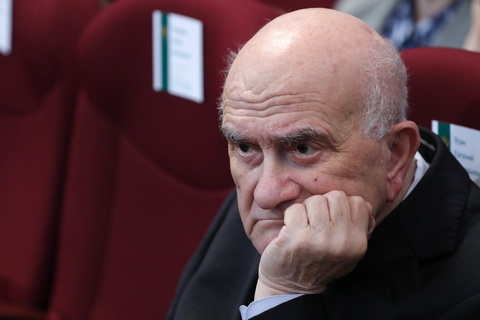
Digest was prepared by George Pogozhaev under the article Dan. E. Yasin, President of the Liberal Mission Foundation (Property Rights, Privatization and Nationalization in Russia. New Literary Review, 2009 )
“We can say that the possibilities proposed by most citizens - members of labor collectives and the rest of the population were ghostly. To achieve their implementation, we needed tremendous efforts, including a large number of activists, for example, to implement the ideas of working self -government on the basis of the second model of benefits. There was no one to make such efforts, there were no such activists. The sober assessment of these populist promises is this: from the very beginning they were doomed to failure.
For the economy, for its future development, this was better. For the future legitimization of property rights of new owners, it was worse . ” “Vouchers were special“ money ”, which created artificial demand for state property. They ceased to exist on July 1, 1994. And the PIFs had to go to the Pyths of real money and promotions with growing capitalization. However, the money did not flow into the lined shells, and the portfolios of shares bought for vouchers were really worth almost nothing.
Something had to be done. But they did not come up with, could not.
The result was like that. The state, in accordance with the plan, got rid of a significant part of its property, but most of those who hoped to get something from this operation were practically nothing. The slight minority won.
There is a problem of legitimation , although the task was at least half solved - the Russian economy for two -thirds ceased to be state -owned. ”
“Lenders received the right to organize auctions and won the fake organizations that represented them. Thus, a package of 45% of Yukos shares won Laguna CJSC from Taldom for $ 159 million, about the same ($ 150 million) Menatep Bank gave the Russian government on credit, which did not think of buying a pledge. Norilsk Nickel went to $ 170.1 million. ONEXIM BANK, which gave the budget for $ 170 million. Other solid applicants for auctions were not allowed.
The government clearly did not set itself the task of helping out the maximum amount, although he needed the money very much - it counted on the political and financial support of those who, by his will, became oligarchs once. These expectations did not live up to it. ” “Without a doubt, privatization has not led to an increase in the efficiency of the economy.”
"M. Goldman refers to the authority of Alan Grinspin: “Much of what was accepted as a given in our free market and attributed to human nature, it turned out not at all by nature, but by culture . The dismantling of centralized planning functions in the economy does not automatically establish, as some believed, a free-market entrepreneurial system. The market economy is supported by a huge mass of capitalist culture and infrastructure, which evolved during the first generations: laws, conventions, behavior and a wide range of business professional and practices that did not have important functions in the economy with centralized planning.
Goldman adds to this: it is critical to understand what happened in Russia. The performances of a small group of Sovietists in Western countries were not heard, although only they understood what significance the culture would have. I must say that I am ready to join the last thesis and, in fact, since 2002 I have been writing all the time and talking about the importance of institutions, culture and values. ”
"Folk capitalism" did not take place. For the future efficiency of the economy, this was not at all bad. But this did not add popularity to the reformers, especially after broadcasting declarations of folk privatization. ” “We had more chaos than in Poland or the Czech Republic. But this is not from stupidity, but from cultural backwardness , from a longer stay in the communist trap. ” “This is the result of freedom provided to people not ready for it.”
“It is clear, however, no development is possible if institutions and culture do not change. Privatization, at first formal, gives the start of the difficult process of cultivating the Institute of Private Property, its legitimization : step by step, the authority of powers, as other necessary institutions of a market economy are approved: an independent court, the information of laws, the termination of the usual bureaucratic arbitrariness, the freedom of the media, the development of economic and political competition. (As a result of this) Private property from the formal norm turns into a full, really working institution. ”
“According to surveys in 28 countries with transition economies, 81% of respondents evaluate privatization in their countries negatively, and this is 15-18 years later. It is necessary to survive this misfortune, taking the majority of the population a return to capitalism in an increase in welfare and the expansion of the possibility for self -realization.
Or , trying to increase the degree of legitimation , to revive the results of privatization with certain methods and thereby stimulate all new claims not only to the old, but also to new redistributions, undermining the tendency to investment and increasing transaction costs, at least in the form of lost benefits.
We can say that at this stage the bureaucrat prevailed the top. Russian business has lost and is forced to occupy a subordinate, vulnerable position. He meets the bureaucracy with assurances in devotion and a decrease in business activity. Instead of its former aggressiveness, the tactics of "not to lean out" come. The relationship between the authorities and business establishes the “strategic uncertainty” regime, destructive for modernization, for large -scale projects, for innovation.
For the time being, it is possible to put up with him, finding an opportunity to enjoy unusual stability, favorable for Russia, the conjuncture of world markets, the opportunity to maintain an increase in population incomes twice as high in labor productivity. But sooner or later this relaxed state will end.
We observe a multifaceted, contradictory process of becoming a modern economy in Russia. I am sure that at the next stage we will see a new wave of privatization, which is now clearly focused on protecting property rights by all institutions of a market economy and a democratic state. ”