
Translated material
"I'm not finding the texts, but they are me"
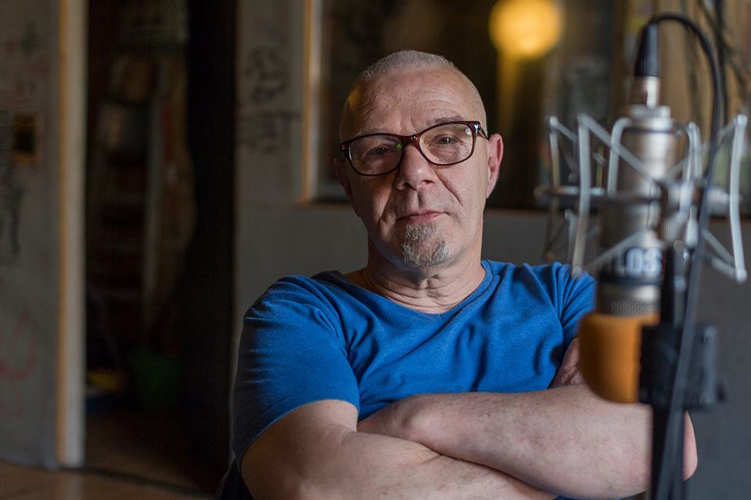
On April 3, Tibor Samzo, one of the most interesting modern Hungarian composers, will perform in the cultural center “House”, whose work is admired by the classic of American minimalism Steve Reich and film director Terrens Malik. Tibor Samzo voices the texts of Ludwig Wittgenstein and Franz Kafka, writes music for films and home videos, makes films and engages in sound installations. 20 years ago, he was one of the founders of Group 180-the first in Eastern Europe of the association of Minimalist musicians. After the collapse of the group, Tibor Samzo works in a style nicknamed “narrative minimalism,” the composer reads literary works to the music, and reading accompanies the display of his documentaries. Shandor Kozlov talked with Tibor Samzo about the synthesis of sound and tongue and about the verbalness of music-from minimalists to hip-hop.
-You have received an academic education, you are often called one of the leaders of Eastern European minimalism, and at the same time you work with folklore, free jazz and rock musicians. What are your musical roots?
- In my childhood in Hungarian schools, musical education was based on the Kodai method based on the pedagogy of relational solmonization and choral solfeggio. In the 60s, a bit music began to influence my generation, thanks to which I began to be interested in blues, and then jazz. My idols of youth were Don Cherry, Charles Mingus and John Coltrain. I founded my first team at the age of 17, and it was a free jazz trio without percussion instruments. But, of course, the main influence on me was the American minimalists Steve Reich and John Cage, whose compositions we performed with the Group 180. Cage's work does not wear a musical message at all, his music is a spiritual state. Oddly enough, in music the main thing for me is not harmony, but the sound itself.
-April performances in Moscow and St. Petersburg will become your fourth tour in Russia. Tell us about your previous experience.
- In 1998, I performed in London Royal Festival Hall , where I met with two famous Russian musical critics and concert organizers - Nikolai Dmitriev and Dmitry Moskov. In 1999, Dmitriev became the artistic director of the House cultural center and in the same year invited me with the project “ Tractatus ” , based on the treatises of Ludwig Wittgenstein. My next concert was a performance at the Gipsydrom festival, where I performed the work of Skullbase Fracture in the company of the Hungarian gypsy orchestra and the Moscow Opus Posth ensemble. It was a very exciting border project at the junction of academic music and light, but at the same time very distinctive “soundtrack” of Budapest caffeen. This concert also made this concert and the fact that Nikolai Dmitriev himself read the Russian -language text of the musical play, as far as I know, who had never previously played on the stage of the “House” as a performer. On that visit, I took with me the Super 8 film camera and hung up many films. On the map of the Moscow metro, I liked the name “Electrozavodskaya” for the Hungarian eye, so their lion's share was made there. Moscow, like New York, I like my giant buildings and large spaces. My third visit in 2004 was overshadowed by mourning on the occasion of the death of my friend Nikolai Dmitriev. At the concert of his memory, I performed several solo works, accompanied by film frames shot in Moscow.
- Your solo albums were produced on LEO label Records , founded by the Soviet emigrant Leo Feigin. The conquest of the world fame of Ganelin-Trio, as you know, was closely connected with this label. How did you meet and why did you start to be published there?
- In 1986, on the way to the New Music America festival, I stopped in London to give an interview for the Hungarian program at the BBC radio station. There, the Hungarian colleague introduced me to Leo, who at that time for the twelfth year in a row was the leader of the Russian -speaking ether. In London , I gave him an unnoticed copy of the Snapshot solo project from The Island " . With the publication of this record in 1987, our cooperation began, which lasted 16 years. He stimulated me to release new records, and I liked to work with him.
In video chronicles, we can study our past better than from historical books.
- In your solo works, the literary text is a component of the musical canvas, and the voices are its layers. In addition, you accompany your works with a unique video sector, archival records of Hungarian Gentlees of the pre -war period and your own films shot on an eight -millimeter camera. Why are text and cinema is so important for you?
- I began to integrate the texts as part of my ensemble “Group 180”, and even then we strove for musical performances. In my view, the text is, first of all, a drama tool where the word as a verbal element becomes a musical phrase. In the work “ Tractatus ”, various voices and languages are superimposed on each other, like musical layers. The human voice and intonations bring additional drama, where the natural narrator itself is revealed. Music, voice intonations and text content can sometimes vary in mood, but together they create one whole. Along with the text, a cinematic picture also plays an important role, which creates an additional layer of perception. I have been working with a magnificent Hungarian director Peter Forgach for a long time. He collects completely unique archival family records of the pre -war period, by which we can study our past better than any history books. Along with this, I actively shoot films on an eight -millimeter film. My first picture was the film " Cuba " , shot on the island of Freedom in 1989. As a result, we get an organic synthesis of cinema, text and human voice, where music plays, so to speak, a central, homogenizing role.
-And how do you feel about hip-hop, so popular now, based on rhythmic recitative?
-In the mid-80s, I first heard the Grandmaster Flash and the Furious Five plate, and I completely liked this music, but still hip-hop appeals to other schemes. In my vision, the text is in a counterpoint with music, but at the same time interface with it. For example, I really liked the experiments with the text of Brian Ino, David Burn or John Hassel.
-You use the texts of authors such as Prague writer Franz Kafka, Austrian philosopher and logician Ludwig Wittgenstein or Hungarian philologist-hemokoist Shantor Keroshi Choma. All of them belong to the same cultural heritage of the Austrian Empire and the Austro-Hungarian monarchy. How conscious is this choice - why exactly these authors?
- They choose me. All of them are united by curiosity and eternal search. They, as scientists, notice big things in the little things, and through their prism they are discovered for us by entire universes. They were like seats. Shandor Kereshi Choma grew up in an impoverished noble family in Transylvania, and later became a great traveler, the founder of scientific tibetology and the author of the first Tibetan-English dictionary and the grammar of the Tibetan language. The works of Kafka, Keresh, Wittgenstein, Ottlik or Hamvash are a material for the search for my self -identification.
- Some of your works are associated with a Jewish theme. In the film " Danube Exodus ” , to which you wrote musical accompaniment, we are talking about the emigration of Jews from Tisov Slovakia, in the work “ Free Fall Oratorio ” You are exploring the verbal history of Budapest Jews and so on.
- Here everything is very similar to how I work with texts. I do not find them, but they are me. Under socialism, we lived in a strange vacuum, where we did not have a clear self -determination, who we really are. My Jewish roots soon made themselves felt, and I became a lot to be interested in the fate of the Jews. Of the private archival video materials that my colleague Peter Forgach studies, I learned much more about the fate of Jewry than from history books. In Moscow and in St. Petersburg, among other things, we will perform nine plays in different languages dedicated to the French Kafka from my new album “ K - Engraving ” . By the way, on the album the Russian text is read by Guy Harutyunyan, a vocalist of the group “Children of Picasso ”.
- You will come to Moscow together with the spiritual man Laszlo Göz - a former ally in Group 180. Tell us about him.
- Laszlo is a completely unique musician. He has his own vision, and he created his musical universe around him. Initially, he is a thrombonist, and, as you noticed, we worked together in Group 180. At concerts, he often uses a bass pipe or tool with two bunks, as well as various types of shells - he will bring part of his collection to Russia. In Europe, he is also known as the manager of the record-label and jazz concert venue Budapest Music Center ( BMC ) . His current group is called Moment's Notice and refers us to the improvisational period of John Coltrain. It also includes an electrician gender Kurtag Jr. and Tsimbalist Miklosh Lukach. I really hope that their trio will someday also perform in Russia.
“The sound of Wittgenstein and Kafka. The narrative minimalism of Tibor Samzo and Laszlo Göza "
April 3, Tuesday, 20:00
Cultural Center "House"
Address: Moscow, Bolshoi Ovchinnikovsky Lane, 24, Building 4 (metro "Novokuznetskaya")
The entrance is free, but online registration is needed
The organizers of the concert-the Hungarian cultural center and the cultural and educational project "Eshkolot"