
Translated material
Ozcho rejected the idea of Russia about a joint investigation of Skripal's poisoning with Britain
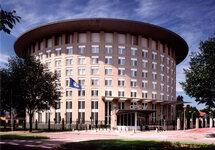
The organization to prohibit chemical weapons rejected the idea of a joint British-Russian investigation put forward by Moscow on the fact of poisoning of the former GRU Colonel Sergei Skripal. It is reported by RBC.
According to the OPCW Rules, to launch such an investigation, the Moscow initiative was supposed to receive the votes of two -thirds of the executive committee, that is, at least 28 votes out of 41. Meanwhile, only five countries spoke in favor of Russia's proposal in addition to it: Azerbaijan, Algeria, Iran, China and Sudan. 15 states opposed, 17 were abstained. Representatives of three more countries - members of the executive committee at a meeting in the Hague were not present.
At the same time, the Russian Embassy in the Netherlands stated on its Twitter that a number of members of the Council supported the initiative of Moscow, namely Armenia, Belarus, Venezuela, Kazakhstan, Kyrgyzstan, Kuba, Nicaragua, Pakistan, Syria, Tajikistan and Uzbekistan.
At a press conference, at the end of the meeting, the Permanent Representative of Russia in the OPCO Alexander Shulgin said: "In response to this (Moscow proposal. - Ed.) We heard muddy streams of lies involved in steep Russophobia."
“The British opposed, the Americans obediently voted the members of these blocks, and some of their allies in Asia, who were constrained by the NATO and EEC discipline,” the official added.
Even before the end of the meeting, RIA Novosti reported that the Russian Permanent Representative to the UN Vasily Nevornzya demanded that the Council of Council of United Nations be convened on Thursday in connection with the letter of the Prime Minister of Britain Teresa May regarding the poisoning of Skripal.
The closed meeting of the OPCW was convened in the Hague on the initiative of Shulgin. Britain categorically rejected the idea of a joint investigation . As explained by the acting The country's Permanent Representative John Foggo, London suspects that the Russian authorities are to attempt on Skripal. Another plausible version of the crime, the official emphasized, has not been expressed for today.
Foggo recalled that exactly a year ago, on April 4, 2017, the aircraft of the Syrian dictator Bashar al-Assad made a chemical attack on the city of Khan Sheikhun , controlled by the rebels. Russia, which is an ally of Assad’s regime, covers the dictator in every possible way, continued the official. In particular, she blocked the extension of the mandate of the joint mission of OPCO and the UN in Syria.
“It seems obvious that Russia never recognizes the legitimacy of any investigation on the facts of the use of chemical weapons if it comes to conclusions that do not satisfy it,” Foggo emphasized. “Otherwise why was Russia to block the extension of the joint mission in Syria?”
“Russia's statements,” the British Permanent Representative continued, “demonstrate complete neglect of the conditions of the Convention on the prohibition of chemical weapons and, even worse, an insulting distrust of the independence and competence of the OPCW technical secretariat.”
In the conclusion of Foggo, Russia called on to comply with the requirements of the Convention on the prohibition of chemical weapons and to reveal the composition of the "beginner" - "such a terrible neuro -paralytic poison that the world has not yet known."
A statement on behalf of the European Union at the meeting was made by Kozhmir Kostov - the Bulgarian Permanent Representative, which now presides in the EU. He confirmed that the European Union is solidarized with the demands of Britain to Russia, in particular with the demand to submit all information about the programs related to the development of the "Novice".
On the eve of the British laboratory of defense research and technology - the structure of the Ministry of Defense of the country - announced as a result of the analysis of the "Novice" samples that this poison could be produced only with the participation of the state , since the technology of its manufacture is extremely complicated. At the same time, chemists found it difficult to confirm that the poison was made in Russia. To do this, they explained, “other information” is needed, in particular intelligence data.
After that, Vladimir Putin said that poisons like a "beginner" can be produced in about 20 countries.