
Translated material
How the NPO data help to solve social problems: the results of the Hakaton of the greenhouse in St. Petersburg
Non -profit organizations and public projects have unique databases that can be used to solve social problems. How to work efficiently with them? This question was answered by the participants of the Hakaton of the greenhouse of social technologies Data.monitor , which was held in St. Petersburg from March 30 to April 1, 2018. The winner of Khakaton was the project of activist Lev Krylenkov : the team developed a geodata processing service, which will help reduce the number of accidents.
For two days, representatives of non -profit organizations, developers, designers, sociologists, journalists and analysts studied monitoring data, collected statistics to solve urgent social problems.
For example, to achieve from the authorities to clean the streets from snow, to show the real level of prostitution and drugsitations and help the victims, reduce the number of accidents, show the scale of the problem of women-confused with children, and improve people's awareness of HIV. Participants created interactive maps and multimedia projects.

Specialists from the Infometer Svyatoslav Zborovsky , Vyacheslav Romanov and Sergey Babushkin helped authors of projects to draw up requests to state authorities. The mentors of the projects were the journalist Andrei Rollekogo , the director of analytics in the Infometer Vyacheslav Romanov , the developers of NEXTGIS, Artem Svetlov and Stanislav Petryakov, the editor of the 29 ″ Nikolai Ovchinnikov , the deputy editor of the greenhouse Natalya Baranova , the chief editor of Novaya Gazeta, Serafim Romanov and the engineer Sap Labs Egor Gumin .
The jury of Hakaton included: the head of the social technology greenhouse Alexei Sidorenko , journalist Angelina Davydova , chairman of the board of the Center for the Development of Non-Profit Organizations Anna Orlova , a specialist in the field of open data , Vitaliy Vlasov and service designer Andrei Misyurev .
Monitoring of an accident

The winner of Hakaton was the team of activist Lev Krylenkov. Participants have created a geodata processing service. “In 2017, 6775 accidents occurred in St. Petersburg. About a third of them occurred on the roads with deficiencies and impaired operation of the road network. As a result, more than 2 thousand people were injured, ”Lev Krylenkov described the problem.
Project goal: reduce the number of accidents. For Hakaton, it was possible to create an interactive card based on the analysis of the most emergency and dangerous areas in St. Petersburg. To do this, the participants downloaded the traffic police for three years, unified it, created the prototype of the service for dynamic visualization on the accident map, depending on various parameters and developed a module for working with heat cards. Also, with the help of the map, it was possible to analyze in which areas there are not enough road signs. All information will help save people's lives by installing signs.

The plans of the project’s authors regularly add data, track emergency sections using volunteers, start working with the traffic police and the authorities to eliminate the causes, develop heat cards to identify hazardous sections of roads and visualize data in all cities of Russia, and achieve predicting changes in the accident accidentality when changing the organization’s organization.
The team will receive funds for the development of a design of 60 thousand rubles. The jury noted the social significance and mac assertability of the project. “It is necessary to spend money on attracting allies: communities of motorists, parents and representatives of educational institutions, those who want safe movement, as well as municipal authorities,” said the chairman of the jury Anna Orlova.
Team members: activist Lev Krylenkov , developers Dmitry Efimov and Anton Bondarenko. Elena Nikitin A and Sergey Ustinov helped with pumping data from the traffic police website.
View the presentation of the project on the link. Link to a project repository with data on GitHub .
"Refuse breastfeeding"
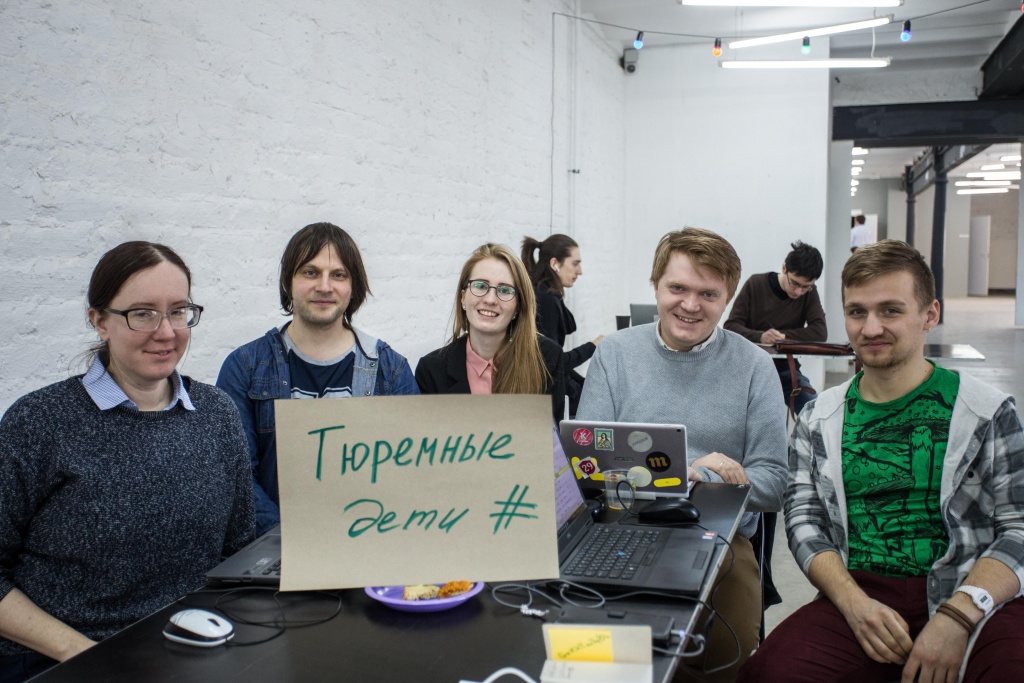
The team of the project “Prison Children” created a multimedia project about women who bear, give birth and raise children in Russian pre -trial detention centers and colonies. The participants decided to show the scale of the problem using an interactive map.
The idea of the project belongs to the human rights project “Woman. Tyurm. Society ” , the authors conduct an investigation about children of prisoners in Russian prisons. “The project is dedicated to those who are not to blame for anything, but are forced to serve his sentence. A child who is born in a pre -trial detention center or colony is with mom to three years old.
In Russian prisons, 538 women in labor and women with young children are now sitting. This is less than 1.5% of the total number of women-conquered. The conditions in which they are contained do not allow us to normally care for either mothers or kids. We believe that if women have not committed particularly serious crimes, they should be free, ”one of the authors of the project, journalist Natalya Donskova, explains the relevance of the problem.
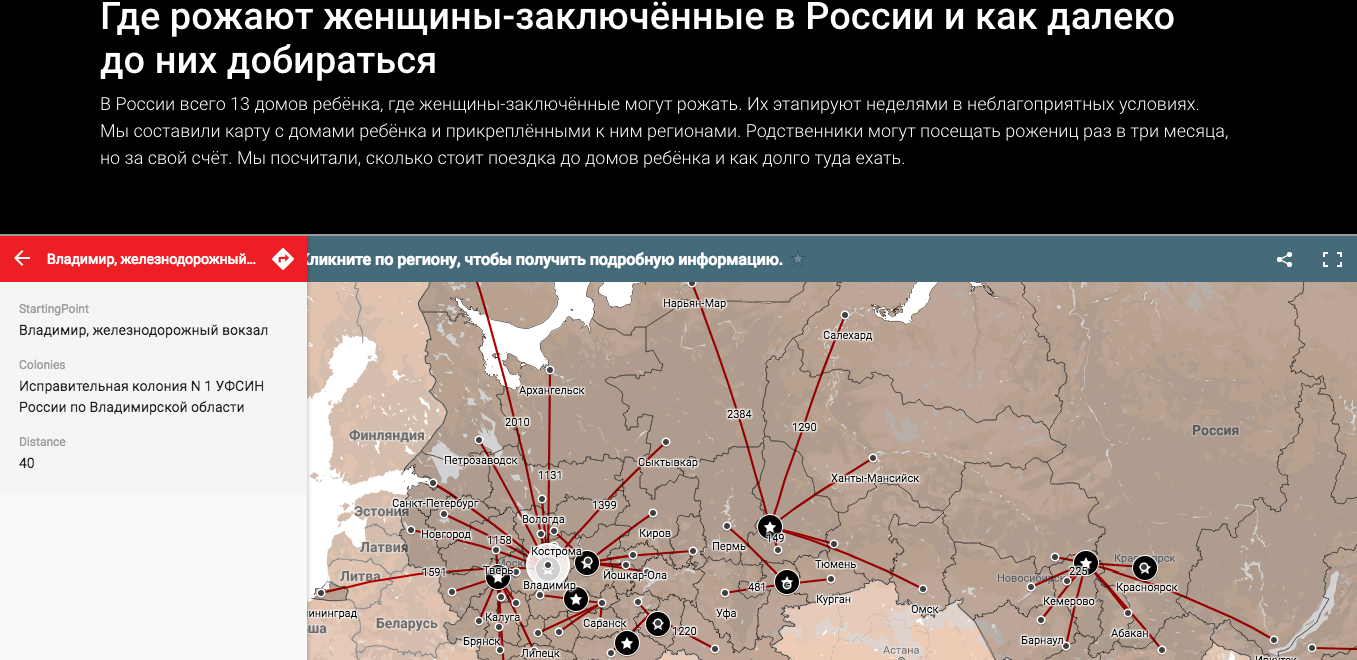
The multimedia project includes women stories, an interactive data based on data and infographics. The map shows 13 Russian houses of the child, where women-conquered women can give birth, information about how to get to them and how much a trip for relatives will cost.
Information shows the economic failure of the practice of the conclusion of mothers convicted of inconsistent sentences. The authors of the project include modifying a multimedia longing, launch a public campaign and a petition, thus attract the attention of the media and the public to the problem.
Team members: journalist Natalya Donskova , civil activist Alexei Sergeev and human rights activist Leonid Agafonov . The team was helped by the editor of the “ team 29 ” Nikolai Ovchinnikov , the deputy editor of the greenhouse Natalya Baranova , the journalist Andrey Rodnye and the director of analytics in the project center “Infomet” Vyacheslav Romanov.
View the website of the project created on Hakaton.
How the streets are cleaned in winter from snow
The Khakaton team “Snow Control” found out how the streets of St. Petersburg were cleaned in winter from the snow. Participants analyzed 32 million location points of all cleaning equipment in a month, studied the structure of data and the attendance of the streets with technology.
Participants developed a map on which you can see statistics, see if all the streets are cleaned mechanically, see where they rarely remove, where often and at what time. The authors of the project include compare citizens' messages about the problems with cleaning with the tracks of equipment and check in detail the compliance with the cleaning regulations.
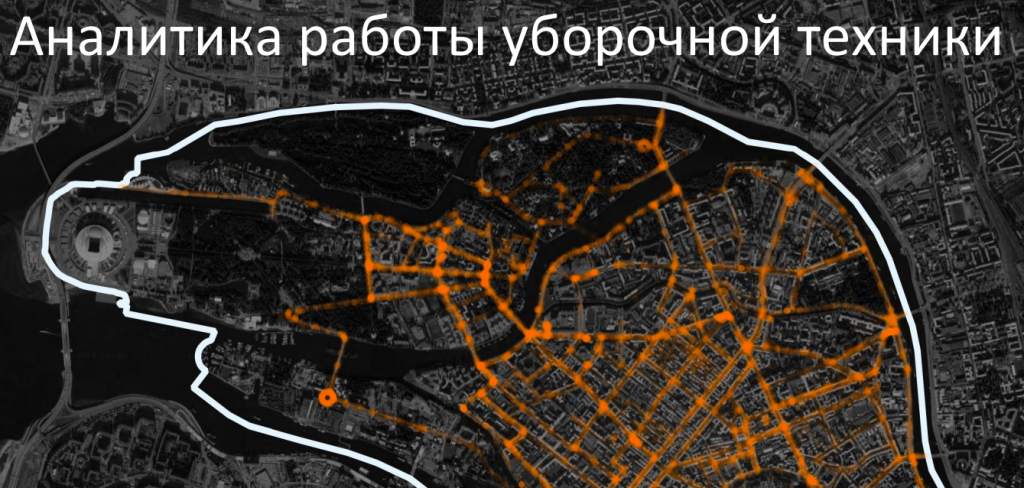
Team members: Coordinator of the Beautiful Petersburg movement Steve Caddins , journalist Yana Grigoryeva , designer Kristina Barysheva, developer Konstantin Chukharev and journalist Daria Bazina .
View the presentation of the project on the link. Link to a project repository with data on GitHub .
Analysis of data from social networks for prostitution
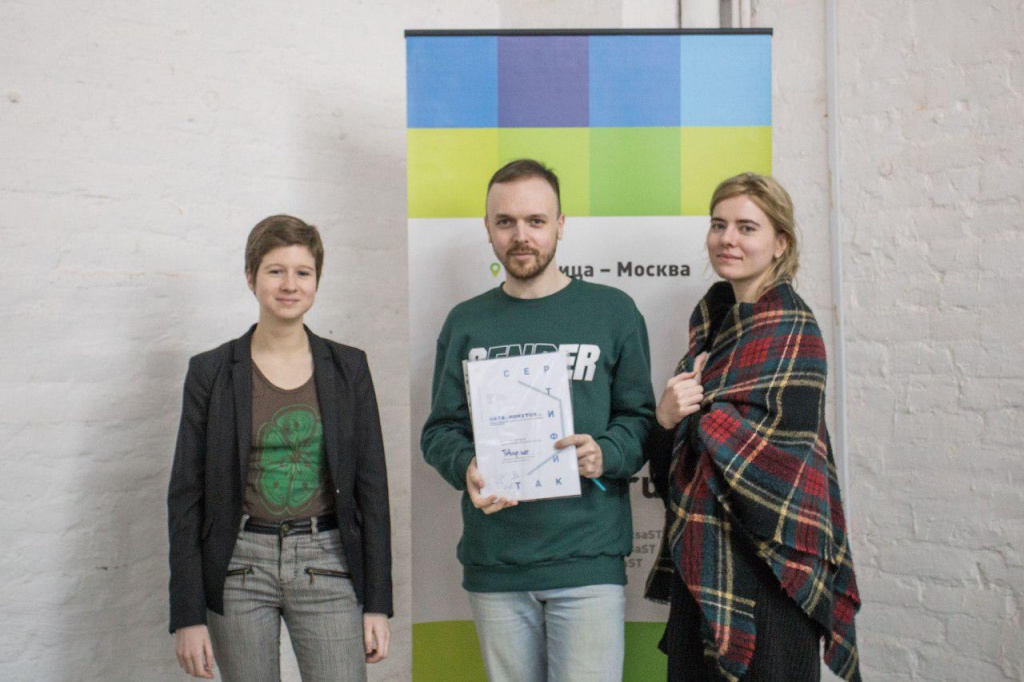
The team of the Product.net project collected and analyzed rare data on the shadow sector of the economy, namely posts on the VKontakte social network with a proposal of work in the field of sexual services.
The idea of the project belongs to the crisis center for women and the project "Ribers Eve" . Experts are confident that the 2018 World Cup in St. Petersburg will grow an increase in demand and demand of sexual services, which will lead to an increase in the number of rape and involving women in sex industry.
One of the problems voiced is the lack of open data (statistics) about the volume of the sex services market in Russia. That is why the participants decided to collect data that is not in the public domain.
Participants analyzed more than 10 thousand entries in VKontakte groups and created a landing from an online announcement reporter. The authors of the project will monitor an increase in such announcements, thus informing about the current situation involving prostitution in Russia.

Moreover, the authors of the project will launch a media campaign, the purpose of which is to help women involved in the industry and prevent new cases of recruiting. It is also planned to create a service for checking ads, reporting reliable data to the target audience and the public, and expanding the capabilities of the service for analysis of data on the cities of Russia, months.
Team members: Public Relations Specialist in the “Crisis Center for Women” Boris Konakov , programmer Margo Lesova , sociologist Anna Kamneva , psychologists Elena Bolyubakh and Anna Reshetnikova . Crisis center for women and the organization "Riba Eva".
View the presentation of the project on the link and the website of the project “Product.net” .
Link to a project repository with data on GitHub.
Analysis of consultations of the Association "E.V.A"
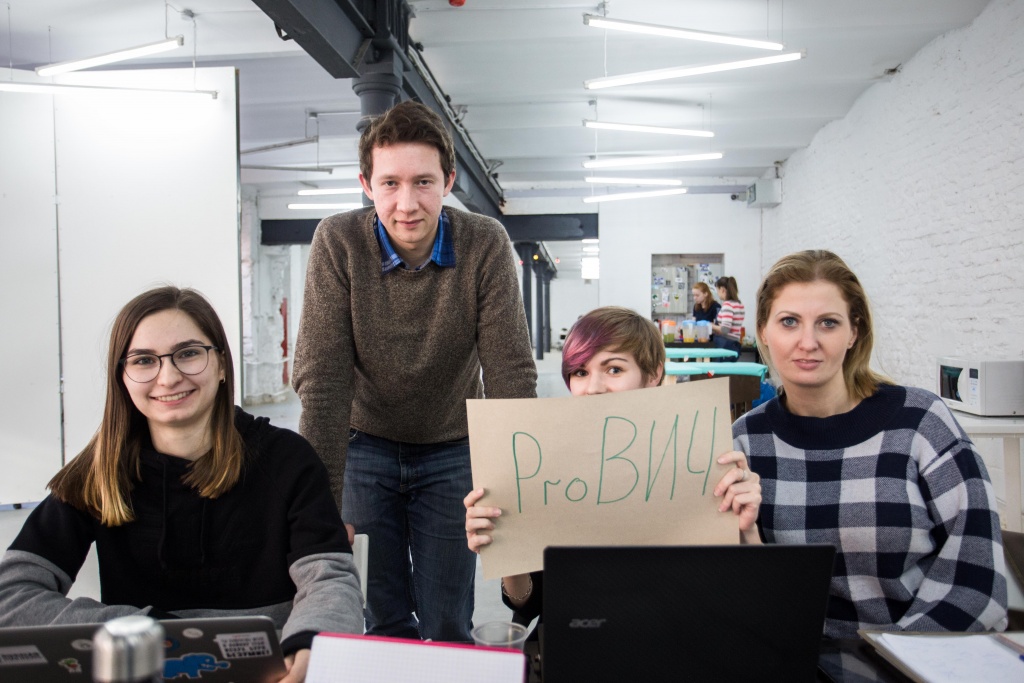
The Khakaton team "Provich" studied the content of the consultations of the Association "E.V.A." which helps women with HIV, hepatitis and tuberculosis. For Hakaton, it was possible to analyze more than 130 records and identify the most popular issues of those who addressed. It turned out that people most often want to find out whether they have HIV or not.
That is why the team members created a questionnaire called "Suddenly HIV?" . It contains several questions that will help evaluate the risks and get brief recommendations about what to do next. Also created a card of AIDS centers where you can go through testing for free.
Team members: PR specialist Anna Ivanova , equal consultant Elena Ivanova , analyst and sociologist Alina Cherepanova and developer Andrey Novov .
See the presentation of the project "Suddenly HIV?" By link.
You can fill out the questionnaire at the link .
Map of the drugs of St. Petersburg
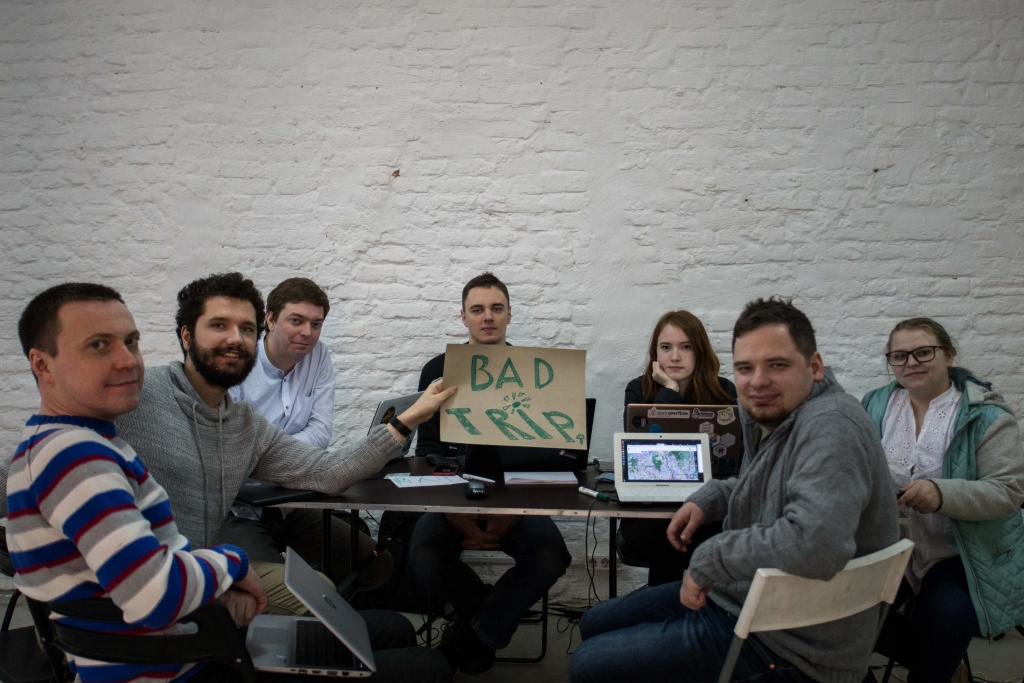
Badtrip team members tried to solve the problem of lack of information about drugswood in St. Petersburg. When compiling a card, data from the city anti -drug commission and hydra were used.
The map was created on the Nextgis web service and consists of three layers. The first layer shows the situation with drug crime in St. Petersburg in 2017. The second layer shows how many drug addicts were officially registered in the district in 2017. The third layer is available types of help for people who use drugs: mutual assistance groups “anonymous drug addicts”, outpatient departments of the city narcological hospital, and the mobile point of the “humanitarian action” fund.
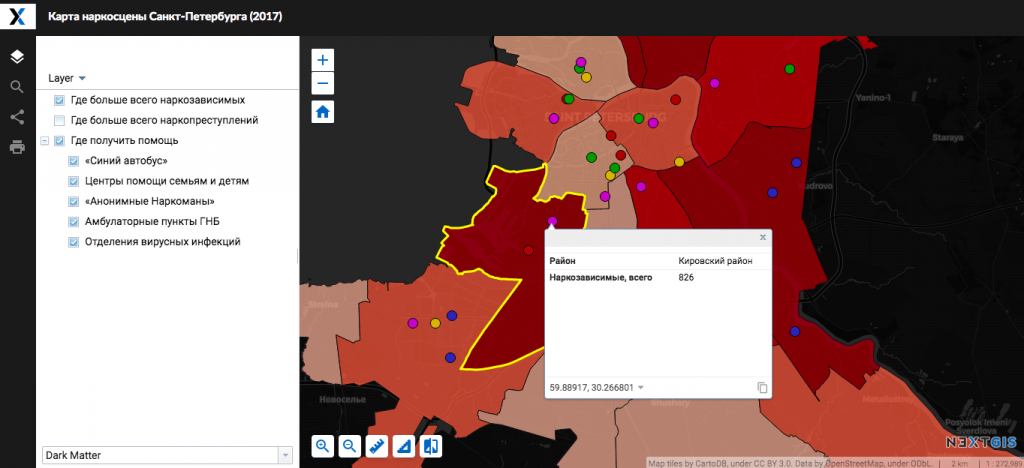
On the basis of these, the participants managed to calculate the area of drug addiction index of the district: a set of data on the number of drugs, the number of drug addicts and the prevalence of drugs in the area. Thus, it was possible to identify in which areas the situation is a special problem.
The team members: the development specialist of the Humanitarian Effect charity fund Alexei Lakhov , sociologist Alexander Makeev , programmers at NEXTGIS Artem Svetlov and Stanislav Petryakov and the web designer Kristina Barysheva . The mentor of the project was the chief editor of Novaya Gazeta in St. Petersburg Seraphim Romanov .
View the presentation of the project on the link . The site of the project "Personnel of St. Petersburg" .
Link to a project repository with data on GitHub.
View the record from the broadcast of the hackathon on the YouTube channel of the greenhouse .
The organizer of Hakaton is a greenhouse of social technology. We thank the Humanitarian Action Fund and Alexei Lakhov personally for help in Hakaton.