
Translated material
Old diesel cars from Germany began to "discard" to the countries of Eastern Europe
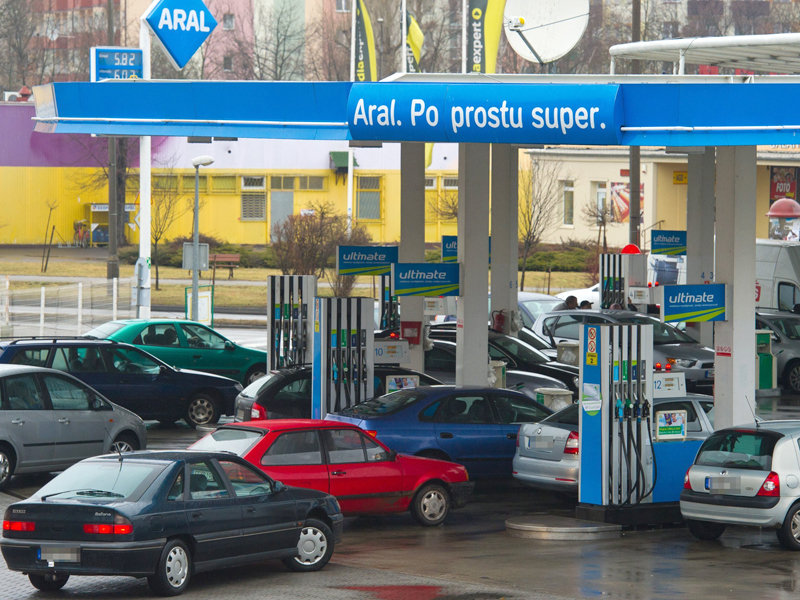
Done cars with diesel engines in Germany over the past month fell sharply in price, and German car owners began to get rid of them rapidly.
In Germany, about 15 million cars with diesel engines are registered, of which 11 million does not meet the modern Euro-6 standard. In connection with the February decision of the administrative court in Leipzig, which allowed the German cities to independently take a ban on the movement of cars with diesel engines, the Diesel Selo Park will be reduced.
So far, cars can be prohibited in Germany that fulfill only Euro-4 and lower standards. But from September 2019, cars that meet the Euro-5 standard may be subject to the ban. Therefore, these machines, which were prohibited from polluting the ecology in Germany, are going to smoke air to Eastern European countries.
According to DW , the export of used diesel engines from Germany in 2017 grew from 197 to 233 thousand, especially in Romania, Poland, the Czech Republic and other countries of Eastern Europe. Only for Ukraine for 2017, 16 thousand used diesel engines were exported from Germany - twice as much as a year earlier.
In addition, in the coming years, other countries of Western Europe also plan to introduce more stringent norms and restrictions for cars with a diesel engine, so the tendency to “discard” the old diesel engines abroad will only intensify.
Global opposition in Germany by the use of diesel engines on cars was caused by Dieselgate - the disclosure of the Volkswagen Group in 2015, which installed special software for emission data into 11 million cars.
The popularity of diesel machines in Europe began to decline sharply - sales of new diesel cars fell, and parking of car dealerships selling used cars were clogged with hundreds of thousands of diesel cars. These machines began to buy up resellers for export to countries where diesel engines are still tolerant.
Sweden may soon join in Germany, where the "diesel" will cease to be allowed into the central part of large cities. Paris, Madrid, Mexico City and Athens also stated that they plan to prohibit the entry of diesel cars into the central part of the cities by 2025. In the capital of Denmark, a ban on registering new diesel cars will enter in 2019.
Therefore, the share of diesel cars in the total production of cars in Europe is reduced and by 2025 it can be only 27% of the total number of cars (in 2015 it was 52%).
In Russia, the share of diesel units is also reduced. But this is not due to concern for the ecology, but with the action for nine years of duties on used cars. Because of this, it became unprofitable to import such cars into the country. The annual import of used cars is only about 2% in the secondary market of the Russian Federation. In addition, not Germany, but Japan remains the main supplier of used cars to Russia.
As for the share of new cars with a diesel engine, it is reduced - now there are only about 7%of them.
The Minister of Environmental Protection of Germany: the ban on "diesel engines" will not help
Meanwhile, the Minister of Environmental Protection of Germany, Svulce, announced that a possible ban on the use of diesel cars would not help solve the problem with harmful emissions.
"Improving fees for the use of diesel engines or a ban on their use will not hit the one you need," she said. According to her, none of the radical measures will help improve the situation with harmful emissions. First of all, it is necessary to call for the answer automakers, not ordinary citizens, added Schulz.
The minister proposed creating more incentives for buying electric vehicles or for the exchange of old vehicles for new and more environmentally friendly. Already, the state, together with some concerns, subsidies a number of similar programs. "We do not want to ban anything. We do not want to force people to walk or ride a bicycle, but we want to create a reasonable alternative," Schulce said.