Date
Author
Дарья Фурманская

Preserved copy
Translated material
Architect Alexander Himemets

Among the Oryol architects of the XIX - early twentieth century there are many mysterious figures. Their signatures are on numerous projects of buildings, and nothing is unknown about them. But the Oryol architect of the Art Nouveau Alexander Himez is the opposite situation - we know his fate today in sufficient detail, about the buildings created by him, continuous doubts. Many of his projects have not been preserved, and the authorship of the Homez is known only according to eyewitnesses.
For a long time, the life of one of the last outstanding architects of the pre -revolutionary eagle was a secret for everyone. In the 1960s, the architect and local historian S.I. Fedorov could not find a single project A.A. in the archives Himets. To clarify the situation, he was helped by acquaintance with the nephew of the forgotten architect - engineer S.L. General. According to him, the first and most detailed biography of the architect was compiled.
Alexander Alexandrovich Khimets was born in 1870. His father, Alexander Vasilievich, was Lithuanian by origin and taught in the Oryol Cadet Corps. Bakhtina. His sons studied there. The eldest, Vasily Alexandrovich, went on the military line and rose to Major General. The youngest, Alexander Alexandrovich, having graduated from his studies, continued his education at an art school in St. Petersburg, and then at the Academy of Arts, where he switched to the architectural department. However, he did not leave military service either. He served as voluntary in the Mozhaisk regiment, which was thrilled in Orel. He participated in the Russo-Japanese War. And in 1915 he commanded a sapper company and was seriously wounded on one of the fronts of the Koven fortress.
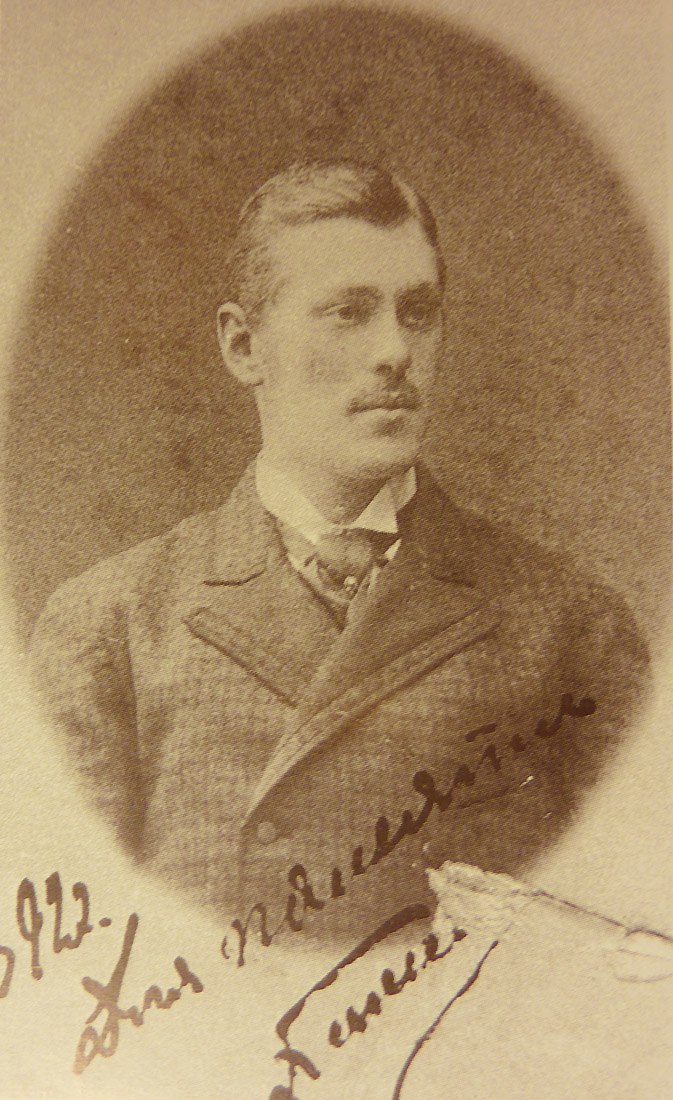
All construction activities of Alexander Himets were associated with Orl and the Oryol province. It is rightfully considered one of the most extraordinary and outstanding Oryol architects of the Art Nouveau. Heimets is an alleged author, if not a majority, then a significant and best part of the Oryol buildings in the Art Nouveau style. In the composed biography of the architect, his nephew General reports that according to the projects of A. A. Himemets, the Berlin Hotel (in its place) was built to this day).
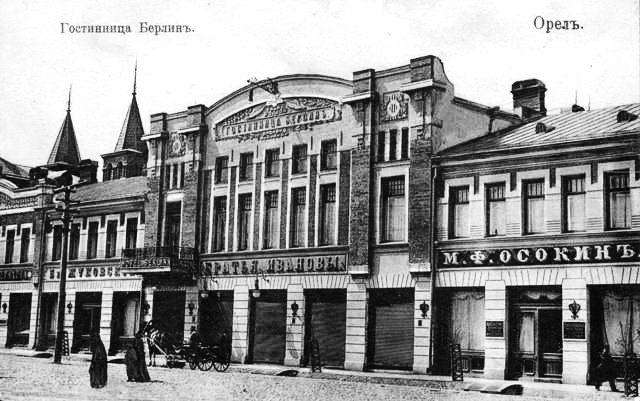
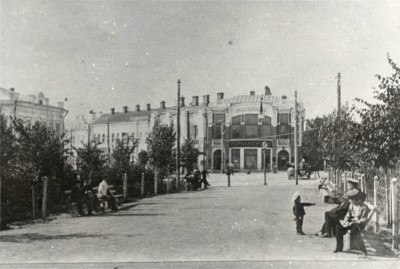
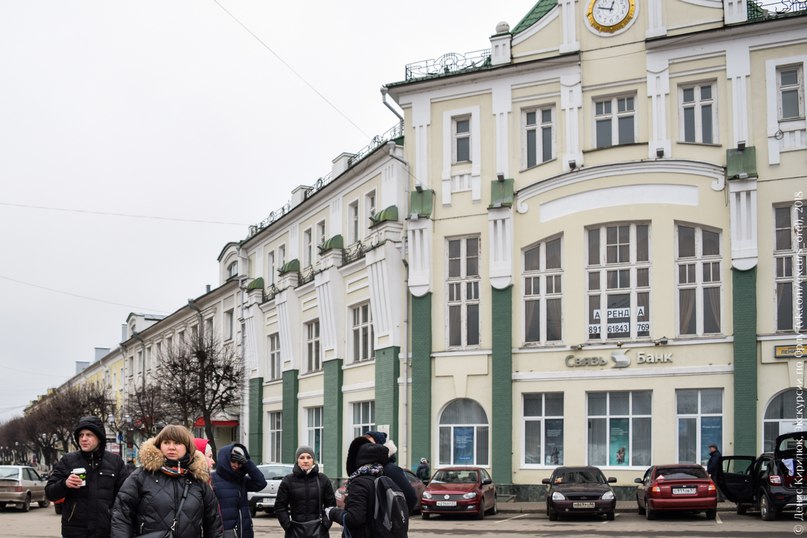
At the beginning of the twentieth century, it was the most prestigious hotel of the city, in its appearance, the stylization of ornamental and architectural forms, asymmetry of the facade, the abundance of stucco and other decor characteristic of modern and architectural forms appeared in its appearance. He attributes to Himemets the development of the project of the Virgins of the Epiphany disassembled in the 1930s in the so-called “Russian style”, as well as the Northern Bank building, on the corner of modern streets of Lenin and Gorky. The facade and decor was very reminiscent of the Berlin hotel, although stucco moldings were noticeably smaller. The main facade in the form of a huge arch went to Nikolaev Boulevard (now in its place Lenin Square), and the side walls at different angles were deployed to two streets that were diverging from him.
This building came to us in an altered form. In the 2000s, the third floor and a four-sided roof that greatly distorted its original appearance were not characteristic of modernity, which were not characteristic of modernity, were added to it.
Another surviving Himets building in Orel is the synagogue building on Sovetskaya Street. This is the only construction of the eagle in the neo -Mauritan style.
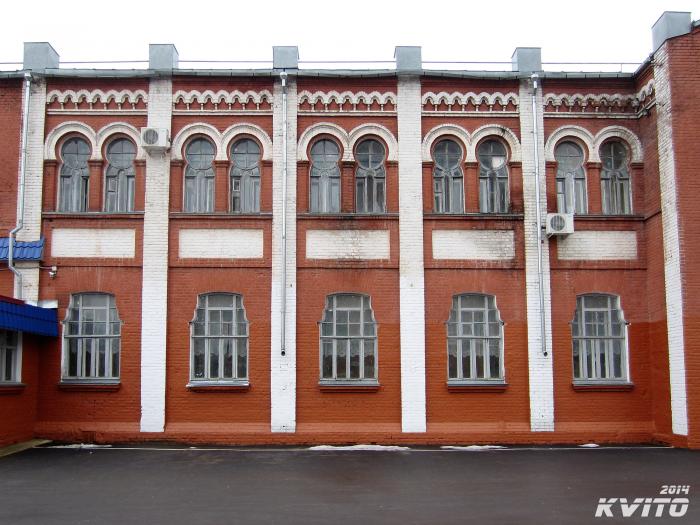
Genechel also spoke about the participation of his uncle in some works on the construction of a commercial bank building on a living room of a street built at the turn of the century according to the project of the Moscow architect S.K. Rodionov and now occupied by the Central Bank. However, there is no documentary data confirming all this information from the Himets biography.
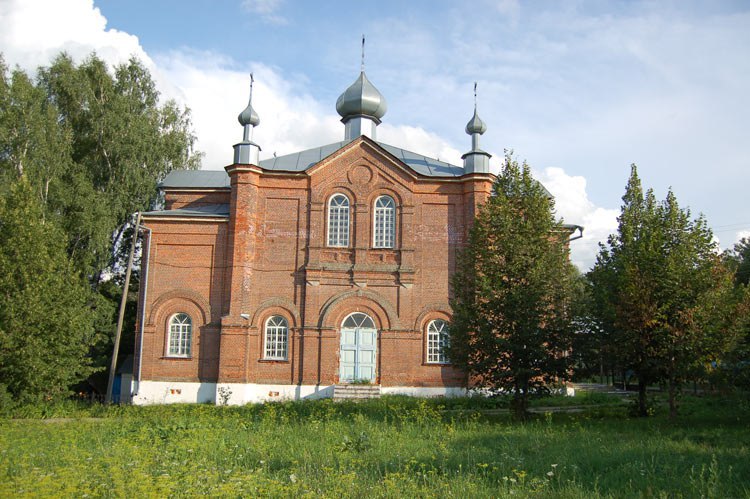
Much better things are with the buildings of Himets in the province. There are documents confirming that he was an architect of the church in the village of Kleimenovo, where the tomb of A. A. Fet is now.
Also, according to his project, a well -preserved to this day was the complex of the Telegin estate in the village of Zlynya of the Bolkhovsky district. Its owners are the landowner Vasily Nikolayevich Telegin and his son, Nikolai Vasilievich, apparently, were, if not friends, then the good acquaintances of the Himez. All three were members of the Oryol Society for the promotion of a trotted stud farming and themselves more than once participated in races at the city hippodrome. Maybe that's why the manor complex built for the Telegins is one of the peaks of Alexander Himets.
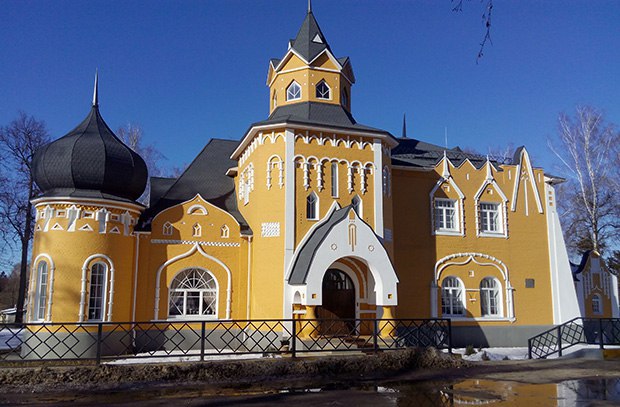
The main house of the estate with outlandish towers and domes combines the features of several styles fashionable at the beginning of the twentieth century: the so -called Russian, exotic eastern direction of eclecticism - neo -Mauritan and gaining the popularity of modernity.
At the same time, according to the local historian K.A. Sedoykina, the author of the most extravagant and extraordinary buildings of the eagle and the province lived in a very modest and traditional building - a two -story building with a stone first floor and the second wooden, at the modern address: Karachevskaya, No. 30. After 1917, A. A. Himemets worked in the orstra, take part in the design and construction of houses, as well as the construction of houses, as well as engineering structures of the eagle and the region. In the construction of the refrigerator in the city of Livna, he infected Typho and died in 1929.
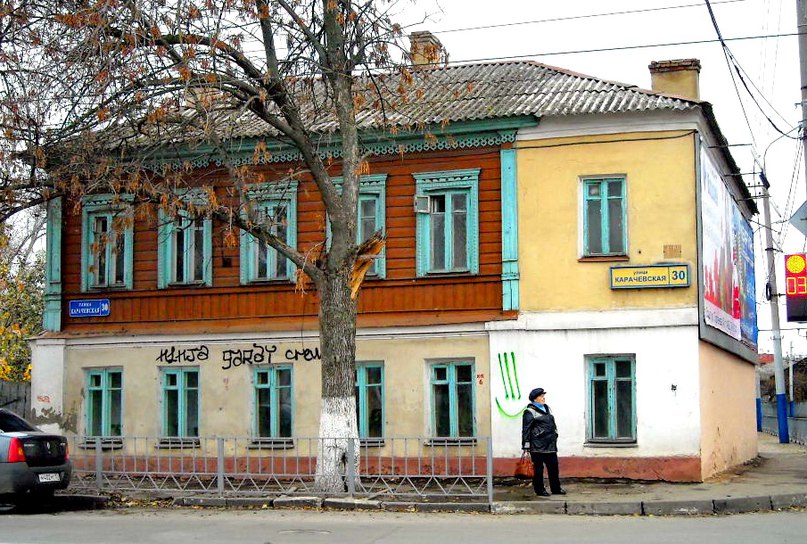
After his death, the heirs of the architect continued to own the house on Karachevskaya. When exactly house No. 30, he transferred to the property of the city and was divided into apartments, is unknown. But in the second half of the twentieth century, the building was already multi -apartment. Currently, the former Himets House is settled and is in a dilapidated state, balancing for several years on the verge of death and complete destruction.
Where the grave of Alexander Himets is located is currently unknown. S.I. Fedorov in the book “Age, Monuments, People”, 2001 of the issue, argued that the architect of the Art Nouveau era was buried in the Trinity cemetery. And he even described his tombstone - a small metal board, made by the same General, nephew and the main biographer of the architect. However, 10 years after the release of the book, this is the tombstone according to the description. The grave of the brightest Oryol architect of centuries has been lost.