
Translated material
DOKER Festival - Choice COLTA.RU
On April 13, at the Moscow Cinema Karo 11 October cinema, the DOKER documentary film festival begins . Vasily Koretsky - about what should not be missed in his program.
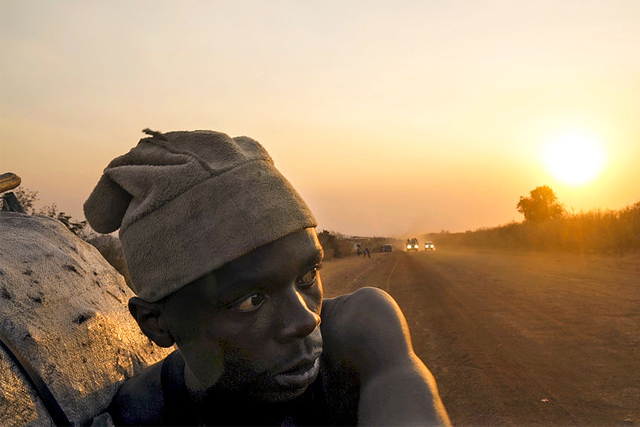 © “Docher” “Makala” (“Makala”) / “Happiness every day” (“Happy Today”) director Emmanuel Graus / director Julio Tonchenchelli
The young Congolese carbonarium of Kabwita lives in a remote village Kolvezi 50 km from the district center. His eyes burn with a dream - to build a new house with a metal roof, plant apples here, here - mango, and here is a palm tree: the palm tree will protect the roof from the wind. To buy a roof, you need to go to the city (accumulation of shaky shacks and canvas tents, dusty and littered). To make money on the roof, you also need to go to the city - sell coal. To begin with, praying to his God, Kabwita goes to chop wood. Then he drags heavy logs on his back. Then she covers the stack of logs with turf and throws red coals inside. You can take a break, just the dinner is ready - the wife fried a rat on the stake. Finally, coal is composed in a dozen bags and, contrary to all the laws of physics, is strengthened on an old bicycle. Now - on the road. The painful tens of kilometers on foot along the dark and dusty highway - the viewer, observing this monotonous transition within 20 minutes, gets only a small part of the hero’s suffering.
Made with a subtle sense of time and duration, not without poetry (the silent prayer of the Kabwits is helpfully transcribed in subtitles) and, it seems, not without crook (first they show us how the hero chop the thick tree with a primitive ax - Sizifov labor; but he already drags the logs drank evenly, obviously, one of the first buyers; one of the first buyers; one of the first buyers; Then he is in the frame again - already in the tent of preachers, where the hero comes to pray before going back home; Who is Kabwita? What kind of family is he? Did he manage to build a house? The answers to these questions are either given hints in separate scenes, or are simply ignored as unimportant. Another thing is important - a forest, man, God, pain, tension, dream, hope. All this is enough on the screen.
With the film, Emmanuel Graus, a picture from the short competition “Happiness every day” rhymes-a portrait of a midwife girl (also from the Congo) who came to Uganda to work as a volunteer in the maternity ward of a rural hospital. Green hills, shadow of trees, bright linen on the ropes, rising with a colored wall, minimalism of primitive hospital atmosphere, black skin against the backdrop of whitened walls - the spiritual agenda of the film about the life of a third world sinks in the beauty of simple things, in a relaxing warmth, in the notorious sense of sisterhood , completely tangible in the scenes of community staff and patients.