
Translated material
Memory. Alexander Alexandrov
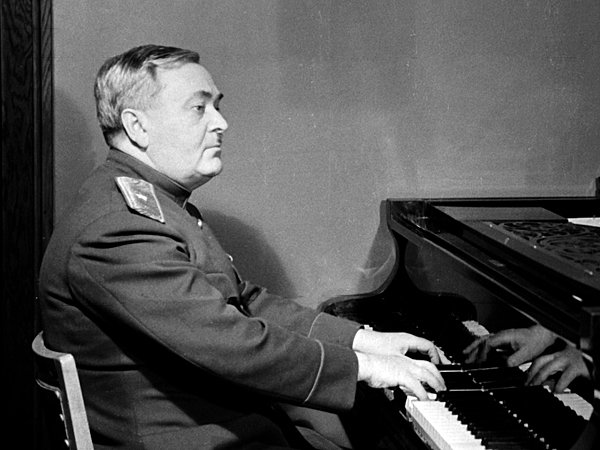
On April 13, 1883, Alexander Alexandrov, a choir conductor, was born.
Personal business
Alexander Vasilievich Aleksandrov (1883-1946) was born in the village of Plakhino (Ryazan region) in a large family of peasants Vasily Alexandrovich and Anastasia Nikitichna. Parents sang in the church choir, loved and often sang Russian folk songs, ditties, and often spiritual chants.
The boy had an absolute hearing and a good voice, he quickly grabbed and remembered the melodies and texts of songs. He was often invited to sing in the local church choir, as well as at weddings and festivities. At seven, Sasha went to the Zemstvo school, but studied there for only two years.
In 1889, the soloist of the St. Petersburg church choir P.A. Zalivukhin arrived in the village. Hearing little Sasha, he persuaded his parents to let him go to the capital for training. In 1891, Alexandrov moved to St. Petersburg, where he sang in the choir of Kazan Cathedral. At the age of 15 he graduated from singing the Kazan singing parish school of St. Petersburg.
In 1897, he became a student of the regency (conducting) classes of the court singing chapel (now the Church School named after M. I. Glinka), after which in 1900 he received the title of regent. After some time, he entered the St. Petersburg Conservatory (composition class of A.K. Glazunov and A.K. Lyadov), however, in 1902, due to illness and difficult financial situation, he was forced to interrupt their studies. Aleksandrov moved to Bologoe, worked as a regent of the cathedral choir, taught choral art in the railway and technical schools.
Since 1906, he worked as a regent of the bishop’s choir in Tver, led choirs in a number of educational institutions. At the same time, he wrote a symphony and the symphonic poem “Death and Life”.
In 1909 he returned to his studies, but already at the Moscow Conservatory, which he graduated in 1913 with a large silver medal in the class of composition by S. N. Vasilenko, and in 1916 - in the class of singing by W. Mazetti.
In 1913 he returned to Tver. Starting his career there as a regent of the bishop’s choir, Aleksandrov after only a few years became the most significant figure in the musical life of the city. Not a single city educational institution was complete without its choral lessons, whether it is a male classical gymnasium or a school of Morozov factory. In 1913, in the hall of the Public Assembly of Tver, Alexandrov organized the production of the now world classics - “Queen of Spades” and “Evgeny Onegin” by P.I. Tchaikovsky, “Faust” by S. Guno, “Life for the Tsar” by M.I. Glinka. In these productions, he was a director, a conductor, and a chormaster, and sometimes a singer.
Another brainchild of Alexandrova was the first music school in Tver, where adults and children that he organized and headed were studied. Subsequently, the school was transformed into a music school.
Stay in Tver turned out to be a time for the complete maturation of Alexandrov as a composer and a choral conductor. He came to the city by a novice musician, and left the already fully established composer and conductor, having received a personal invitation to teach at the best musical university of the country - the Moscow Conservatory.
More than a quarter of a century - from 1918 to 1946 - Alexandrov taught at the Moscow Conservatory. In 1922 he became a professor. In 1932-1934 he was the head of the Church Department, since 1940-the dean of the Conductor-Church Faculty, from 1942-the dean of the combined conducting and chore and musical and pedagogical faculties of the conservatory. Among his many students - K. B. Bird, V. G. Sokolov, D. B. Kabalevsky, K.P. Kondrashin and others.
From 1919 to 1930, he also taught composition and choral singing at the A. N. Skryabin music technical school (now the Academic Musical School at the Moscow Conservatory). Also since 1919 he was an assistant to the head of the 2nd group of the First State Choir, from 1921 to 1923-the State Church Chapel. In 1922-1928 he was a choirmaster of the Chamber Theater.
Since 1936 - Artistic Director of the Railway Ensemble of the Songs and Dance of the CDCH, since 1937 - the song and dance ensemble of the Moscow City Palace of Pioneers and Schoolchildren (Hormaist V.G. Sokolov).
In 1928, Alexandrov, along with F.N. Danilovich and P.I. Ilyin, created the ensemble of the Red Army song of the Central House of the Red Army named after M. Frunze (now the Song and Dance Ensemble of the Russian Army named after A.V. Alexandrov). He was his musical director, and since 1937 he was the head, artistic director and chief conductor. The entire Soviet Union and a number of foreign countries traveled with the ensemble, winning the Grand Prix in 1937 at the World Exhibition in Paris.
With a complete full house in France, 15 concerts took place, a full -length musical film was shot, the largest firms of the Polydor and Columbia gram samples released 14 discs.
In the same 1937, Alexandrov was awarded the title of People's Artist of the USSR.
During the Great Patriotic War, Alexandrov created the famous songs “Holy War”, “On a campaign! On a campaign! ”,“ Indestructible and legendary ”.
Member of the CPSU (b) since 1939.
In 1943, on the basis of his "anthem of the Bolshevik party", he created a melody, which since 1944 officially became the anthem of the USSR. The words were written by G. A. El Registan and S. V. Mikhalkov, partially edited by Stalin himself.
In the same 1943, Alexandrov was awarded the Order of Lenin, he was awarded the title of Major General (before that he was a brigade commander).
In 1945, after a trip to Finland, Alexandrov had a heart attack, after which the doctors forbade him to conduct. However, already on the next tour in Poland and Czechoslovakia, he neglected the advice of doctors and held concerts himself.
As a result, the heart could not stand it - on the tour in Berlin, he had a second vast heart attack.
Alexander Alexandrov died on July 8 (according to other sources - July 9) 1946 in Berlin, during the European tour of the Red Banner ensemble. He was buried in the Novodevichy cemetery in Moscow.
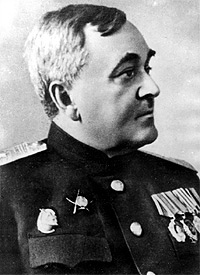 Alexander Vasilievich Alexandrov. Until 1943 Wikimedia Commons
What is famous
Soviet composer, choral conductor, chormaster and teacher. The author of the music of the anthem of the USSR, and laid on the same melody of the anthem of the Russian Federation ..
Aleksandrov played a large role in the formation, development and creation in 1928 of the ensemble of the Red Army song (now the twice red -banned order of the Red Star Academic Song and Dance Ensemble of the Russian Army named after Alexandrov). After the triumphal performances of the collective at the World Exhibition in Paris in 1937, Aleksandrov was appointed head and artistic director of the ensemble.
Combining in the tradition of Russian household, chamber, opera, church and soldier’s singing, he brought domestic choral art to an international professional scene. The male polyphonic choir with soloists, a mixed orchestra consisting of symphonic and folk instruments, and the ensemble ballet is recognized and remain one of the best in the world.
What you need to know about
In addition to secular music, Alexandrov wrote a lot of church music. He created a poem for the choir, orchestra, organ and soloists “Christ Risen” (1918), the concert “Have mercy, God” (1926), 6 chants of the liturgy, 2 chants of the passionate week of “The Robber of prudent”, 8 chants of the all -night vigil, “Great” to the saint of the saint of the Miracle Worker and “praise the name of the Lord”.
Having moved to Moscow from Tver, Alexandrov from 1918 to 1922 was the last regent of the Cathedral of Christ the Savior.
Direct speech
The grandson of Evgeny Alexandrov about Stalin’s attitude towards grandfather: “Stalin really favored Alexander Vasilyevich, called us home, invited his grandfather for lunch or breakfast. Father told how one night there was a call by phone:
- Call Alexander Vasilyevich!
- Who says?
- Tell me, Stalin ...
We had such a commotion, grandfather fled to the phone, dressing on the go. So he talked: in one hand a tube, and supporting the trousers.
But it turned out that Stalin simply wished to hear the Russian folk song “Kalinushka” at the government concert, but not that famous “Kalinka”.
They urgently found the soldiers who once performed it, recorded words, a melody, and, collecting the ensemble at night, Alexander Vasilievich learned this song with the performers.
Hearing this song the next day at the concert, Stalin sat, puffing a tube, and grinned at his mustache - he really liked this efficiency and skill of the ensemble with his leader. ”
Grandson Evgeny Alexandrov about the creation of the famous song “The Holy War”: “When the war began, the guide of the ensemble moved to live in the ced.K.A. One morning during breakfast to A.V. Aleksandrov came up with a political worker with a newspaper in his hands: "Alexander Vasilievich, here there is a wonderful poem by Lebedev-Kumach." After reading the poems, his grandfather immediately took the newspaper and went home. By evening, the song was ready. At night, the artists of the ensemble were called, the grandfather spilled on the black note on the board, wrote poetry, and by the morning, the song was learned. Already in the morning of the next day, the Holy War began to fulfill its soldier's duty. The ensemble performed it for soldiers going to the front at the Belorussian station. ”
7 facts about Alexander Alexandrov
- According to some reports, the real name of the conductor was Koptelev. In the metric book with. Plakhino recorded that he was born in the family of "an indefinite vacation non-commissioned officer Vasily Alexandrov Kimtelev."
- Aleksandrov was awarded the orders of Lenin, the Red Star, the Red Banner of Labor and the White Lev (Czechoslovakia).
- The first performance of the ensemble Alexandrov took place on October 12, 1928 consisting of eight singers, two dancers, a Bayanist and a reader. And already in 1937, when the collective was withdrawn from the structure of the Central Code and became an independent creative unit, and Aleksandrov was appointed by his head, artistic director and chief conductor, the number of the troupe increased to 274 people.
- Aleksandrov twice became the laureate of the Stalin Prize of the first degree: in 1942 - for the anthem of the Bolshevik party and a number of songs, in 1946 - for concert activities.
- He was married to a chorist of the cathedral choir in the Bologna of Ksenia Morozova. All three sons from this marriage - Boris, Vladimir and Alexander became composers and conductors and were associated with the ensemble of the Soviet Army. Another son - Yuri (1939) - gave birth to Alexander Ballerina Lyudmila Lavrova, with whom he was in a civil marriage.
- The name of Alexander Alexandrov is listed in the Golden Book of Tver. On one of the buildings of the city, a memorial plaque will appear in memory of it.
- On December 8, 2000, the State Duma voted for the state anthem of Russia to the music of Alexandrov. On the same day, the great -great -grandson of Alexander Vasilievich was born - Vladimir.
Materials about Alexander Alexandrov
Biography of Alexander Alexandrov on the website of the MGK named after Tchaikovsky
Article about Alexander Alexandrov on Wikipedia