
Translated material
On duressment to unanimity

On March 30–31, the XXV International Interdisciplinary Symposium “Ways of Russia” was held, organized by the Moscow Higher School of Social and Economic Sciences (Shaninka) and the Russian Academy of National Economy and Public Administration (RANEPA). This year, one of the sections was devoted to the question of where the boundaries of the permissible in the public sphere are located: is it possible to censor political views and if so, what? Do you need a dialogue with people whose views seem absolutely unacceptable?
The organizers of the section decided to look for the answer to this question with Hannah Arendt, whose philosophy became the basis of modern thinking about the public sphere. The presentation of world specialists in the tenant philosophy made reports: Academic Director of the Hannanah Center at Bard-College Roger Berkovich, founder of the Khanna Arendt Center at Oldenburg University Anthony Gruzenberg and professor of free university Berlin, editor of the Hannaharendt.net Wolfgang. Hoyer. Professor Shaninka and the organizer of the section - sociologist Grigory Yudin specifically for Kolta met with speakers to discuss the state of the public sphere in Russia and in the world, as well as evaluate the applicability of the ideas of tenant to modern politics.
Grigory Yudin: The idea to organize this event arose in connection with sustainable pressure, to which the public sphere is subjected to all over the world today. This pressure is aimed at limiting the presence of people in it whose views are considered to go beyond the permitted. We see many cases in the United States, when carriers of extreme right -handed views refuse to publicly express their opinion. Similar things happen in the EU. And, interestingly, we see something close here in Russia, and on both sides of the political spectrum. The authorities justify the exclusion of opposition politicians from the public sphere, calling them traitors and the “fifth column”-someone who undermines the unity of society. But the opposite camp is actively engaged in the filtering of discourse and drawing the boundaries of its space. My question is as follows: how did we come to such a situation? What would you call the most significant changes in the organization of the public sphere over the past decades that have made the current state of things possible?
Roger Berkovitz: In a historical section, the answer to your question would begin with the statement of John Stuart Mill: there should be freedom of speech, but not for Catholics. This tension has always existed. We want open debate, but we recognize certain boundaries. Mill in the essay “On Freedom” wrote that public discussions are good until they are harmful. In liberal circles, this consensus has long been preserved in the United States for a long time. However, in the last 10-15 years, an important change has occurred - a new understanding of “harm” has appeared. The concept of injury has become something that in the USA is talking about every day in university campuses and newspapers. The idea that hearing the opposite point of view is not just sad, but traumatic, physically harmful, has become a common place for many. I would call this process the medication of the public sphere. If earlier it was possible to openly talk about some ideas, recognizing that they are dangerous, now they need to be adjusted in a medical manner. And I consider this phenomenon really alarming.
Ulrich Beck often said that postmodern and post -struggle -free thinking destroyed the idea that liberal discourse would once lead us to the right ideas. Now we know that in fact there is no truth and to some extent has never been. But the thesis of Mill that the best argument will win sooner or later, was blown up by postmodernism. I believe that Hannah Arendt is important for this discussion precisely because it argues the need for a free dialogue not by the search for truth, but a pluralistic understanding of the world as many people with various opinions. The only way to understand this world is to listen to as many people as possible.
Wolfgang Hoyer: Today they say a lot about the fact that reality is designed. I rather agree with this, but this does not mean that we may not recognize the presence of actual truth and assume that if everything is designed, then it can be arbitrarily redone. Populists in Western Europe in a sense opposite the idea of truth, claiming that everything around us is opinions and lies. I am very surprised that in the past few years this is happening even in Germany. After the Second World War, we have formed a difficult tradition of recognizing reality. But this does not care about populists, they see only a conspiracy everywhere.
Anthony Grunenberg: According to my sensations, today public debate has fallen into a difficult situation. On the one hand, we see fragmentation of discourse: new groups of interests, new genders, and so on are created. Hypermoralization of discussion occurs, as if there were some strict norms that determine who are allowed to say, which views are normal and which are rejected. At the same time, I notice the desire for unanimity - for the public sphere, where everyone would have a single opinion. This situation destroyed the conditions for an agonistic public discussion, which I am extremely sorry about. Now people are often limited even with the right to speak out, and we need to re -fight for this opportunity.
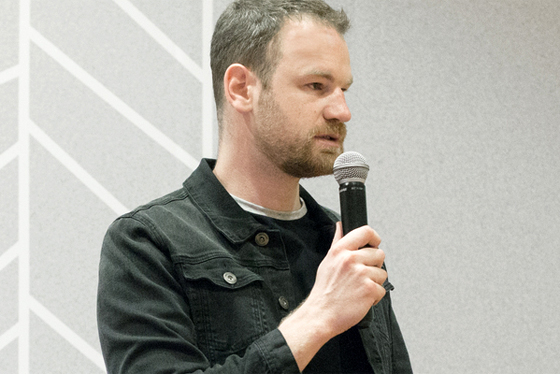 © Yegor Gaidar Foundation Grigory Yudin
Yudin: All of you mention “agonism”. This concept is based on the ancient Greek concept of “Aon” - the space in which the competition occurs, different from the market. Such a struggle is somewhat akin to sports, the main task in it is to surpass the opponent, while sharing his commitment to the common goals. This idea, picked up by Arendt and other thinkers, is actively developing in political theory in recent years. But only now she begins to be considered as a possible way out of the situation in which we are. In the agonic model of the dispute, absolutely anyone has the right to tell others about their beliefs. But are there any conditions under which still the exclusion of someone from the public sphere is possible?
Grunenberg: I believe that it is important from the very beginning to put all the cards on the table. Then you need to talk to each other until you come to a suitable decision. But before all the cards lay on the table, no one can be excluded from the discussion, otherwise you will quickly come to the dominance of false hypermoralization.
Berkovitz : The question of whom to include in the public sphere is very important. Of course, if someone comes to you with a baseball bat, then this person does not participate in the discussion. There is an opportunity to exclude those people who are involved in violence. As for those who only calls for violence ... This is a more difficult question. I think such people should not be excluded from the public sphere, although I would not invite them to the Academy. For example, we can mention the nationalist Richard Spencer, who called for “non -violent ethnic purges” (in my opinion, this is Oxymoron). But if someone invited him, then I would recognize such a right for these people, but I would ask Spencer uncomfortable questions.
Another difficult point: what to do with people who act as direct propagandists - represent a lie in a convincing form and use complex technologies to deceive and misinform people? It can be assumed that you just need to argue with them. But as soon as the actual world, which we all share, gives a crack, it becomes very difficult to support the dispute. Is an unlimited broadcast of propaganda in the public sphere possible? How can we even determine where the propaganda and lies, and where not?
I am convinced that a deliberately false representation of facts in the public sphere needs to be regulated and prevented. But I am very worried about how this regulation will be carried out. I usually give an example of people who deny global warming. In this problem there is an actual element with which even the most stringent skeptics agree: O'Kay, the Earth has been accelerated for the past hundred years. Then the question is about whether this warming is related to human activity. Here, too, many respond in the affirmative, but at the same time believe that there is no firm evidence of this. Finally, the question arises of whether we can change the situation. And then gigantic discrepancies appear about how to act. Is it possible, as a result of these discrepancies, to conclude that all global warming is fiction? In such disputes, it is very difficult to separate opinions and facts.
Yudin: Returning to my question: I will give one specific case that happened in the RANEPA several years ago. The university invited Igor Strelkov, a combat commander, who in 2014 began a military campaign in eastern Ukraine. Strelkov is a citizen of the Russian Federation, allegedly related to the Russian special services and the army. In Ukraine, he was successful for several months, but then everything began to curl up, and he returned to Russia, where he was trying to engage in politics. This is a person who not only called for violence, but personally committed him and believes that it was justified.
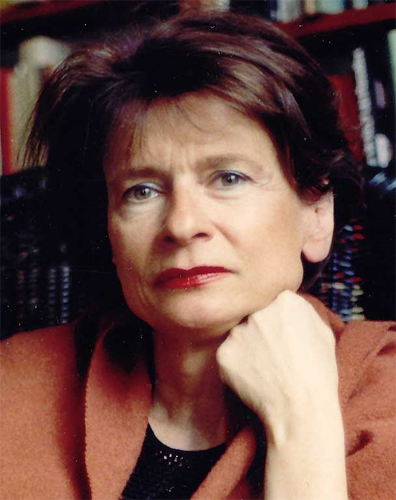 © Carl von Ossietzky Universität Oldenburg Anthony Gruzenberg
Grunenberg: I believe that a person who uses violence cannot be part of the public sphere. Otherwise, the exchange of views begins, but an excuse for violence.
Berkovitz : I am not against the military’s public speeches, because they do it quite legally, as members of the army ...
Yudin: However, in Ukraine there was no official presence of Russian troops.
Berkovitz: Yes, but this man represented himself as a fighter for freedom. Even if I do not agree with his understanding of freedom, he is still part of the political sphere.
Grunenberg: He was part of the partisan groups of the military, which violated international law. This question is not about public debate, but about the legitimization of what they did.
Berkovitz: There is still such a fundamental difference: do you invite a person to the academy where his opinion can be challenged, or are you just inviting him to make a speech? In the USA there is a format of appeals to students at graduation ceremonies, when a certain honorary speaker appears before the public and there are no questions. I don’t think that disputed speakers need to be invited to such events. But if we are talking about an institution where they will argue with him, then why not. And how was it all over, did one of the audience come up with Strelkov?
Yudin: No, and in this, in my opinion, the whole problem. I would say that the responsibility here lies with the audience, and not to those who invited him. Listeners could ask him uncomfortable questions and make a statement that his position is unacceptable for them. With some reservations, I would not even be against public protest by students. In my opinion, all these things have much more in common with a political action than just an exception operation. But one of the arguments in favor of an exception is that the invitation gives such people legitimation. If they are not called, then they are invisible, at least in a certain environment.
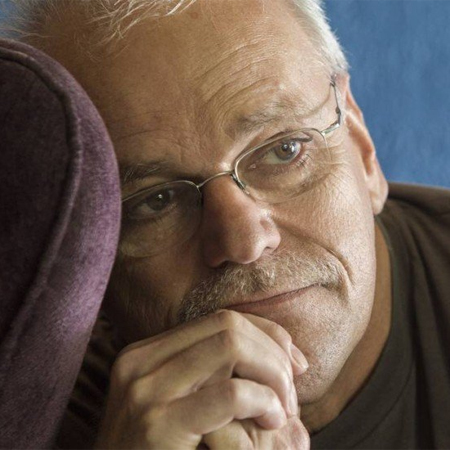 © ANA BRANCO / Agular O GLOBO Wolfgang Hoyer
Hoyer : I think that if this is a politician, then you can invite such people. But if he violates the law ...
Berkovitz: What about Martin Luther King? He also violated the law. Strelkov believes that he fought for the rights of the Russians stuck in Ukraine.
Grunenberg : The question of what he appeals to values, what ideas in his speeches protects. There is a difference between Martin Luther King and a man who promotes an undeclared war. I will give another argument. I think that the academic community in most cases is very naive: its members are not well informed enough to argue at the same level as the guest who had real political experience. In such a situation, you just have to decide whether to believe him or not.
Yudin : But how to fix this situation? Would you suggest introducing requirements for the audience in terms of its awareness?
Berkovitz: You can invite someone who can withstand this person at the same rhetorical level. I would not say that this is a prerequisite, rather, just a good practice. These people are really more convincing than we, they have real experience. Someone may even hear a sentence for the academy.
There are quite powerful double standards on this score. For example, in the USA no one wants to listen to people like Steve Bannon or Mark Jengen. But when someone invites Louis Farrahan with his egregious anti-Semitism, racism and so on, it cannot be criticized, because he is left. It is very significant here that people are not unhappy with a bad person, but by the fact that this is a bad person not from their camp.
In the essay “On Freedom”, Mill says: it would be good if we established a general standard for a civilized discussion. The problem is that for each camp this standard is its own. If you want to have a lively public sphere, you have to eventually let the enemy into it and face it to face. The only way to develop thinking is to constantly argue with the enemy.
Many say: it is not necessary to listen to the opponent, you can just read about him. The difference is that in the second case you simply say: this person is an idiot. And he cannot answer you. But if he is here, on the stage, then the dispute begins. As Rusna said, you simply cannot understand the world if you hold on to your opinion and never put it into question. This is important for the academy and for politics - to hear those who really cause irritation.
Yudin: This, of course, is a bold position. But there is a widespread belief that not only representatives of the Academy, but also the liberal public as a whole are very weak in terms of discussion and look at the world through pink glasses. Therefore, there is a fear that in a dispute with people from another camp they will be easily defeated. The fear is that in the public sphere a dangerous element of self -destruction is laid, which gives privileges and a rhetorical advantage to those who want to destroy this sphere.
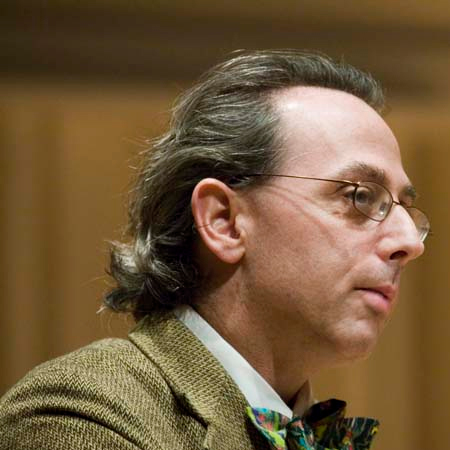 © Pete Mauney / Bard College Roger Berkovitz
Berkovitz : Is it possible to assume that liberalism is the view of a minority that will lose if you ask the majority? This is a classic question. I remember how a professor of constitutional law told us: if a democratic vote was held on the first amendment, it would never have passed. In a sense, this is true if the liberal elite cannot convince people that adhering to liberal values in the end is beneficial for themselves. But I do not think that this is completely impossible, sometimes it still turns out.
I am a supporter of the system of non-cheese liberal-constitutional guarantees. But even the constitution will not help if most people do not believe in it. The liberals are weak today because they forgot about the need to defend their positions. In the last 60-70 years, after the Second World War, their ideas have become generally accepted. The arguments of the liberals about the need for civil rights could not be challenged, and therefore they were lazy. As a result, today, not only the majority, but also the liberals themselves do not understand a significant part of the liberal agenda.
Yudin: That is, the problem is not in the internal weakness of liberal ideas, but simply in a lack of training?
Berkovitz: Yes, I think that you need to train in people the ability to argue.
Grunenberg: In my opinion, political liberalism today can offer us a lot of useful things. The big problem is that in recent decades it has been equated with economic liberalism with some abstract regulatory ideas. Today we need the revival of political liberalism. In addition, we need the concept of a state based not on the ethnic group and not on the race.
Berkovitz: Liberalism is associated with three different ideas: cosmopolitanism, open boundaries and anti -nationalism. The problem is that throughout history people have always wanted to belong to various groups, including different nations. Today, everyone who calls himself a nationalist and calls for the return of “Russianness” or “Germanism” are automatically considered people of anti -liberal views. It seems to me a great simplification: liberalism coexisted next to nationalism for hundreds of years. It is incorrect to consider any attempts to create identity except the identity of the oppressed groups dangerous and wrong. You need to get out and listen to what people really want. It is not necessary to agree with them, but it is important to realize the need for this discussion.
Yudin: Let's discuss the situation that occurred in a bard college last fall. We are talking about the regular conference of the center Hannah Arendt, one of the speakers on which was Mark Jengen, today is a noticeable German politician and parliamentarian from the Right Party of the Alternative for Germany. Jongen is a philosopher, a former assistant Peter Slaterdike, who considers himself one of the ideologists of the ultra -right. He performed in the Center for Rusade with a lecture, after which there was a tough discussion with the participation of the audience. But then many scientists from the USA and Germany criticized the event itself. В открытом письме американские академики потребовали извинений от организаторов и признания того, что носители такого рода убеждений не могут выступать на конференции имени Арендт. Это возмущение легко понять, учитывая, что сегодня Йонген атакует беженцев, которых Арендт считала наиболее уязвимой группой. Что вся эта ситуация говорит нам о состоянии публичной сферы?
Берковиц : Расскажу о том, как я вижу ситуацию. Каждый год мы проводим конференцию, на которой выступают 20—25 спикеров. И, как можно ожидать от либерального колледжа, у большинства из них левые политические взгляды. Я взял себе за правило заботиться о плюрализме и приглашать не только академиков, но и артистов, интеллектуалов, бизнесменов. Я хочу, чтобы были представлены разные точки зрения, включая точки зрения людей, несогласных с мейнстримом. При этом я не мыслю в терминах «левые/правые» и зову не идеологов, а просто умных людей, которые могут бросить вызов общепринятым идеям. Мне показалось, что на конференцию, посвященную кризису демократии, нельзя было не пригласить такого человека: одни считают, что он дает ответ на этот кризис, а другие — что он за этот кризис как раз и отвечает. Кстати, в тот момент, когда я пригласил Йонгена, он еще даже не начал политическую карьеру — он избрался в парламент незадолго до конференции.
На мой взгляд, на конференции он проделал хорошую работу: он провел на ней оба дня, задавал вопросы — в общем, вел себя вполне как человек из академии, коим он и является. Его выступление прошло хорошо, он ясно артикулировал свою позицию. На сцене был также Иэн Бурума, один из самых влиятельных интеллектуалов в мире, главный редактор крупнейшего литературно-политического журнала либерального толка в США The New York Review of Books . У них был мощный спор. Единственное, чего не делал Бурума, — так это не оскорблял его и не пытался прогнать со сцены. Я был модератором этой дискуссии, предлагал людям задавать вопросы. Это была отличная возможность для аудитории задать вопрос, получить отпор и задуматься.
Самая интересная вещь, которую Йонген произнес в ходе своего выступления, — «“Немецкость” имеет право на существование, но при этом я не говорю про “кровь и почву”». Сам Йонген — иммигрант, который родился в Италии, а мать у него из Нидерландов. При этом он считает себя немцем. По ходу дискуссии я отчасти понял, что он имеет в виду: за два-три поколения жизни в стране ты обретаешь какие-то нарративы и установки, способы «быть немцем», что бы это ни значило. Одна из проблем в том, что Йонген уверен, что ему точно известно, какие это способы. Это очень примитивная идея, но в то же время это аргумент, к которому многие люди отнеслись бы с пониманием.
В том, что мы пригласили Йонгена, я не вижу ничего для него почетного. Да, мы действительно дали ему платформу — некоторые считают это легитимацией. В какой-то степени это правда: тем самым мы сказали, что его стоит послушать. Но я не могу себе представить, что человек, состоящий в руководстве третьей по величине политической партии в Германии, нуждается в легитимации со стороны академической конференции. Если бы не резкая реакция в виде открытых писем, в Германии об этом случае никто даже бы не узнал. Моя работа как профессора — помогать людям думать. Приглашение Йонгена помогло моим студентам и коллегам в их мыслительной деятельности. И, несмотря на всю критику, я смотрю на это событие оптимистично — очень многие нас поддержали.
Груненберг : Я полностью согласна с Роджером: события такого рода должны иметь свое место в публичном дискурсе. Но я заметила кое-что еще. Когда я смотрела конференцию на YouTube , я подумала про Йонгена: этот парень очень умен. Он выполняет двойную функцию, выступая одновременно как академический ученый и как пропагандист. В своей академической речи он использует все орудия пропаганды. Например, он приводит аргументы из области полуправды и сразу отступает, когда ему на это указывают. И я подумала, что Иэн был слишком с ним добр, это был такой оксфордский стиль: «я согласен, что здесь мы с вами не согласны». Этого было недостаточно. Академический дискурс должен научиться чему-то от реального публичного спора. Быть информированным, хладнокровно анализировать, что оппонент имеет в виду. Распрощался ли он со своей функцией пропагандиста? Может ли вообще быть беспристрастным академический ученый, который состоит в партии? Этой рефлексии мне не хватило. Но я не говорю, что его не надо было приглашать.
Юдин: Значит ли это, что академия все-таки должна пытаться сводить друг с другом разных людей?
Берковиц : Есть люди, которые отстаивают точку зрения, что академия ничем не отличается от политики. Это очень опасное наследие 1960-х. Я верю, что для академической среды главное — это академические цели. Не запираться в башне из слоновой кости, но и избегать любой политизации. Аргумент Арендт состоял именно в том, что политике нужно больше неполитических пространств, в которых могут возникнуть беспристрастные идеи. Не в том смысле, что мы ищем объективную истину, а в том, что мы пытаемся мыслить плюралистично, придерживаемся более высоких стандартов, чем политики. Я верю, что мы как академия должны оставаться верны своей идее: спорить и говорить. Пока что чаша весов склоняется в пользу сторонников политизации университетов, но исход битвы еще не решен. В небольших колледжах мы все еще можем придерживаться идеи неполитического академического мира.
Юдин: Но люди обычно спрашивают: как при агонизме возможно что-то сделать? Разогреть публичную сферу и быть вовлеченным в активную борьбу — это здорово. Но как принимать политические решения?
Груненберг: В агонизме важно, что вы высказываетесь в контексте более широких политических и социальных процессов, которые происходят вне агонистической дискуссии. Во всех этих процессах имплицитно присутствует некая общая цель, к которой нужно обращаться. I will give an example. Вы планируете создание больших архитектурных проектов, но в то же время вам не хватает денег на уход за пожилыми людьми. Публичный диспут начинается с обсуждения того, что сейчас важнее: новый оперный театр или дополнительное финансирование для сиделок. В какой-то момент приходится найти соотношение между двумя этими несовместимыми потребностями. Приходится спросить себя, в чем состоит человеческое измерение этих больших зданий, какие ценности в них воплощаются. Для таких дискуссий существуют специальные институты вроде местных парламентских структур и волонтерских организаций, но сегодня они не используются по назначению.
Хойер: Одна из сфер, где в Германии сегодня возрождается агонизм, — это парламент, который спал годами. То есть правовые процедуры работали, но дискуссии не было, фракции просто кое-как соглашались между собой. Эта процедура поиска решений никогда не приводила ни к чему неожиданному. Сейчас «АдГ» помогает возродить публичные споры. В итоге ты думаешь про людей из партий, которые ты раньше никогда не поддерживал: да, это смелый поступок. Это агонистическое пространство, организованное легальным образом.
Юдин: Но если возобладает агонизм, нет ли опасности, что никто не станет следовать никаким правилам?
Хойер : Это вопрос цивилизованного поведения.
Берковиц: В этом разница между «АдГ», которая привносит в немецкую политику осмысленные споры, и Дональдом Трампом, который просто разрушает правила цивилизованного дискурса, существовавшие последние 70 лет. Вместо продуктивной дискуссии мы видим пропаганду с обеих сторон и мышление в стиле «победитель получает все». Поэтому в США ситуация более опасная, чем в Германии.
Антония привела пример про здания. Я бы вспомнил старую американскую традицию встреч с политическими представителями и руководителями ( town hall meetings — буквально «встреч в ратуше»), когда несколько сотен людей разговаривают друг с другом. Должны ли мы поднять налоги, чтобы нанять больше полицейских и учителей? В такой дискуссии всегда будет агонистический элемент. Но, зная, что все мы — часть одного города, люди понимают, что всегда будут победители и проигравшие. Если согласиться никак невозможно, то в конце концов кому-то придется уехать. Но сейчас от вовлечения горожан в политику почти ничего не осталось. Более того, в США самые разные люди и фракции смотрят на других с таким откровенным презрением, что не могут допустить, будто они — часть единого сообщества. Они смотрят на всех остальных как на воплощение зла.
Груненберг : Откуда берется этот эмоциональный накал?
Берковиц : Это связано с медикализацией дискурса, о которой я говорил вначале. В «Истоках тоталитаризма» Арендт приводит аргумент про метафизическое одиночество — когда старые традиции утрачены, возникает необходимость верить в непротиворечивую идеологию, чтобы найти свое место в мире. В США сейчас очень велико метафизическое одиночество, непонимание, что я делаю здесь и сейчас. Это ощущение накапливалось в течение долгого времени, и сейчас страна в кризисе. Люди не понимают, как можно отождествить себя с Америкой, и видят гораздо больше смысла в отдельных групповых идентичностях: либералы, консерваторы, белые, SJW (борцы за социальную справедливость, social Justice warriors . - Ed. ). Если не преодолеть этот раскол, то страна просто придет к распаду.
Юдин: Вы говорите о сецессии штатов?
Берковиц: Да, каждый год тема сецессии поднимается все чаще. Не думаю, что это может случиться в ближайшие десятилетия, но давление будет возрастать. В 1789 году США появились как страна с мощным принципом федерализма, при котором большая часть решений принимается штатами на местном уровне, а центральное правительство существует просто как объединяющая идея. Потом консерваторы захотели наделить центральное правительство силой во имя национальной безопасности, а либералы — во имя защиты гражданских прав. В итоге локальные полномочия постоянно передавались на федеральный уровень. Сейчас американское государство существует совсем не в той форме, в какой оно задумывалось и существовало примерно до середины прошлого века. Локальные сообщества хотят жить по-разному, но получают только бесконечные качели между Обамой, Трампом, Бушами и Клинтонами. Вопрос в том, можем ли мы как-то обратить этот процесс вспять и восстановить тот децентрализованный эксперимент, которым когда-то была Америка.
Текст подготовил Арнольд Хачатуров