
Translated material
Disagreement Theodore. Chapter 1
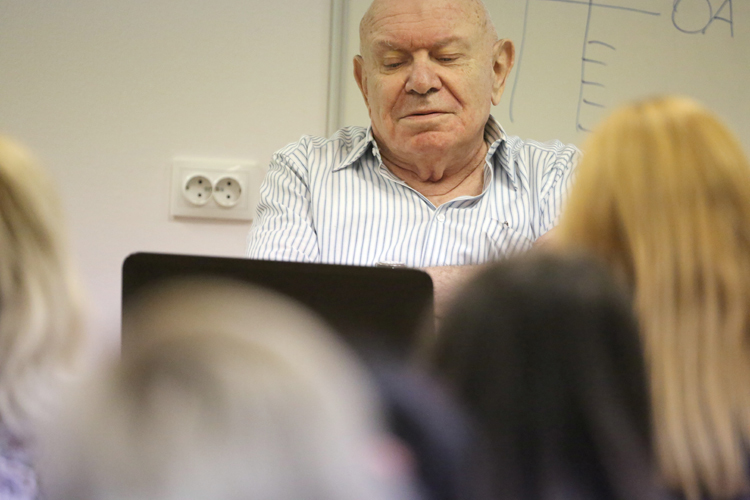
Theodore Shanin is an outstanding person. Large, bright, energetic, he went through the wars and collapse of states, created one of the brightest Russian universities - the Moscow Higher School of Social and Economic Sciences, and in adulthood; Pouring the 20th century, he easily stepped in the XXI century and registered in it. The plot of his life is dizzying. With the judgments of Theodore Shanin, one can agree or disagree (disagreement with the disagreement is a sweet thing), but not to feel that a man of great history is next to you.
With the support of the Liberal Mission Foundation, Tatyana Sorokina and I recorded many hours of video, and this project will still be presented to the public. But the Shanin story is so bright that it would be just stupid not to turn it into an autobiographical story. In the text, some miraculous features of Shanin’s speech are preserved-a little, interspersed, without busting, since Theodore is a person of not only many citizens, but also many languages; This aroma adds a lot to the story.
Alexander Arkhangelsky
Chapter 1. Vilenchanin
When they asked me: "Where are you from?" - I always had a problem how to answer. And in the end, such a recitative developed: my father was born in Russia, my mother was born in Germany, I was born in Poland, while we were all born in the same city that is now the capital of Lithuania.
If easier and more specifically, I was born in Vilna, the current Vilnius. In 1930, it was the provincial city of Poland, half of the population of which felt like Jews. In the south of Poland there were Jews who defined themselves as Poles of the Jewish religion, and local Jews were furious when someone dared to call them so. Because in their eyes they were Jews with a capital letter. The city was the capital of Misnagdim, or Litvakov - those Jews who, following the Vilnius Gaon, that is, a genius from Vilna, who was considered both the holy and the most intelligent and the greatest, and in the XVIII century resistance to the Hasida movement, as well as assimilation.
Gaon named Eliyahu Ben Shlomo Zalman was not only the main theological authority, but also a brilliant mathematician, that is, a person prone to rational thinking. And when we said “ours”, it meant “Jews, but not Hasidi”. They chuckled over the Hasids. They danced when they prayed. They sang during prayer. What Misnaged considered incredibly indecent and stupid. It was also believed that Hasids do not know how to defend their Jewishness. How to protect it? We must fight with Polish anti -Semites. The Hasids did not know how to fight as it should, and the Vilenchians fought perfectly. And they did not accept the mystical thinking that Kabbalah expressed, and all that was so. They believed that a real religion was a Talmud, a set of rules. That is, to be truly religious is to study and know the right. And the rabbi for them was an adviser by right, not a representative of holiness. Misnaged has a personal responsibility to God for his behavior and his views.
This, of course, created such a tough Puritan religion. The Misnageds were, so to speak, by Jewish Puritans, which I understood where later when I saw the real Puritan. And behaved extremely responsibly. Merchants from Vilna did not sign the contracts, because if a person said the word, he will observe it. My father was proud that he had never signed bills. By the way, the word "Misnaged" means in Hebrew "disagreed." So I am from disagreements.
My mother was called Rebecca Yashunskaya. It sounds completely like a Polish noble surname. The reason, apparently, is that the Jews who worked for the Polish nobility often, when they began to distribute the names, accepted the name of the man who was the master of land. (There is a place near Vilna, called Yashuns.) The family spoke several languages - which, by the way, was quite normal for the middle classes Vilna. Mother graduated from Polish University and preferred Polish all languages. And since she commanded the house, it was she who decided that I should speak completely without an accent and brilliantly in Polish, because it is a language from the country in which I live.
Her character was tough and strong. She was thirteen years younger than her father. What was considered normal in her social class: a rich person should have a young, beautiful wife. It was different extraordinary: in her generation, married women did not go to university. In this regard, she was a rare exception.
Grandfather spoke brilliantly in Polish: he was generally a very good linguist; Later, when a new Lithuanian government came to the city, he was the only member of our family who learned Lithuania during the year. Father always preferred Russian. Since he was at the University of Russian in St. Petersburg and all that is so. His name was Mer Zadshnur. “Zayd” is, of course, both German and the “silk” Yiddish. And the "cord", like in Slavic languages, is a "lace." Which, apparently, determined what the forefathers were doing. Because his whole family was "in textiles."
The main thing in my father’s family was his mother, whom I had never seen: my grandmother died before I was born. All Jewish Vilna knew her. The parents of my grandfather in his father, when he began to grow up, realized that he would be a Nikudyshnik according to the concepts of Vilno. That is, a person who does not know how to do business. And that when they die, he will squander everything that the family gathered. And they did what in such cases the merchant family always knew how to do, in any case, in Vilna. They called the matchmakers and the matchmakers explained what was the matter.
The matchmakers took up work and found the right bride, my grandmother, who was left for the girl without a father and took the house control of the hands of a limp mother. Having married her grandfather, the grandmother managed to set the matter so that with time all four of her sons were able to create their own businesses, and all three daughters had enough money for Nadan and good marriage. Because when my grandmother was sung with a useless man, she immediately understood her task. The textile store soon turned the medium -sized into a whole textile empire. She spoke freely only to Yiddish, she was not taught languages. But she could explain herself in all languages, went to Berlin, to buy goods to St. Petersburg.
Legends were composed about her, which, of course, reached me.
One is about how she returned from somewhere in the goods (say, from Berlin, where there were excellent fabrics) and stands in front of him in the store. Her chief clerk stretched out in front of her with a notebook to record instructions, the rest of the clerks run around, weigh. And she argues loudly: if we put five rubles for this fabric, it will be a shame for me. Put seven rubles - it will seem insulting to customers. Place fourteen. And sold.
According to another legend, they often went to her with a request to give money to the poor. Well, let's say, there is a good poor girl and there is a young man who has nothing, if not help, they will not be able to marry. She listened to the request, asked everything in detail, then said: “Well, I have to consult with my husband,” went out into the empty room, returned and said: “My husband agrees.”
The city knew this. She was the heroine of the Vilnius merchants, in any case, textile. They often came to her for advice. She died early, fifty with something; Nikudyshnik-Ded lived up to eighty-five and died of pneumonia. My father was the youngest son and, when the time came to share the case after the death of his mother (not to transfer the use of the Nikudi), he returned from St. Petersburg, thanks to which he fell out of the revolution.
By the time I remember my father, he was one of the rich merchants of the city; The special success was brought to him by the fact that he became a monopolist of the sale of Galosh. In the Vilenschina, the peasant wore felt boots. Pima is hard, boots are soft, they must be worn with galoshes. And the Vilenchians were three million, of which two and a half million were peasants, and the galoshes were sold in their shops by local Jewish merchants who preferred to work with a Jewish gurtovik. That is, a person who received large parties from factories and resold.
Before becoming a rich man, he was a member of the Socialist -Revolutionary Student Organization in St. Petersburg. He participated in those groups that went to the troops to persuade them to go over to the side of the people. I was very proud of it. But when he arrived in Vilna, of course, the situation changed; On the one hand, he returned to the family of wealthy merchants, on the other hand, he took the Zionistic movement with all his heart, became his leader, a member of the party of common Zionists, that is, Zionist Liberal.
Mother’s grandfather was called Grigory Yashunsky. He looked like a pensioned colonel of the Russian army. Strong. Whiskered. Shaved head. One of the strongest impressions of my youngest childhood is when he went out with me to take a walk and took out such a small box. He opened it. There was a small brush and black paint. He spent it on the mustache. And it was, of course, a very important minute, a sign that we are going out for a walk.
Grandfather was Yashunsky. Mother is Yashun. Father is a messenger. Why am I Shanin? The simplest (but incomplete; you will have to wait full) the explanation is this. No one except the Poles could say correctly or write my last name. What interfered. It became especially difficult when I came to England to study the work of various social ministries of Great Britain. And every day a young man, a younger official, met me at a taxi, and tried to pronounce my last name. And looking at the piece of paper. He got down at least three times in a row, asked him to excuse and tell him how it sounds. I said: “Zadshnur”, he respectfully opened the door and said: please, sir ... After which he stuck, blushed and every time he seated the incomprehensible.
I was angry, but could not change anything, because my father was very proud of his family, his family story. And only when he went to the forefathers, did I decide that: the time has come. I found a friend who worked at the Hebrew Academy of Language. And he said: here, you see, I won’t know what to call myself. His proposal is Shang and . Why Shang and ? Because “Shani” is “purple”. The purple color in Hebrew. And this was somehow associated, in his opinion, with the surname, in which there were “silk” and “lace”. What I objected to: we are not Ukrainians. And we can do nothing on “and” end. I started adding one letter at the end for verification. Shanis, Shanir, Shanin, Shaninov. Ultimately, Shanin sounded decently. I opened Tel Aviv’s phone book, looked-no Shanins. Because I did not want new relatives. And he wrote a letter to the Ministry of the Interior, that, I ask you to change my name to Shanin. And he became Theodor Shanin.
Mom was non -religious, like her father. The only exception is that she lit candles when meeting Saturday. That is, for her, a kind of religious experience was a memory of the dead. And it, this experience, has even intensified over time when the number of dead in the family began to increase every day after the Germans entered the city.
As for Saturday itself, it was observed, in the main thing because of my grandfather, who was deeply religious. The family gathered at a common table in our large apartment to have lunch, and there were always guests. Representatives of high -ranking families, university friends of mothers, different people with whom his father had business, his political friends, artists, writers, poets who wrote to Yiddish, this artistic part was called “Young Vilna”.
My Bonna was sitting near me to look after my manners. I was not just a boy: I was a panic. (I don’t know how I would grow if it had left. But this is not left.) I was silent at the table. That is, I never uttered the words for the entire period of my sitting at this table. And they said between themselves that, of course, I influenced me and taught me different things, including Yiddish and Russian, which sometimes sounded at the table. After decades, I began to come to the USSR and ended up in Vilnius, the capital of Soviet Lithuania. He performed at the Institute of Agriculture Economics. They asked me questions, I answered. Suddenly, one lady raised her hand and asked: “If possible, I have not an agrarian question. What is the secret of your beautiful Russian language? " To which I replied: “Well, there is no secret. In this hall, I am the only Vilen citizen. ” There was some kind of dead silence. I thought to myself that I was joking in vain, it was not necessary to beat them so abruptly in a sick place: the most offensive thing that could be told by the Lithuanians was to remind you that Vilna was not their city. But suddenly someone laughed. And after this there was an explosion of laughter.
By the way, I had a Russian nanny from emigrants, the daughter of some tall officer. Many of those who fled from Russia were settled in Vilna, because there it was possible to speak freely in Russian, the city was multilingual. Mother said that the nanny at some point stated that she was leaving us. Mom was alarmed because it was a beautiful nanny, it was difficult to find one. She asked: Why, what happened? Are you not pleasing enough? And she said: I can’t stay because Panich hit me. What my mother rushed at me: did you hit the nanny? I replied:
“You yourself said that if you are attacked, you need to fight back.”
“What do you want to say that the nanny hit you?”
- No, but she was angry with me, and it looked as if she could hit me.
My parents, I repeat, were not religious, but liberal. And liberal are also in relation to religion. Therefore, they decided that I should know the Jewish religion, as expected. And they moved me to my believer grandfather. Grandfather took me to the synagogue. He explained to me what Jewishness is, what a Jewish religion is. And he often told me excerpts of Russian history, which he apparently studied at school. And excerpts of the history of Jewish. He said as if it were fairy tales. Years later I suddenly realized that these were not fairy tales, but history, historical legends. And the first book that I myself read was also connected with history - the biography of Napoleon Bonaparte. Mom just then prepared for exams for the title of master of Vilnius University. She and colleagues sat at the desktop, and I lay on the floor, on the carpets, and in order to occupy me with something, she gave me that book.
And Vilna himself - he was also a visual aid for history. Lithuanian, Polish, Jewish. On that my visit to Soviet Vilnius, when I was harshly joked about the only Vilen resident, I talked with the deputy director for science by Kazimir Prunskens, the future first prime minister of an independent republic. I called her "Dr. Pruniskene." In gratitude for the lecture read, she invited me to show Vilna. I replied:
- I will be grateful. And I would like to start with the coffin of Pilsudski's heart.
She looked at me in amazement:
- What coffin? Where in Vilnius to be the coffin of Pilsudski? Pilsudski is not buried here.
I said:
- Yes, he lies in Krakow, but his heart is buried here.
And told her in detail about the will of Pilsudski; About how his heart was temporarily walled up in the crypt of the Church of St. Teresa, and then reburied along with his mother’s coffin in the Rosa cemetery in Vilna.
Russian troops entered Vilna twice. The first time in September 1939, when they hit the remains of the Polish army in the back, which still desperately resisted in Warsaw and in other places. Of course, they entered without a fight, so it was a minute of the great surprise of all the Vilenchians. We were in the war with the Germans, and suddenly Russian tanks entered. It was completely unexpected. From this period, which lasted about two months, it was remembered, firstly, that his father disappeared from the house: the family was afraid that he would be arrested like a bourgeois, and therefore hid. And secondly, that we were sent to the tenants of the political instructor of high ranks.
He lived in my children's room and was unusually polite, calm, smart. Not only me, the whole family had unusually positive impressions of this person. And at some point, mother told him that some wives of officers bought themselves night shirts and decided that they were evening toilets. And they went out in these evening toilets to Mitskuevich Street, the main one, take a walk. And the city, of course, laughed with might and main. Using the opportunity to laugh at the Russian occupation. He somehow grunted very sadly, thought and answered. I remembered this answer. I did not understand him then, but I understood later:
- We built tanks. You danced tango.
The Red Army left just as unexpectedly - after it was decided to transfer Vilna to the Lithuanians and demonstrate that everything that happened was not an attack on Poland, but a fair recreation of legitimate boundaries. They give the Lithuanians what was them. They take Western Belarus and Western Ukraine. But two months later, when the Russian tanks rolled out, the Lithuanians did not immediately come. A joke was immediately born: this is because the only tanker of the Lithuanian army was a cold. Of course, the Poles came up with this. But in general, the Vilenchians loved to joke about themselves and about others, so they picked up a joke.
A year later, the Russian army appeared again. We were declared later that at the request of the inhabitants of Lithuania, the Soviet Union decided to free them. I was in the country with my mother, when a lot of aircraft suddenly appeared above the city. They flew to the Vilnius airfield. I remember this moment very well. And I also remember - and I will remember until the end of my life - a huge poster that hung on each wall in Vilna. A very muscular hand that squeezed the vipers. On the viper, the bourgeoisie was written. А на руке — «Пролетариат».
В течение трех дней нас национализировали, отобрали и завод, и магазины огромные. Мы переехали в более скромную квартиру. Нас выбросили из той квартиры тоже — ее передали приезжающим советским чиновникам. Тогда мы переехали в предместье Вильно, в небольшой дом; и все население вокруг дома было польское. То есть там не было ни одного еврея. Я как-то застал свою сестру, которой тогда было три года, за тем, что она бросает в соседских девочек кирпичи, довольно крупные.
Я ее спросил:
— Ты что делаешь?
— Они меня обижают.
— Как они тебя обижают?
— Они говорят, что я еврейка.
Мне пришлось ей объяснить, что она и впрямь еврейка и что это не обидно, а, напротив, очень хорошо. Даже блестяще. И она перестала кидаться кирпичами.
До тех пор — это было твердое решение родителей — я ходил в ивритскую школу. Где практически все давали на иврите — математику, химию и так далее. И вот из лучшей, мощнейшей школы, входившей в образовательную сеть «Тарбут», я попал в рядовую польскую школу, да еще в предместье. И в первый же день меня зверски избил какой-то ученик из второгодников. Он был больше меня раза в два. Я отбивался, но не помогало, так как он даже не чувствовал моих ударов. Я вернулся домой, залитый кровью. Отец спросил, что такое. И я объяснил. Он ринулся к директору. На что директор ответил, я это помню хорошо: «Я очень сожалею, господин Зайдшнур, но я не смогу защитить вашего сына».
С этим мы вернулись домой. Родители советовались при мне. И решили, что я должен переходить в идишистскую школу (ивритские сразу закрыли). По крайней мере, меня не будут бить за то, что я еврей. Проблема заключалась в том, что я не знал идиш достаточно. Кое-что понимал, но не больше. Поэтому мне наняли учителя, который со мной работал ежедневно и за хороший ответ давал мне почтовую марку — я их тогда собирал. И еще была проблема — школа находилась в городе, а мы жили в предместье. Я бежал за автобусом, ехал и после этого шагал через часть города, пока добирался до школы.
И тут выяснилось, что бывают проблемы другого порядка; к ним мы оказались не готовы. Моим одноклассникам объяснили, что есть классовая борьба, в которой пролетариат при помощи Красной армии победил буржуазию. И что это очень хорошо, будущее будет еще более блестящим. Ну, для мальчишек в моем возрасте (мне тогда было лет девять) классовая борьба выражалась кулаками. И для классовой борьбы был нужен буржуй, каковым я и оказался.
Там, конечно, было еще несколько учеников из моей бывшей школы, но они как-то растворились; они не вели себя как миснагдим. А я вел себя как миснагед. То есть с ходу отвечал на все обиды кулаком. И начался такой период, когда я дрался все время. И отстаивал свои взгляды. Отца однажды вызвали в школу и пожаловались, что на выкрик «буржуй» я ответил польским присловьем: где вода бежала, она побежит опять. В смысле — прошлое вернется. И директор школы сказал отцу: «Из-за него нам закроют школу, а вас посодят за такое. Ведь он кричит, что кончится советская власть!» На что отец дал мне первую серьезную лекцию о политических отношениях. Я перестал выкрикивать опасные лозунги, но продолжал драться, конечно.
При том при всем я оказался лучшим учеником в классе, хотя в прежней школе, «Тарбут», был худшим учеником в школе. Оглядываясь назад, я думаю, что дело отчасти заключалось в том, что отец был почетным президентом «Тарбута» и я знал, что меня не могут тронуть. Я совершенно спокойно продолжал приходить в класс с пятью двойками. Мама нанимала репетиторов, делала все, что возможно. Ни в зуб ногой, ничего не помогало. А тут я стал ведущим учеником. С ходу. На языке, который я как следует не знал. До сих пор помню, как я отвечал на какой-то вопрос по-польски. Учитель говорил: «Хороший ответ, но повторите на идиш». Я, напрягаясь, пробовал находить слова на идиш.
Так продолжалось до июня 1941 года. Однажды утром я открыл глаза — меня будила мама. И сказала: «Вставай, одевайся быстро». За ея спиной стоял солдат с винтовкой и большим штыком. И этот штык я распознал с ходу как не наш. Потому что у поляков были штыки как ножи, а у тогдашней Советской армии — скорее как трехгранный клинок. Мама сказала: «Одевайся быстро, нас высылают». Я переспросил: «Высылают?» — не совсем понимая, в чем дело. Она подтвердила: «Да. Одевайся быстро, тебе придется мне помогать».
И я помогал собирать вещи, всякое такое прочее. В доме было четыре чужих человека. Двое в гражданском — более высокие чиновники — и два солдата. Чиновники были не наши. То есть не виленчане. Их прислали, ясно, для операции. Теперь, оглядываясь назад, я знаю, что очищали границу в то время от буржуазии. К счастью, они не раскопали, что отец был не только буржуем и лидером сионистов, но и эсером. Потому что всех, кто в свое время был в русском революционном движении, главным образом бундистов, арестовали и многих потом расстреляли. Но им в голову не пришло, что буржуй мог быть в свое время эсером. И его выслали особым эшелоном в Свердловскую область, в лагерь. А нас другим эшелоном — на спецпереселение.
Дату буду помнить всегда. 14 июня, 1941 год. Неделя до начала войны, о чем мы, разумеется, тогда не могли и догадываться. И тогда произошел спор, который многое решил в жизни моей семьи. Солдаты молчали, а двое в гражданском говорили с матерью по-русски. Даже не говорили, а болтали. Отношение к нам было хорошее — несмотря на то, что они пришли нас арестовывать. Особенно нежно они отнеслись к моей сестре, которой было четыре. Ну, она была красивым ребенком, и ей очень нравилась вся эта ситуация. Они проявили сентиментальность, отозвали родителей в сторону и сказали: вашей дочери нет в нашем списке. Мы вам не скажем, куда вы поедете, но едете далеко. И там будет очень трудно. Быть может, не выдержит ваша девчонка. Если хотите, можете ее оставить. Мы как бы не заметим.
После этого при мне шел спор между матерью и отцом. Мама сказала: ни под каким предлогом. И так нас разделяют, тебя забирают. А отец сказал: это дело жизни и смерти. И как-то эти слова — «жизни и смерти» — потрясли маму. И меня отправили в город отыскать деда. Город странно выглядел, потому что сновали туды-сюды машины со станции. То есть свозили людей к поездам, к эшелонам. Я с трудом нашел деда, сказал ему, что происходит. Он ответил: хорошо, я иду с тобой. Собрал Алинку. Ее, между прочим, звали Алия, что значит «эмиграция». А меня — Теодор, как Герцля — создателя сионистического движения. Мы были детьми вожака сионистов…
Собрал — и увел к себе, думая, что спасает.
А нас подвезли к эшелонам. Это был такой эшелон, который русские хорошо знают как «сорок людей — восемь лошадей». Такую штуку создали в Первую мировую войну, чтобы перебрасывать армию. В вагоне было человек тридцать. Я был самым молодым. И поэтому мне отдали место у окошка, через которое я мог видеть людей.
Мы вскоре тронулись с места и поехали на север — я судил об этом по тому, какие станции мелькали. И вдруг что-то произошло. Во-первых, стало темно на станциях. Во-вторых, поезд наш повернул и пошел на восток. И мы увидели надписи «Наше дело правое — мы победим». War. Но было неясно, с кем, — и это взрослые обсуждали меж себя. С японцами или с немцами. Дня через три появился какой-то плакат с немецким оккупантом, и тогда нам стало плохо. Потому что Вильно был на границе. И было ясно, что немцы войдут быстро. Они и вошли — на третий день.
У некоторых виленских евреев были иллюзии, особенно у моего деда, свободно говорившего по-немецки. Они считали немцев единственной цивилизованной нацией в Европе. Где уж русским до них! А полякам! Так что иным казалось, что цивилизованная нация входит. Немцы же были в Вильно во время Первой мировой войны, просидели в нем несколько лет, и все было очень хорошо. Порядок был. Так что чувства, что начинается что-то ужасное, у большинства не было. Отец, может быть, немножко больше других понимал, что такое нацизм, но он с нами не ехал.
Позже мы узнали, что у деда была всякая возможность уйти на польскую сторону. Он говорил свободно по-польски. Он не выглядел на еврея. С ним была девчонка, блондинка с голубыми глазами. У него были друзья среди польских дворян, с которыми он вел дела по водочному производству, — они поставляли ему картошку, пшено для перегона. Казалось бы, можно было уйти. Но он остался в городском гетто. А позже ситуация ужесточилась, уже нельзя было уходить. Он прятался у своей бывшей прислуги, еврейки. Это мы узнали позже, когда вернулись в Вильно — и стали искать его и сестру.
To be continued
Read also:
Глава 2. Посланник Иегуда
Глава 3. В Боливию через Палестину
Глава 4. Война и мир
Глава 5. Здесь и сейчас