
Translated material
What should we argue about?
Andrei Babitsky explains why talking about values is more interesting than discussing news
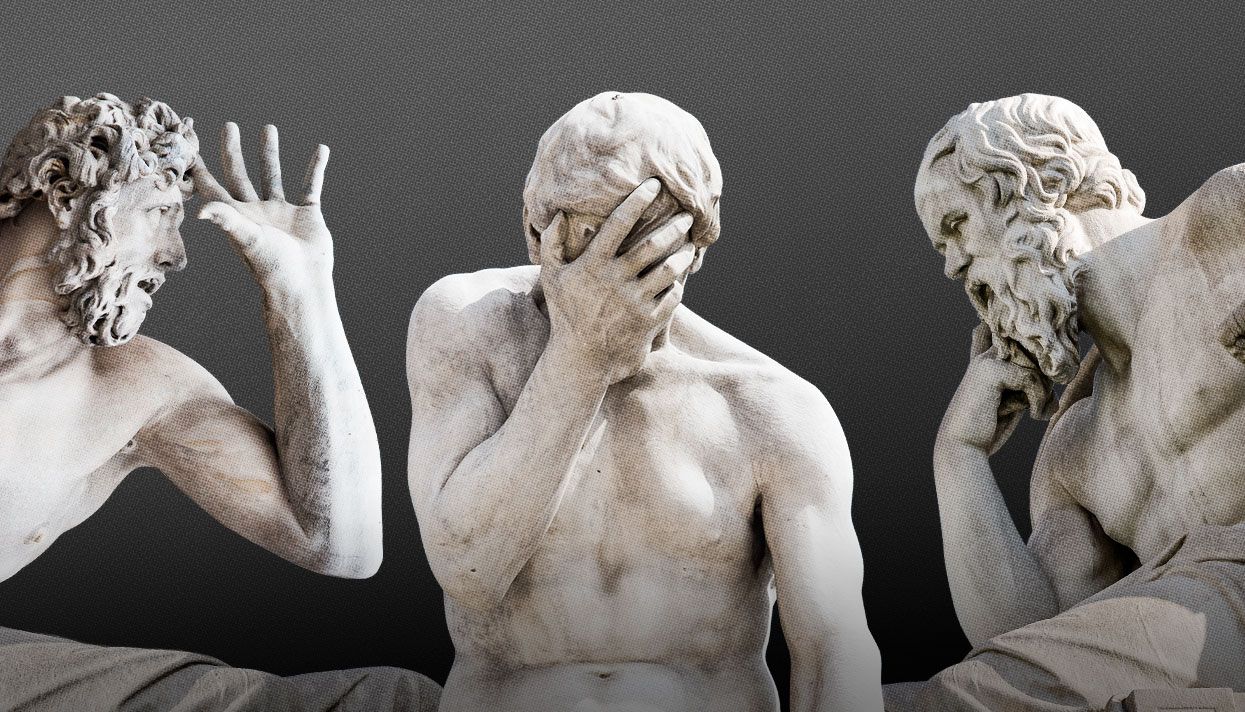
Inliberty, with the support of Medusa, launches a cycle of public discussions “ Great Disputes ”. The leading podcast “ The case ” and the editor -in -chief of “ Postniuki ” Andrei Babitsky explains what it is possible (and it is necessary!) To argue in 2018, when it would seem, it would be impossible to argue: the public opinion was supplanted by the private, the Institute of Public Discussions degraded what to argue about?
On the one hand, in Russia, there is nothing to argue about. It is impossible to seriously discuss the managerial talents of Aman Tuleyev or the texts of Vladislav Surkov. Any attempt to talk on an actual topic-from the strategy of election behavior to the fan zone of the World Cup at Moscow State University-after two steps rests on a concrete fence, because uncontrolled violence and theft, and not the dignity of football and political idealism are the subject of discussion. What is there to argue about.
On the other hand, what else to do. We have a bunch of time, and friendly conversations are the best way to get to be even with him, replacing the political struggle and a sermon that is absent in Russia as a genre. If the discussion of news does not make much sense, let's about the eternal - beliefs and values. We learn much more about ourselves and others, if we talk about what excites us every day, and not right now.
The only problem is that, according to the common opinion, we do not really have values. And if we personally have, then others definitely do not have; Popular contribution about 86% hints that most opponents hold their views for some superficial, abnormal, or even pragmatic considerations, but definitely not because they have any coherent system of beliefs. And this is just a belief that you can and should be fought.
The sign of the time is the crowding out of the private opinion of the public. It is necessary to greatly underestimate the interlocutors so that, having set the one and a half thousand respondents not very important by the standards of history and even human fate, to draw conclusions about what they think and feel actually. Some percent of our fellow citizens believe in flat land, support or do not support Putin, and oppose abortion. According to these atomic answers, it is difficult to reconstruct even the most unreasonable picture of the world.
Not only in Russia, but throughout the world, frustration has been accumulating for many years, associated with the fact that people who have been caught on the way from a kindergarten to a business center or responding to a phone call in the middle of the working day on Tuesday, people who have no incentives for reflection, give not the most accurate and balanced answers to completely accidental questions.
There are methodological reasons not to succumb to this frustration, but there are no less important household ones. A ten -minute conversation with any person who holds on his unacceptable views often shows that the interlocutor is not a cynical fool who sold his opinion for a piece of sausage. Private opinion can also be unprecedented and wild, but each time it is not an example of interesting public. Get any mistaken, and it turns out that behind his unlawful there is a whole picture of the world - his own values, beliefs and views on the nature of man and society.
This is what we need to talk about and why do you need a new Inliberty project - “ Great Disputes ”.
Watching any public discussion, it is difficult to believe, but in Russia there are left -wing and right, progressives and conservatives, defenders of democracy and skeptics who do not want to trust important decisions to uneducated people. All of them are simply because they are everywhere and always. Their judgments - no matter how often we say to ourselves about a special path and an inaccessible Russian soul - quite fit into the spectrum of disputes, leading hundreds and thousands of years to the best minds of mankind.
If you listen to the discussions of scientists from a variety of disciplines, it will become clear that disputes about the basic categories of the structure of society or the nature of man are still far from the end, and the positions themselves over the past few decades have changed repeatedly. Is it possible to make something if not good, then at least new and more from the crooked wood of humanity? Kant said not, and the Communists believed that they would. Most modern psychologists will agree, rather that our opportunity to influence a person is limited, but fifty years ago, thanks to Pavlov and Skinner, the idea was widely distributed in the world that with the help of the correct incentives of any of us can be sculpted as clay. Today, this dispute becomes relevant again, thanks to the fashion for gamification-if a person cannot be convinced to do something useful, you can come up with a mechanic that will turn a forced effect into a game.
Are our thoughts, habits and weaknesses the consequence of our nature or education? Do we have free will? Why do we refuse to behave, according to the laws of formal logic and economic rationality? Is it possible to separate science from pseudoscience? Is it necessary to build a human hostel, relying on the “facts”, whatever their nature? Is public progress possible and does it exist in principle? Do the nature of society change technologies or simply serve as the instruments of human activity?
It seems that these issues have nothing to do with current political disputes. What are the nature of the person we are going to support or bomb? But they, of course, have consequences. If a person is good, then give him freedom and he will make the world around better. If he is weak and unreasonable, you need someone strong and rational in order to protect him from temptations. If it follows natural inclinations, then it is necessary to judge him, but if he is a social animal that exists within the collective, we have to judge social orders. Whether it is necessary to put Vasya in jail - this is a private discussion, but our ways to answer this question directly depend on what we think about a person and society in general.
The cycle of public discussions will be held on its own site Inliberty Dawn . The first event will take place on April 19. And for those who doubt whether to go or not go, there is a warm -up test - about what you believe more: in genes or in education.
Andrey Babitsky