
Translated material
I, Cossack
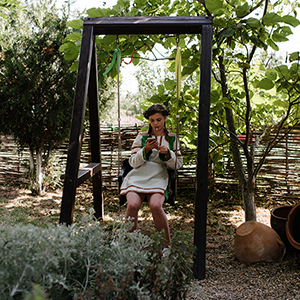
The issue of the identity of the Cossacks is still the subject of discussions: are they historically established nationality or public class? And what to do with suppression and repressions in relation to the Cossacks in the USSR (testing), resulting in a long interruption of tradition and finally confused the issue of self -determination?
During the 20th century, the Soviet epic - literature (in particular, Sholokhov’s novels), cinema, which has long interpreted the history of this ethno -social group in the most profitable angle for a long time. And today the “author” of the Cossacks in its modern form is largely a state, which has its own vision of its ideological tasks.
So, it was decided to create by the end of 2018 the All -Russian Register of Cossack Army under the leadership of the chieftain appointed by the president of the country. It is planned that it will be formed on the basis of Cossack associations existing in the regions. The initiative to create such an organization belonged to the Kuban Cossack army and was supported by the Council under the President of the Russian Federation for Cossacks.
The Kuban Cossacks are considered the most active in Russia, despite the fact that in the Krasnodar Territory, according to the 2010 census, only 5,261 people call themselves by nationality (8% of the total number of Cossacks). For comparison: in the Rostov region there are 29,682 people (44%), and in the Volgograd - 18,452 (27.3%). Nevertheless, the revival of the Cossacks is considered almost a priority task in this region. “Cossack squads”, patrolling cities, are opened here, Cossack classes are opened, numerous festivals of folk cultures are held, there are Kuban Cossack army and Cossack choir. One of the striking examples of such a policy is the State Exhibition Complex "Ataman".
If in the case of south of Russia Cossacks is one of the main supports of local identity, then in Primorye the problem of self -identification is aggravated by historical circumstances. Cossacks - Transbaikal, Don, Volga, even Kuban - moved to the Far East not so long ago, in the 19th century, and were listed as a separate army for a little more than 30 years. Today, attempts are being made to restore the traditions of the Ussuri Cossacks (whose successors, according to the same census, 152 people consider themselves), but it did not manage to acquire them due to the brevity of its existence.
Modern Cossacks embody their ideas about the rules of behavior, the moral code, appearance, etc. As their own capabilities. Often, inherited or accidentally found artifacts, the only thing that connects them with the past. And, as in the case of any reconstruction, their lifestyle is not determined by the internal need: it is an artificial reconstruction of attributes, mostly external ones. When the observer invades the world of Cossacks (in this case, the photographer), they further exaggerate their way of life, thus turning its documentation into concentrated production of simulacra.