
Translated material
The mission of Ozkhu visited the Syrian Duma
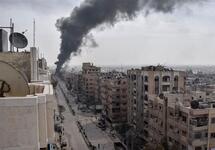
Employees of the mission of the organization for the prohibition of chemical weapons (OPCW) visited one of the places in the Syrian Duma, where Himataku probably occurred and collected samples for analysis. This was reported on the organization’s website.
The collected materials will be sent to the OPCW laboratory in Reykjavik, Norway.
"OPCO will assess the situation and consider future steps, including another possible visit to the Duma," the organization said in a statement.
Based on the analysis of the collected materials and other information obtained by the mission, the OPCO will draw up a report on the events in the Duma, which will present the countries that signed the Convention on the prohibition of chemical weapons.
The OPCW mission arrived in Syria on April 15, the day after the strike of the US troops, Britain and France for the production facilities for the production of chemical weapons.
On the 16th, it was reported that the regime of the dictator Bashar al-Assad and the Russian forces supporting him did not allow employees of the mission to the place of Himatia in the Duma. OKZO experts said they cannot guarantee their safety.
On April 20, French Foreign Minister Jean-Yves Le Drian said that Moscow and Damascus are hindering the investigation. "This is probably done in order to destroy evidence and material evidence in the place where a chemical attack took place," the head of the French Foreign Ministry said.
Le Drian noted that Russia in recent days puts forward conflicting versions of events in the Syrian Duma: "It is said that there was no Himakaki, then this is the work of the rebels; and the next day it is declared a Western fake." At the same time, Moscow does not care about sequence and reliability, as he seeks to “sow doubts and confusion,” the French minister said. He recalled that France presented a detailed report on Himatak on April 7 , which contains comprehensive evidence of the responsibility of the Assad regime.