
Translated material
The teacher of invincible
Leo Gankin escorts Arsenal coach Arsen Wenger - a man who changed English football
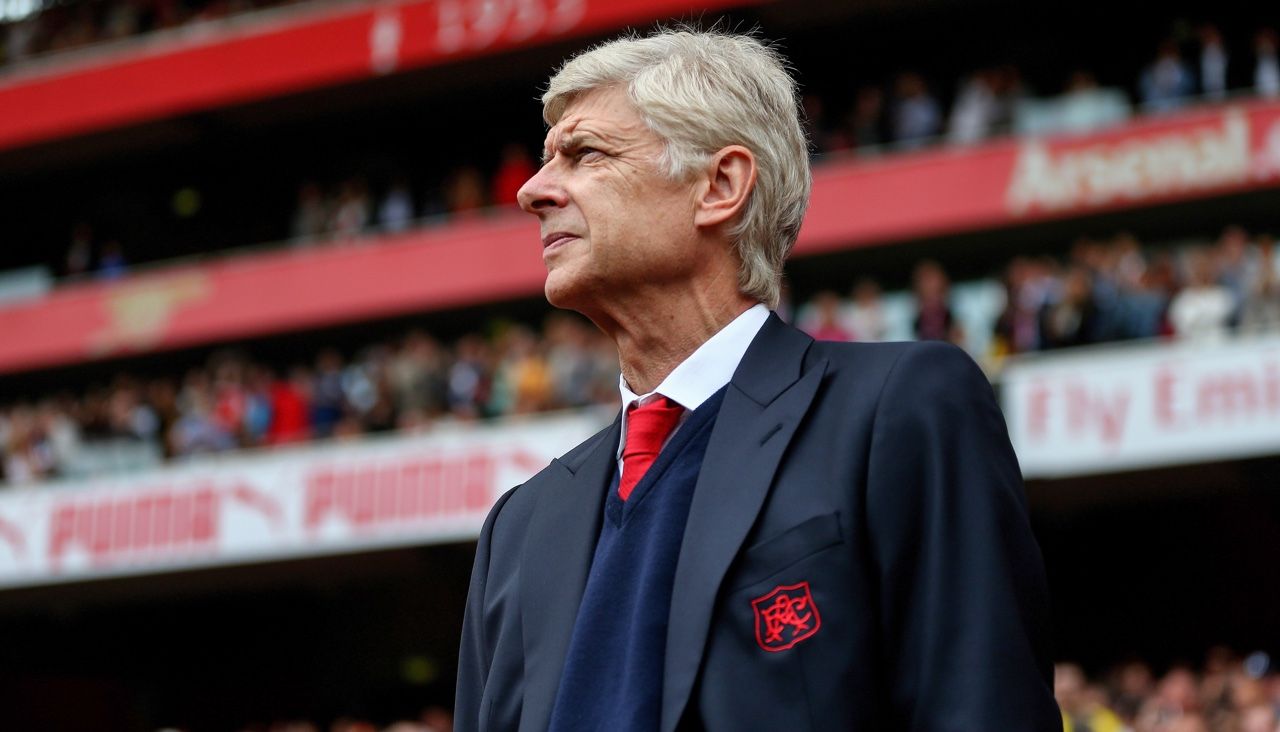
On April 20, it became known that at the end of this season, the head coach of Arsenal Arsen Wenger will leave his post. Wenger headed Arsenal for more than twenty years - under him this team won the championship of England several times, reached the Champions League final and set a historical record, having never lost in one of the seasons. At the request of Medusa, Lev Gankin explains how Wenger changed English, and not only English football - and why his era was over.
“Boring, Boring Arsenal” - “Boring, Boring Arsenal”. This is the name of one of the chapters of the “football fever” of Nika Hornby, in which the main character complains at the inexpressive, maximum defensive game of his favorite team. The case takes place in 1969, the meeting of Arsenal and Newcasl is described. The next twenty years, the situation has not changed the situation-for example, from December 1992 to March 1993, the team held 12 consecutive matches in which exclusively accounts of 0, 1: 0, 0: 1 and 1: 1 were recorded exclusively. “Arsenal has such a plan - we must hate us,” wrote Hornby. “We [the fans of Arsenal] love the team, which all others consider in the principle of unworthy of love.”
Now this is believed with great difficulty: over the past two decades, Arsenal is lying, perhaps the most playing team in the English Premier League, masters of subtle attacking combinations, witty programs for contrary, technical “walls”, leaving the opponent’s defenders, and other football fil) in the fools. In their matches, it is clogged - and passes through - a huge number of goals. In 2011, the Arsenal and Newcasl match did not resemble the game on which Hornby turned out to be Hornby many years ago-the London club in the first half stole four goals to his opponents, after which he safely squandered the advantage in the second half of the match. Three years earlier, with the same account of 4: 4, the Arsenal’s game with Liverpool ended with the same football: in Russian football mythology, she will forever remain due to the poker of Arsenal midfielder Andrei Arshavin and the commentary of George Cherdantsev about the “car to a special hospital”. Arsenal is also responsible for the richest match, which I saw on the air: 7: 5 with Reding in the 1/8 finals of the Cup of the English League in 2012.
The team, and all the English football, owe this reincarnation, owe a high fried person who resembles a large smart bird. Arsen Wenger came to an almost club of the same name in 1996, becoming only the third foreign coach in England (after the eccentric Slovak, Joseph Venzlosh, who had a briefly worked with Aston Villa, and Ruud Gullita, who had become a short-playing Chelsea coach). If the players from the continent at that time were no longer considered in the Premier League exotic, then the clubs, as a rule, were still working by old-school British-Selo-wires, so the appointment of Wenger was perceived with skepticism. "He speaks in English?" - the captain of Arsenal, defender Tony Adams, was interested. It will take a year and a half, and Tony will suddenly be in the position of the central attacker in the match with Everton, will accept the program from Steve Bowld, his colleague in the protective line (this is the bald man who has been sitting on the Arsenal’s coaching bench on his left hand from the head coach in recent years), and will bring Arsen to Wenger the first English championship.
Adams’s sudden exit is one on one in a historical match is a direct consequence of the coach’s work. If, in the near -football affairs, Wenger was almost a dictator (the players complained that he forbade them to even eat chocolate, not to mention the drink - his favorite form of removing the stress of British football players of the old model), then, on the field, he appreciated freedom -love and playing intuition. Even at his previous place of work, in the Japanese club "Nagoya", Arsen shouted to the ward: “Do not ask me what to do with the ball! Think for yourself! " A good reason to recall another Arsenal and Newcasl game, in 2002, and the brilliant improvisation of the Dutch Dennis Bergkamp, who led to a goal recently recognized as the best in the history of the English Premier League. This is impossible to train: the only way by which the coach can increase the likelihood of such heads is to liberate his wards as much as possible, show that he believes in the team and in each of her player. Wenger believed - and this faith was unshakable, although sometimes it seemed blind and reckless: for example, when he said in a blue eye that the Arsenal could go through the whole season without defeat, although this was the last time in the history of British football in the 19th century. With this phrase, it was a lot of trolls-even sarcastically placed it on a T-shirt with the signature of “Wonderful Wenger”-and a few months later, in the 2003-2004 season, the legendary team of “invincible”, which did not lose 49 matches in a gathering, implemented the coach’s chap-keeping slogan into life.
However, when playing intuition was not enough, Wenger was capable of thin tuning - both in training and during the match. For many famous football players, he boldly changed his position on the field: Thierry Henri, for example, moved from the position of Winger to the center of the attack, where he became one of the best in his generation, and, on the contrary, he transferred from the support zone to defense. Coaches are often divided into two categories: those who count, first of all, on star players capable of a brilliant insight to solve the outcome of the match, and those who, on the contrary, builds a tough tactical scheme where any superstar is simply obliged - or ruthlessly part with it. The Arsenal of the Arsenal of the best samples subtly combined both approaches: there was no shortage of great football players who were allowed on the field (Viyira, Bergkamp, Henri, Fabregas, Van Persia, and Aleksis Sanchez), but the gear of coaching thoughts did not stop spinning for a second. Therefore, for example, in the 2005-2006 season, the team managed to get to the Champions League final with protection assembled from the Successes from the Switzerland type players from the sky from the sky of the Switzerland or Cat Dʼivoir, and not to miss a single goal in the playoffs to the decisive match with Barcelona.
Real control-Frick , Wenger changed the idea of what is included in the coaching profession: he closed not only training and leadership of the team during matches, but also all other life of the club-from diets of football players to financial statements. The latter, in particular, forced him to realize him in the mid-2000s that the Arsenal needed a new stadium to increase competitiveness-and, despite the sentimental attachment of fans to the little Hayberi, Hungarian has bravely authorized the construction of a large Emiris arena. Brave - because at that time American and Asian thick people with multi -million -dollar sponsorship contracts have not yet come to European football; Money for construction had to draw from internal reserves. This meant: the skinny years have come, he would have to bother with salaries and transfers - and Arsen decided on this, once again believed his players.
The experiment did not pass painlessly: the salary ceiling set by the coach in the club was criticized from all sides, since it turned out that the top superstars and talented youth received approximately equally. As a result, the team began to periodically leave the best players, without disdaining even to go to direct competitors-as striker Robin Van Percy, who moved to Manchester United in the summer of 2012. All of them repeated the same mantra: “We need trophies” - and the only trophy that Hungarian could offer them was a prize of spectator sympathies for bright football, which yesterday “Boring Arsenal” by the middle of the zero stood behind him for many years. Despite this, the team in the first twenty years of the reign of the French coach never fell below fourth place and regularly played in the Champions League ” - and although there are thousands of memes and jokes about this fourth place, under the current conditions, Wenger definitely squeezed out of Arsenal the maximum and even more.
One of the Black days in the history of the club, when Arsenal in August 2011 lost to Manchester United with a score of 2: 8, the United Defender Patrice Evra said in the post-match interview: “It feels like eleven men against eleven children.” Offective words, in which, however, there was an objective truth: realizing that he could not fight, for example, with Chelsea Roman Abramovich for profitable contracts for the top players, Arsen Wenger turned the Arsenal into the best SDUSHOR of the world, opening several fresh talents every year. In 2006, the head coach of the England national team Sven-Joran Ericksson took 16-year-old Theo Walcott to the world championship, which was regarded in hot pursuit only as madness-but it seemed that Ericksson simply understood that in the oak and the Arsenal youth team it could be more likely to find a class promising football player than in the starters of many others Teams of the English Premier League.
On the one hand, Venger won almost nothing more with his “children” - most of his achievements relate to the first decade of work in Arsenal, before the construction of a new stadium and a change in financial strategy. On the other hand, from Fabregas, Walcott, Wilsher, Okslaid-Chemberlene, Ramzi, Beligirin and others, it was the coach who had fashioned the main players of his national teams. In October last year, a football player who was born after the Arsenal coach was first scored for the team in the official match, - striker Edward Nketia.
The problem was only in one thing: the fans of Arsenal did not really want to worry about the SDUSHOR. Especially in the 2000s, with their even more accelerated rhythm of life and permanent media hysterics: any season without trophies was automatically perceived as failure and provoked the further, the more loud conversations about coaching retirement, and the cameras mercilessly grabbed fans that stunned fists-one, a colorful long-haired uncle with a ring in his nose, I remember the most.
Two decades earlier, the president of the Japanese Nagoya told Venger to the question of the task: “My dream is to make the club the best in Japan and in the world in a hundred years.” This is a normal temporary backlash, the coach smiled, and not the British requirements of the result here and now. His resistance to the fan and journalistic “drop-yes-lane” over the past decades is a separate beautiful and slightly sad story: a large smart bird falls into a cage, full of small fussy tweeting creatures that peck it from all sides, and she tries to maintain her own dignity and purity of plumage. And after all, Wenger was experiencing definitely no less than the authors of the Wenger Out banners (“Wenger, Leave”) in the stands: in his youth, he was eager after the defeat of the French club “Nancy”, in which he began a coaching career, and to this day, each lost match adds new wrinkles to his already crossed area to the face. He worried-but kept calm and almost did not break into the journalists or the players, continuing with the enforcement of all intelligent prudence to answer provocative questions at press conferences.
In Arsenal, Wenger, as it is now clear, will work twenty-two seasons-an almost record time for European top-leagues (only Alex Ferguson had more). Such a longevity itself in the profession is already yesterday, and it is no coincidence, commenting on the departure of the great coach, his colleagues, Josep Guardiola from Manchester City and Jurgen Klopp from Liverpool, they unanimously said that they did not see themselves in profession at the age of the Arsenal coach. “I do not need football to be happy,” Klopp admitted. Wenger could not and, apparently, could not-it is already known that he is not going to retire, like Ferguson, and, most likely, will continue to work somewhere else. Perhaps yesterday, Arsen’s football philosophy is also presented today: the willingness to make an instant result in favor of long -term strategic planning, stubbornly following the chosen game style once, instead of acting in circumstances in the name of victory. “Boring Arsenal” Wenger turned into “Scoring Arsenal”, “arsenal” clogging - and did not refuse the principles of a charming attacking game even when there were no born bombers like Bergkamp or Henry.
Actually, this is the main thing - with the departure of Arsen Wenger not Arsenal, and all world football finally says goodbye to his “yesterday”.
Lev Gankin