
Translated material
Purchases without corruption

What is the secret to the success of the Prozorro public procurement program?
Vitaly Portnikov: Prozorro state procurement program is considered one of the most successful reforming projects of the Ukrainian authorities. What is the secret of success? This is our broadcast today, but at first the plot of my colleague Vladimir Ivakhnenko .
Vladimir Ivakhnenko: State purchases in Ukraine have always been a reason for the suspicions of officials in corruption. All offers for auctions were previously submitted in envelopes, and agreements were reached in closed rooms. For goods and services, the state often paid 30-70% more than their market value. After public changes in the country in 2014, civil activists and volunteers, with the support of the International Organization of Transparency International, began the development of an electronic procurement system to save this sphere of corruption. From the volunteer project, it turned into the state under the patronage of the Deputy Minister of Economic Development and Trade Maxim Nefedov. Having studied the experience of Georgia and Portugal, the authors of the initiative created a three -component system of Prozorro electronic tenders. The state, IT business and society are involved in it. The state makes it possible to earn money companies and at the same time receives quality goods and services at minimal prices, which are automatically determined during electronic auctions. The system is based on the philosophy of complete openness of the data - "everyone sees everything."
The pilot project of the automated public procurement system earned three years ago, and since August 2016 it became mandatory for all state customers when purchasing goods worth more than 200 thousand hryvnias (about 7 and a half thousand dollars) and services worth more than one and a half million hryvnias (57 thousand dollars). Small purchases can still be carried out without tenders.
The main achievement of “Prozorro” in the Ukrainian government is a simplification of business access to trade auctions and the transparency of all procedures. In 2017 alone, 250 thousand tenders were held. During the action of Prozorro, the state budget managed to save almost 38 billion hryvnias (one and a half billion dollars). The most purchases in the electronic system were held by the Kiev city administration, the Ministry of Infrastructure, the Dnipropetrovsk Regional State Administration and the Mariupol City Council.
State purchases in Ukraine have always been a reason for the suspicions of officials in corruption
However, not everything is smooth in the work of “Prozorro”, as her opponents say. Critics of the project argue that the new trading system has only temporarily complicated theft of public funds, and now officials have learned how to go around it, for example, entering into an unscrupulous competition with private business. By responding to criticism, ProZorro developers emphasize that the electronic procurement system is just a tool, and not a panacea from corruption. Thanks to the openness and constant monitoring, a lot of transactions were cancelled in which the real cost of goods and services is overpriced ten times. Despite the existing shortcomings, for the reforming economy of Ukraine, this is an important project that made public procurement more transparent and allowed to save budget money.
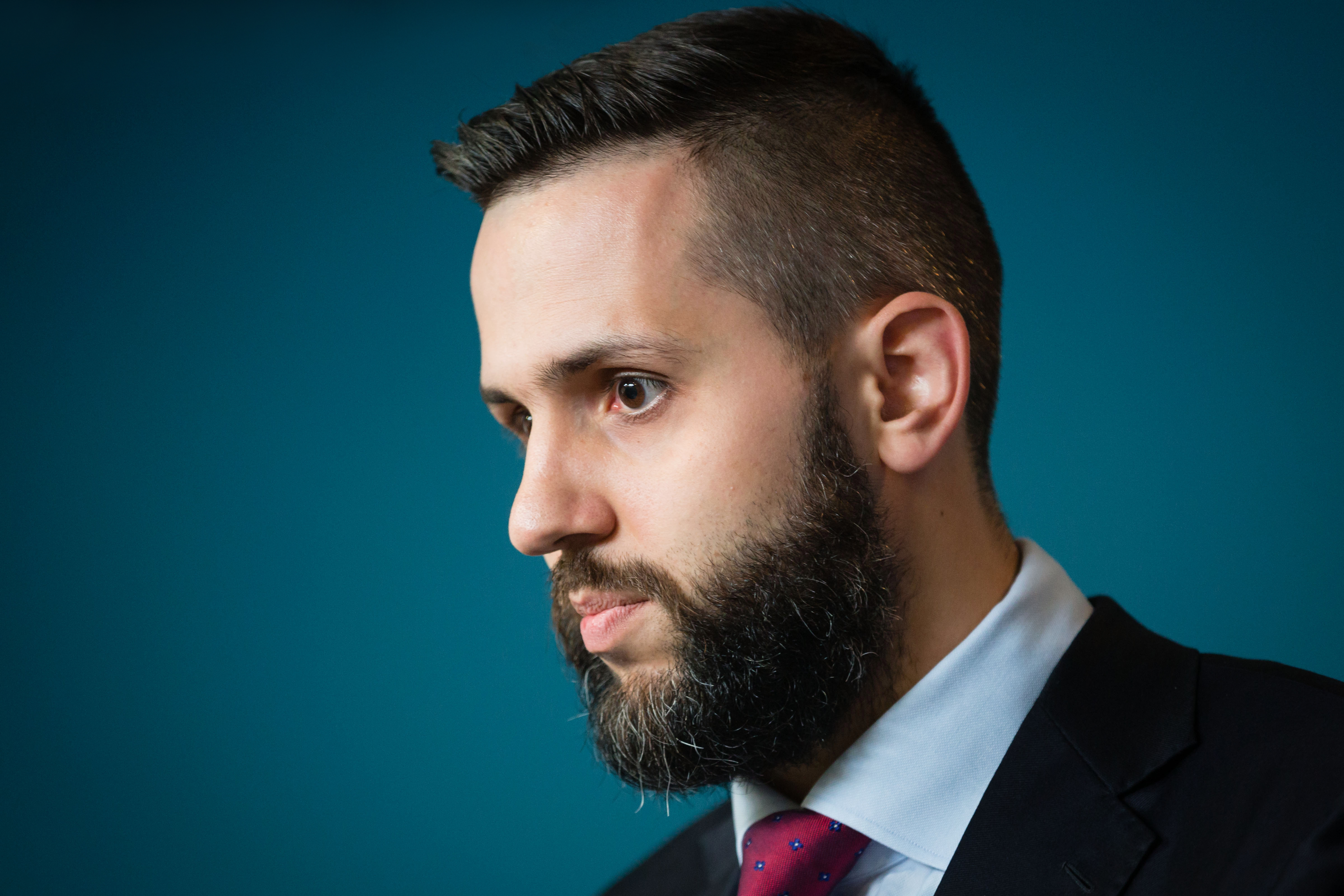
Vitaly Portnikov: The guest of our current broadcast is the First Deputy Minister of Economic Development and Trade of Ukraine Maxim Nefedov .
The Proozorro program is one of the obvious successes of the Ukrainian government for all the years of reform. It is very interesting to understand why this happened.
Maxim Nefedov: “Prozorro” is only a component of reform. Yes, he is most interesting to the audience, you can go to the site, glorify; Everything related to online is considered fresh, modern and better. In fact, this is only a brick in the general reform of the procurement. From the state of A - real gold toilets, golden loaves, terrible corruption, unfinished bridges, kickbacks and the general conviction of business, that without a kuma, without a bribe with the state, it makes no sense to even start dealing, we are trying to go to paragraph B, to a situation where everyone can trade with the state, sitting on his sofa with a laptop, when it is not necessary to collect certificates when, in principle, one can not know who does not know who, in principle. The director of a particular institution, everything is done anonymously, online and as transparent for any taxpayer, and all this can be monitoring.
There are many such bricks. Many of them are built slowly. For example, buying training is a topic, as everyone understands, important. Even if the most modern tools are given to unprepared, unmotivated people, they are unlikely to be able to become excellent drivers, builders or architects. The same is with buyers. It is clear that this causes less interest to the public. At the same time, “prozorro” how exactly the electronic component seems much more interesting to everyone.
Vitaliy Portnikov: On whose experience did you rely when preparing it?
Maxim Nefedov: It cannot be said that there is some kind of reference experience in the procurement. Purchases are the same tool, an attempt to create some rules and some architecture that will allow to be the optimal result in a certain market to buyers and business of a certain quality and mental properties. There is no ideal product, and there is no ideal tender.
Small countries where everything can be centralized, where there can be a hundred buyers throughout the country and where, in principle, there are not a lot of business and competition, this is one situation. There may be some other situation: the United States or China, giant countries with giant regional markets, with the lack of national suppliers in many areas, and there is a completely different situation, there are tens of thousands of purchasers, hundreds of thousands, millions of suppliers.
Ukraine is located somewhere in the middle. We are a fairly large country, more or less homogeneous, in order to be able to build a single system of procurement throughout the country. We studied primarily on the experience of countries that have been working with the so-called “Legasi Systems” for a long time: the same South Korea, who built a system in the 90s, which looks like, probably, any person imagines purchases, if we ask him on the street. This is some kind of website: buyers go there, some kind of tender is being entered there-I want to buy one hundred tons of milk. Suppliers also come in: I see a tender - milk, one hundred tons; I will send my offer there, I’m ready to put it for a thousand dollars. This is an interesting system, but, frankly, already quite outdated in our time.
On the other hand, there is an interesting experience in Georgia, which approached purchases from the point of view of much greater freedom and much less following rules. On the third party, there is the experience of the European Union. We will still implement an association agreement, so for us in this regard there is a certain number of external restrictions. And, finally, the last thing we took into account is the standards of open data that exist in the world. From the very beginning, we were laid down on the fact that Ukraine should be a leader in this regard. If we have already encountered the situation with the same golden loaves and gold toilets, then we must move to a situation of absolutely radical openness: every citizen has the opportunity to see everything that happens in the procurement.
Vitaly Portnikov: And what did it look like?
Maxim Nefedov: There was a classic paper system, that is, each state agent announced his tender, somewhere in the bins he had a tender documentation, there was an old site on which the announcement was simply posted that, for example, such and such a school wants to buy one hundred tons of milk. If you want to know on what conditions and what agreement will be, call Ivan Fedorovich, come to school, there is a package of paper documents, you study it, xerite, photograph the phone. After that, you go to your office, consult, make a package of documents, collect all the certificates, then put the seal to each page, write off, sew it with threads, sealed with a piece of paper, put the seal again and bring in the sealed envelope. Then you can come to the notorious office 15 by 15.00.
It was necessary to remain on the opening of envelopes, because there were repeatedly situations when the proposals of competitors are opened, then the chosen winner is whispering the desired price in the ear, he leaves with his piece of paper somewhere in the right room, rewrites it, sealed and reports. If you are an honest businessman from the conditional Lviv, and you want to take part in the tender in Mariupol or in Kharkov, how many such packages can you prepare at the same time, how much can your accountant get a tax certificate at the same time? It is clear that these barriers lead to the fact that competition on tenders falls. Even without any corruption, the state overpays. We all understand: if one or two participants come to the tender, it is a little naive to think that they will bargain among themselves.
Vitaly Portnikov: You want to say: when you introduced an electronic system, has it completely changed?
We are trying to change the behavior and attitude of hundreds of thousands of people who participate in procurement
Maxim Nefedov: Ideal does not exist. We are trying to change the behavior and attitude of hundreds of thousands of people who participate in procurement. Now at least every person who wants to participate in the procurement knows that he has all the information about the tender, and the supply of proposal, and the auction that is mandatory, and all this happens online. After that, you also give your anonymous proposal online in the same way. Any person, the same law enforcement officer, the same deputy sees the same thing - company 1, company 2, company 3. Anonymous auction takes place further. As soon as it ends, everything is opened, and then you see the name of the company, and you can check what documents were submitted, and so on.
Accordingly, if there is any problem, you say: no, the winner is disqualified because he did not put any certificate. Again, there is no need to argue about it. Anyone can click, go into the proposal and see if there was a certificate or it was not. In the same way, you can file a complaint online. All this happens approximately like on eBay: click the “file a complaint” button - the tender is suspended, frozen, blinks red (tender in a state of appeal), and then for 15 days the antimonopoly committee makes a decision in one direction or another. Of course, this radically reduces the barrier of participation in the auction, respectively, prices are falling.
We now have a share of small business, which is participating in the auction, 18 percentage points higher than in the European Union. We see that business trust in procurement is very growing. I do not want to say that it was very bad, but now it has become perfect. No, it has gone perfectly, but it has become much better. More than 80% of suppliers say that it has become better or much better than before. The share of companies that have encountered problems during purchases has almost doubled, and problems here are not only direct corruption, but in general, bureaucracy, incomprehensible documents, difficulties, some barriers, just a banal bureaucratic rudeness.
Vitaly Portnikov: Can ProZorro be deceived?
Maxim Nefedov: The question is what to mean by “deceive”. Is it possible to deceive, for example, a roadbread camera? Of course, people smear numbers, do something else. This is probably possible, but this share is extremely small.
Are there any violations? Certainly. If I could make the righteous out of sinners, I probably would not have worked in state bodies, but would have founded the church. Of course, people who are accustomed to live very well all their lives, buy yachts, private planes, when they come in to the state budget, have not gone anywhere, they are still trying to make fraud. So we are on the right track, but we have not yet reached a total victory.
The advantage is that we can track all these cases. There are hundreds of criminal cases of fraud in the country. And even where the corrupt officials hid, and not evaporated, they try to behave much more modest, because they understand that they will face problems. Yesterday we have ended a scandal with a purchase purchase for schools of one of the Kyiv areas. There, an absolutely impudent scheme that used to ride before: we declare a tender, look, and if we do not like the winner, cancel the tender, re -rensure, cancel. This for all participants in the process will end extremely sadly.
An indicative example is the company Metro. Cash and Carrie ”, a large German retailer. Before Proosorro, they could not win a single tender on the handle, or toilet paper, or on bread - it was not lucky. Now it is a major supplier for many Ukrainian state bodies, that is, the situation is improving.
With violations that we see, we are fighting at least increasing the risk for corrupt officials. Just two months ago, the president signed a new law on automatic monitoring. Ukraine will become the first country in the world that does not introduce manual procurement monitoring when a policeman or auditor simply looks and says: something here is not right, I will initiate a criminal case; Now each tender will be checked in about the same scheme as banking scoring, that is, it will automatically go into the risk management system, and the computer will check all this according to many criteria. Accordingly, if red flags work, the tender will automatically go to a review. This is a powerful tool for combating violations.
Another such tool is open data. After all, what is one of the main problems of paper tenders? An honest person and a paper tender can hold honestly. The problem is that we cannot find dishonest, in the fact that in a paper tender you can buy medicines in one hospital ten times more expensive than in the other, and you will not even know about it. After all, even if we get some signal from a journalist or human rights activist, it is not clear what was the further mechanism of work. The Ministry of Economics requested information, and, as a rule, we were answered in a month in our paper letter: you know, there was a fire (either a flood or mouse ate, or something else happened), and it seems like not to find guilty. Here we can automatically compare gasoline prices, aspirin, milk and so on. Accordingly, we can find those cases where fantastic abuses are really found, but now for this you can beat hands, dismiss, punish, clean the system.
Vitaly Portnikov: You talked about abuses with the budget. I always believed that abuse with the budget is also a huge number of state -owned enterprises, which, by the way, are managed by your ministry. What do you think when this stage ends?
Maxim Nefedov: Fortunately, we do not manage them, but simply establish a policy, but by this is governed by numerous state bodies. But here, of course, we, of course, advocate radical privatization, simply because the presence of a huge amount of state property, whether it is state -owned enterprises, state land or state real estate, is an energy dependence among officials.
Many believe that the state, common is like a draw, respectively, from this you can cut something for a future happy life. Of course, even in cases where we mention corruption, it is just total inefficiency. The state is rarely a stringing owner who is well monitored at what rate his property is surrendered or what they grow on the agricultural fields belonging to him, how certain state -owned enterprises behave. Directors of these state-owned enterprises know that if they even completely fail, they can always come under the government or under parliament with an outstretched hand, say that they have a thousand jobs, and we must somehow help from the budget.
At the beginning of 2018, finally, a new law on privatization was adopted, thanks to which we will try to restore order in this area. Privatization in 2016 - it was rather a failure than success. We are trying to radically simplify the privatization rules. All companies will be divided into only two groups - large and small. The difference between them is in understanding whether it is a business or not a business. At a large enterprise, you can conduct an audit, build a financial model, the analyst will consider prospects, and you can evaluate this as a company. Of course, it is sold with investment obligations, it cannot be cut into scrap metal, it must be invested in it, and so on. Small assets, even if it is a legal entity, actually do not conduct any activity, they have a turnover - one million dollars a year, ten employees and so on. This is rather a development site. There we are interested not so much in maintaining activities as in this place the windows and fences were not pounded, and something rusted, in ensuring that new plants or new buildings were built there.
Крупные объекты будут продаваться так же, как они продаются в частном секторе, то есть государство будет нанимать советников, инвестиционный банк, который будет готовить предприятие к продаже, рекомендовать правительству цену, проводить переговоры с инвесторами - не так, как это делают чиновники (не всегда вежливо и профессионально), а так, как это принято в бизнесе. Малые предприятия будут проданы через онлайн аукционы.
Многие считают, что государственное — это вроде как ничье, и из этого можно что-то себе нарезать на будущую счастливую жизнь
У нас есть такой сестринский проект ««ProZorro продажи»: та же самая логика, те же самые электронные аукционы, только не на понижение, а на повышение цены. Мы очень успешно работаем со многими активами, например, с имуществом банков, которые обанкротились и отправились в фонд гарантирования вкладов с избыточным имуществом госпредприятий. Поэтому мы абсолютно уверены, что справимся с малой приватизацией. Я думаю, что, начиная с конца июня или июля, мы увидим первые аукционы по новым правилам. Я очень надеюсь, что из тех 3500 госпредприятий, которые есть в стране только в управлении правительства, мы сможем радикально снизить эту цифру хотя бы вдвое.
Виталий Портников: Есть какое-то внутреннее сопротивление этому процессу?
Максим Нефедов: Конечно, есть. Так же, как и в закупках, те люди, которые жили на этом многие годы, жили очень успешно, очень богато, и, конечно, они, мягко говоря, не рады этому процессу. Это успех для налогоплательщиков, для каждого украинца, потому что он просто снимет со своей шеи прилипал, перестанет каждый год финансировать из бюджета убыточные предприятия. Для их директоров, для менеджмента, иногда для политической коррупции, которая может существовать рядом, это огромный удар. Это, собственно говоря, и есть борьба за построение новой Украины. Для меня это очень хороший показатель того, что эти реформы настоящие. Наоборот, плохо, когда реформам никто не сопротивляется, если ты что-то делаешь, а тебя только хвалят. Для меня это очень подозрительно — это означает, что никто от этого не пострадал, что мы не сталкиваемся в этой сфере ни с какой коррупцией, неэффективностью. Правильные реформы происходят тогда, когда ты понимаешь, что принимаешь какое-то решение, и после этого все предыдущие хорошо известные личности начинают подавать на тебя в суд, лить против тебя черный пиар или каким-то образом бойкотировать эти решения. Это означает, что ты действительно вычищаешь болезнь из организма.
Виталий Портников: Вы были одним из представителей бизнеса, которые пришли на государственную службу после 2014 года. Многие ваши коллеги уже ушли, очень разочарованные, а вы продолжаете работать - почему?
Максим Нефедов: Надеюсь, что когда-нибудь я уйду. Это абсолютно нормальная ротация. У нас почему-то часто считается, что есть два мира — мир чиновников и мир бизнеса, и они никогда не должны пересекаться между собой. But this is wrong! Государственные чиновники должны чувствовать, что они могут быть востребованы в бизнесе, тогда они уже не будут так раболепствовать перед своим руководством, не будут бояться, что если они примут какое-то не то решение, которое им спускают сверху, то станут никому не нужны. Нет, они должны понимать, что если им навязывают какое-то решение, противоречащее их этическим принципам или просто банально глупое, то они всегда могут уволиться, отказаться это делать. Они найдут себе работу в частном секторе. Так же и для представителей частного сектора, для бизнесменов не должно быть зазорным идти работать на госслужбу, это не должно восприниматься как какой-то вид деятельности, где ничего нельзя добиться, и это как-то стыдно.
Виталий Портников: Очень многие бизнесмены сами идут в депутаты.
Максим Нефедов: Я же говорю не о тех людях, которые думают идти на госслужбу, чтобы на этом зарабатывать, а о тех, кто воспринимает это просто как работу, призвание. Наверное, государственная служба не может платить столько, сколько в частном секторе, но она должна платить достаточно, чтобы человек мог прожить, чтобы можно было прийти и попробовать что-нибудь построить. В конце концов, работать на государство действительно очень интересно. Никогда ни в одной частной компании вы не столкнетесь с такими вызовами, как здесь.
Даже взять, например, «ProZorro»: бюджет государственных закупок прошлого года в стране - почти 18 миллиардов долларов. В Украине есть не много компаний, у которых такой оборот и сотни тысяч клиентов. У нас зарегистрировано 150 тысяч компаний — это же наши клиенты. Я перед ними всеми отвечаю, пытаюсь обеспечить им самый лучший сервис, пытаюсь к каждому из них относиться так, как банк относится к своим вкладчикам, как мобильный оператор старается угодить своим клиентам. Как госчиновник я заинтересован, чтобы они принимали участие в госзакупках, чтобы конкуренция росла, цены падали, а качество росло.
Мы должны прийти к пониманию того, что это наша страна, и никто, кроме нас с вами, ее не построит. Нет какой-то элиты или каких-то политиков, которым это нужно, а мы можем просто каждый день трудиться, смотреть телевизор, ходить на футбол и игнорировать эту часть жизни. No.
Виталий Портников: Так это было после обоих Майданов - многие люди так считали.
Максим Нефедов: Я очень надеюсь, что эта ситуация изменится. Собственно говоря, из-за этого я и пошел работать в правительство. Я не призываю кого-то с экрана: вы там идите, а я дома посижу. Я хочу и личным примером показать, что изменения действительно возможны. Я - обычный человек, я не считаю себя более умным, талантливым или подготовленным, чем любой украинец. Я могу прийти и что-то изменить. Я не могу сказать, что я или наша команда сделаем идеально, но мы смогли заложить какой-то фундамент. Приходите, замените меня и сделайте лучше, продвиньте это дальше — вам это точно по силам.