
Translated material
Christ and fools
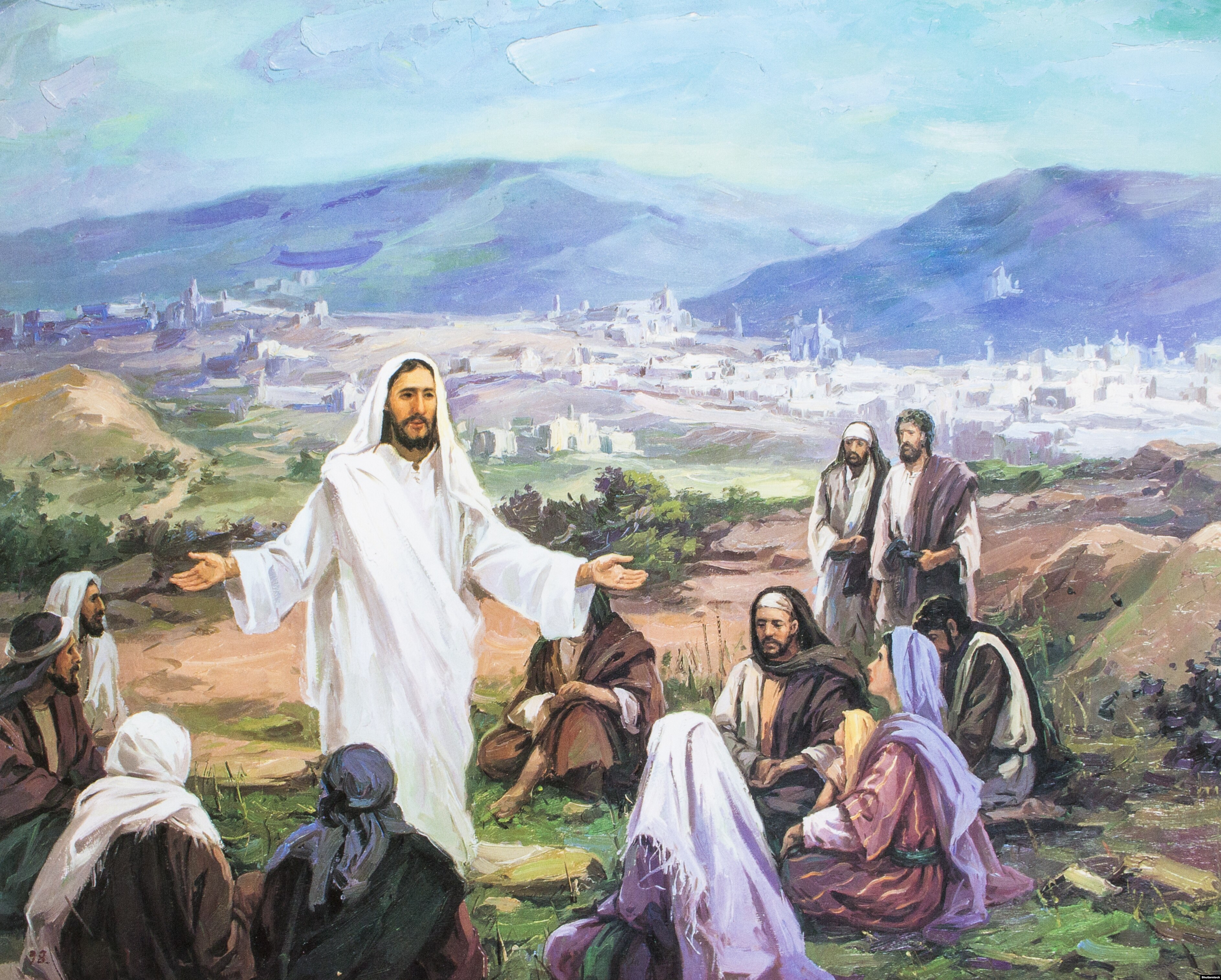
Why did Jesus forbade people to call people fools?
- There is a commandment in the Nagoric sermon: do not call your neighbor a fool.
- The scripture does not say that the value of a person is in the strength of his intellect - it is in something else.
- The word sometimes does not just hurt, but can kill psychologically: a person can carry this load all his life.
- The main thing is that a person is in his place. People with not very high intelligence should not solve state problems.
- Stalin was a villain, but not a fool. A smart person can be a great villain.
Yakov Krotov: This release of the program is dedicated to fools. A whole country, the Russian Federation, despite the constitution, scripture, and so on, as one of the cornerstones of its existence, considers it necessary to condemn fools. Why in the Gospel, in the Nagoric sermon, this commandment is standing: "Do not call your neighbor a fool."
Our guest is the Orthodox priest Roman Zaitsev and psychologist Alexander Imashev .
Father Roman, did you have to call someone fools, mentally or aloud?
Roman Zaitsev: Yes! The concept of "cancer" is an empty person, and to say this is to take on the prerogative of God. We still see how easily they write out tickets to hell, as if they have a direct connection. This is especially evident from famous people who somehow did not please the Orthodox. But there is also a spiritual murder. If a talented child is constantly spying that he is so useless, most likely nothing will come of it. Or here are famous people-actors, directors, scientists-often the first time did not go to some higher educational institutions, and the teachers said to them: you are empty, you are no good. And the world could lose the greatest man. I think this is exactly what Christ had in mind.
Yakov Krotov: “An empty person” is a literal translation of the word, but in the context of the Gospel, the Savior speaks several times about the void. They expelled demons - and the soul of a person is like an empty house, and if God does not settle there, then demons will return and bring with them more. The soul should be filled with something. From the point of view of psychology, is this an archaic figurative system or not?
Alexandra Imasheva: Not really. In psychology, we also have such a thing as an inner emptiness. Usually this is due to the loss of meanings, that is, a person seems to live, but does not know where to go. It seems to me that this is just approaching this case. But if he feels empty inside, this does not mean that he is actually empty. There are meanings, he just does not see them.
Yakov Krotov: In Russian classics there are two novels - the “idiot” of Dostoevsky and “Anna Karenina”, Tolstoy’s answer to “Idiot”. In Prince Myshkin, Dostoevsky intended to give in this image of modern Christ - it seems that there is no goal, and on the other hand, he is a more integral person than all the heroes. Tolstoy sees Levin in this place, and ends with the fact that good is for no reason and in this sense aimlessly.
Alexandra Imasheva: But this is the goal - to do good.
Yakov Krotov: And if a person sets himself a goal - to do good, a philanthropist will come out of him, says Tolstoy in other places, which is disgusting and disgusting. Do you have to learn to be a fool?
Alexandra Imasheva: Why, if a person does good, then he is a fool?
Yakov Krotov: If a person does good for the goal. Tolstoy has the whole novel that the goal itself should not be the subject of manipulation.
Alexandra Imasheva: It seems to me that this meaning is not set as a goal, and this somehow opens, grows in the soul. A person who has found himself in an existential plan and feels the meaning of life, does not feel emptiness.
Yakov Krotov: Chekhov gives such a sign: fools love to gather in flocks. This is the main reproach that is heard against the modern Orthodox Church: we live in modern civilization, secular, atomistic, individualized, and you are sheep, fools, you are getting into a herd.
Roman Zaitsev: I partially agree with this, because the personality, personal opinion, personal going beyond is persecuted, including the church.
Alexandra Imasheva: A person is a social being, therefore it tends to get into some groups and look for like -minded people.
Yakov Krotov: Man is a creature created for life together, and according to the Holy Scriptures, a person is the image and likeness of God. Is it compatible?
A person who has found himself and feels the meaning of life does not feel emptiness
Alexandra Imasheva: In my opinion, yes. People who are looking for God can also get together, and I do not see a sign of stupidity or emptiness in this.
Yakov Krotov: But with Okudzhava, on the one hand, “we’ll take hands, friends, so as not to disappear one by one”, and on the other hand, “with a smart one-troublesome, with a fool, you need something average, but where to get it?”
Roman Zaitsev: Two or three people who are already a church are not a flock.
Alexandra Imasheva: By the way, Christ also gathered the apostles around him, and they also lost a heap, and then He sent them to carry the word of God in two, and then people also gathered to them too.
Yakov Krotov: Yes, and we recall the late Frederick Nietzsche: Christians are rams. Or, as Einstein said to be a good sheep, you need to be, first of all, a sheep. Church - for fools and fools?
Alexandra Imasheva: I just don’t understand why only fools gather. There are philosophical societies, the societies of mathematicians, the scientific community. Science is made in groups.
Yakov Krotov: How would you determine the difference between the Church and the flock - only by quantity?
Roman Zaitsev: No, of course. A flock is a leader: everyone is following him.
Yakov Krotov: Lord Jesus Christ and 12 Apostles.
Roman Zaitsev: The Lord gave us freedom, but the leaders do not give it, we must follow them unquestioningly.
Yakov Krotov: Patriarch Kirill and the Moscow Patriarchate.
Roman Zaitsev: Well, it looks more like a flock.
Yakov Krotov: Was Stalin a fool?
Alexandra Imasheva: It seems to me not.
Roman Zaitsev: No, of course.
Yakov Krotov: What is motivated by a person who says that the main trouble of Russia is fools, and why should a Christian stop such a statement?
Alexandra Imasheva: The Savior did not say: do not say that all are fools. He said: do not say this to his brother, this is not good.
Yakov Krotov: You committed the murder - there is the meaning of this. When Pushkin said that Russia's trouble is fools and roads, he committed the murder of the entire Russian people?
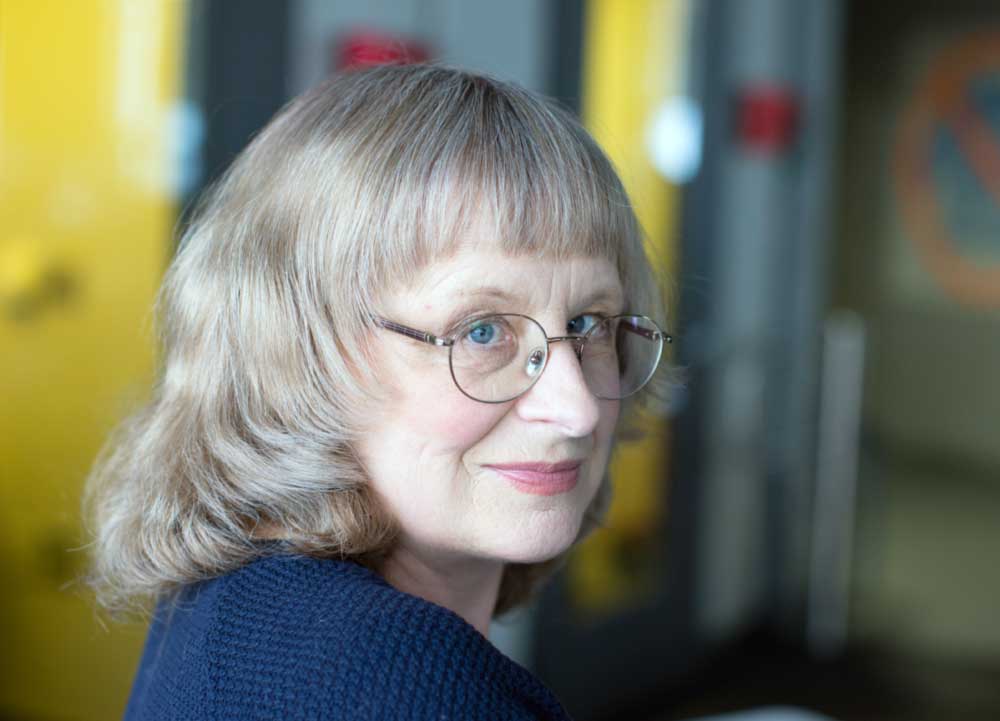
Alexandra Imasheva: If you call a person not even a “fool”, but a “dummy”, this is, first of all, a lies, which, as you know, belongs to the devil, not the Lord. Any person was created in the image and likeness of God, and that is why he is not a dummy. And the second is the gluing of labels. This stigmatization, this means that we judge a person, based on only one of his negative quality. That is, we, as it were, describe it only with this negative quality, and this is also wrong. Of course, this is offensive to a person, it belittles him, and this is harmful to him.
Roman Zaitsev: The word can kill. If not literally, then psychologically a person can carry this load all his life. How many situations when parents simply destroy their child with a single phrase!
Alexandra Imasheva: And in adolescence they will see consequences. Yes, the word wounds. And here the Savior warns us that we do not injure our neighbor.
Yakov Krotov: It seems to me that he says, rather, about the murder of a word.
And all these people who destroy Russia, are they fools or vice versa?
Stalin was a villain, but not a fool. A smart person can be a great villain
Alexandra Imasheva: Stalin was a villain, but not a fool. A smart person can be a great villain.
Yakov Krotov: Can you call a person a villain?
Roman Zaitsev: I think many will even like it.
Alexandra Imasheva: This is another quality. A fool is a person who was either born or is not educated, he grew up so that his mental abilities were not developed, and this is his misfortune, not guilt. And the villain is developing, making a choice and enters the villain. The fool does not make a choice, he simply does not understand that he is a fool.
Yakov Krotov: What about the "Orthodoxy of the brain", how are they written now? Do we fool people, turn them into fools?
Roman Zaitsev: I really do not like when all the people are called slaves, rams. Those who say so are fighting for their rights, but for some reason they do not want to think about the fact that they themselves violate the rights of other people.
Alexandra Imasheva: It seems to me that there are fanatics on both side, and they lose the clarity of judgments.
Roman Zaitsev: This is about the toon and Pharisee: we are progressive humanity, but you are cattle, you are preventing us from building a garden city at this place.
Alexandra Imasheva: People are not bad, people are as they are.
Yakov Krotov: And they are not obliged to build a city city?
Roman Zaitsev: No.
Yakov Krotov: And "go and preach the gospel to the ends of the Earth" - are not required?
Roman Zaitsev: It is “preach” that these people leave their garden and engage in a common garden.
Yakov Krotov: Returning to the Gospel, can we about someone’s characters, starting with Herod the Great: Pontius Pilate, Judah, Peter, Thomas, say “fool”?
Alexandra Imasheva: No.
Roman Zaitsev: You can imagine a fool who does not doubt his truth.
Yakov Krotov: Why was there such an veneration of holy fools in the Orthodox tradition? Those whom we call holy fools are still fools. In the XIX century, when it was officially forbidden to read the holy fools, and they were put in psychiatric medical workers, they were often called blessed, but the people were unambiguously spoke - a fool.
Alexandra Imasheva: These are people with a clear violation of the psyche, with a delay in mental development. But does the scripture say that the value of a person in the power of his intelligence? She is in something else.
Yakov Krotov: Why did smart people think that fools deserve special attention?
Alexandra Imasheva: Partly - because such people often show some other properties that give the value of the individual. For example, people with Down syndrome, who are like children: it is known that they are very kind, they say about them - sunny. They are not angry, not capable of dirty tricks. And the holy fools, perhaps, were also read because they told the truth when many were afraid to speak.
Yakov Krotov: Of course, here is the Christian version of a rather ancient belief that some drawback in one has compensation in another. A person cannot socialize and sleeps naked on the street, but an angel is talking to him. And from here listening to all these blessed soothsayers.
Alexandra Imasheva: A person should be in his place. People, with not very high intelligence, should not solve some state problems, but should, say, work in the store. It seems to me that Russia's trouble is fools in its place.
Roman Zaitsev: When is the last holy fool? This is probably Ksenia Petersburg .
Yakov Krotov: It depends on whom to be considered foolish ... among the new martyrs, canonized by the foreign church in the 70s or already by the Russian Church in the 90s, I think there are a dozen and a half classic holy fools in the 30s. Strictly speaking, a blessed Matronushka is also a woman who is close to Juddy.
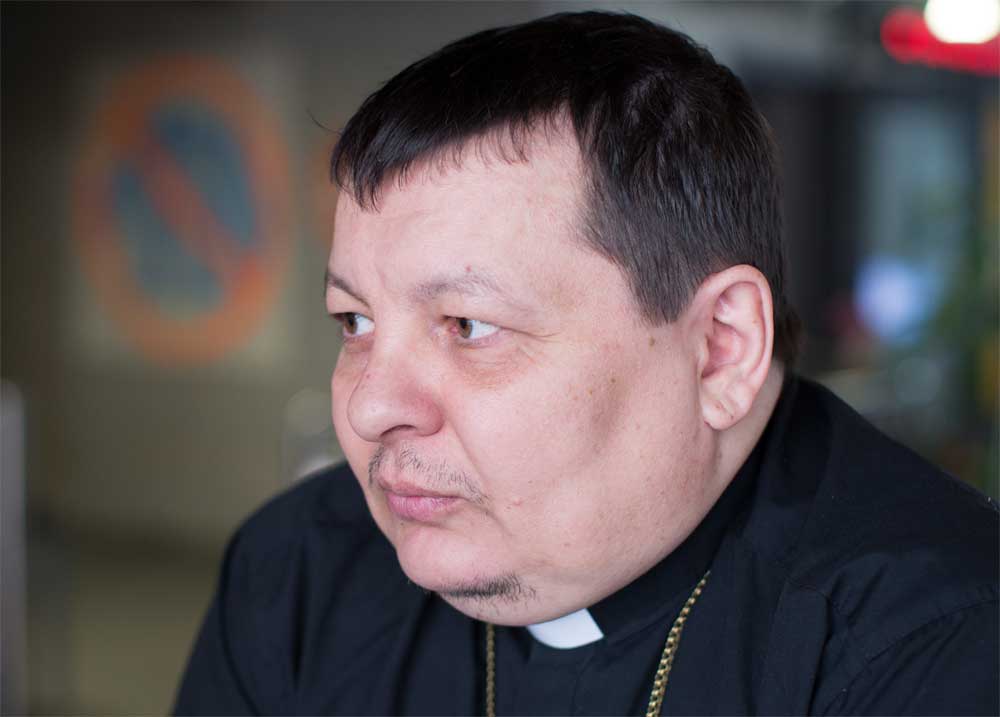
Roman Zaitsev: Juddy can be in artists. Here is Oleg Kulik - when he was a dog, this is quite a fool.
Yakov Krotov: But this is professional foolishness. And to be a Christian priest is confessional foolishness. They put on ourselves, and why are we better than Oleg Kulik? We are worse! He has creativity, performance, and we have a tickling of pride.
What does it mean - a person in his place? Are you in your place in life?
Alexandra Imasheva: I think, in my own way.
Yakov Krotov: What are you riding? In my opinion, the first repentance is that I was not in my place, I took someone else's, from my tears.
Alexandra Imasheva: We must strive to be in its place.
Yakov Krotov: What is sin? This is a miss. You strive to get to, but you get not on the target, but in the other.
Alexandra Imasheva: This is another matter. You can be in your place, but we all, of course, make mistakes, because we are not saints and not angels.
Yakov Krotov: In any collection of repentant prayers, a person compares himself with the deceased all the time. As in the canon of Andrei Crete : "I killed my soul, I killed my body." I am talking about myself that I am a fool, emptiness, I am like a deceased who walks, moves, eats, and nothing inside, the house of my soul is destroyed. This is what St. Andrew wanted to say. You can be in your place, but then let's review the definition of a fool. How can I help my neighbor? Recognizing himself as a fool.
Alexandra Imasheva: I, as a person of science, think that a fool is a shortcut,
Yakov Krotov: Spiritually dead man - do you agree with this definition? Ivan Ilyich, Chichikov, Joseph Vissarionovich, Vladimir Ilyich ...
There is still a spark in a spiritually dead person, it is just not manifested
Alexandra Imasheva: I don’t know ... Here is an empty person is a spiritually dead man, and a fool ... The problem of Russia is fools and roads - this is another, these are not spiritually dead people, but fools who are not sitting in their place! A spiritually dead man, here is “cancer” - this is possible. But in a spiritually dead person there is still a spark, it is simply not manifested, not visible.
Yakov Krotov: Father Roman, at the beginning of the program you said that to condemn is the prerogative of God. Do you really think that the Lord Jesus forbade us to tell our neighbor a “fool”, then to send all the fools to the fiery hell to himself?
Roman Zaitsev: I was not talking about condemnation, but directly about the verdict that a person is empty, he is not suitable for anything. This is completely different.
Yakov Krotov: Can God be so to speak? Or will God never say that?
Roman Zaitsev: No, God still gives a chance to man. Although such heroes as Stalin, we still give an assessment that this is a bloodsucker and a sadist.
Alexandra Imasheva: And on the other hand, the Lord saved the robber on the cross.
Yakov Krotov: So he saved the robber on the cross, and not the robber in the Kremlin office. Or will it save in the Kremlin office too?
Alexandra Imasheva: It depends on whether this robber is poking.
Yakov Krotov: You give a traditional answer since the time of St. Thomas Aquinat : we do not know what will be in the nanosecond between the last exhalation and the court.
Roman Zaitsev: If a person does not recognize the possibility of his wrong, then he goes to the end, and God will not be able to turn him away. He is a god, not a broker through a knee.
Yakov Krotov: It seems to me that Father Roman now called the creator of the universe a fool. Why do you give God only two opportunities: either he breaks through the knee, or listens to confession? God is the Creator! And, communicating with another person, you are not approaching him in the binary system: either to condemn, or he is playing. You are trying to come up with something. Can't God come up with something for Stalin?
Roman Zaitsev: I can come up with, of course. I think that the limit of death will have many more chances and the same Stalin will somehow change his attitude - why not?
Yakov Krotov: At Stalin - perhaps, but what to do with a person whose father and mother killed, and sent him to the concentration camp? Where is the creative approach?
Alexandra Imasheva: Well, this is villainy ...
Yakov Krotov: According to the Gospel, telling Stalin the "villain", I myself go to the fiery hell.
Alexandra Imasheva: If Stalin came to me, and we would talk to him, I would try to do something for him until the last. But I'm afraid that my weak forces would not have been enough, although every person has a part of God in him. As a clinical psychologist, I sometimes worked with very severe cases, and it still feels that there is this small spark.
Roman Zaitsev: But if you trace the story of the same Stalin or any other villain - how did he come to his villainy? And who and how many times did the conditional "cancer" say to him?
Yakov Krotov: Well, Joseph Vissarionovich and in the seminary, the bosses spit ... again we will write off everything to the clergy? When the Savior spoke a naked sermon, it is on the same hand: substitute another cheek, goodbye to seven times, do not call the neighbor “fool” ... And then what to do if the heart is sickening, disgusting, and it seems that all the others are nasty and ugly people?
Roman Zaitsev: This, of course, is a ceiling, what we should strive for. But I'm not sure that I can achieve this ideal with my own strength.
Alexandra Imasheva: You should not tell the person “You are a fool”, in extreme cases, you can tell him what feelings causes you for your act.
-
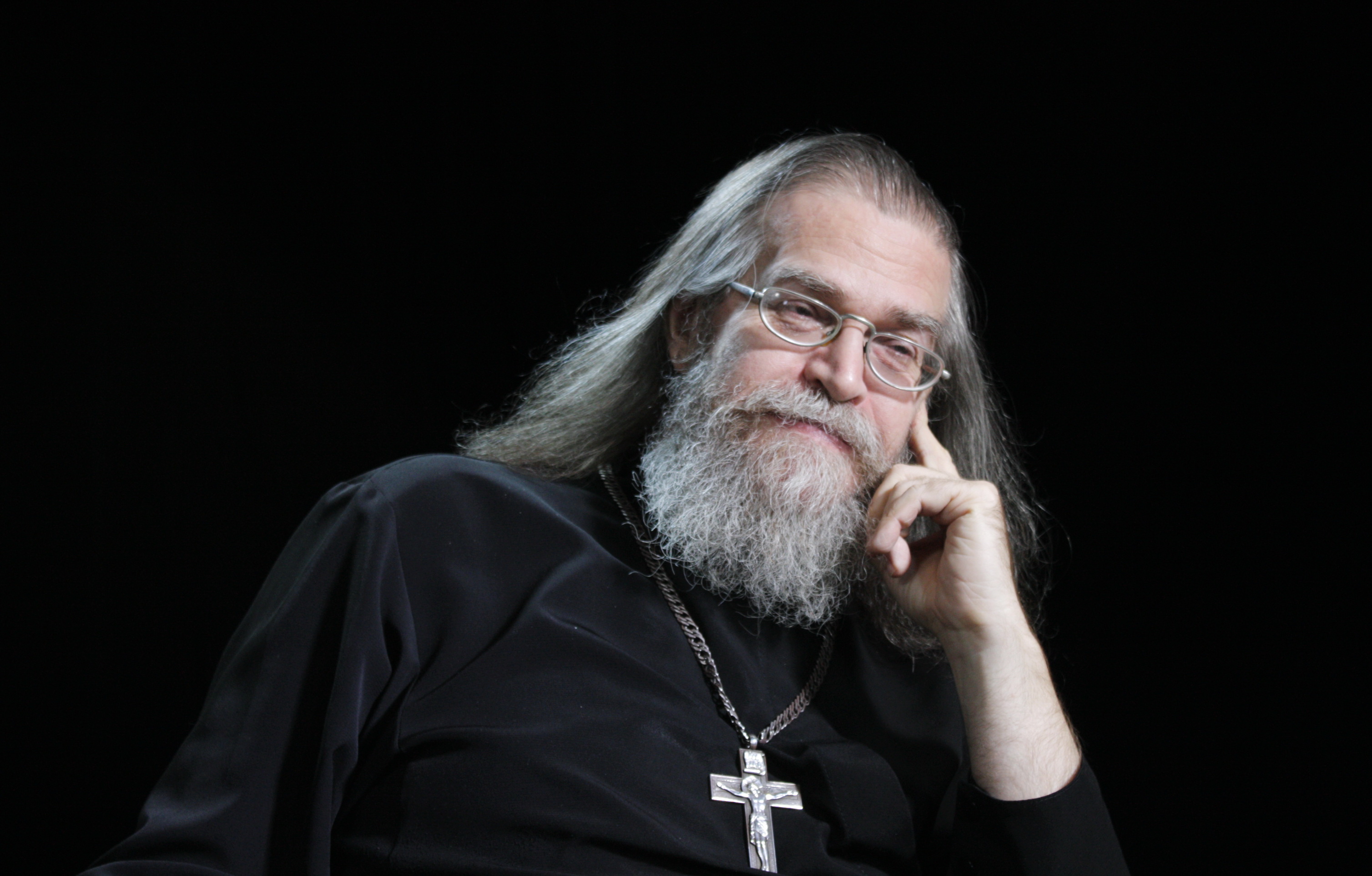

Yakov Krotov
Historian and priest, leading Radio Freedom Radio "Between Vera and Belief"
ykrotov@yahoo.com