
Translated material
Theater art studio

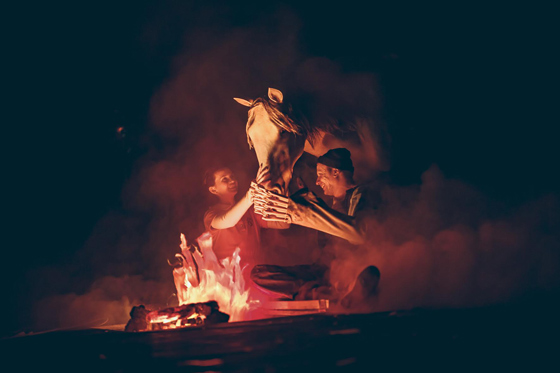
The hyphen that has been closed in the name will warn the attentive viewer that in front of him is the original composition of Dmitry Krymov, and not the staging of the Turgenev story: the dog was called Mumu, and Mu-Mu is such a caramel. The plot was transferred from a lordly estate to a modern backstage world: an elderly calling star of the Polish directing is like a lady, a wordless work scene with a terrible wooden hand is Gerasim, and a hyperactive girl Masha, the chief artist’s niece, obviously, is Mumya. True, all this turns out only at the end - the rest of the action has nothing to do with the story. For the most part, this is a performance about an actor who is trying to rehearse the Turgenev performance with him in the main role - and a bored child interferes with him. The prominent artist of the theater art studio Alexei Vertkov plays himself, the prima of the Krymov laboratory, Maria Smolnikova, is ridiculous and at the same time reliably depicts a little girl, the skill and fidget, inhibited by the attention of adults.
 © George Bezborodov
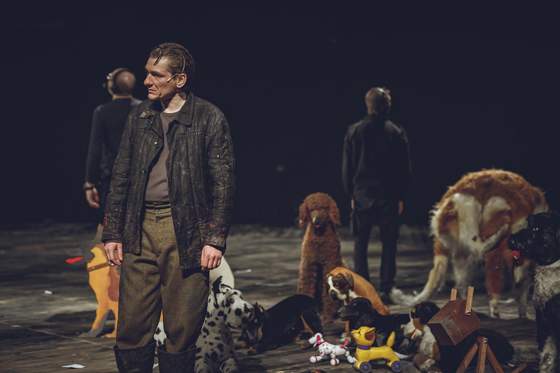
There is not a word from “Mumu” in “Mu-Mu”, but there are many lines from the “Notes of the Hunter”: they are read by Vertkov, whom the program calls that the hunter (the director gave him a gun and a large pack of different-caliber toy dogs; once a couple of real dogs even run-though not racing, but shepherds). From all possible approaches to descriptive prose, Krymov deliberately chooses the most naive - illustration: scarlet tulle clouds float along the back, fake firebracks smolder on the stage, and a plywood coffin with a huge doll flies through the ground. Each such attraction is followed by Vertkov’s excuses: they say, excuse me, they wanted beauty, but a galone fan was obtained. “Mu-mu” is, in essence, a gesture of powerlessness before literature: the director is convinced that no theatrical workshops are compared with the reader's imagination.
For hard work, the theater rewards only Frustration.
The director had already made a mocking performance about theatrical weakness six years ago - the production was called “How you like it” based on Shakespeare's play “Sleep on a Summer Night”. ” The artists of the Krymovsky laboratory passed themselves as a grief from the Bard Comedy, who tried to play the history of unfortunate lovers in front of the Duke and his guests. Three -meter dolls depicted a delicate romance, the “Amaters” awkwardly explained the plot, and the nearby man's audience loudly guessed what they show them: vanguard, underground? This was one of the best projects of the director, who only pretended to be a cheerful trinket, but in fact debunk the theater with his imaginary intellectuality.
 © George Bezborodov
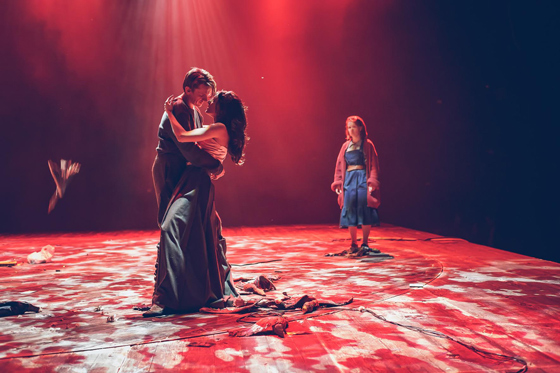
True, it was impossible to say about the heroes of the Shakespearean production for sure where and in what century they live, what scene they reach. But the characters of “Mu-Mu”, without a doubt, work in the theater of nations: the direct Masha makes his uncle blush, discussing the Khudruk with the director, and torments him with questions about whether the nations are presented in the state of the theater. In general, compared to “How you like it ...” Theater everyday life has become more recognizable. The director called “mu-mu” comedy del arte, and in a sense it is true: the actors are ordered not to play a person, but the type is just like in the Italian comedy of masks. Only instead of a lustful old merchant, a cunning servant and a stupid doctor - a quoted theater child, a grumbling director, a capricious star, a sullen worker.
 © George Bezborodov
The most touching mask in this backstage version of del arte is an assistant to the director, an executive woman with tired eyes, without whom nothing works on the stage. An outstanding actress Inna Sukhoretskaya can perfectly adapt to any directing - that Ivan Vyrypaev, that Dmitry Volkostralov, that Dmitry Krymov. Here she has only one monologue-a passage about the profession of Premeres from the memoirs of Stanislavsky-but this is almost the best episode in the whole performance. The invisible girl robs the audience to resentment over the years of unified work-but does this without a tear, with dignity, through a half-smile. This scene is similar to a five -minute super -emotional squeeze of the performance “The_marusya ” from the repertoire of the dance company “Dialog Dance” - the only project about the inconspicuous work of the theater manager.
For Krymov, probably there is no topic more personal than the theater: he was a child from a famous theater family - just like his heroine - and spent his conscious life behind the scenes. Therefore, with all its resemblance to the Kaputnik “Mu-Mu” is a very bitter performance: after all, the point is that the theater rewards only frustration for hard work-be you at least a lot, at least the main actor appointed to the role of Turgenev.