
Translated material
Freedom hears us
100 years ago, Maurice Dryon, the creator of the “Cursed Kings”, was born. Valeria Novodvorskaya - about the Testament of the writer: remember that unrighteous power is doomed
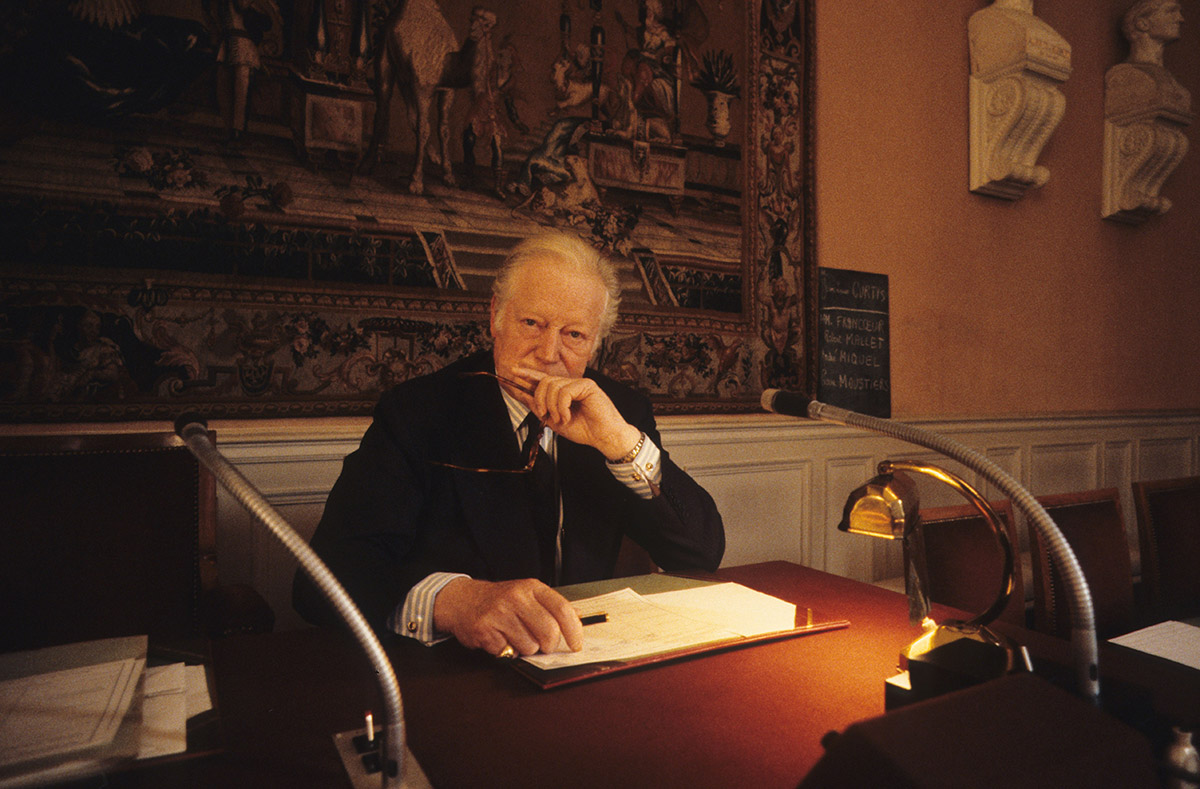
Photo: East News
Without us, rarely does it. Especially in France, especially in literature. It turns out that Maurice Druon, historian, writer, academician, hero of the resistance, Minister of Culture under President Pompidu, cavalier of French and foreign orders are also from ours! .. Maurice Druon - great -grandson of the Orenburg merchant Anton Osipovich Flake and grandson of the doctor Samuel Kessel from the Kovensky province.
Maurice’s father, actor Lazar Kessel, left Russia in 1908 and donkey in Nice. The surname Dryon went from his stepfather, Rene Druon. How can I not recall Bulgakov with his theory of blood as a "bizarre tassimed deck of cards."
Of course, Druon was an anti -fascist, but, unlike many, in those years he did not look for supports in Stalin and the USSR. He was in resistance, in the “Free France” movement, became famous as a military correspondent. His Peru owns the famous “Partisan song”, the unofficial anthem of resistance, written by him in May 1943, together with the uncle, Joseph Kessel. The song served as a call sign for BBC programs addressed to the continent. But she would have approached for the rain quite quite.
“We will go where the raven does not fly, the beast is not included. No one, no power will conquer us, will not drive us away. Folk Avengers, we will divert evil, let the wind of freedom fall asleep and our grave ... "
The main work of Maurice Druon is the epic “damned kings”. He wrote it from 1955 to 1960. The first six books. And added the 7th volume in 1977. How little new is done on Earth! How the mistakes and atrocities of unrighteous power are repeated!
When the king needed the money, his vaunted legists did not stand over the slandered Templars. The order was robbed. Like Yukos
We can extract many instructive examples from French history from someone else's for us. XIV century. The French king Philip IV was beautifully proud of his adamance and commitment to the laws, he surrounded himself with scientists, supporters of the “legal state”. But he was still taken by bribes and robbed peasants, or even noblemen more victorious, and none of them came to the scaffold. In Paris, as in the 70-80s to Moscow, food was brought during hunger so that the capital would not rebel. And what the province eats, it did not worry anyone.
When the king needed the money, his vaunted legists did not stand up for the shy and declared by the heretics of the Templars. The order was robbed. Like Yukos. Only false testimonies were extorted to torture, and Jacques de Molay, the great master, and the Prior of the Order, who refused to repent, were not sent to distant camps, but to the fire. At the stake, they cursed the dynasty, reached to lawlessness and robbery, to the executions and torture of the innocent. The people cried a little, but suffered, deciding that the Templar case was not his business, however, as well as the "case of Yukos."
The XIV century had his own Pussy Riot, Margarita and Blanca, 20 and 18 years old, the spouse of royal sons, who were hot in prison of Chateau-Gayar for having brought their lovers. And this, it turns out, was state treason.
Philip IV did not survive the burned Templars even for a year. Does the current "iron king" understands how many curses gravitate over his head? In a historical perspective, evil is always avenged.
The gifted son of Philip IV Philip V Long did not rule, because he stumbled at the very beginning of the journey, paying his mother -in -law for the poisoning of a little nephew, a legal king.
History takes revenge on tyrants and killers, and not a single thing Magnitsky’s nothing will come off the villains. So above the head and remember the song of Dryon: “Walk, friends! In the night, freedom hears us. ”
First published in NT No. 14–15 of April 22, 2013