
Translated material
Two snowballs and real time
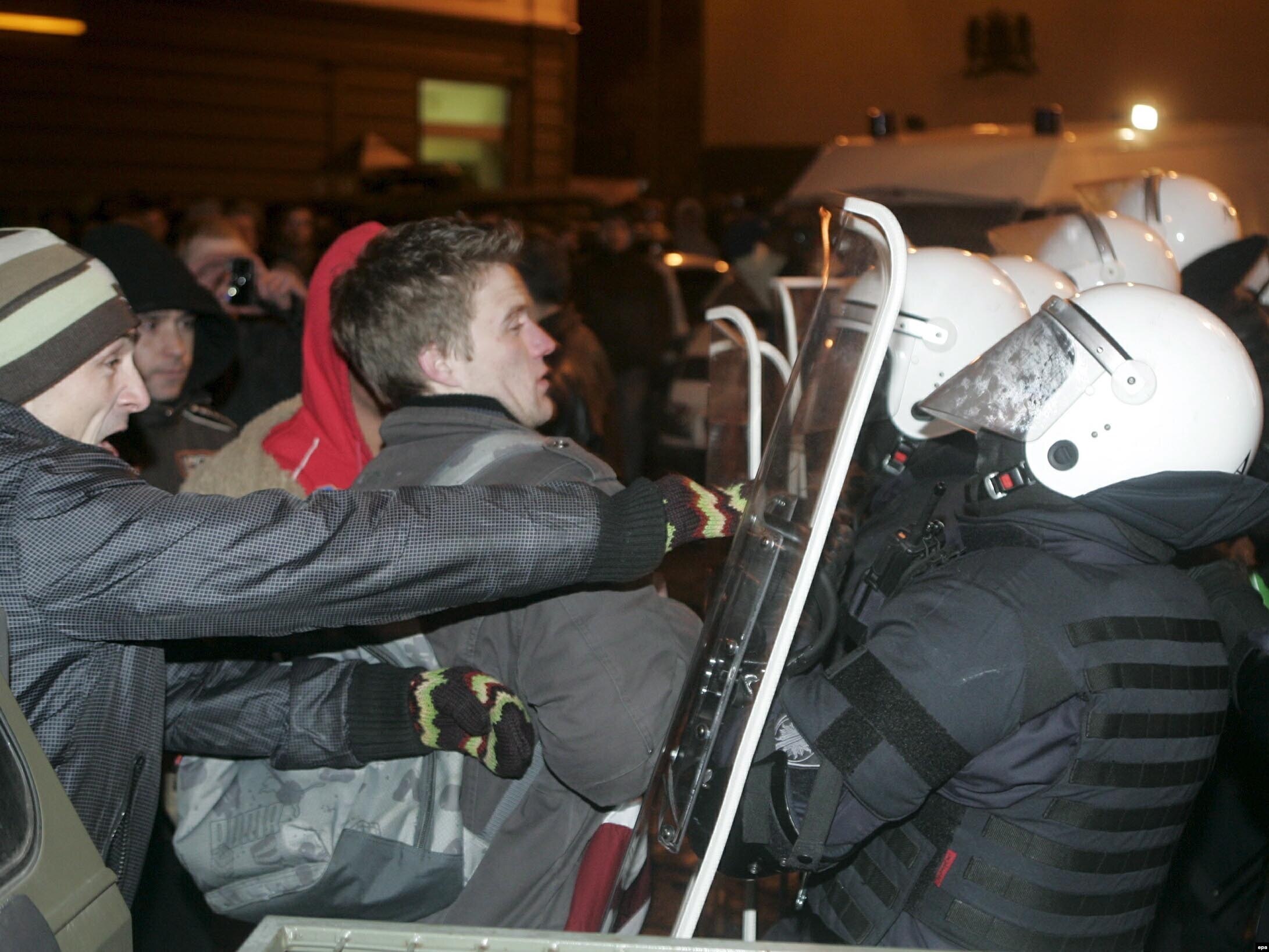
In Latvia for participating in the January riots of 2009, the musician, a researcher of folklore and public figure, Ansis Ataol Berzins, is serving a real prison term. He threw two snowballs, an empty plastic bottle and cobblestone, which broke the Sejm window. At the same time, the articles on which he was convicted was already not in the country's Criminal Code. The harsh attitude of the authorities towards the participant in the riots almost ten years ago caused a public outcry in Latvia.
In March, President Raymond Weionis refused to have mercy on Berzins. “I had no confidence that the right moment is now for his pardon,” the president said, “according to how the case developed, it is clear that in the process of Ansis Ataola Berzins there are a lot of aspects. He is a very contradictory personality. Perhaps a sort of anarchist.”
We are talking about the so -called "revolution of cobblestones." On January 13, 2009, on the anniversary of the two revolutions in Latvia - 1905 and the 1991 barricades revolution - an anti -government rally was held in Riga at Domskaya Square, gathered more than 10 thousand Latvian residents exhausted by the economic crisis. The application for its holding to the Riga Duma was submitted by three leaders of the recently registered opposition party “Society for another policy” - two ex -minister Aigars Shtlesenbergs and Artis Pabriks and assistant to the Eurodrams Gundars Romanovskis. They demanded the dissolution of the Sejm. The rally, which was supported by a total of 25 parties and public organizations, began at half past six, and after an hour and a half, Artis Pabriks closed the event, offering the participants to diverge home. Several hundred people, heated by speakers, moved to the Sejm. They turned the cobblestones from the pavement, threw bottles and pieces of ice into the windows, trying to break into the building, turned cars over and smashed the windows. The police were able to disperse the crowd only by 22 o’clock.
As a result, 126 people were detained, 30 were injured, another 28 had to be hospitalized. A month later, Ivar Godmanis resigned and the government fell. Oppositionist-organizers later entered the new party "Unity", which won the elections to the Sejm, Artis Pabrix became the Minister of Defense.
Administrative cases of detainees under the article “Resistance to police officers” in the courts began to be closed, and materials were sent to the police-in order to start criminal processes under the 2nd part of the 225th article of the criminal law, which suggests from 8 to 15 years of conclusion: “Active participation in organized riots related to pogroms, explosions, destruction of someone else's property and violence, as well as confrontation law and order. " However, the police were not able to find the organizers, and the protests were recognized as spontaneous . The prosecution was charged to 68 people, the verdict was sentenced to almost everyone, most of them were aimed at public work. Several were acquitted. The real prison term was received by 9 people (previously convicted), the conditional - 17, several convicts were replaced by a conditional term later.
He stood in the square because he believed that the power was to blame for the terrible state of the economy
In 2013, when the trial of Onsis Berzin and other participants in the riots took place , the second part of the 225th article, according to which they were brought to criminal liability, no longer existed in the Latvian Criminal Code for two and a half years. Berzins were sentenced to one and a half years conditionally, the defense appealed this decision, but the Supreme Court did not soften the punishment, but, on the contrary, added another three months. Then the musician came out with a conflict with the testing service that supervises conditionally convicts. Ansis was trained in the Czech Republic when he was demanded to appear for registration, he did not obey, and as a result of the next court, the conditional term turned into real. Ansis decided not to return to Latvia, announcing that he was in a political link. But he was arrested in the Czech Republic, stayed there for almost a year and was given to Latvia in March, despite his protests.
In the Czech prison of Berzins, the guards were brutally beaten in front of his mother, as a result of which he could only move on crutches . The guards said that Ansis himself attacked them. In the Czech Republic there is now a trial in this case. President of Latvia Raymond Weionis rejected his direction of pardon directed to him, explaining to the press that even before the January events, Berzins had 20 administrative offenses, moreover, he did not go to celebrate.
Ansis's mother, orientalist Elena Staburova, considers the whole process a political order.
- Over the past year, while Ansis was in prison, I had to raise all the documents of his process, as well as documents related to the processes of other people who have passed in this case. I was convinced that it was a political order made, obviously, such an influential person or group of persons that the judges were not considered the rules of the legal game and simply went forward. First of all, it was necessary to withdraw from among the guilty representatives of the elite, who actually bear direct personal responsibility for what happened in Old Riga in January 2009. Those people who declared a rally in the Riga Duma on the square were not just to speak to the audience from the rostrum, but according to the law they were responsible for the order on the square, and within two hours after the end of the rally.
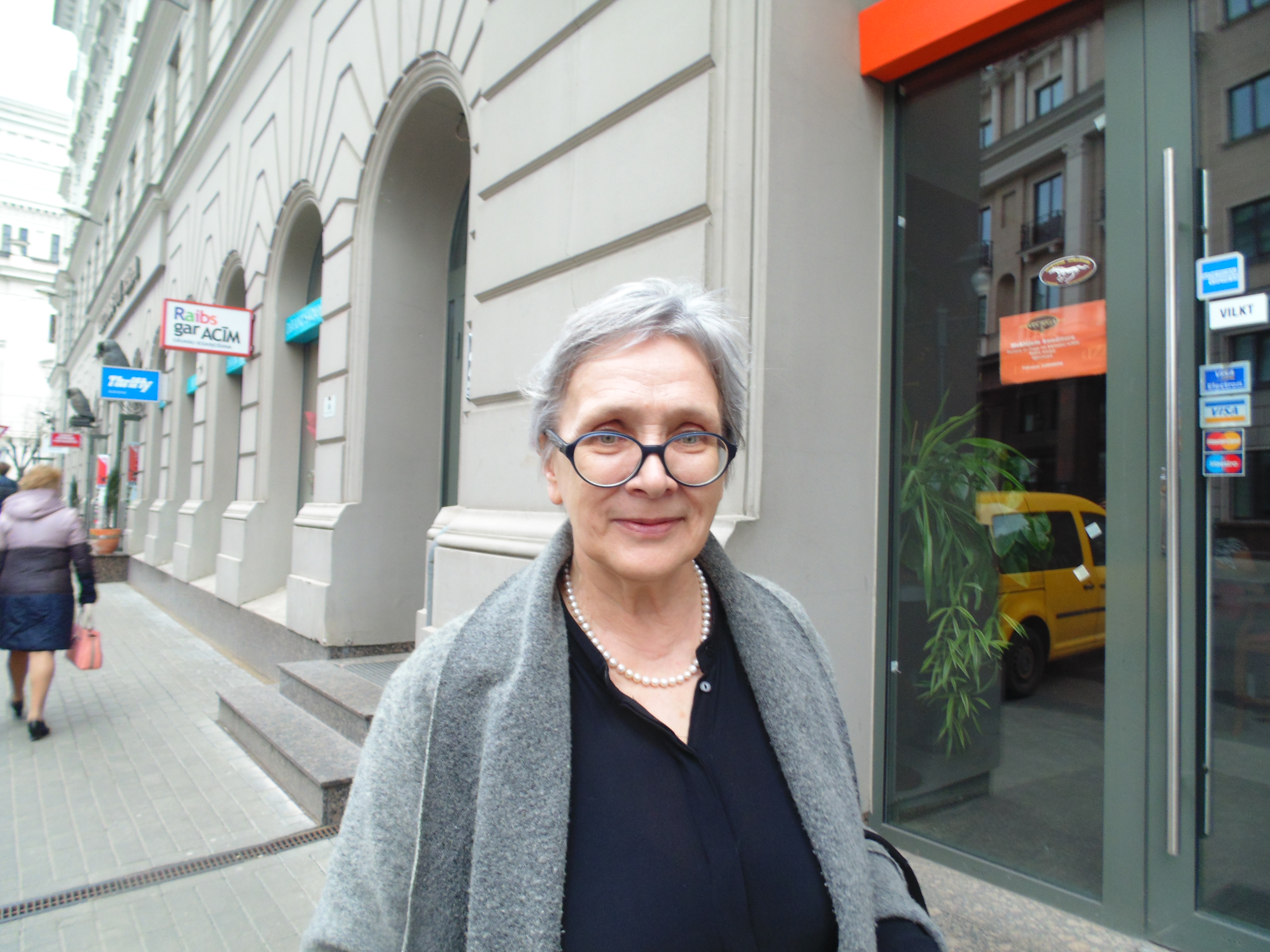
It was important to find the guilty people who themselves would agree that they were guilty. Therefore, when a person agreed, he was “forgiven”, they gave an easy article. As for Ansis, from the very first minutes when he ended up in the police station in the evening of January 13, he wrote in the testimony that his protest was political. He stood in the square with his button accordion, because he believed that the power was to blame for the terrible state of the country's economy. And it was against this power that he opposed. He immediately formulated this, and the policeman obediently recorded this. Ansis admitted that he acted, but refused to admit his guilt. Anatoly Koni, who led the process of Vera Zasulich, said that practically none of the jury understands his thought that there is an action, but there is wine, and that these two things can be separated. Ansis came to this thought independently.
Those who pleaded guilty and agreed with the prosecution received soft punishments
- What is charged with him?
- The first verdict of Ansis is a very interesting document on 6-7 pages. Most of these pages are devoted to what happened that day in Old Riga. It became bad for someone with the heart, someone demanded to compensate for 100 lats because he was interfered with noise, someone was defeated by the car. All this was listed in the sentence of each accused. And in conclusion it was said that a particular person participated in all this. And then there was its own fault: it was that Ansis, from his own words, threw two snowballs, one empty plastic bottle and one stone, which broke the window in the Sejm. And most importantly, this was not proved. The only objective evidence of what happened during those hours in Old Riga - records from surveillance cameras, which were full around the Sejm - were immediately withdrawn from the case, and the prosecutor Vita Khutore applied the secrecy vulture on them.
Lawyer Yanis Museniks defended many participants in the riots on January 13, and in several cases he managed to achieve acquittals. But not for Ancis Berzins.
- I also participated in a rally in old Riga, and I remember very well how it all started and how it ended. I ended up at the Sejm when there was not even police officers there. It was a protest against the rulers who were then at the helm of the state. They took very strict measures to increase taxes, spent a huge amount from the budget - more than two billion euros on saving Parex Bank, unemployment has grown a lot. Most of the protesters were about 30 years old, family, who wanted to work and live in Latvia. I emphasize that this was an official event, but the organizers were not called to court even as witnesses. There is no objective evidence of Ansis guilt, the accusation is based on his words. He had no intent to participate in the pogroms. Ansis in this event participated as an individual and did not provoke the situation in any way. So it happened, and I think that they did it intentionally that there were no fences on the streets towards the Sejm. When the event ended, people, including Ansis and I, independently went in that direction. It was logical, I did not even have other thoughts. The next day, the prime minister said on television that everyone would sit. But after a couple of months the government changed. It changed the law so that the participants in these events could not punish severely, and those who pleaded guilty and agreed with the charge received mild punishments.
“Remember such an Ansis Berzins? He began to download the right to download, and how did it end? "
Neither the police, nor the prosecutor’s office, nor the court liked that Ansis did not plead guilty - it was a non -standard situation. This was reflected in sentences. And when Ansis considered that everything was already behind, problems with the probation service began. The courts - both the first instance and the supreme - unequivocally stated that Ansis has no obligations to fulfill some kind of test program. This was especially noted. Ansis worked all this time with the probation service, and whenever letters came from there, he reported why he could not appear: because he is trained abroad as part of the state program. The Ministry of Education had information that he received a scholarship for internships. Ansis is a law -abiding person integrated into society, he is engaged in musical and scientific projects, owns a farm, the father of three children. But the probation service went right away according to the maximum program - to the court with a request to immediately transform the conditional term into the real one. It was a rough mistake. It even seems to me that no one really read the verdict.

The case was considered not at the place of residence. That is, the decision on the transformation of the deadline was made by the court, which did not have the right to do so. Ansis asked to delay the court before his arrival, as he could not interrupt scientific work abroad, but his opinions were not taken into account. I got the impression that it was a indicative process. So that later everyone remembers him: “Remember such Ansis Berzins? He began to download the right to download, and how did it end? " I turned to the Supreme Court, and to the General Prosecutor's Office, and to the Ombudsman, to the president - no one wanted to open the case again.
The protest in our Latvia does not happen like in Greece or in other southern countries. We go to the airport and fly away
When Ansis was detained in the Czech Republic, the situation has changed. There is no article that provides for responsibility for participating in the riots. And we had many arguments in favor of Ansis remained in the Czech Republic. We were allowed to express them, but the court did not take into account the contradictions in the case that we indicated.
- They could not help but give him to the European order?
- Yes, the procedure is conservative, and the matter is not considered in essence, but we had a chance. It seemed strange to me that all the questions: changing the prison, changing the regime, changing the preventive measure, consideration of the case of issuing on the merits - considered one judge. And the Supreme Court of the Czech Republic considered the case in the written process, which I consider ineffective.
- Why did people accept sentences so dutifully?
- In order to sue and protect his interests, a person must have a character, because it requires a lot of time and resources, and not everyone is ready to go to the end. It was a pure deal with the government.
- Do you think such protests, spontaneous or organized, in Latvia in the future are possible? As you know, this was the only surge in popular indignation all the time after the restoration of independence.
- Today I do not see such a subject that could organize it. Because the protest in our Latvia does not happen like in Greece or in other southern countries. We go to the airport and fly away. This is the most obvious producing our inhabitants. And every year 20 thousand people protest in this way, ”said Radio Liberty, lawyer Janis Mussex.
Latvian officials are now commenting on the affairs of Ansis Ataola Berzins and other participants in the riots of 2009 is extremely reluctantly reluctantly. President Raymond Weionis was forced to give his comment, since he was asked the question. Weyonis said that he consulted with Prime Minister Maris Kuchinskis and came to the conclusion that the pardon of Berzins "would not be an honest act in relation to those who have already left for the punishment in this case."