
Translated material
A new "rhino" came out
A new, eighth issue of the Losorog literary magazine was released. The philologist and writer Alexander Markov were one of the first to get acquainted with him and made a guide to his texts and images specifically for the "friend".
Return to youth not only inspires a rethinking of his own capabilities, but also checks the world and language for strength. The new, already eighth issue of the Nosorog magazine has been devoted, in fact, how, having found himself in his own youth, in the world of languid expectations, to find out what your own letter and your own habits of speech made with you. The fact that you used to take for granted, except sometimes trembling before this as inevitable, now turns out to be the world of experiments, which you first approach as an expert of the victorious.
The “children's” Valerie Larbo, the mysterious French writer of the early twentieth century, in the translation of Alexei Voinov, is a special prose, on behalf of the student, looking for comfort in the fleeting impressions of the world that he opens. It is so different from the usual feeling of a teenager, whose emotions overtake a thought. But after the experience of Dostoevsky and psychological prose, it turned out that teenage emotions are only part of the obsession with ideas, even if these ideas will never be clarified. Larbo does an amazing thing: he shows how a teenager can make restrained judgments to envy - simply because he guessed: how ideas will always remain the same, he will remain the same person when he matures. With inquisitiveness, mathematics and the responsibility of the stringing owner, the hero Larbo is busy only with himself, but this allows him not to break into hysteria or cruelty.
Poems of Arseny Rovinsky, Vadim Bannikov, Maria Malinovskaya and Vasily Borodin are united by a single theme: art is always on the side of space, but this space more often disturbs than pleasing. In the world of poets of this issue, the narrator does not recognize the signs of his own fate in the surrounding world, but the things themselves with terrifying invariability say that fate has already pastered us. This can be the court of God, which is “entered into any landscape” (Borodin), or a deadly disease, fluctuating “magnetic blinds on the windows” (Malinovskaya), but fate can only be responded with the preference for the most aliven living person.
The translation of the essay Walter Benjamin about Gölderlin, made by Ivan Boldyrev (edited by Anna Glazova), is important to introduce a new concept into Russian science: “composed”, differing both from the idea and the essay. “In this regard, to the visible and spiritual functional unity of the poem, the Sochi reveals itself before it as a borderline definition.” So composed is not just the result of literary work, but the ability to deliberately get by with all the poetic tools, with rhythms and rhymes, in order to decide on the poem. Thus, the judgment of the great thinker about the great poet confirms the second teenager as an through topic of numbers: the fate and power of things is not a ready -made organization of space, but a reason for our consciousness to declare itself free.
 The new issue of the magazine "Nosorog" (No. 8) Literary magazine: prose, poetry and philosophy to buy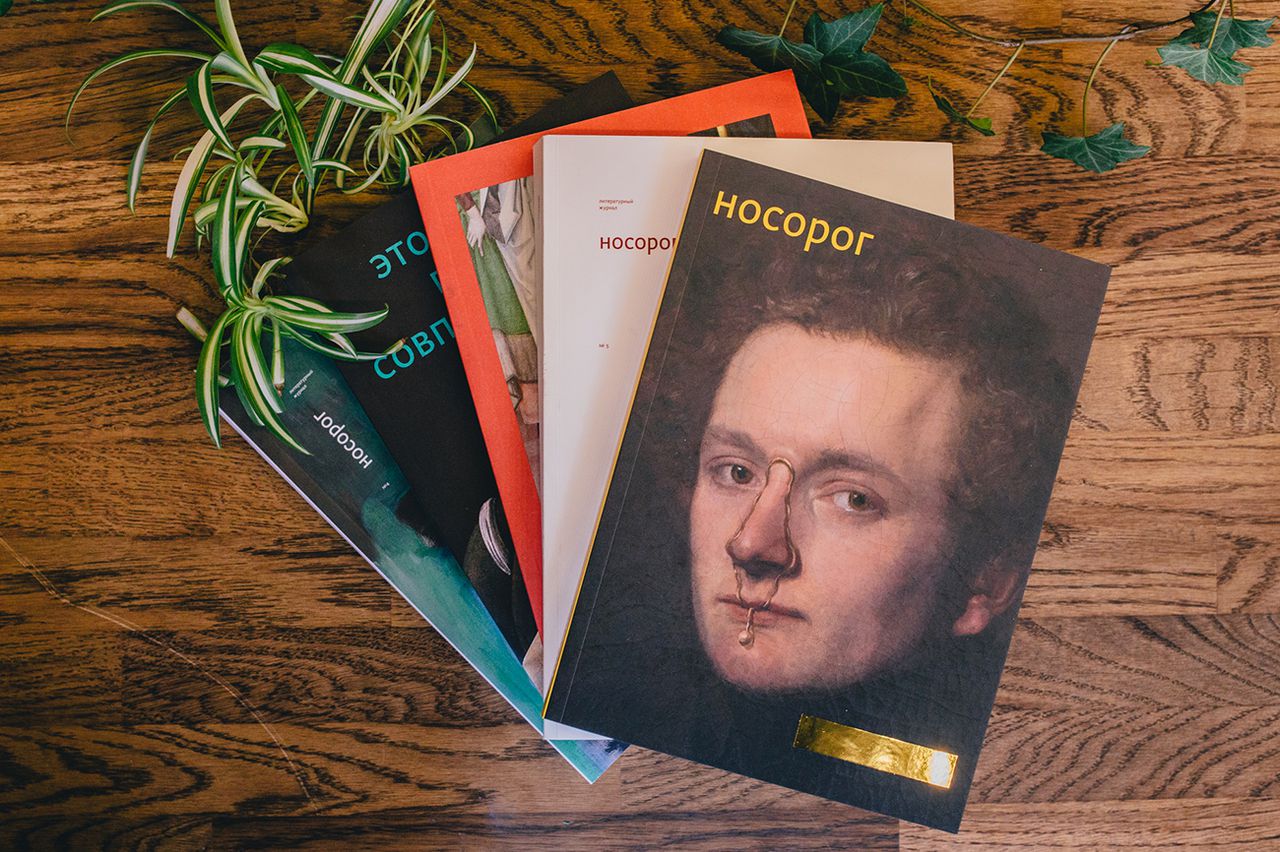
The small story of Donald Bartelm “Edward and Pia” translated by Stanislav Snytko - it would seem that the ordinary narrative about the walk of the middle -aged lovers in a foreign city, who left the oppressive experience behind. But the peculiarity of the story is that the more the heroes are understanding the world, the more confused they know each other. Understanding does not come either with age, with experience, nor with the rejection of experience. Only strange humor is the common language of heroes, and the best than all the memorized languages before that. In this story, not so much the teenage sensation of the world returns as the radicalism of the Betniks and the hippie, although played by roles as notes.
The archival publication of Pavel Ulitin, the creator of typewritten artistic prose, “words around other people's words” expresses fear not only before the wiped meanings of the words, but also before their immature force, when “lonely words from under the just smoking machine” and the writer were suddenly threatened with the banality of every fresh experience. “I try, I read different things from different inaccessible sources, but they say to me: it was already.” Any printed word can immediately bring to clean water, and only the experience of the “grateful viewer” allows you to at least partially penetrate this verbal mechanics.
The continuation of Pepperstein’s novel “The Wandering in Tabers and Monasteries” and the reproductions of the canvas of Marcus Shinwald, with grotesque fixing of the body parts, is a reminder that not a story penetrates the verbal mechanisms, but a novel, even if the heroes of the novel have been bothering to become only the bodies thoroughly written out. Then the entire issue of the magazine can be read as an approach to the novel: the direct impact of mechanical reasons imperceptibly over the experience of a common fate, but knowledgeable authors have already mastered the mechanics of affects.