
Translated material
Divorce price
Russia lost more than $ 50 billion due to conflict with Ukraine
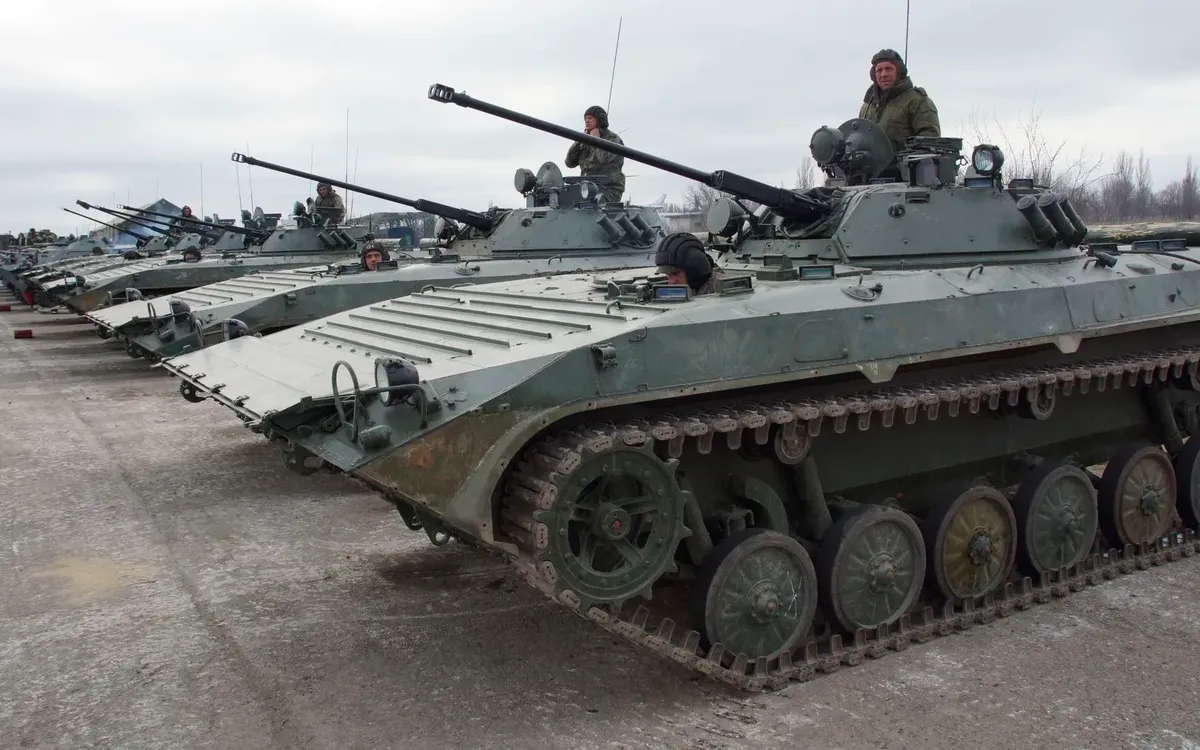
At the end of March, the Ukrainian government closed the program of economic cooperation with Russia for 2011–2020, which involved the expansion of trade and financial ties between states. Prime Minister of Ukraine Volodymyr Groysman promised at all costs to tear off the “imposed” country with the Russian economy. A month later, it became known about the withdrawal of Ukraine from the CIS, which was accompanied by the termination of the contract of friendship, cooperation and partnership with Russia.
The political background of these decisions does not need to be explained. The process of degradation of diplomatic relations between countries lasts since the change of power in Ukraine in 2014. The official breakdown of a number of state agreements became only the tip of the iceberg compared to deeper processes, which, however, are described less often.
The economic consequences of the conflict between the two countries (with the exception of sanctions and gas wars, which traditionally attract a lot of attention in the press) are still practically not meaningful. The conflict is either silent about this side of the conflict, or the scale of losses is significantly underestimated, which allows each side to manipulate the rhetoric of “national interests” against the background of the destruction of entire sectors of the economy.
The director of the International Development of the Institute for Modern Development and a member of the European Dialog expert group, Sergei Kulik, took the first step towards a comprehensive analysis of losses from the Russian-Ukrainian conflict, preparing a detailed report entitled “Russia-Ukraine: the price of the report“ New ”publishes on the site). By focusing on the Russian economy, Kulik leads to calculations according to which curtailing cooperation with Ukraine has led to the need to pour tens of billions of dollars into a number of sectors and programs, which worsens the already dubious prospects for economic growth in Russia.
The prerequisites for the weakening of trade ties between the two countries appeared before the annexation of Crimea and the war in the east of Ukraine. At the peak - in 2011 - the bilateral turnover reached a maximum of $ 50.6 billion and has since gently decreased, dropping to $ 39.6 billion by the end of 2013. However, according to the degree of diversification of trade ties and the specifics of its requests, Ukraine was still noticeably distinguished among all other external partners of Russia.
If Moscow did not interfere with the signing of the Association Agreement with the European Union (SA), then the reduction in trade would occur at a low speed.
Instead, we saw a dramatic gap, as a result of which Russian exports to Ukraine were 3 times compared to 2013 (from $ 24 billion to $ 8 billion).
Moreover, according to some groups of goods (perfumes and cosmetic products, railway equipment, glass, etc.), the share of the Ukrainian market was higher than 20%-in many cases, Russian suppliers could not find alternative markets. As a result, “the probable losses for Russia, which were very high, turned out to be incomparable with already consisted losses at least for Russian exports due to conflict,” Kulik writes. Only import substitution through the defense industry, the loss of orders at Ukrainian civilian enterprises and risks for the banking sector cost Russia $ 50 billion - this is 5 times more than the expected damage from the Association of Ukraine with Europe.
A special article of expenses in the “divorce” was the accession of Crimea, which “turned out to be an obvious surprise for the economic bloc of the government”. Since 2014, from 300 to 470 billion rubles have been spent on the arrangement of life in the region since 2014. It was not possible to revive economic growth, but the dependence of Crimea on budget infusions is growing steadily every year: in 2018, the republic’s incomes are 77% are provided with financial resources from Moscow. “In terms of gratuitous revenues to the budget of the subject since 2015, constant growth has been observed - in 2016 by almost 20%, in 2017 - by almost 40%. <...> In general, from 2015 to 2020, help from Moscow in annual terms will increase 2.3 times - up to 150 billion rubles, ”Kulik writes.
The forecast for the future for the future is disappointing: the scale of the cost of import substitution and mutual isolation of countries makes the probability of changing the course of an extremely low, even if warming is outlined in the political plane. According to the results of 4 years, Ukraine is actually in a state of default, and Russia is weakened by financial losses, western sanctions and stagnation in the economy.
In the report of Sergei Kulik, it is noted that Russia lost dozens, if not hundreds of billions of dollars, from the break in relations with Ukraine.
At the same time, the Crimea, in which the standards of life after joining Russia had to grow, today is one of the most weak regions in the economic plan, which requires large capital investments and subsidies from the federal budget. From the point of view of the economy, Crimea is still functioning in an emergency, and this situation will last for a long time. The report does not talk about how disaster is - we are talking about objective information, without assessments. These are numbers and trends that allow you to think about how to reanimate the situation.
In particular, if the conflict around Crimea can last decades, then with respect to Donbass the denouement should come faster. If, conditionally, tomorrow the hot phase of the conflict ends and instead of militaristic accusations will have to really be engaged in territory and people, then what will this mean for Russia? And for Russia this is a very important problem - Donbass is not indifferent to us even purely in an economic sense.
And the question will arise: what remains there? The old economy, which has existed in the Donbass since Soviet times - coal, metallurgical and chemical industry - will probably not be restored in the previous form. Human capital was also very much injured - many people just left. So, it will be necessary to develop a new economic profile and look for ways to restore Donbass.
Another topic that interests the authors of the report is related to the creation of a joint Russian-Ukrainian platform for expert discussion of socio-economic reforms that are already in Ukraine and which in the near future is coming to Russia: these are reforms of the pension system and healthcare, decentralization of power, the fight against corruption and so on. After all, we, as countries, are quite similar to each other in terms of starting positions. In addition, Ukraine still remains our neighbor, despite all the conflicts.
Evgeny Gontmamer
Chief Researcher of the Institute of World Economics and International Relations, member of the expert group "European Dialog"
- In addition to individual reports, our expert group also releases a quarterly ballot about domestic policy in Ukraine. This is due to the fact that we really do not like the information background that has developed today in Russia. The only topic for public discussion, in fact, comes down to hatred of Ukraine as a sovereign state: how they can spend a different course and choose a different future than us.
In this informational noise, emotions prevail to a large extent. I am sure that people who make decisions in Russia do not know what really happens in Ukrainian politics and economics - all are blinded by mutual accusations. However, we believe that sooner or later our relations with Ukraine will be normalized.
Of course, these relations will never return to the state of “fraternal peoples” - the idea of a single community will have to be left in the past.
But the resolution of conflicts in the Crimea and in the Donbass in any case will require a transition to a civilized discussion in the expert language. It is fundamentally important that by this moment we have a picture of the original position we are. As experts, we do not discuss high policy - what to do with Crimea or Donbass. Let politicians do this. Our task is to give them analytical material for thought that would push them to a dialogue and mutually beneficial solutions.