
Translated material
Battle of Telegram
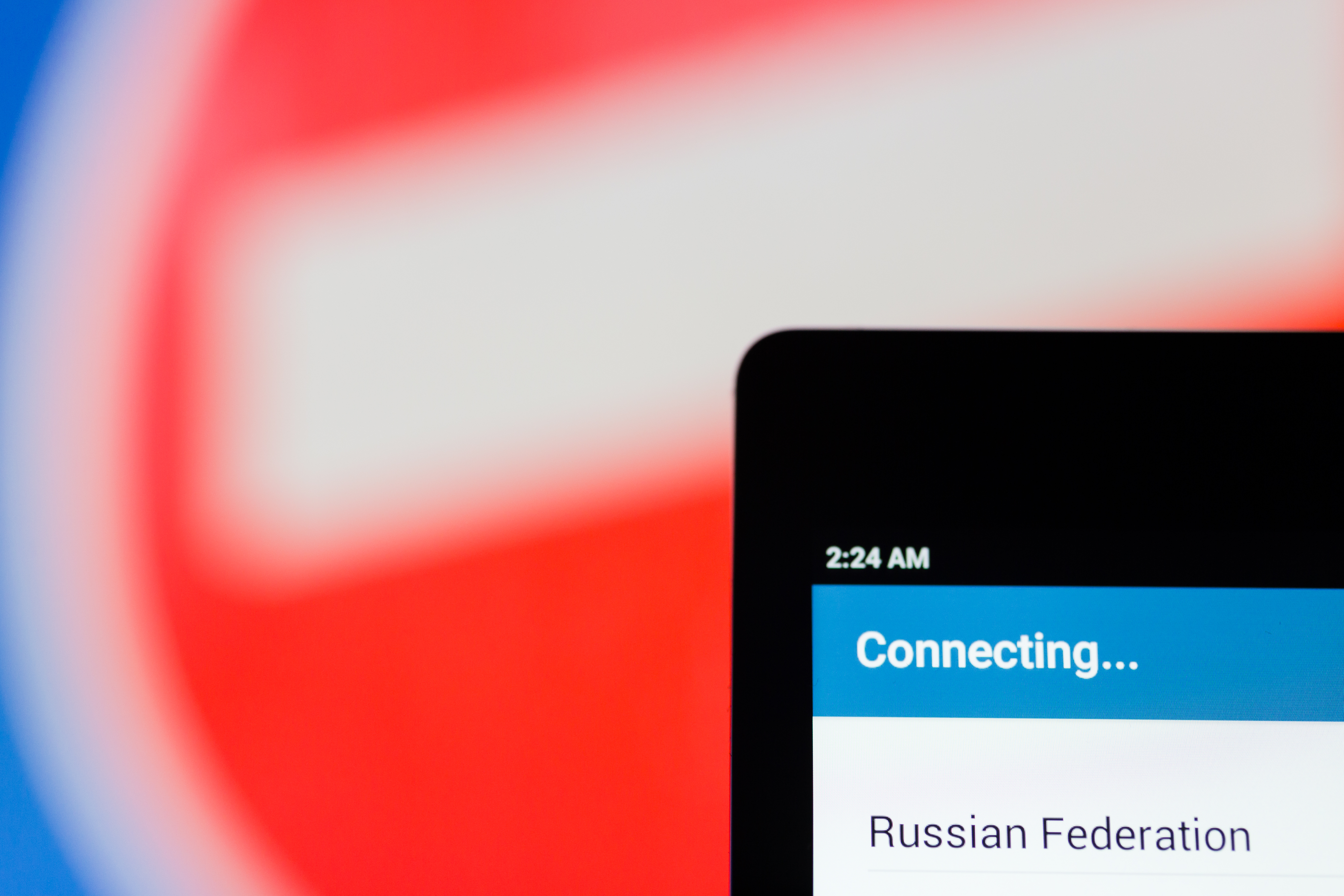
Will the Internet turn off in Russia?
- The continuation of the work of the Telegram messenger banned in Russia is an example of how a group of people was able to resist the whole state machine.
- The collision of Telegram with Roskomnadzor is a conflict between the Russian government with a global network and the involvement of Russia in it.
- Many users become hackers, learning to use the systems of bypassing locks.
- A detour of Telegram blocking for many people can involuntarily become the first action at the request of their political position.
- Telegram blocking and its consequences is a good reason for people to think about how dependent on the Internet and its individual services.
Sergey Medvedev: The future has come in the last week in Russia in a not very pleasant form - the Telegram messenger blocks, and advanced users launch paper aircraft from windows. What is a disposable action, the symbolic struggle of Roskomnadzor with a rebellious local, or is it a foresight of a certain future when a great Russian firewall is built, the Internet will be blocked in Russia? Details in the plot of our correspondent Anton Smirnov .
Anton Smirnov: The main theme of the last weeks is the battle for Telegram.
In pursuit of IP addresses that the messenger uses, Roskomnadzor blocked many random sites: from online schools to online stores. The policy of the Russian authorities led to the fact that thousands of entrepreneurs suffered large losses. The business community involuntarily connected to the battle for free Internet. Entrepreneurs whose sites were in the block began to sue the state, and now it largely depends on them whether the authorities will see their mistakes.
If the business shows legal nihilism and does not massively sue the government, then the Internet awaits loud locks or even more - creating an analogue of the Chinese firewall, which in the language of Russian officials is called "sovereign cyberspace".
Sergey Medvedev: We invited today's guests to discuss the prospects of this digital anti -utopia: this is Pyotr Levich , the founder of the Future Foundation , director of the Department of Interaction between Science, Technology and Society of the Moscow Technological Institute , and Alexei Grishin , Head of the Information Technology Department in Aladdin R.D. .
What are the results of the struggle for today - this is the victory of Durov and the progressive public or, rather, defeat? Telegram, in general, is available, it opens on my smartphone.
Peter Levich: This is definitely the victory of ideas, because it is difficult to recall for some time and technological opportunities in which a group of people could withstand the whole state machine. It is difficult to imagine the more effective actions of a totalitarian machine that could lead to a greater emphasizing their perfect powerlessness.
Sergey Medvedev: But what cost! Blocking many sites, Google works poorly, various of its services ...
Alexei Grishin: Telegram is blocked by fairly full -scale methods. Not just key IP addresses are blocked, which are used by the messenger to transmit information, whole subnets for blocking are used, and according to yesterday there were more than 20 million, and this number was already moving by 50. It is clear that not only Telegram got into these 50 million blocked IP addresses. At the same time, as we see, Telegram is still working.
A huge number of services from Amazon got there. This is a very popular resource for storing information and expanding services, especially a small business. Google-cards, google cards, are not affected, fonts are not loaded, the captcha service provided by Google does not work. Most sites began to load much more slowly due to the fact that attempts were inaccessible to turn to free Gulla content storages, such as fonts, photographs, icons. While the device fulfills requests, the user must wait, and this negatively affects the user's attitude to the service.
Sergey Medvedev: What are the prospects of all this? Durov will continue to be such an elusive cowboy on a white horse, will go away from third-party IP addresses, and Roskomnadzor will urinate in the areas, blocking more and more the Internet?
Alexey Grishin: This will become clear in a few weeks. Judging by the current statements of the ruling authorities, they are ready to finish the matter, to terminate the work of the messenger in Russia. It is clear that this will have huge global consequences. Is Russia ready for this? At the moment, practice shows that not very.
Peter Levich: We are now at the phase transition point, and we will go to some plateau. It is difficult to say what kind of plateau it will be-a Russian firewall or some kind of bonding, looking through the fingers at the semi-working Telegram. Those methods that are implemented by these prohibitions in Russia are very brutal and incompetent.
But such processes of confrontation between the metaphorical vertical and horizontal world go around the world. The vertical world is corporations, hierarchies, states, militaristic structures, and the horizontal world is the manifesting community of hackers, biohacers, horizontal distributed networks, and messengers. On the one hand, it seems that the vertical world is in agony, because it cannot control anything: science, education, everything distributed flows like sand through fingers, and the vertical world has an army, special services. We see these processes in China, that in Russia, in Europe, in America. In fact, the vertical world still has many resources.
It is very important to maintain tension in this conflict so that it is not too destructive, to pull out some product out of it-this is about some actions on the membrane between these worlds. But no one except our internal hopes promised us that globalization would be continuous. There is a hope that the Internet will always be global, connected that we can always write to someone on Facebook to the other end of the world, but, in general, no one promised us this.
It is very important to maintain tension in this conflict so that it is not too destructive
Telegram is a small element of the general process. It seems that the process of fragmentation of the Internet is indeed: both the world and the Internet depart from the globalization process, we enter during the period of fragmentation. This questions many sensations from our civilization.
Sergey Medvedev: Alexei, do you see the possibility of implementing a Chinese script in Russia, building a firewall, the Great Kremlin digital wall, the creation of some local deputies of global networks?
Alexey Grishin: In theory, there is such an opportunity, and this is absolutely normal. The question is how we are ready to stay without this relationship. Yes, Russia has its own honeycombs, there are data processing centers on which Internet services can be located. Yes, some of their software products are written in Russia. But now most of the information developments that we have and function, we get from the outside. We all use Microsoft programs, we get their renewal directly from the center of updates, which is located in the USA and Europe, where there is an active development, but we do not have it. We use some services of a free community, it is large, fragmented. And this free code originally originated on another continent, from there we pump it to our mirrors and here we use it, we finish, coordinate with an external network. If there is no such relationship, then we can remain without a large number of resources.
In addition, we must not forget that in information technology, closing some information always carries a negative effect. The most striking example here is cryptography. In Russia, we had domestic cryptography, which is called "GOST". Foreign cryptography was open and available to everyone, it was called "RSA" . At the moment, absolutely all services that establish encrypted formations, they set directly on derivative formats from this cryptography open to the public, developed in the United States, because they shared with everyone to find problems in this code, in this approach, in the methodology. We kept our GOST closed. At the time of the removal of the "Iron Curtain", our GOST turned out to be useless to anyone, and we switched to foreign standards. And such a closure, conservation, firstly, can push us back very well, and secondly, what we will create and develop can be useless after globalization, which will be sinusoid. This is very dangerous.
Sergey Medvedev: But it seems to me that the rollback back is the last thing that excites the architects of the new Russian digital closure, Roskomnadzor and the FSB. Peter, what is behind this attack on Telegram and wider - on the Internet? These people solve some local problems, perhaps, before Putin’s inauguration, they want to show zeal in the struggle, or is this the beginning of a broader campaign?

Peter Levich: This is a transition to those rules that are imposed on us. One can argue why the vector of all mankind for globalization is declining: possibly, including due to technology. Under technology and in this case, the Internet as their face, there is a lot: both the editing of the genome and neurotechnology that work with the identity of people. For many people who are not in Moscow, not in Skolkovo, not in Silicon Valley, but in the Russian outback or in a similar Texas, this causes fear: they do not understand where the world is going, who they are now. Trump, Brexit is also a manifestation of such a rollback. These events were the first bells of rollback from the common vector, when all of humanity was actually connected in a single impulse of movement to the singularity.
Sergey Medvedev: How are Russian programmers and in general the computer community ready to play according to the rules that Roskomnadzor and the FSB standing behind it offers? Now it is brought to hear that "Male.ru" actively helps Roskomnadzor in the search for bypass IP addresses for more efficient blocking.
Alexey Grishin: If before the war with Telegram we have blocked less than one million IP addresses, now we need to effectively block more than 60 million, and the resources are not unlimited. For complete cutting, you need to control, check the system performance, establish, configure it and be able to interact with it.
Sergey Medvedev: In the world, as I understand it, four billion IP addresses. Internet blocking means that all four billion will be blocked? Or is there one large roof?
Alexei Grishin: There is no large switch. Even if we turn off those networks that go and carry out a relationship directly through the fiber -optic channels, the Pacific Ocean and other places are laid, then we will still have airspace. A lot of satellites fly over us, it will still be the opportunity to transfer the information to the end point.
There are two types of IP addresses, respectively, the older ones that we use now-these are the addresses of the fourth and sixth IP version. Depending on the version, the number of IP addresses is different. And when we make our network a certain large autonomous network, we can set arbitrary addressing.
Sergey Medvedev: That is, the sixth protocol gives some endlessly expanding row, billions and billions of addresses. Russia does not have such energy capacities to block it.
Alexey Grishin: Not like energy capacities, here you need to directly limit the gear channel. If this channel is not outside, then everything will turn off at once, but it is difficult now with control. Russia has really chosen some kind of intermediate path between the total openness of Europe and the West and the complete closeness of China. It is not yet clear what comes of it, where it will go. Perhaps Roskomnadzor himself does not fully understand what the end point is in all this war of the locks.
Sergey Medvedev: Kaspersky is often accused of cooperation with the Kremlin, with the FSB. Programmers will still play according to the rules that the authorities offers?
Alexey Grishin: The programmer first of all does his job. Its task is to create a code, and the task of the system administrator is to build networks. Since we will lose interaction with the other side, we will not see foreign developments. This is already found even now, but in hacker communities. Each large gelativated hacker community has its own developments. The flow of vulnerabilities into neighboring gelative communities is a small opening for them. Therefore, we will begin to develop at different speeds, programmers will have less software, less codes. On the one hand, this should depress them, but on the other hand, this is the potential for creativity and growth. They can re -inate what already exists abroad, and get an additional bonus for this discovery. You know that cellular communications were invented both abroad and with us, and radio too. When there is no this communication, the same discoveries occur in different places. Accordingly, here the restriction will give programmers additional opportunities, but will deprive them of the existing opportunity.
Sergey Medvedev: Peter, what resistance strategies are possible now? Are we all becoming hackers? The first episode of hostilities leads to the fact that an ever wider culture of legal nihilism on the network is formed?
This is a transition to the rules that are imposed on us
Peter Levich: This is, of course, so. Durov technically could not agree with the Russian authorities, but he forbade colleagues from Agora to go to court so as not to legitimize the process.
Sergey Medvedev: Thanks to such Libertarian and free actions of Pavel Durov, we, one way or another, learn to use the systems of bypassing blocking.
Peter Levich: In this case, the decision of Durov was not a decision of the entrepreneur, but a decision of the progressor. He refused to do something, and it is difficult to imagine a more effective progressor action on his part in relation to the manifestation of free thought in Russian society. We understand that the audience of Telegram consisted not only of political activists. But a small button: I am ready to install these proxies for millions of people - could become the first action of a political position. This is a stunningly beautiful story!
We are in many ways in many ways and got used to comfort, to the fact that you can immediately go on YouTube, sit in Google documents, in the chat and so on. In general, we do not even imagine how involved in the infrastructure of the Internet. If the Internet were disconnected 25 years ago, it would led, roughly speaking, to some Apocalypse of a certain level, but if the global Internet is disconnected now, this will lead to an apocalypse of a much larger level.
And then we understand that in fact there are different scenarios of the future, singular biotechnologies, when we cannot control what we develop and how, and this may well cause technogenic disasters: the environmental crisis is not solved and so on. This first bell is to try to reflect your position: as far as I am dependent on Telegram, on YouTube, in general, on the Internet, to think about how ready I am ready for global disconnection of the Internet. It seems to us that Google documents and YouTube will be destroyed, but in fact everything will be destroyed: the Internet of things, a banking system and so on. All scenarios about zombie apocalypse can be implemented.
Maybe this is the global teachings of Roskomnadzor, but we must also pull out some positive thing for ourselves from here: to think about how dependent on this connectedness, what scenarios may be. Not all of them will have the level of comfort to which we are used to.
Sergey Medvedev: Alexei, maybe everything is not so apocalyptic? China uses all cloud services, apparently, a very powerful filtration system is simply implemented there, in which even open sites are blocked if there are links to some prohibited resources. Maybe there will be just a Chinese scenario in which everything works: a system of bank payments, payments - it is simply forbid people to go to Facebook, YouTube, Amazon, make purchases? Does Russia have software tools to organize its own alternatives?
Alexey Grishin: All phones and laptops used in China are produced in China. Large services and data distribution centers are in China. At the moment, we buy a large number of microelectronic components abroad, buy ready -made devices there, from the same China we carry them to our Russia and use them. At the moment, we do not have our own developments on the provision of comfort. We use software products, for the most part integrated into our domestic business from the outside. We need to increase resources in this direction in order to be autonomous and independent. Therefore, the Chinese development scenario is currently not very suitable for us. Yes, perhaps we can live on it, but it will drive us into very narrow frames, make you tighten our belts.
Sergey Medvedev: It seems to me that the problem here is simply a lack of resources. Китайские замены Фейсбука, соцсетей и прочих сервисов разрабатывались уже не первое десятилетие, они невероятно аппаратно продвинутые, люди привыкли ими пользоваться. В России это практически невозможно: что ни делают, выходит пулемет или компьютер "Эльбрус", который весит восемь килограммов.
Алексей Гришин: У нас есть хорошие программисты. Наши студенты, которые обучаются в Питере, постоянно выигрывают первые места на олимпиадном программировании, постоянно находятся в топе. Мы разрабатываем одни из лучших систем по распознаванию лиц.
Сергей Медведев: Петр, есть ли здесь риск, что Россия в этот раз снова окажется отрезанной от следующего витка мировой информационной революции, как это произошло с Советским Союзом уже в 60–70-е годы, когда бравые генералы и ФСБ взяли на себя руководство советской компьютерной отраслью и фактически забросили ее в дыру 20-летнего отставания, воруя и копируя западные технологии? Сейчас силовики снова берут в руки компьютеры, и это грозит тем же провалом.
Петр Левич: Кажется, да. Жизнь человека измеряется десятилетиями, и, возможно, многие россияне проживут значимую часть жизни в ситуации и цифрового, и физического "железного занавеса". Но через блютус и вайфай люди могут передавать друг другу сообщения, вообще не завися от внешних источников, и этого не было в Советском Союзе и вообще в мире.
Сергей Медведев: А там достаточно мощностей, чтобы обеспечить хотя бы какую-то долю нынешнего интернет-трафика?
Петр Левич: Трудно сказать. Если эти глобальные процессы случатся не только в России, интернет уже не будет прежним, это будет какая-то новая ситуация. Процессы взлета и падения глобализации, тоталитарных структур, империй насчитывают тысячи лет (что Римская империя, что Советский Союз), и мы можем предположить, как это будет происходить. На этот волновой процесс накладывается более линейный процесс развития технологических возможностей. И интересно, как перемножится достаточно привычная нам ситуация вибрации тоталитарности в мире с новыми технологическими возможностями глобальной связи через распределенные сети.
Мы можем получить совершенно неожиданные вещи: может оказаться, что будущее новых технологий существует не в больших городах и странах, не в Кремниевой долине и не в Москве, потому что там закручивают гайки, и там спад цивилизации, а где-нибудь в малоизвестном подпольном сообществе в горах. Возможны всякие киберпанк-сценарии. Чтобы взломать андроиды, созданные в большой корпорации, можно прийти в какое-то темное вонючее подполье; конкурентность уровней и компетенций возможна. Telegram – пример того, что он может в одиночку противостоять большой системе.
Сергей Медведев: Давайте представим худший сценарий. 2019. Роскомнадзор, проведя сейчас кавалерийскую атаку на капитал, отработал технологии и начал постепенно глушить Фейсбук, YouTube, Амазон. Большая часть знакомых нам ресурсов отключена. Есть ли технологические возможности доступа в интернет? Распределенные сети или, говорят, Гугл с Маском будут раздавать спутниковые?
Алексей Гришин: В некоторых странах уже введена такая политика изоляции. Есть отдаленные участки нашей планеты, куда просто не дошел другой интернет, кроме спутникового. Поэтому в одной из стран реализован следующий подход. Есть большое сообщество, в нем формируется запрос о том, что именно мы хотим получить завтра. Они собирают заявки с других людей, поэтапно проголосовав, и тот пакет, который выиграл, заказывается у одного спутника через другой спутник и прилетает буквально за сутки. Да, там идет большая задержка, скрытие технологии передачи данных, активно развивается стеганография. Там все это очень сильно затруднено, но передача информации все равно есть. Получается, что информация просто доступна меньшему кругу лиц. Те, кто знает, как ею воспользоваться, скрывают свои знания и умения, поскольку государство не хвалит за такое знание.
Сергей Медведев: Как в 60-70-е годы – были широкие массы населения, и были те, кто слушал Голос Америки, Би-би-си или Радио Свобода. Получается, что за цифровой стеной есть люди избранные, слушающие альтернативную информацию.
Может оказаться, что будущее новых технологий существует не в больших городах, а где-нибудь в малоизвестном подпольном сообществе в горах
Петр Левич: Просто меняются технологические инструменты этого подполья.
Алексей Гришин: Я не думаю, что мы пойдем какой-то другой веткой развития, мы просто будем перенимать эти технологии и дорабатывать, модифицировать их под конкретно сложившуюся ситуацию.
Сергей Медведев: В Китае 10% пользуются интернетом и обходят блокировки.
Петр Левич: Это уникальная ситуация. Китай сейчас на очень глубоком уровне выходит на другую ситуацию в плане отношений государства и людей. В этом смысле блокировка интернета для них не первая проблема, потому что там другой менталитет. Сюжет сериала "Черное зеркало" про социальный рейтинг существует в реальности: на твой социальный рейтинг влияет то, насколько ты и твои друзья лояльны к власти. И если ты общаешься с людьми, у которых низкий социальный рейтинг, то и твой рейтинг понижается. Это все технологизировано.
Сергей Медведев: Там люди получают балл за то, что "стучат" на других.
Петр Левич: Китай – пример того, что все новые технологии, на которые дают нам свободу, там дают тоталитаризм. И в этом смысле вопрос не в технологиях, а в их применении. Мы можем построить красивое и гуманное общество без интернета, вообще живя в лесах, становясь симбиотическим с природой видом, и там не будет технологий, которые лишат нас свободы. А можем построить очень тоталитарное и страшное общество, даже не блокируя интернет.
Сергей Медведев: Проблема не в технологии, а в обществе, которое ею пользуется. Те политические и социальные структуры, которые есть, любую технологию поставят себе на пользу. Нельзя же сказать, что паровая машина Ватта или станок Гутенберга в чистом виде принесли нам свободу. Используя их, свободу получили общества, в которых она созрела. Та же самая паровая машина использовалась для колониализма, печатный станок – для печати "Майн Кампф" и других малоприятных текстов.
Алексей Гришин: Можно вспомнить еще ядерную энергию, которая принесла с собой не только пользу, но и огромный вред и опасность.
Сергей Медведев: Наверное, мы слишком долго жили в эпохе глобального оптимизма по поводу глобализации и того, что интернет сделает нас свободными. Но здесь все гораздо сложнее: видимо, освободиться мы можем только внутри себя самих.
Закончу этот эфир своим "бумажным самолетиком". Сейчас идет столкновение не только Telegram с Роскомнадзором, но шире – структур власти, которые созданы в России, с глобальной сетью, с глобальной связанностью, с вовлеченностью в нее России. Фронтир свободы проходит, в том числе, и здесь.