
Translated material
The break of St. Andreas
Where are the continents run? And is it possible to artificially cause a destructive earthquake?
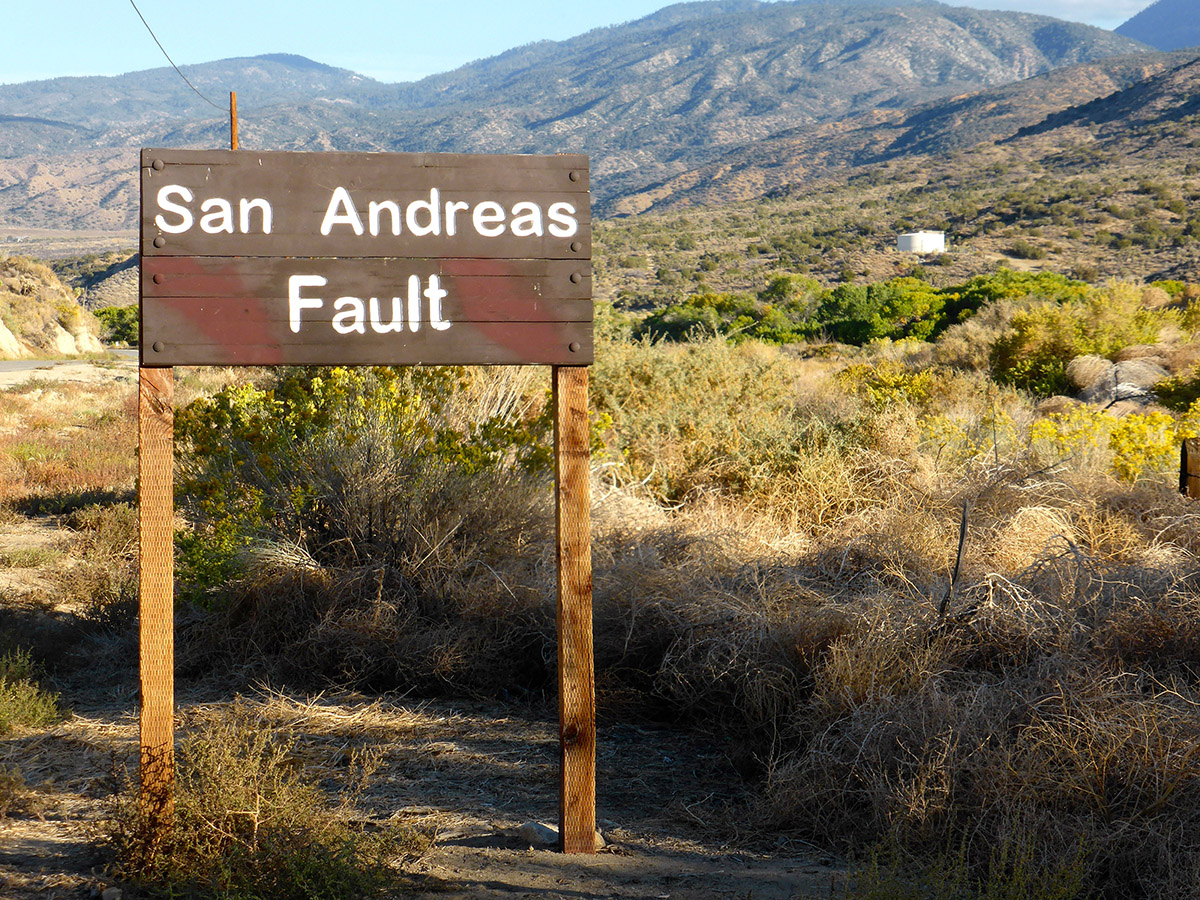
Photo: Flickr / Michael R Perry
In April 1906, an earthquake occurred in San Francisco, as a result of which more than 3 thousand people and 300 thousand were left without shelter. After 83 years, another, although not so terrible in consequences. Catastrophists predict: sooner or later there will be a large earthquake that shakes San Francisco with the Earth, and the city will disappear in huge gaps of the earth's crust. And the reason for this is a crack in the ground, called the fault of St. Andreas.
During the Cold War, the bike went that there was supposedly a Soviet nuclear missile aimed at a certain point (“water tower”) in California, the hit of which would cause the state of the Earth's crust into two pieces. After that, the eastern piece would be flooded with the Pacific Ocean, which would cause the death of most of the 30 million California, including residents of Los Angeles and San Francisco. Of course, this bike was born not in the Ministry of Defense of the USSR, but was a transferred presentation of the Hollywood film "Superman" of 1978.
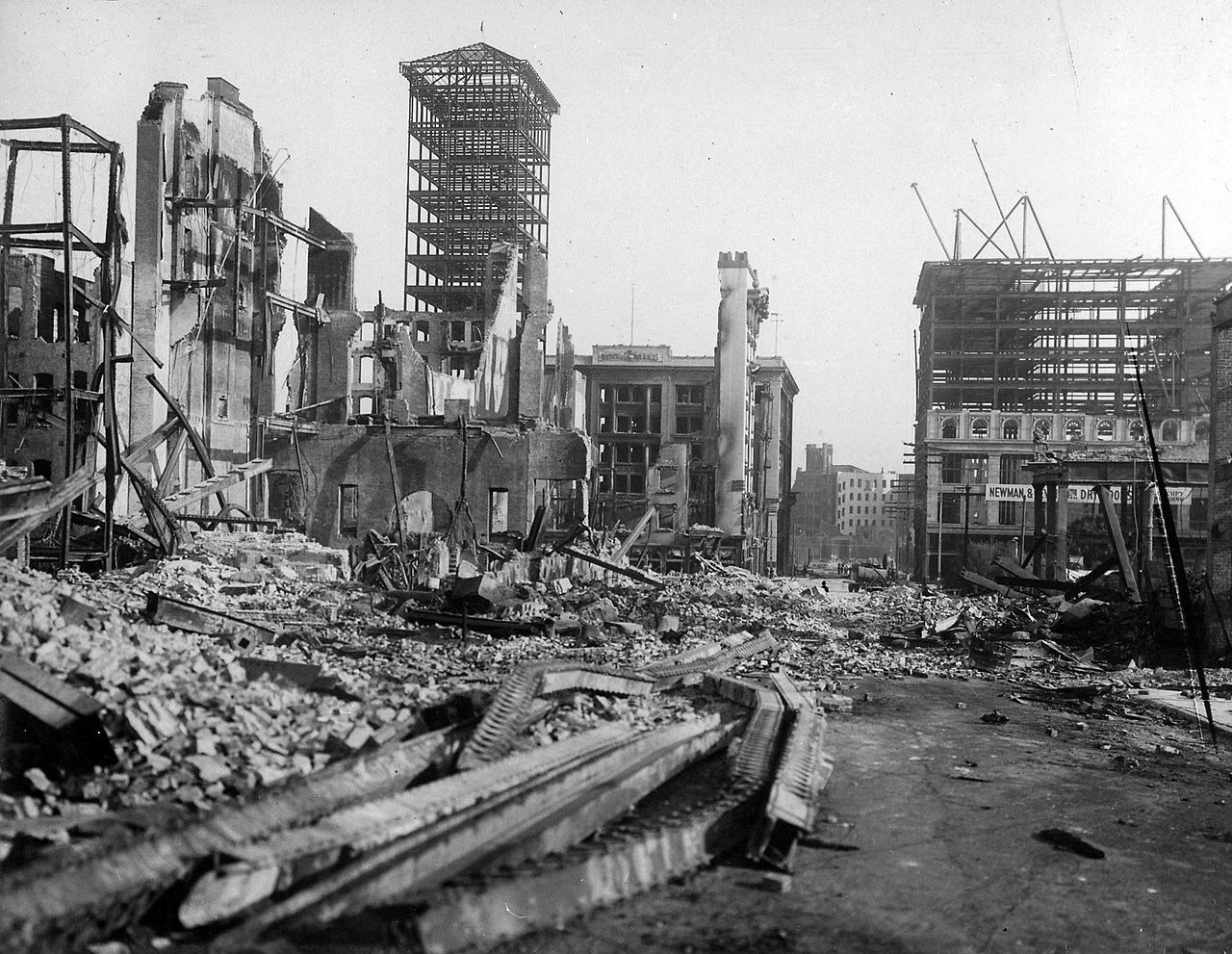
San Francisco after the 1906 earthquake photo: Wikimedia Commons / US Archiv Arcweb
1300 km of fear
But is there a grain of reality in this bike? Along the coast of California, it really takes a break of the earth's crust of San Andreas with a length of 1300 kilometers, separating the Pacific and North American tectonic plates. San Andreas (along with Khayvard, Kalaveras and others that adjacent to it, is a source of large earthquakes.
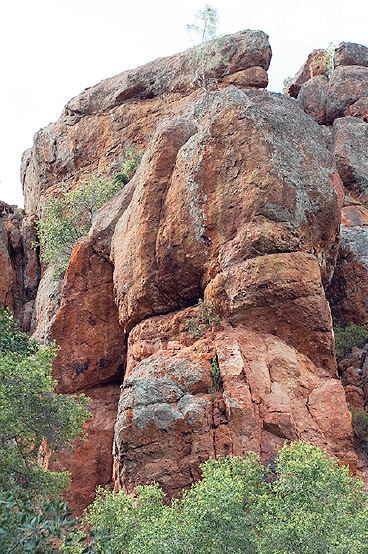
In some places, San Andreas is visible as a ravine, in other places it is almost invisible. The eastern and western aspects of the fault move parallel to each other: the western - to the north, and the eastern - to the south. The movement of plates occurs at about the growth rate of human nails - 3-4 centimeters per year. This movement can be seen on the roads that cross San Andreas: the shifted road markings and traces of regular road surface repair are visible at the fault. The most visible manifestation of the “work” of the fault is the ancient volcano Ninina, which was formed 23 million years ago, after which it was neatly “cut” “cut” by the fault of San Andreas into two halves, and the left half for millions of years “left” for a break by 314 kilometers to the north and became the National Pinnacles monument (Pinnacles National Monument).
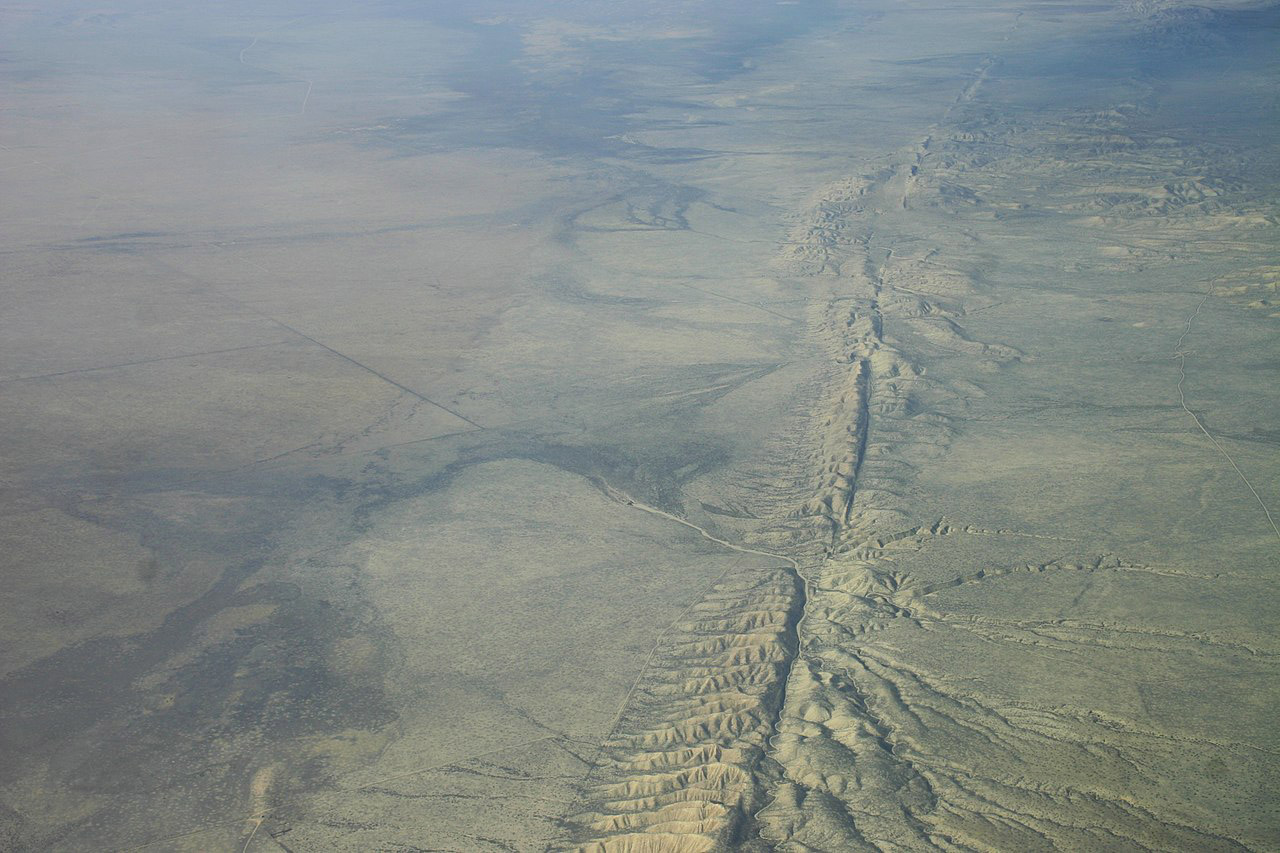
Aerosynamok fault San Andreas Photo: Wikimedia Commons
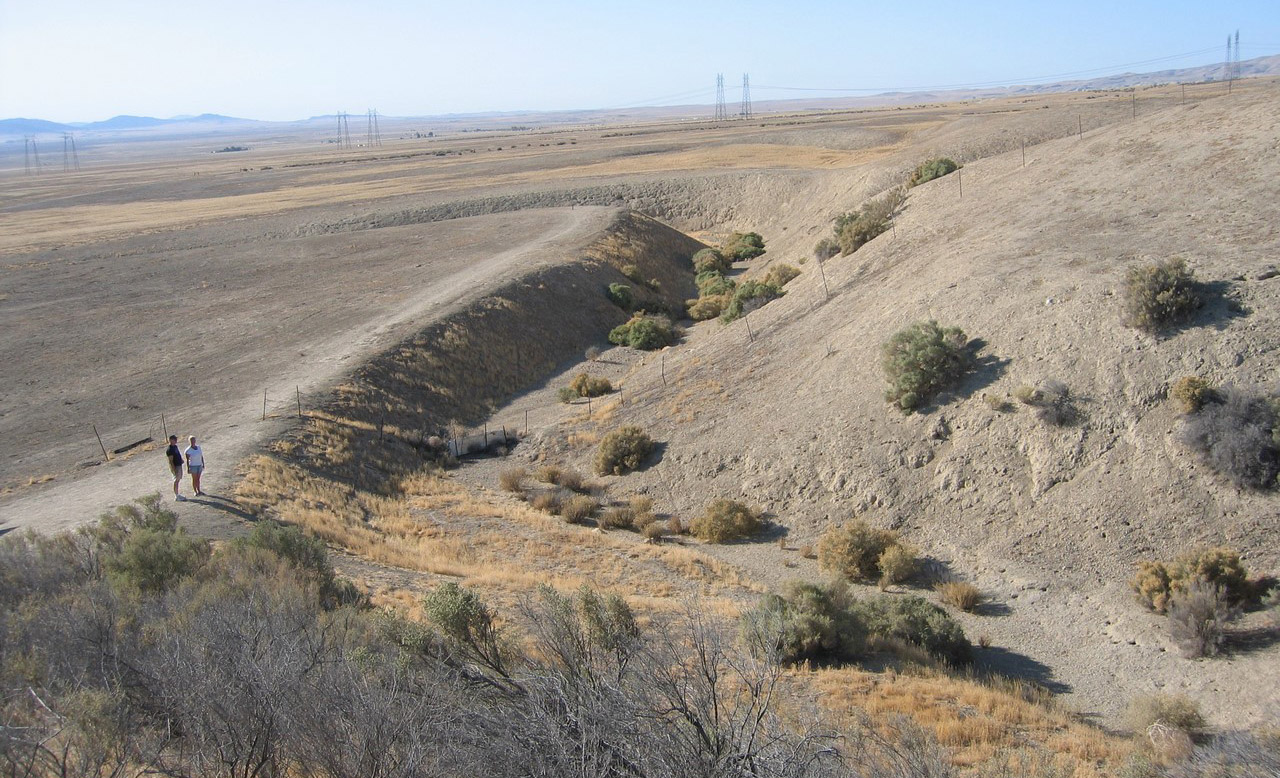
Photo: Pandoraopen.ru
Where are they rushing?
What forces are moving thousands of kilometer pieces of the earth's surface? Until the 20th century, the answer to this question was unknown. More precisely, there was not even a question: geological science believed that the continents are motionless, and the areas of the earth's crust move only down and upward, according to the theory of geosynclhals adopted in the middle of the 19th century.
But since the 16th century, the cartographers noticed that the coasts of Africa and South America can be imposed on each other, like two pieces of a broken plate, after which some researchers periodically put forward the idea that the continents are moving. Most of all the arguments were brought by the German scientist Alfred Vegers. In 1915, Wener showed that the coasts of different continents not only coincide along the contour, but also contain the same rocks of stones, as well as fossils of similar animal species. Wener suggested that 200 million years ago there was a single supercontinent Pangea, who subsequently split into parts that became modern Eurasia, America, Australia and Antarctica. For 50 years, the theory of Vegener was considered a set of random coincidences, since the geophysicists were considered incredible that the continent (mass of stone) could move along the other mass of the stone (solid bottom of the oceans), not being destroyed by friction. The situation changed only after the Second World War, when the US military, using Sonar, built oceans and found in the middle of them long chains of underwater mountains, clearly volcanic origin. Researcher Herry Hess showed that the bottom of the Atlantic Ocean is extended in two directions from the mountain range passing in the middle of the Atlantic. The extending ocean bottom carries the continents, as the escalator in the subway carries passengers.
And who moves them ...
As a result of the research of Hess and other scientists of the 1960s, a revolution occurred in geology, comparable to the Copernician revolution in astronomy. It turned out that the earth's crust consists of several large plates (African, North American, Pacific, Eurasian and others), as well as a large number of small plates that move at a speed of several centimeters a year, encountering each other. Each plate has a thickness of about 100 kilometers. Under the plates that form the “lithosphere”, there is a hot viscous layer with a thickness of about 200-400 kilometers, which is called an asthenosphere. Tectonical plates “float” on it, carrying continents.
In the collision of plates, depending on the nature of the collision, mountains (for example, Himalayas), chains of islands (for example, Japanese islands), cavities and volcanoes are formed. When the ocean and continental slabs collide, the ocean goes down. This is due to the fact that the ocean bark has a different chemical composition and greater density. Herry Hess called the ongoing process the “conveyor tape”: the new bark is born from hardened lava in the middle of the ocean, slowly moves for millions of years, after which he again plunges into the bowels and melts.
Why are the slabs on the fault of San Andreas move to the sides, and not towards each other? The fact is that for 40 million years in the region there was a complex “dance” of three tectonic plates (Pacific, Farallon (Farallon) and North American), the boundaries between which passed at an angle to each other. The Farallon plate was “pushed” under the North American, after which the Pacific began to slide sideways along the former border of the Farallon and North American slabs.
Tectonic slabs are similar to foams moving convection course of boiling soup. In the 19th century, scientists did not understand how this “soup” could continue to “boil”. According to the calculations of the famous physicist William Thomson (Lord Kelvin), according to the laws of thermodynamics, the Earth was supposed to cool in just 20 million years. This contradicted estimates by the age of the Earth made by geologists. Thomson did not take into account the heating of the Earth with the decay of radioactive elements, which were discovered only at the beginning of the 20th century. Because of this warm-up, the Earth continues to be hot after four and a half billion years of its existence. We live on a huge nuclear reactor - planet Earth!
Shaking of the earth
Well, the continents are moving, but how does this affect our lives, in addition to the need to periodically repair several small roads crossing San Andreas? The fact is that the movement does not occur continuously. Each shift begins with the accumulation of stress, which is “discharged” with a jerk during a large or small earthquake. In the central part, the break “crawls” due to thousands of micro -markets, which are not felt by a person. But sometimes the tension does not discharge for a long time, after which the movement occurs as a jump.
This happened during the 1906 earthquake in San Francisco, when in the area of the epicenter “left” part of California moved relative to the “right” by almost 7 meters. The shift began 10 kilometers under the ocean bottom in the San Francisco area, after which, within 4 minutes, the shift pulse spread to 430 kilometers of the fault of San Andreas-from the village of Mendosino to the town of San Juan Batista.
The plan of the main villain
Thus, it is impossible to flood the coastal California with a point nuclear explosion on the fault of San Andreas. The slabs in the fault area do not move towards each other, but to the sides (along the north - south), so it is less real to push the Pacific plate under the North American one than flood the aircraft carrier. But is it possible to cause serious destruction by an artificial earthquake? Oddly enough, this idea was tested not only in Hollywood films. In 1966, geologists from the US State Geological Service (USGS) noticed an unexpected sequence of earthquakes in the Military Arsenal of Rocky Flass in Colorado. The time of earthquakes exactly coincided with the moments when the military got rid of liquid waste, pumping them under pressure deep underground. Geologists put an experiment by pumping water to an abandoned oil field near the city of Rengli in Colorado. For the first time in history, people artificially caused an earthquake.
After that, the USGS discussed the idea of preventing large earthquakes along San Andreas for some time by discharge of the voltage of the break using a large number of micro-markets. However, they decided not to experiment in USGS, since it is clear that they would not have enough money in case of error for the complete destruction of Los Angeles or San Francisco.
It is worse
Despite the earthquakes, California is one of the most pleasant places for life on Earth. Most state residents live in one or two-story houses and knows precautions. Therefore, a significant earthquake in San Francisco in 1989 caused not very large destruction. In the end, in other places of the planet there are problems - hurricanes, tsunami or unfavorable political situation. Yes, and the collapse of San Andreas is not the most dangerous geological object in the United States. For example, there is a Yellowstone supervolcano, which about two million years ago bombarded ash to the entire western half of the modern territory of the United States. A huge number of animals died even thousands of kilometers from eruption-due to dust that fell into the lungs and polluted drinking water. Such eruptions change the climate of the entire planet for years, causing a "volcanic winter." But the theme of volcanoes and supervolcans deserves a separate article.
First published in NT No. 17–18 of April 28, 2008