
Translated material
Where to meet spring
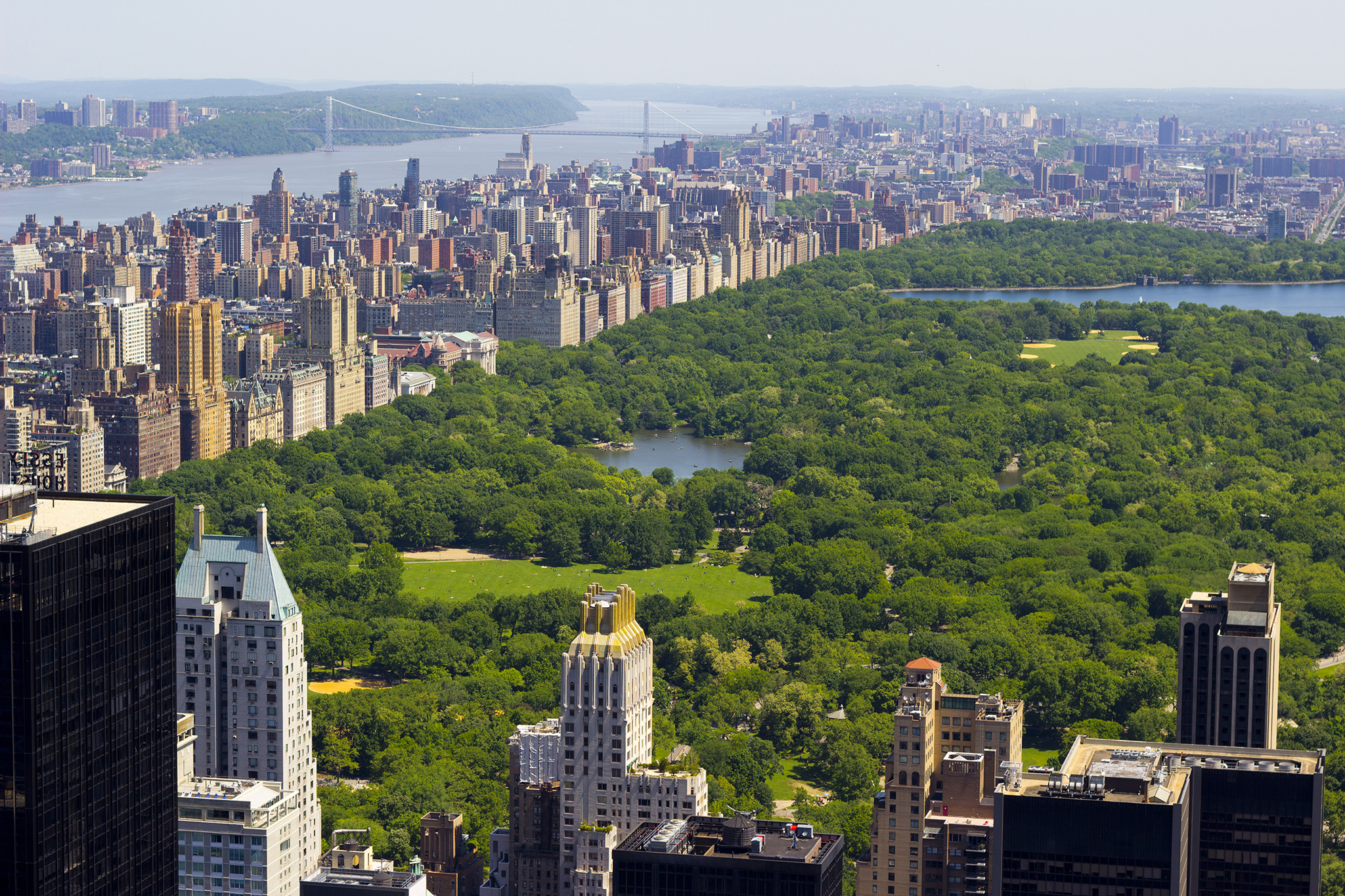
Central Park and its inhabitants
Alexander Genis: There was no such winter yet, they say New York old-timers. I myself say. For 41 years I have not seen anything like it. Back in April, a snowdrift spent the night at our porch. The most annoying thing is that I know how it ends - hasty heat. What I do not like in New York is confusion with the seasons. There are one less here less than it should be: autumn, winter - and at once in summer. You will not have time to take off the cloak, how to wear shorts. The transition from cold to heat takes place in a few hours. Even flowers are in a hurry to dissolve like crazy. But this year, after an unusually long, just like in Russia, winter, the New York residents, who are warming up, meet spring with enthusiasm and rush into nature. To do this, it is not at all necessary to leave the city. Perhaps only in New York, wild nature feels great in the very center of the metropolis-in the central park.
This miracle of New York we will devote the second half of today's “Ach”.
(Music)
Alexander Genis: In Europe, the park is the result of expansion and evolution. Growing up, the city was seized, like Paris - the Bolest Forest, the surrounding nature or planted it. But in America, the parks sometimes just changed the names. Returning labels, the forest was turned into a park. This happened in Bronx, where a pristine grove was surrounded by a fence and included it in the botanical garden.
Even in Manhattan, on the northern outskirts of the island, there is a densely overgrown hill that remained the same before white people came here, including me. Having lived next to him for 15 years, I enjoyed him as a summer resident. In the spring he collected lilies of the valley, in the fall - mushrooms, in winter (meat in the cold!) He fry kebabs, which hares and homeless people came to admire.
But the central park is another matter. He is unique in the plan. When he was invented, the new light was not only new, but also not tamed. In the Wild West, which began, as the proud residents of Manhattan still think, on the other side of the Hudson, the monks rode, the bison, scalpes shot and the cowboys worked. The first New Yorkers admired the zoo, secondly appreciated smoked tongues, others were examined in museums, read about the fourth in westerns, which were novels until they got into the cinema.
In the greenhouse conditions of close Manhattan, the central park was to become a wild West for the internal use of citizens. He was an artificial, but real reserve of virgin America. As a theater in the theater, the Central Park exaggerated nature. Concluded in a stone box, she blossomed with a paradise, neglecting price and benefit. Not like Disneyland with its caricature geography, not like national parks with their untouched beauty, not as romantic gardens with their poetic arbitrariness, but as a model of a new world in full size. Strictly inscribed in the correct figure, the park demonstrates its intentional origin. But nature that has fallen inside lives at large. In the Manhattan line-drawn line, the central park gives a life-giving break from geometry.
This contradiction creates a unique nature of New York. It is easy to do without the main one, such as red in Moscow or Tiananmen in Beijing, Square. In New York, it is a large clearing of the Central Park.
Once I saw her a sea of people. In waves stirring out of the metro, they sat on the grass in anticipation of the guru. A motley crowd came to a meeting with the Dalai Lama, in which I had a chance to get down. There were hippies - still long -haired, but already with a bald head. Panki with well -groomed ironicheses. Unnecessary girls in wreaths of dandelions. But there were also solid lawyers in ties. And strict, similar to the teachers of the lady. And funny Franciscan monks with tonsure. And shaving -headed Buddhists. And orthodox Jews with curled paces. We were protected by horse police. Their lovingly well -groomed horses posed for onlooks and restrainedly squinted at the juicy grass.
Having achieved silence, Richard Gir, the leader of the Hollywood Buddhists, went to the microphone.
“There are no outsiders under the flowering cherries,” he quoted Hike in his translation and presented the old man in round glasses.
The Dalai Lama smiled and said a few words that might seem banal to everyone except the audience.
“We are all one when we feel good.”
The next morning (I specifically checked) there was not a single dirty piece of paper left at the site of the hundred thousandth gatherings. As if the clearing was shook off like a tablecloth.
(Music)
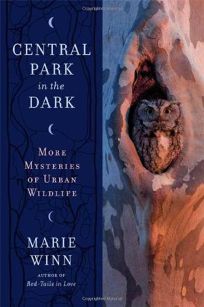
Alexander Genis: The Central Park appears in countless films, sing songs about him and compose music, including the one that sounds in this program. And of course, many books have been written about him. In the framework of our archival section “On the Life of the Day” we offer the conversation of the correspondent of the American hour of Irina Savinova with Marie Winn, the author of the curious book “Central Park at night: also about the secrets of the city animal world”.
Irina Savinova: How does the central park of New York differ from its other parks?
Marie Winn: With her beauty. He is really more beautiful than others. But otherwise, he does not differ, say, from the prospectus park, the patterns-bee-park and other parks of New York. All of them can calmly exist wild animals. Another thing is that the central park is a celebrity, it is most often mentioned, books are written about it, it is shot in the cinema. James Baldwin, Salinger, Edith Warton wrote about him. In the 1940s, a musical was written about him, which is called-"In the Central Park". In addition, he is right next to my house. But he is not unique. All city parks have something to show.
Irina Savinova: The Central Park is especially ...
Marie Winn: He was planned by a pair of famous architects, Vors and Holmsted, in the mid-19th century. They were also designers of Prospect-Park, Park in Paris and many others around the world. All city parks remind us of nature, but on the other hand, they look like a stage setting with scenery for scenes from the life of a wild animal world. In the Central Park, everything was brought and planted in order to resemble indomitable nature. Of course, I'm not talking about the park as a whole. It has many sites for sports games, a lot of alleys for walking. However, our group and I made the center of our research precisely the wild part of the park.
Irina Savinova: And who can be found in such a wild area? What species of animals live in the park?
Marie Winn: In the wooded area of the Central Park, and in other city parks, there are more representatives of the animal world than we guess. Of course, the most noticeable are large creatures, mammals. Raccoons can be found more often than others. Such a beautiful animal. Their remote relatives are in other countries, but our raccoon is local, North American. I'm not talking about nightly creatures. In the afternoon in the park there is a lot of protein. Our North American, gray. At night you can see bats, they are also mammals, but people forget about it and consider them birds. The park has four types of bats. It is difficult to see them at night and hear too, but we have a special device that records the sound above the frequency that the human ear captures. This device turns the sounds made by bats into clicking. If you go out into the park after sunset, the device begins to crack, it means that there are bats, and you can notice their dark gray silhouettes, especially near the lamps, where they like to hunt night butterflies that have arrived.
Irina Savinova: If we talk about night animals, you cannot forget the owls ...
Marie Winn: In the Park, owls occupy a special place. They are the most interesting in his night life. There are incredibly beautiful owls that appear in the park after the mating season ends. They do this in other places, not in the park, and then return to it. This is a large horned owl, one of the two largest in North America, a long -eared owl, with brushes on the ears, and a small alphabet. It is easy to find them with the park - we have assistants, birds. Soyk and even small singing birds at the sight of a silhouette of a day on a tree on a tree, owls begin to arrange a terrible din. And amateur ornithologists know that if there is a flock in all screaming birds, you need to take binoculars, look for branches in the thick of the branches and please you-owl. But the park has another variety of owls, which did not appear by itself, but was specially imported. This is a converging owl. 32 individuals were released. Once upon a time, hinging owls lived in the park, but then for some reason they disappeared. This time they took root. These are small birds the size of a European thrush or raspberry.
Irina Savinova: Who visits the park, who watches the local nature?
Marie Winn: First of all, I note that people come here to just relax, play sports, skip children and walk dogs. But there are others, there are quite a lot of them, and I am from among them. Who are interested in something defined in the wild in the wild. I do not mean the wild nature of man, but the animal world. Whether it is moths, birds or frogs, we look for them, observe their behavior, spending a lot of time trying to learn more about them.
Irina Savinova: Once in the park, many species of animals lead a normal life, the environmental situation should be favorable ...
Marie Winn: The importance of the role played by the park in the global environmental situation is difficult to overestimate. Here is one example for you. Twice a year, the park provides its territory to millions of singing birds to relax on the way from the places where they breed, to the places where they migrate in search of sources of food. The path is very, very long, and they need to rest, eat and drink water. And food and water in our park at their service. Despite the fact that everywhere there are stone jungle, they didn’t have such a place to relax like a park, they would just have died. Migration is a very difficult part of birds. Therefore, urban parks, where birds take a breath, are of great importance.
Irina Savinova: How are animals in the park and people coexist with each other?
Marie Winn: In different ways. Take the raccoons. Relations with people went in the wrong direction. Many people come to the park with bags and even buckets full of food for raccoons. And the raccoons were very grinded, they even come out before twilight, waiting for the distribution of delicious things, such as spaghetti with sauce, pizza and much more. The raccoons divorced so much that soon the park will not be able to cope with their livestock. In fact, there are no need to feed these animals around and so much food: they catch small fish and crayfish in lakes and streams, eat berries, and finally eat chicks and underwear - they are omnivorous. From this point of view, the role of people is negative.
But people can help owls. Owls often die under the wheels of cars. We can achieve a reduction in the number of hours during which traveling through the park is allowed. Especially - at a time when owls fly out to night hunting. I would like that at this time there were no cars on the roads of the park.
Irina Savinova: Your book is about the park at night. What is interesting for the night park?
Marie Winn: Perhaps the most interesting thing in observing the park at night is the mysterious life of insects. What happens at night will never see during the day. Night moths flies into the lights put up by us, the trees that distinguish the juice attractive to them are flooded. I saw only a few types of night insects, and there are tens of thousands of them. We have the goal - to identify as much as possible. Some of them are beautiful and large, like butterflies.
Irina Savinova: Who is your favorite character in the book?
Marie Winn: In my opinion, the main characters of the book turned out to be night moths with the rear wings. I know we were very tired of them, but we were able to describe more varieties than experts on night moths in our region. When they open the front wings, you can see how beautiful the rear, painted in orange, yellow and velvet-black colors. These moths are characteristic representatives of the night life of the city, but few sees them. And many more pages are dedicated to conjugating owls with their sometimes comic, and sometimes tragic fates.
Irina Savinova: But, perhaps, the most famous residents of the park are the family of red -tailed hawks, who had a nest over the window of the house in the luxurious area of Pyatnu Avenue.
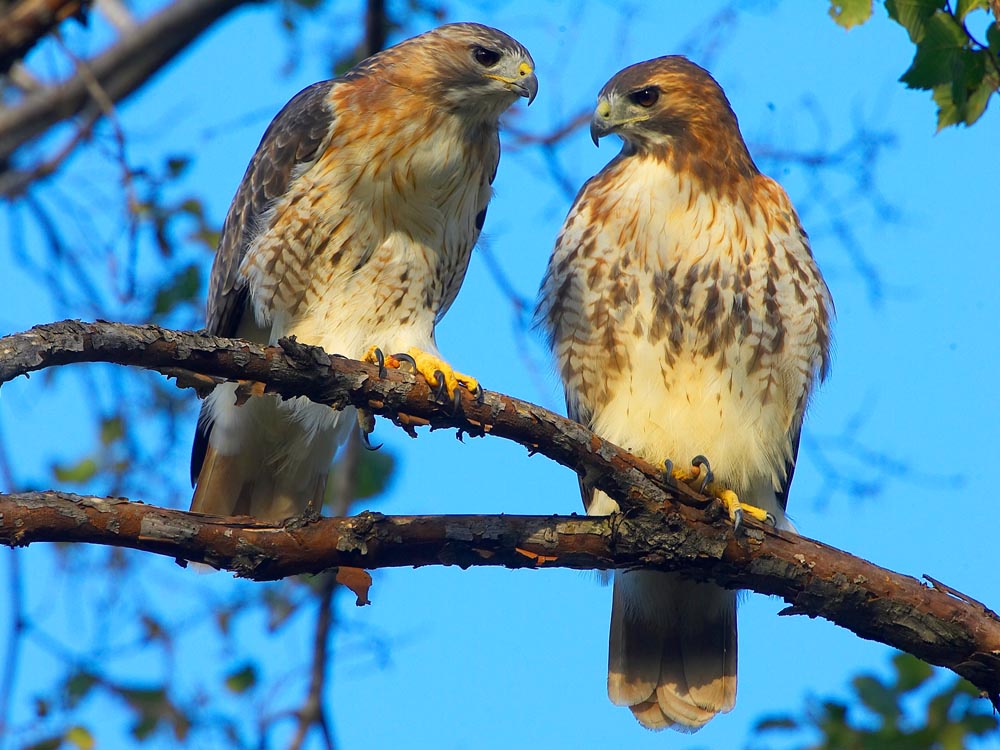
Marie Winn: In short, it was like that. In 1992, when we had no hawks, one male settled in the park. Amateur ornithologists began to watch him. Then he got a girlfriend. And we all followed the development of their intimate relationships. They walked nest not on a tree, as is customary for this species of birds, but on the cornice - above the window of the apartment on the ninth floor. The house looks at the central park, and, sitting on a bench, one could observe life in the nest. Good luck and failure when conception. There were fewer the latter - the hawk became the father of 24 children. We saw how they hatch the chicks, teach them to fly and live. His successes with different partners. Not that he was Donjuan, just one hit the car, the other ate a rat poisoned by poison and died. Then he got down with Lola and so remained with her. We gave them names to all: at first there was first love, then the first mother appeared, finally - Lola.
Irina Savinova: How can people help the rest of the inhabitants of the central park?
Marie Winn: There are completely obvious things. You can’t throw garbage, you need to walk only along the paths, and not cross the sections planted by plants and grass. Walking along the grass, we save for a few seconds, but we trample the grass, the earth is loosened, the roots of trees suffer. This must be taught. It’s good that many people hear me now: walk along the paths. The park is a very beautiful place, but so unprotected - there are too many people in it.
Irina Savinova: Do you think it is possible to populate parks with new species of animals?
Marie Winn: No, I don't think. The animal world itself comes to the park. Especially birds: they themselves fly and fly away. You do not need to intervene in this process.
(Music)
Alexander Genis: Continuing the theme of the inhabitants of the central park raised by our interlocutor, I want to remember the monuments.
If you start a walk from the southern entrance, then soon you will fall into the alley of monuments. The feeble Shakespeare opens it. Behind him in a row there are decisive Columbus, romantic Robert Burns, Corvens Walter Scott, stormy, like “Appassionate”, Beethoven. The parade of geniuses completes the ancient thinker, draped into something ancient. If not for the signature, no one would have recognized in him the inventor of the telegraph Morse. And it does not rest on the column, but on the telegraph key. There is a pretty, purely New York line in this. It is immediately obvious that in the 19th century, the telegraph seemed no less romantic than all Scottish poetry. New York, perhaps, is more suitable for not the grand greatestness of the multi-meter statue of freedom, which serves as an epigraph to all of America, but restrained, albeit lyrical emotions for a more modest reason, such as the opening of a wire communication. It is not for nothing that New York has ainated his famous Brooklyn bridge. In what other city are songs, poems, even operas about the bridge?
The further we go to the park, the deeper we plunge into the past. Monuments of the spirit are replaced by boulders left by glaciers. And then almost the most ancient attraction of New York with the age of age. This is an Egyptian obelisk needle Cleopatra. For three and a half thousand years, he has grown out less than in the last fifty. But now he was cleaned of city soot, and he stands as new.
Approaching him, I always add a step with impatience, although I understand that, having lived for 35 centuries, the obelisk will wait for me. The last time, staring at my favorite monument, I did not notice a flimsy scum and almost knocked it down.
“Idiot,” the wife shouted, holding me behind the floor, “you want to deprive us of Woody Allen.”
(Music)
Alexander Genis: In the central park, one could always meet other celebrities. Most often - Jacqueline Kennedy, who loved to walk and run around the reservoir. Now this ring track bears her name. Another first lady, the former wife of the former president of Sarkozy, was so liked by our park that she exchanged Paris and her husband for him. But most of all, the central park was appreciated by the artist Bakhchanyan.
- This is my summer palace, Vagrich told me, calling the Winter Palace - the metro. Living next to both, he used them for their intended purpose. The museum was a wonderful warehouse, the park was a meeting of friends. Vagrich knew every path by heart, every tree - in the face, every creature - in appearance and taste.
In art, Bakhchanyan preferred a minimum shift that separates pathos from a parody. The most famous example is the Leninist cap. Putting her as a leader in the eye, the artist turned Ilyich into Urca. Vagrich confessed the same minimalism in fishing. Without recognizing fishing rods, he always dragged a fishing line with a hook in his pocket and threw a tackle where he had to, but always with success. Most often, the very artificial lake that wraps the path Jacqueline Kennedy and protects the multi -meter wire fence. Once this water was watered with a city, now seagulls, frogs, fish and, until he died, Bakhchanyan use it. Dexterously throwing the hook through the fence, he dragged white perches, fat -fired without fishermen. And Vagrich collected mushrooms in the park, in the summer - berries for jam. Climbing into the thickets of the Shakespearean hill, where all the plants mentioned by Bard were planted, Bakhchanyan composed his absurd and very funny texts.
Once Bakhchanyan led me to the pond near the toy castle Belvedere and told about the tragedy that happened here.
“Wise men from the Park Directorate,” he said, “decided to decorate the pond with goldfish.” It’s elegant and profitable, they decided, because these pretty creatures live up to thirty years, once launched - and admire for years.
Indeed, the fish splashed with pleasure, inspiring, as the Chinese domesticated, carefree thought. Old -timers rejoiced, tourists - even more so. But even more cute fish liked the local biting (this is a breed, not temperament) to the turtles, which at the morning ate everyone.
“There is no one left alive,” Vagrich summed up, “like the same Shakespeare.”
(Music)
Alexander Genis: “A square centimeter of housing in Manhattan,” Vitaly Komar thoughtfully told me, “there is more than the same area in my picture.”
I wanted to object out of politeness to the artist, but I could not, because I could not argue. Frantic prices only plow lust. Residents of our city are obsessed with pornography of real estate. Adults, it would seem, people adhere to the display cases of real estate offices and warmly argue about how they will arrange furniture in apartments, where they never live.
“Here,” she says, considering the plan of a spacious closet without a kitchen, but in the phanse, “will fit a sofa for mom.”
“Perhaps,” he agrees, “it would be better for her a separate room, and in Buffalo.”
I myself am not trifling, because I have long looked at a 10-room apartment in an old, remembering both Roosevelts house near the Museum of Natural History, where the eldest of the two presidents is depicted in civilian clothes, but on horseback.
“Three fireplaces,” the wife reads the announcement aloud, “a view of the central park and a two-way hall for dancing.”
“And spacious,” I pick up, “you hear, a spacious library.”
“Besides, it’s not so expensive,” the wife is about 18 million. “
“Put it off for five hundred years,” I estimated the eye.
And what if Manhattan is an island, and judging by prices, treasures? It is located monstrously inconvenient. Like Venice, but at least cars are prohibited there, and then there are a million of them, and everyone is in traffic jams. Nevertheless, in all of the part of the universe we know, there is no more desirable address.
“The future,” they will tell you, “here begins before, the past never disappears, the present stretches into an accordion, and a miracle guard around each corner.
In general, this is true, and I even know how it, a miracle, is called: Central Park. Not in any city (except for the most green - Washington, which was forgotten to complete) there is such a huge hole in the city landscape. A neatly carved park in 43 hectares is stretched by fifty quarters. Starting at the statue of the melancholy Columbus on 59th Street, it reaches to the entrance to Harlem on the 110th. But, permeating the city, the Central Park does not apply to it, for it lives in harmony only with its own aesthetic laws and philosophical theories.
(Music)