
Translated material
Faith, love, hope
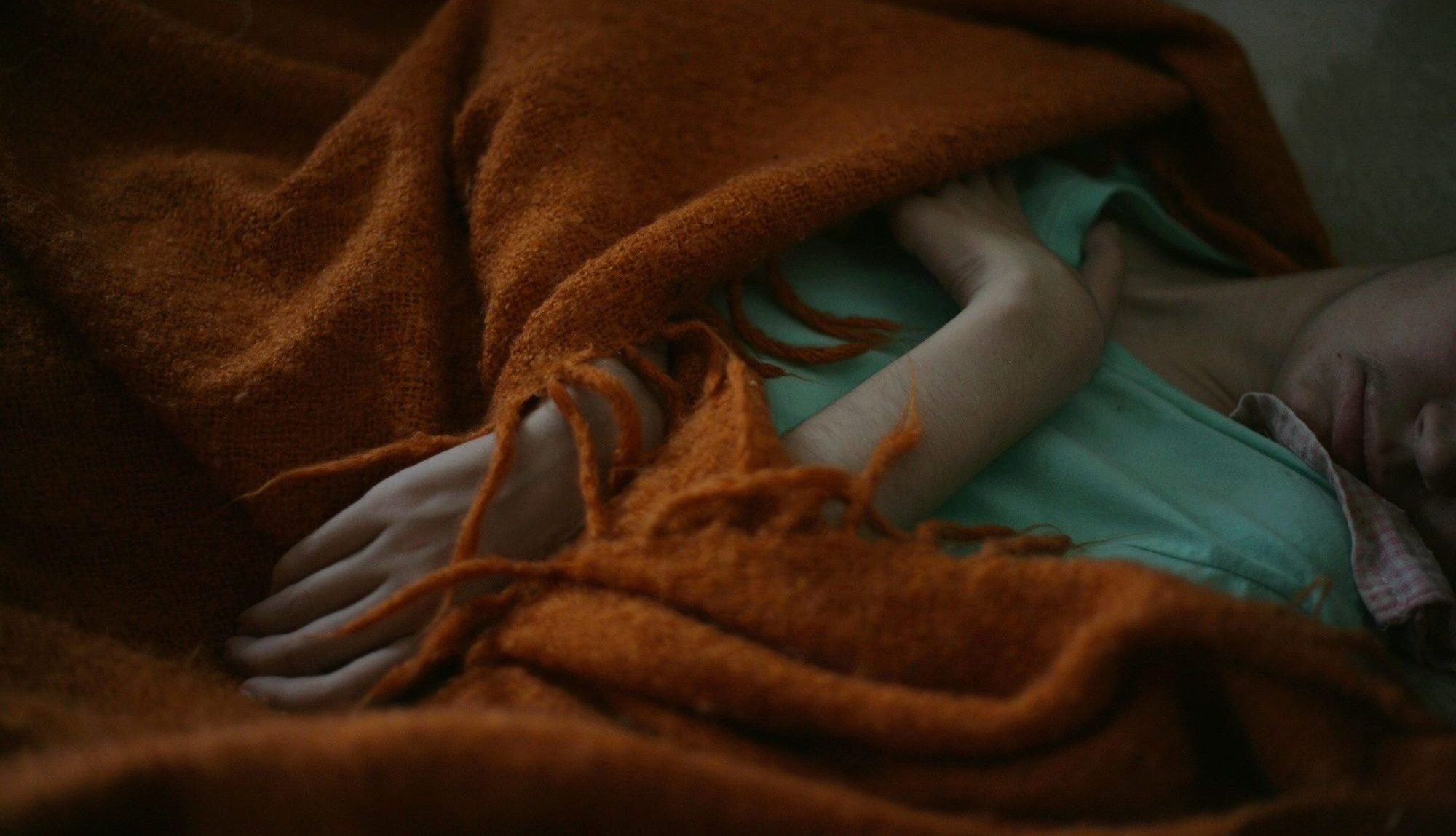
No serious illness can be called fair. But if you try to somehow place all the terrible ailments of mankind on the speculative relevance scale, a point called “multiple sclerosis” should be below zero
Help Karitas in Siberia helpI hold Nadia for a thin-fuel pen with long curved fingers. A disproportionately small, exhausted body is hidden under the blanket, and this pen-the only one capable of at least some kind of movement-clung to me, as in a rescue circle. Two days ago, Nadia turned thirty -six, but she looks like a teenager, only with an unusually adult face, a densely flooded blush - she is embarrassed, new guests are infrequently with her. Even the eyes on this face, as if obeying the general bodily numbness, froze - non -extinguishing and glass, look inseparably at one point.
The disease squeezed the people's lungs - it is difficult to breathe, her breasts rises abruptly, each sigh is accompanied by a quiet groan. She is trying to say something, but of all the words it turns out to pronounce only the simplest syllables: “Ma-ma”, “PA-PA”. During the conversation, Nadin fades the interest in me, and she awkwardly turns her head to the balloons with helium hanging under the ceiling. Each ball is tied to the ribbon, and the ends of these ribbons are tied on the fingers of the other nadina hand. These balls brought her on the past birthday the Catholic priest, the father of Ondre from Slovakia. He is here, holds a hand on Nadi's shoulder and quietly tells her that do not mean affectionate words with a funny East European accent.
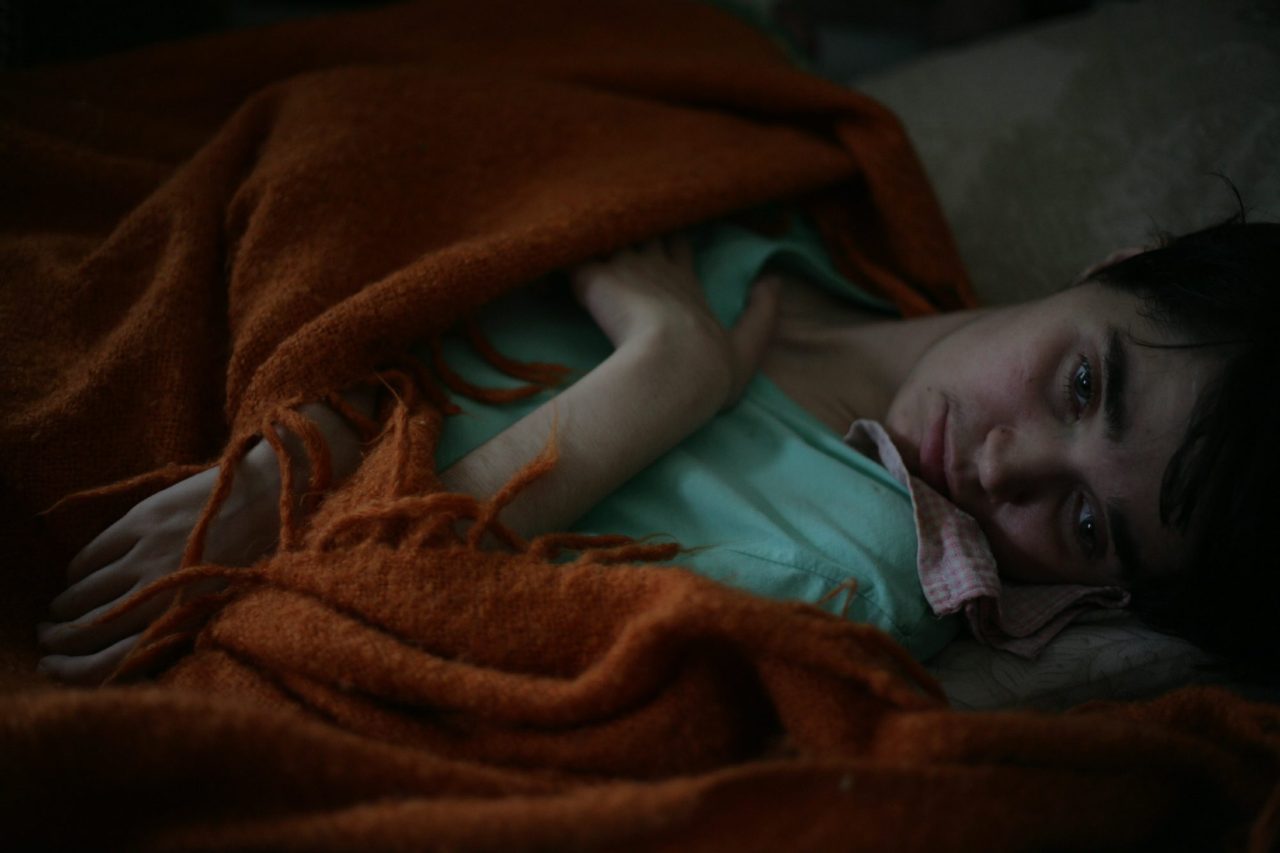 Nadezhda photo: Svetlana Sofin for TD
Nearby and all of Nadia’s relatives - mother, grandmother and even younger sister, came to visit Kazan for a couple of weeks. Only dad, an important engineer in production (photos of a solid mustachioed man in a suit show me with pride), now at work. The family holds on to each other, and everyone, as they can, cares about Nadia. While one helps to cook liquid food for her, the other removes the room, and the third makes a therapeutic massage.
Medical history
I have long been drunk with tea with sweets and cakes that remained after the holiday, and now they vying about Nadia. Until the age of 14, she was the same girl as her peers - she studied at four, walked in the evenings with friends and loved to read stupid boulevard novels. She knew the languages well - she taught English and Spanish, entered the technical school - to an accountant, like a grandmother. I went to the church - like a grandfather born in a Catholic village in Western Belarus. Later, “after” - I went in a stroller with other guys to nature, watched TV shows for hours and sat on social networks, corresponded with former classmates. I jumped around the house on one leg to get to the kitchen and help my mother. I tried to draw with special finger paints. She said. The whole family recalls different stories from life incessantly, but one detail is unbearably cutting me - they talk about Nadezhda only in the past tense.
Distant sclerosis is unpredictable and cruel. Where it comes from-it is incomprehensible, and, despite the serious achievements of medicine in recent years, it is still incurable. The shell of the nerve fibers is affected in the spinal cord, the impulses do not reach the body, and sooner or later inevitable paralysis occurs. All ruthless unknown in this reservation, “sooner or later” - while some live with it for decades, or even do not know about their diagnosis, others burn in a few months.
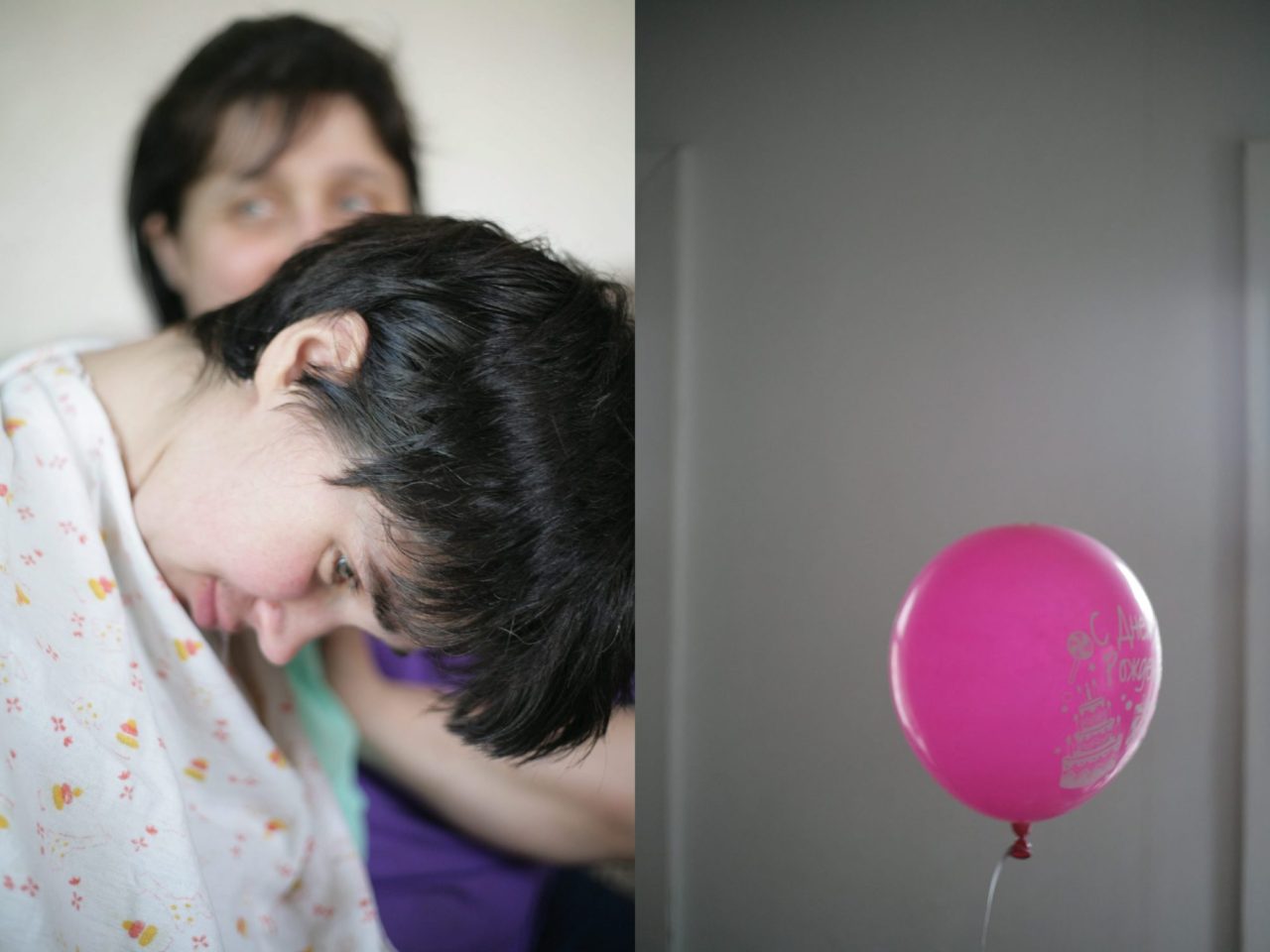 On the left: Mom makes Nadia Massage. Right: a balloon presented by a Catholic priest photo: Svetlana Sofin for TD
Nadia was not lucky - for the first time she became ill in her native Karaganda, and local doctors could not explain what was the matter, why a smart and lively girl suddenly began to quickly weaken and almost stopped studying. They shifted with their hands, prescribed drugs at random and advised to turn to an experienced neurologist at the first opportunity. In Saratov, where the family moved from Kazakhstan, fearing ethnic conflicts, the cause was immediately established, but the disease progressed rapidly and inevitably. If in the spring of 1997, Nadia had not yet noticed her ailment, then in the fall she hardly moved without outside help.
After a few years, neuralgia will be added to the first diagnosis, the hope will make a complex surgery on the brain and install neurostimulants. To relieve terrible pains, she will have to drink the strongest painkillers. Maybe this is what poured oil into the flared fire of the disease, but there were no periods of remission for several years.
Real faith
Nadia’s mother, Lyudmila Ivanovna, carefully stores all medical conclusions, all documents of her daughter - along with faded photos of a smiling girl from a past life, she shows endless decisions, diagnoses, recommendations and decisions with unpronounceable medical and bureaucratic formulations.
Lyudmila Ivanovna-a middle-aged woman with soft facial features and in a quiet voice-is amazed at some boundless briefness, bulldog grip and willingness to fight to the end. Over the past twenty years, she managed to participate in the work of several public organizations, to achieve free rehabilitation for Saratov children with disabilities, to take an active part in the development of various regulations and methodological recommendations on this topic. If earlier preferential drugs and free medicinal physical education classes were only a dream, now almost all the proposals of social activists are included in targeted programs even at the federal level. But in all associations and clubs, Lyudmila Ivanovna remains, as she says with a laugh, “impostor” - does not occupy any formal posts and positions and does not like unnecessary publicity.
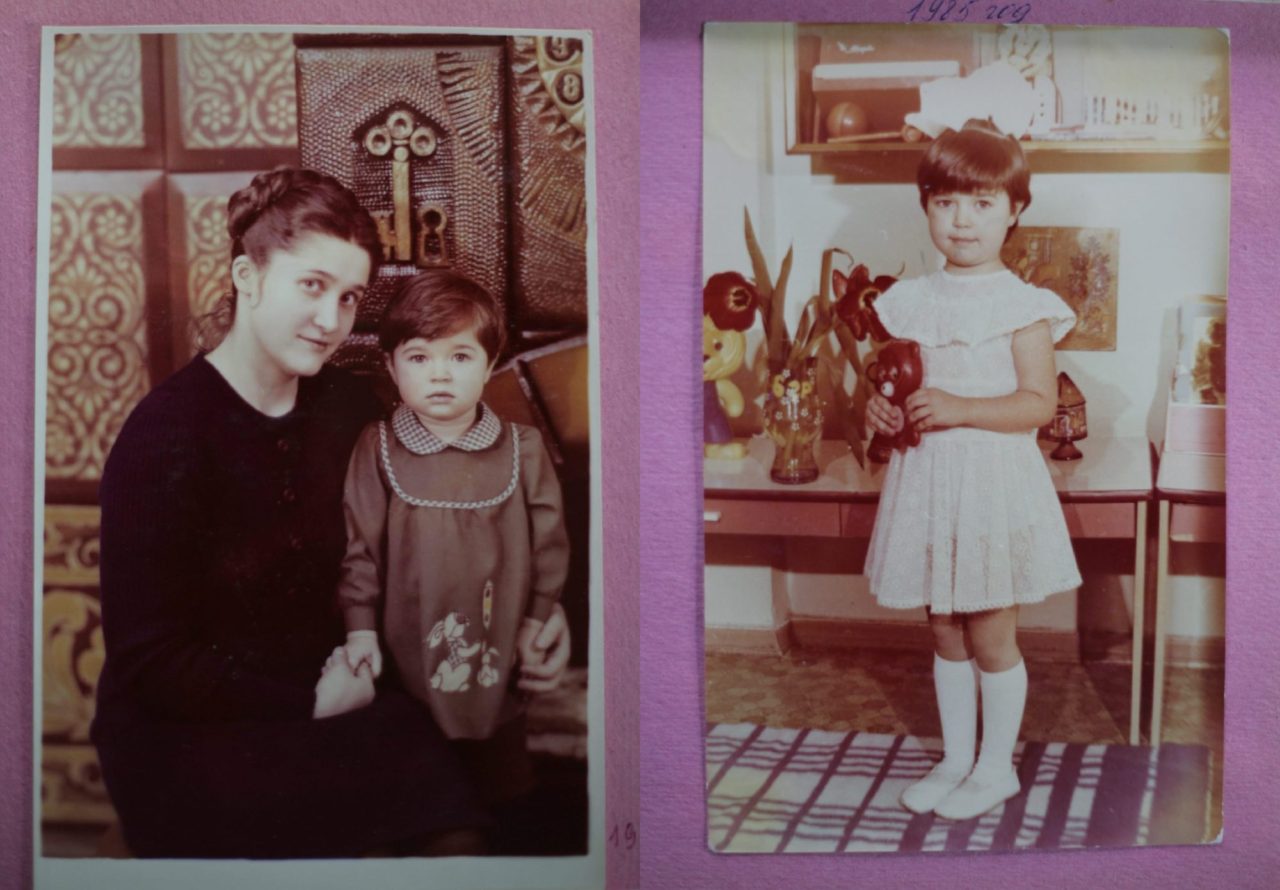 Left: Nadia with her mother Lyudmila Ivanovna, 1983. Right: Nadia, 1985 photo: Svetlana Sofina for TD
But, perhaps, even more the boiling activities of Lyudmila Ivanovna surprises her inexhaustible optimism. I talked with many families raising children with disabilities - and the most stubborn and strong -willed for the ostentatious armor had endless fatigue and devastation. Nadi's mom is not like that. It seems that she will radiate cheerfulness-in any misfortune she will find and see something good. Their house on the very outskirts of the city is nothing, but the air is clean and fresh. And it’s not scary that behind the gate is a mess from the mud puddles. The building itself is old and rickety, but the ceilings, the ceilings are high! Even the lack of sewage system does not bother: "But we have a great drain hole!"
Maybe the fact is that mom never remains with Nadia alone. In addition to a friendly family, the girl has many friends - former classmates and friends in a Catholic arrival. One of the parishioners, Masha, for every holiday he sends a letter to the Nadia, displaying large letters with an insecure handwriting. Masha has a heavy form of cerebral palsy - it was probably very difficult for her to write even these two sentences: “Nadia I wish you health let the Lord create a miracle for your birthday. I wish you to see you walking so that you could then be with me. ”
Mom reads to me and Nado loud these letters, with difficulty holding up tears, and from the portable column at the head of Nadina, the tearful “Adagio” Jazotto plays. “This is a real faith, this is a real prayer,” Ondrey’s father says, continuing to stroke Nadino's shoulder. Then, the unexpected Rosenbaum, the beloved Nadia singer Trofim and the amazing processing of the “Abba” in Russian folk style, which leads the Odrey’s father in indescribable delight, will replace pseudo -classical music.
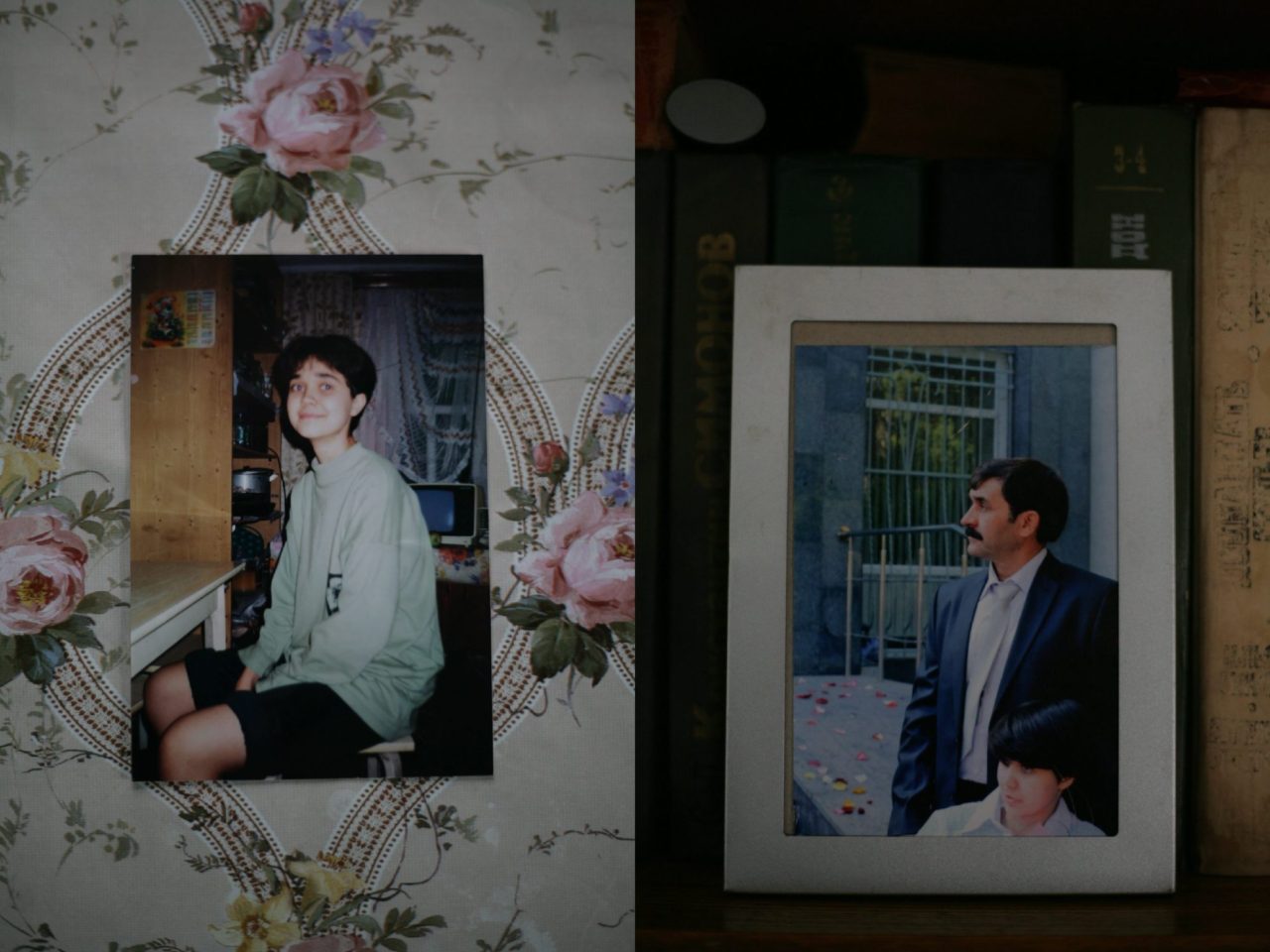 On the left: Nadia in high school, when she could still go to school. Right: Nadia with dad photo: Svetlana Sofin for TD
The Catholic Church in the life of a nadine family is not only and not so much a religious organization. Any lying patient requires complex daily care, and even boundless love and care of loved ones is not enough to provide the necessary comfort to a paralyzed person. Lyudmila Ivanovna and the whole family has been helping for almost 10 years for the care of lying patients Karitas, working with Catholic parishes throughout Russia and helping all those in need, regardless of religion.
In Saratov, Karitas does not just help specific people - the forces of one leader and two professional nurses would not be enough for an almost millionth city. Each of the care experts and so on a day for four to five visits to their wards, but for Saratov it is still a drop in the sea. Therefore, the patronage service here acts differently: Karitas helps a greater number of those in need, teaching nannies, seats, social workers and relatives of patients. Having completed training, they will already be able to apply the knowledge gained and transfer it further.
Nadia Karitas has been visiting and supporting the family for a very long time. The main help was the technical means of rehabilitation - walkers, strollers and verticalizers. But in recent months, Nadia no longer rises from the bed - he cannot even sit in a stroller. Lyudmila Ivanovna attended several classes in Karitas and now knows, according to her, “several cunning nuances” - how to keep her daughter, how to wash and do massage, why she needs to drink as much as possible. These invisible subtleties are unknown to most social workers and commercial seats, but if you don’t know them, you can hurt a person without even noticing this.
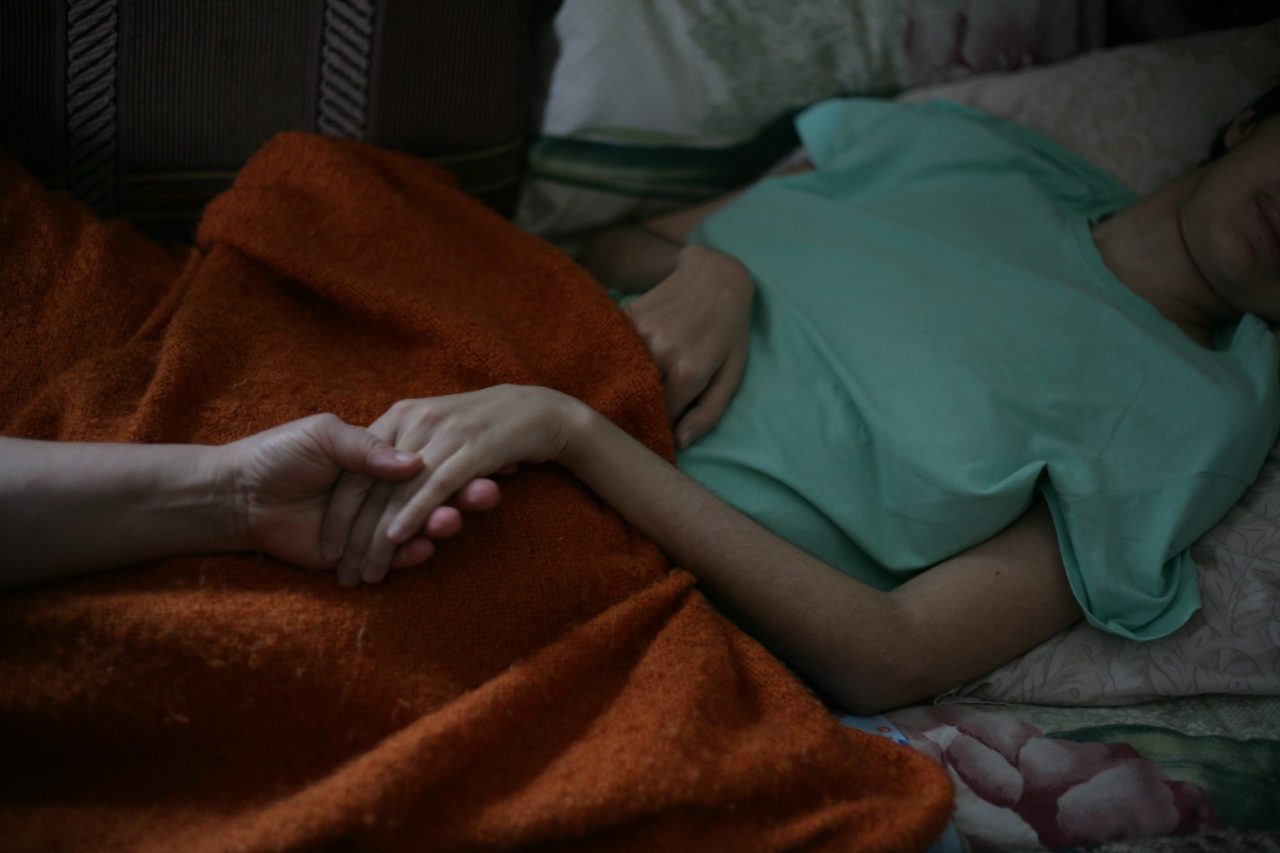 Nadezhda photo: Svetlana Sofin for TD
In the Nadi room under the ceiling, strange ropes are stretched. I did not immediately understand that they, like wires, lead from Nadina's bed to the yard. With their help a few years ago, Nadia moved around the room. Now they don’t use ropes, but they continue to hang-my grandmother tells me that someday Nadia will definitely go again. "You will, Nadenka, run again like a bunny?" I know for sure that this will never happen, but, of course, I am silent. The main thing is that there is someone to take care of Nadia.
There is a lying patient in every city in Russia, on every street, in every multi -storey building. Not with every row there is a friendly family, ready to take care of him and, moreover, learn how to care. Caritas patronage service works in 10 regions of Russia, helping directly and teaching the proper care of seats and social workers. Please support Karitas so that not a single lying patient is left without care and attention.
Do you want us to send the best texts of “such cases” to you by e -mail? Subscribe to our weekly newsletter!