
Translated material
Android P with gestures, virtual fox in Google Maps and a voice assistant who calls himself where
What Google showed at the I/O conference
On May 8, the annual conference of Google I/O was launched in California. The conference itself is primarily focused on developers, but at the presentation opening its presentation, Google top managers talked about new products that will be interesting to ordinary users. In addition to the announcement of the next version of Android, the presentation was also shown by the new functions of individual Google applications - from artificial intelligence, calling the hairdresser, to a fox indicating the path to Google Maps.
Android p
The main announcement of Google I/O is the new version of the Android operating system. In Android P, traditional buttons in the lower part of the screen will be replaced with gestures: by running a finger from the bottom up, you can open a list of all applications or view those that were launched recently. The triangular button "Back" will remain in place.
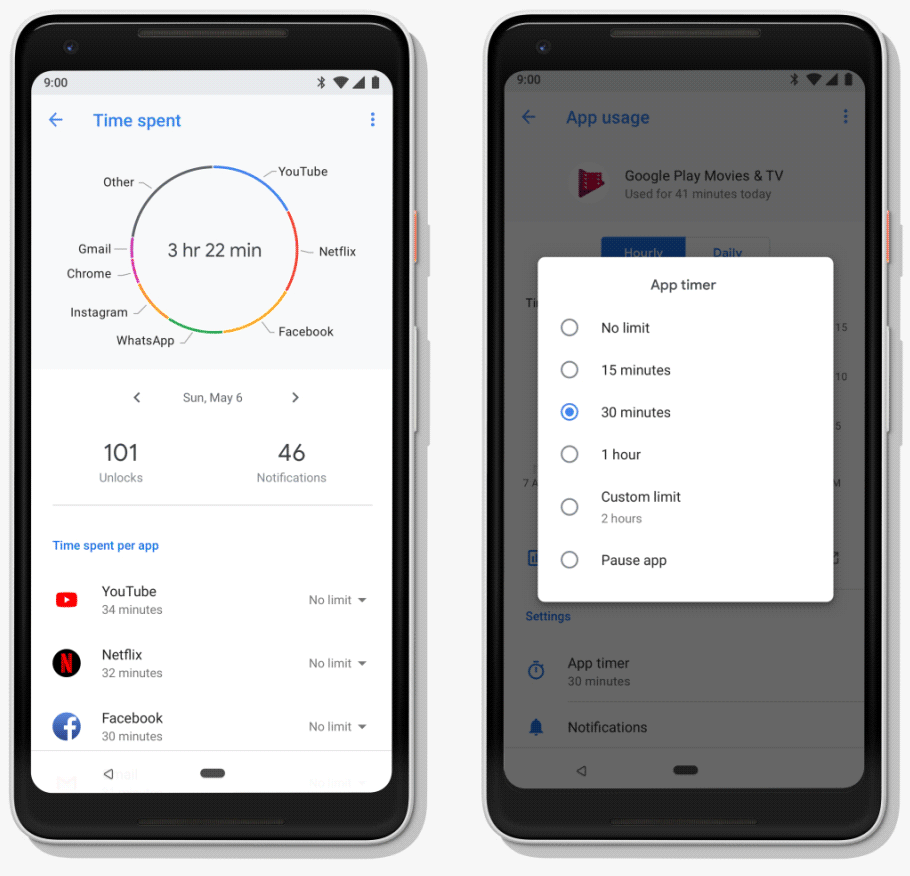
In Android P, much has been done so that the owner uses the phone less. The Dashboard section appeared in the system, which shows how much the user was sitting in a particular application. It can limit the operating time of specific applications or, for example, turn off notifications from them.
In the “do not bother” mode, the phone really does not bother the owner without showing him any notifications. To turn it on, just put the device on the table with a screen down. And closer to the time of sleep, Android P can generally convert the screen into black and white mode.
Google devoted a lot of time to the “smart” functions of the new Android: now machine learning controls even the brightness of the screen backlight and the battery state - the system is trying to predict which user’s applications will not be needed in the near future and “kills” them.
Two more “smart” functions are designed to let the user quickly achieve their goals. When he searches for the name of some application, Android P can offer a specific action inside it: for example, if you look for a taxi application, it will be possible to immediately call a taxi home from the recommendations.
The second function should offer in the list of applications a similar “quick access” to the tasks at the moment, whether it be a call to a close person or launch a certain program when the phone owner came home from work.
Android P will come out in the summer of 2018.
Google Duplex
Perhaps the most impressive innovation touched the voice assistant Google. The Google Duplex function allows him to make phone calls to different institutions for a person: an assistant can write on a haircut at a certain time or find out whether it will be too crowded on Wednesday evening in a restaurant.
The voice assistant seems to be a secretary and behaves so that the person to whom he calls will not even understand that he communicates with the robot. If the system understands that the conversation has become too complicated for her, she will ask the owner to turn on.
The experimental version of Google Duplex will appear in the assistant Google in the summer of 2018.
Google Maps
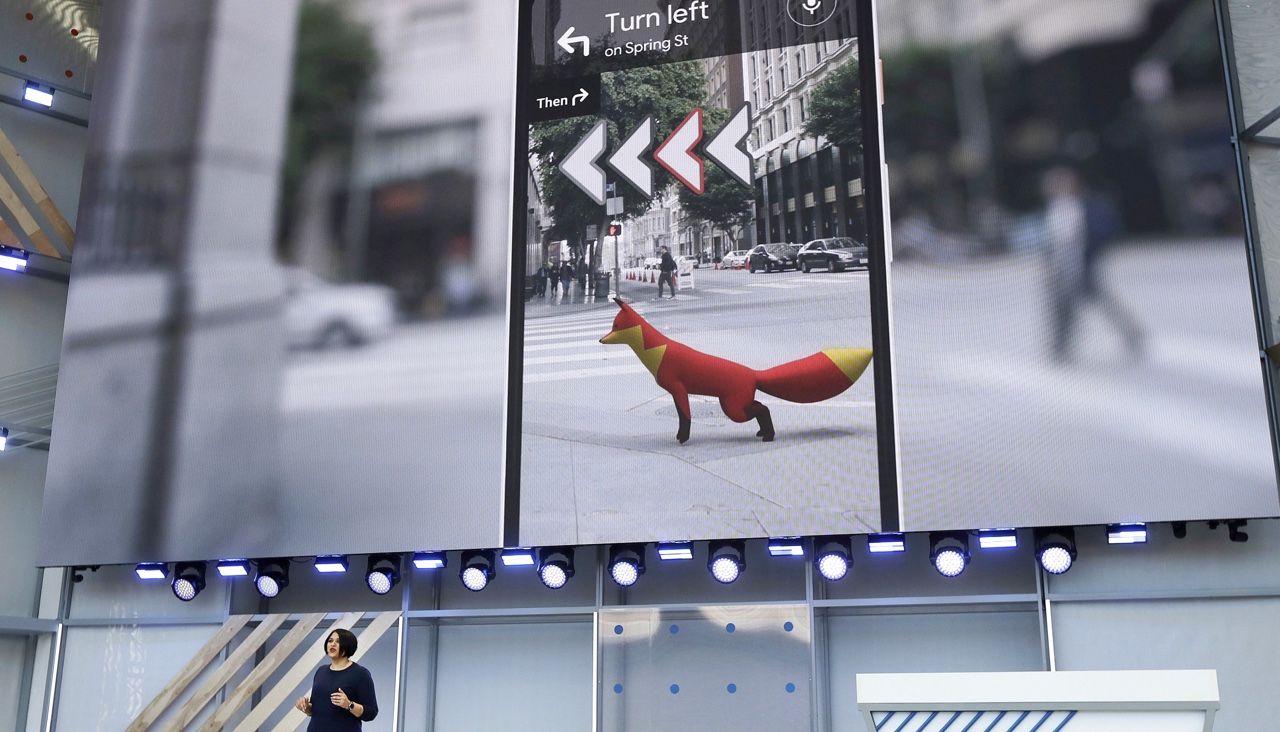
In Google maps, a augmented reality mode will appear: it will be possible to bring the camera to the street and see the arrows leading to the destination. And there will also be a virtual fox showing where to turn!
In augmented reality mode, the application will also show the names of the streets and cards of places located nearby.
Google Photos
The Google Photos application, which allows you to upload all photos from the phone into the cloud and look for them (the cat’s request shows all photos with cats), there were advanced editing opportunities. With the help of machine learning, the application will be able to paint old black and white photos. And Google Photos will offer to improve the picture (for example, “tighten” brightness) and automatically turn photos of documents into PDF files.
Google Lens
Google has a Lens application that can find out the objects that the user leads to the camera and look for information about them in the search engine. Soon it will be able to put the camera on the inscription, recognize the text and copy it into the exchange buffer-for example, to quickly enter the Wi-Fi password.
Sultan Suleimanov