
Translated material
The choice of Europe
On relations between the EU and the USA, the next blow was inflicted on transatlantic solidarity. A look from Brussels
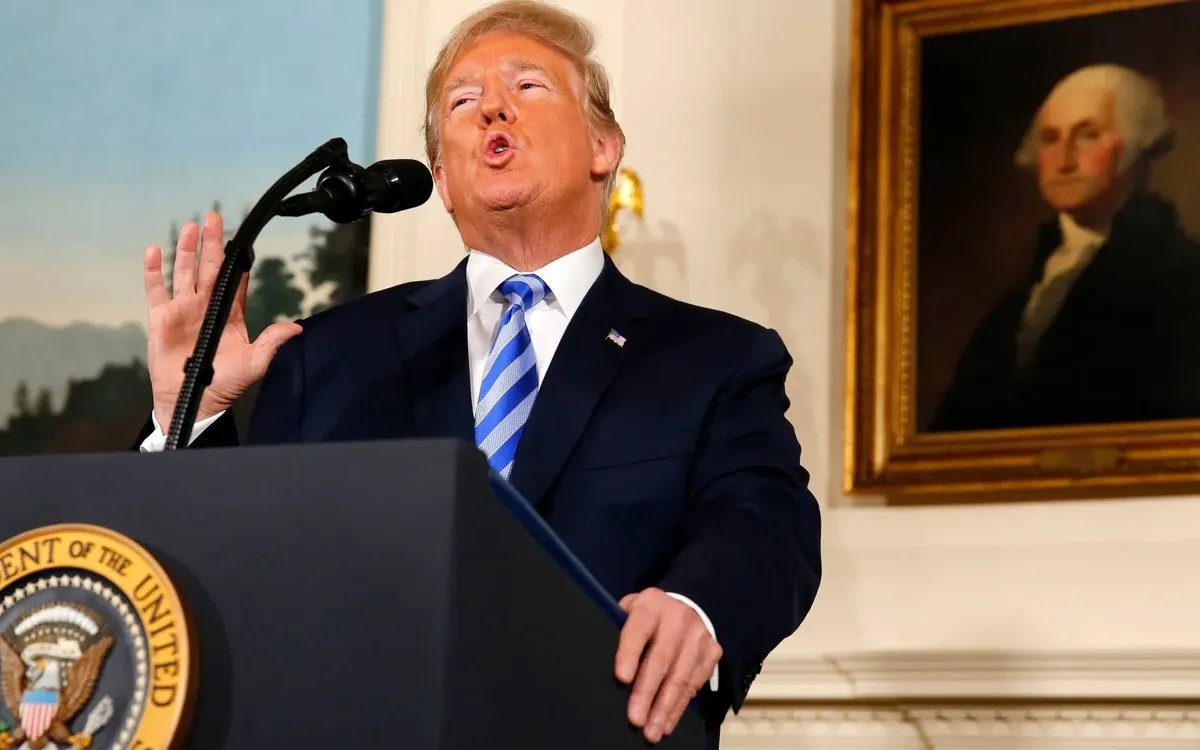
The diplomatic efforts of the European Union, the negotiation attempts of the leaders of Germany, Great Britain and France to convince the American president were unsuccessful - the owner of the White House announced the exit of the United States from the international nuclear deal with Iran. Brussels, as well as Berlin, London and Paris, expressed discontent and concern.
Firstly, a nuclear transaction with Iran is regarded in Europe as a major diplomatic success, primarily the European Union, its policy of “soft power”. This is a matter of prestige. Secondly, Iran’s exit from the agreement and the resumption of his nuclear program would again make this country a dangerous source of the global threat. The loss of levers of influence on Tehran would further complicate the prospects for stabilization in the Middle East. And instability in this region is a direct threat to the EU security. It was from the Middle East to Europe that the main stream of migrants poured into Europe. Finally, the Union countries have serious economic interests in Iran. The largest European companies work there, which, after a nuclear agreement, made plans to expand their presence.
A jointly comprehensive action plan - the SVPD, which in 2015 signed with Iran “six”, representing the international community (Great Britain, Germany, China, Russia, the USA and France), is a European initiative and the result of 12 years of difficult negotiations, the success of the EU multilateral diplomacy. At each case, the European Union condemns Iran for egregious human rights violations, but unlike the current American administration, does not set the goal of changing the Ayatall regime.
The high representative of the EU on foreign affairs and security policy Federica Mogherini in her statement emphasized that the countries of the Union will strictly comply with the conditions of the Iranian nuclear transaction. She called the Agreement “Six” with Iran “the key element of the global architecture of non -proliferation (nuclear weapons) and the most important factor of security in the region”. Iran, Mogherini noted, still met the transaction terms, which is confirmed by ten sequential reports of the IAEA.
In the same spirit, governments of all three Western European participants of the “six” spoke out. “Germany, France and Great Britain decided that they would fulfill the agreement,” said the Chancellor of Germany Angela Merkel. At the same time, she also recognized Trump's motives to some extent: the European powers are also preoccupied with the continuing missile program of Tehran and his destabilizing actions in the Middle East, in particular in Syria. But Germany is against the gap of the agreement.
The head of Foreign office Boris Johnson also made the possibility of the “next agreement”, which would be deeper than the current and took into account the concern of the West. But, in his opinion, the Americans should be the first to nominate their proposals. In other words, do not bury the already achieved compromise with Iran, but to achieve the next step, to develop and expand the deal.
“The agreement has not died, the Americans come out of it, but it remains,” said Jean-Yves Le Drian optimistically.
Europeans are unhappy that, solving their foreign policy and economic problems, the Trump administration is not very considered the interests of the EU countries. The Minister of Finance of France Bruno Le mayor called Trump’s decision a big mistake and promised to lobby this week in his negotiations with the American colleague, Stephen Mnuchin, at least an exception for European companies, which can be punished by Washington for communication with Iran and suffer serious losses.
Following him, the French President Emmanuel Macron also spoke out on this subject. He announced his position in an interview with the German media (being at that moment on a visit to Germany), and then had a telephone conversation with Iranian President Hassan Rouhani. Macron also recognized as insufficient coverage of the 2015 agreement, but believes that today the main thing is to maintain an existing document. Rowhani promised Macron to do everything so as not to leave the agreement. But he demanded that the Europeans guarantee that their companies would not leave Iran, frightened by American sanctions. Like, in Iran, the government is now under strong pressure from groups advocating exit from the agreement.
Europeans, therefore, should now get Washington’s guarantees that their enterprises will not be affected by sanctions against Iran, which the United States will introduce in the coming months. In the coming week, the foreign ministers of Germany, France and Great Britain will meet with its Iranian colleague to find a solution to this difficult equation. Paris, according to the representative of the Champs Elysees, expects “tough” negotiations with Washington.
The US withdrawal from an agreement with Iran calls into question billions of dollars of planned European investments.
The largest oil refining enterprises of the EU operate on Iranian oil, machine -building companies, such as Siemens, operate in Iran. American sanctions would be a strong blow for them.
Comments on the part of the European business itself are very careful. The Association of Industrialists and EU Entrepreneurs - Businesseurope - considers Trump’s decision to be "a clear step back and the threat of political and economic stability in the region and beyond." “It is still difficult to quantify the possible economic consequences of the US exit (from the agreement) to European business,” the President of the Association of Emma Marchegali said in a statement of the President of the Association. “We need legal clarity, and we are counting on the support of the EU institutions and the governments of the Member States to help business cope with current uncertainty and its negative consequences.”
The European Union has levers with which he in the past defended his companies from US sanctions, but today we are talking about a possible loss of access to the world's largest American market. Experts in the European Commission believe that in this situation, European companies will ultimately choose between their economic interests in Iran and the USA. It is easy to guess in whose favor the choice will be.
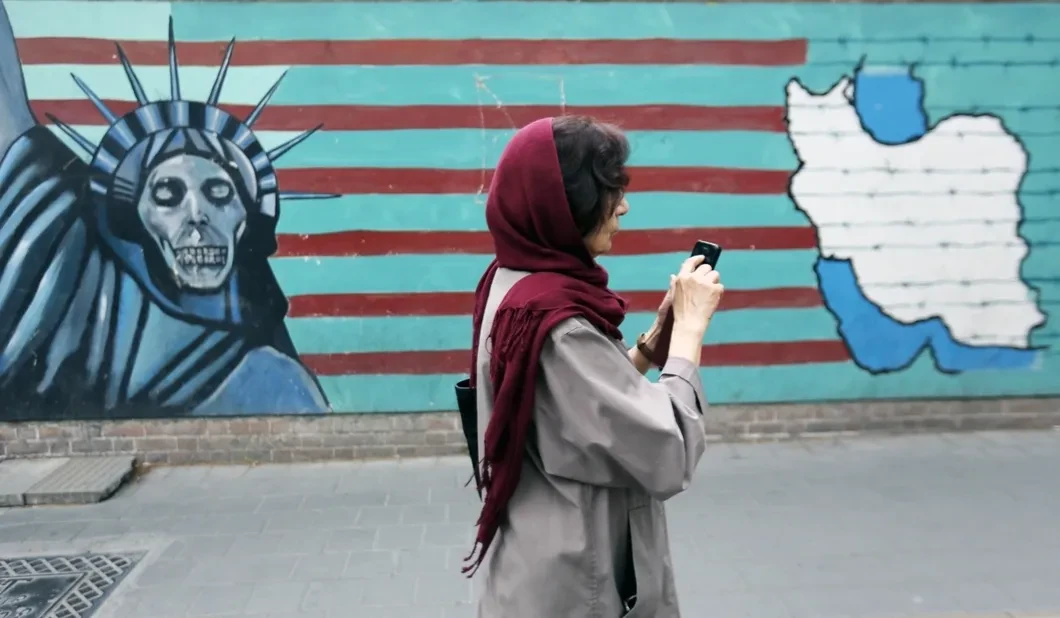
“European governments are clearly inclined to think that a delay in the implementation of American sanctions inspires hope. They think that they can still convince the US president to cancel this course. But he promised to completely abandon the Iranian transaction, ”said Ellie Geranmeye, senior expert of the European Council on International Relations. “Now it should be completely clear that the current US administration cannot be a partner in saving an agreement with Iran.”
According to her forecast, the leaders of the EU countries at the nearest summit must condemn the US decision and assign responsibility for international instability on Trump. European leaders can threaten the United States to abandon partnerships in negotiations on a wider framework of Iran, until Trump will guarantee European companies leading a business with Iran. They should ensure political support for these companies, as well as promote de -escalation between Iran and Israel in Syria.
Europe faced a historical choice and must demonstrate a political will to promote its security interests, it believes and sees the EU cooperation with Russia and China an important element of Iran’s attraction to further observance of a nuclear transaction.
But the general background is now such that the leading European powers, on the contrary, see the danger of Russia's interception and China initiatives in relations with Iran and in the influence of the Middle Eastern region. In the current international situation, especially with a deterioration in relations with Russia after Crimea, few in the political elites of Western Europe are delighted with such a prospect.