
Translated material
Eighteen plus
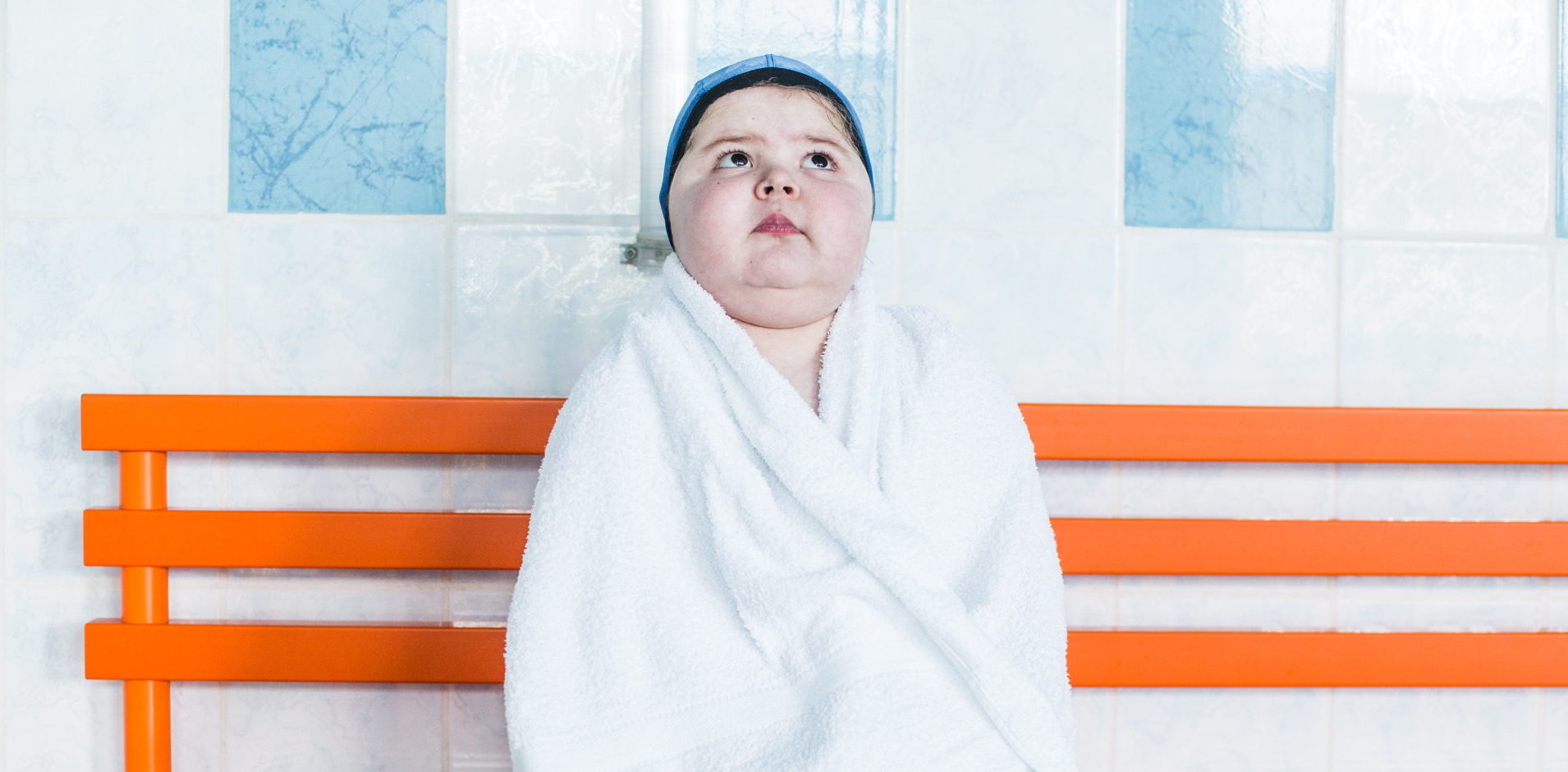
“When I realized that my state cannot and did not want to help me, I was hoped for another country. But even there we were not needed by anyone, ”says Ekaterina Glushenkova, the boy’s mother with Miodistrophy Duchenna. After refusing clinical assistance with her husband and son, they drove Norway, Sweden, in the end to find help in Moscow
Help mymio fund help"All this genetics is a lottery"
“Get me a ball,” Gleb asks, holding out his hands to the ceiling in his apartment in the small city of Shelekhov, the Irkutsk region. He struggled to climb the sofa, and jumping behind a balloon, as most children do easily, can no longer. Gleb has congenital genetic disease - Duchenne myodistrophy. With genetic mutation, the protein of dystrophins in muscle cells is not synthesized, and muscle tissue gradually perishes. The muscles of boys with MDD are frail from birth, every year muscle weakness progresses and once gets to the heart.
“Gleb was born very calm. I thought: "God gave such a child." The eldest daughter was a restless baby, ”says Katya Glushenkova, recalling the first months of her children's life. - At three months, Gleb was vaccinated - and he was all eagerly, began to suffocate. The hospital was diagnosed with Apnoe and prescribed. In the summer, we went to relatives in Buryatia, and Gleb had an attack again - he could not breathe. On the ambulance we were taken to the village hospital, Gleb put a dropper and took blood for tests. The liver enzymes turned out to be higher than the norm. "
Returning to Shelekhov, Katya began to examine her son. On the ultrasound, the liver looked healthy. But compared with peers, Gleb was weak and sluggish. Before you get up, I relied on my knees. Later, Katya found out that this symptom is called the “Govers' technique,” and it is characteristic of children with a dwarf. And when the muscles are destroyed, the hepatic enzymes begin to go off the way.
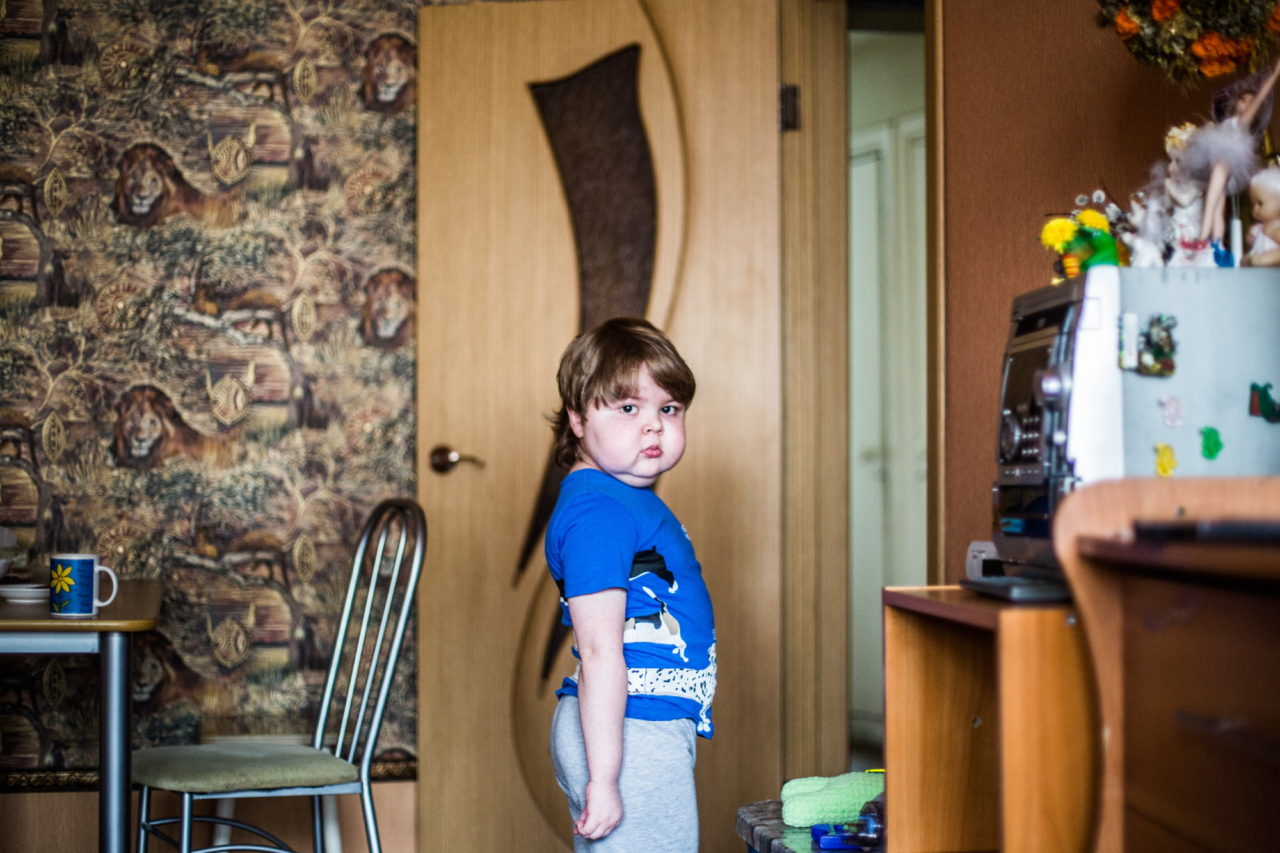 Gleb photo: Anton Klimov for TD
But then no one told her about it.
The diagnosis brought to Moscow
In the regions, the diagnosis of rare genetic diseases is often difficult, and the farther from Moscow, the worse the situation. The Glushenkov family tried for more than two years to understand what was happening with their child. At the age of three, Gleb was sent to Moscow, to the Russian Children's Clinical Hospital. All tests showed negative results. But the alleged diagnosis was nevertheless sounded - "suspicion of myopathy." Gleb was sent for a consultation with a neurologist. Seeing the boy, he said: "You have the muscle dystrophy of Duchenne." To the confused question of mom, what it is, the doctor dryly answered: “Read on the Internet. 18 years old - and that’s it. ”
After reading about the disease, Katya could not believe that this happened to her son. And when I found out that a woman was a carrier, a feeling of guilt was added - she was afraid to fly home and meet her husband's gaze. I thought that he could not survive it and would blame her. But nothing of the kind happened.
“All this genetics are a lottery,” Katya believes. The so-called nonsense-mutation fell to Gleb, but the fact of its presence could accurately establish it only abroad-my mother sent her son’s blood to the United States, where a genetic analysis was done for $ 1175. He showed the whole feature of the course of Duchenn's myodistrophy in Gleb. The gene responsible for the production of dystrophin protein consists of 79 pieces - exons extended in a row. If there are no two or more exons in this series, then the protein synthesis begins, it comes to, say, the 50th exon and stops. Gleb’s 55th exon is not read. The disease manifests itself in the same way as the rest of the boys with the MDD - he stumbles, falls, cannot go down and climb the stairs. Four years ago, Katya found out what exactly for this mutation there was a medicine - Ataluren. It can add to boys with MDD from seven to 12 years of life. Instead of conditional eighteen, Gleb can live up to 25-30 years. Steroid preparations on which almost all children with a duccess “sit” are “sitting” do not extend life so significantly.
The state is powerless
“Where did I just not write to get this ataluren. And in American companies that produce this medicine and the Ministry of Health, ”Katya lists the chronicle of her struggle. - I begged to take Gleb for the clinical studies of Ataluren, because this is our only chance for life. They answered me standardly: everything is decided by the doctor’s consultation until the drug is registered in the Russian Federation, look for a sponsor. ”
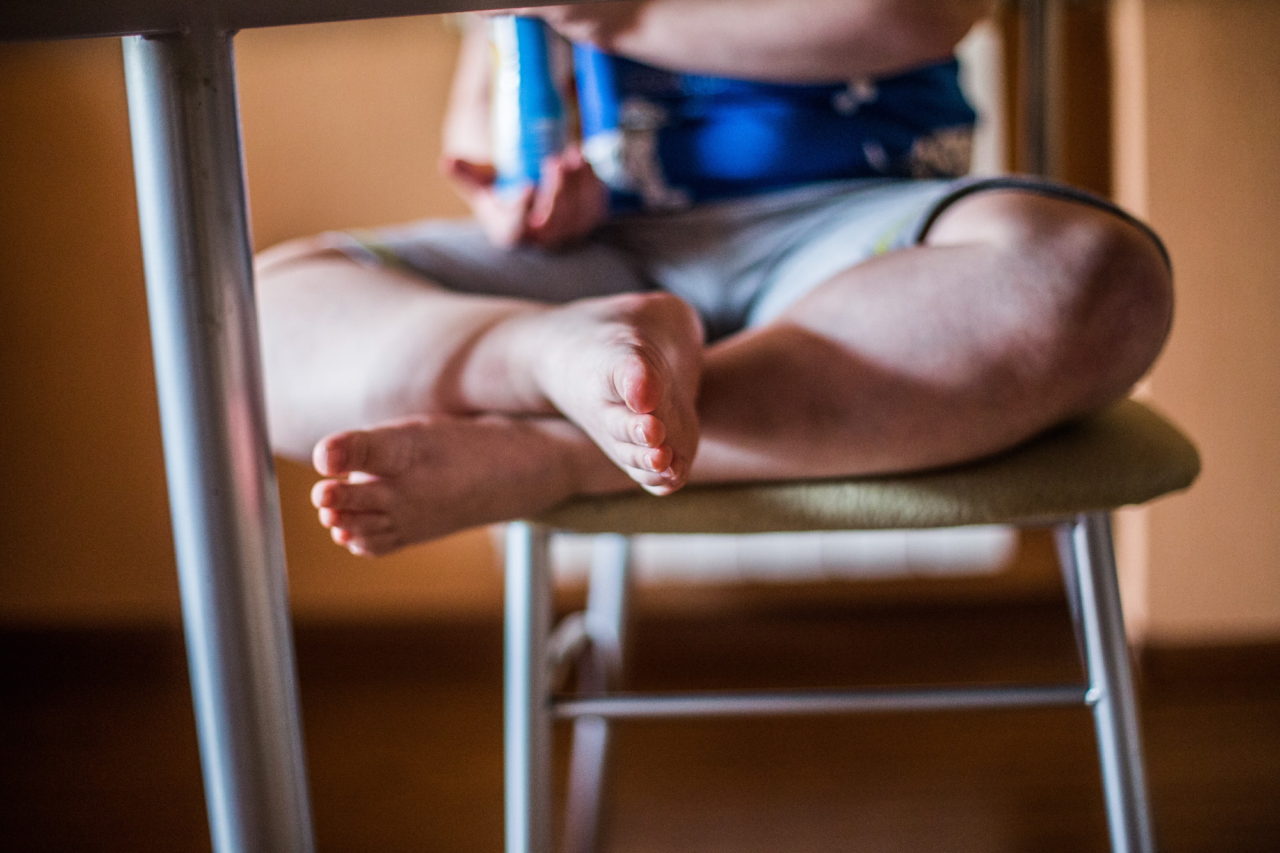 Gleb photo: Anton Klimov for TD
The cost of an ataluren month is three million rubles. The apartment in which the Glushenkov family lives is less. So far, there was only one case in Russia when an ataluren received a child with a dwarked. The family of Stepa Paravaev, first through the court, achieved permission to import the drug, then the portal "Mercy" managed to collect nine million rubles to buy a cure for Stepa for three months.
And Gleb was simply refused a medical consultation. Probably because he would have appointed Ataluren according to life testimonies, and Ekaterina Glushenkova would go to court - with the same requirements as Paravaeva. The Distribator of the medicine was ready to provide a lawyer who would protect Gleb's interests in court. But none of this happened. It was the end of 2016. Gleb was born in the winter of 2009, and all this time the family tried to get a diagnosis first, then find at least some way out. In Europe, today 300 patients with Duchenna's myodistrophy receive ataluren, there are good treatment results.
“I realized that nothing would work out with my state,” Katya grins sadly. - And we decided to go abroad, try to get citizenship. This was the only chance to achieve the medicine and thereby save Gleb. "
Glushenkovs chose Norway. Having issued visas, in March last year, the family flew abroad for the first time in her life.
“Gleb said everything as it is: we left home to get medicine for you. We were immediately provided with hormonal drugs that we had before bought ourselves (in Russia to get something for free, we had to try hard). Norway is a small country, only two children who receive ataluren live here. Gleb again took DNA analysis. But in mid -July, we became aware: until August 1, we must leave the country. It was not possible to achieve Ataluren. ”
Then the Glushenkovs decided on another desperate step - to move to Sweden. The family settled in the small room of the hotel in Gothenborg. As it turned out, in Sweden, Ataluren is no longer prescribed, they are focused on exon-transmitting drug. Gleb never caught a cold during this time - ecology, good products, and proximity of the sea affected. I went to school, like ordinary children (they didn’t take him to school in Russia, they said directly-sit at home: if the child falls and something happens to him, and we and you will be pursued in criminal order). And at the same time, Katya found out that in November 2017, Ataluren’s clinical research should begin.
 Gleb and Catherine on a walk photo: Anton Klimov for TD
“I thought we had to return. Gleb’s muscles were destroyed all this time: sitting in a chair, he could no longer get out of it on his own. Ataluren’s clinical studies begin in our country, which means that we have a chance. Now I understand that it was still necessary to stay in Sweden as much as possible. But the local lawyer assured me, they say, you will not succeed in anything. ”
Neither here nor there, or welcome
The family returned to Shelekhov. What could have changed in seven to eight months? Nothing. Gleb is still most part of time watching cartoons and sculpting the heroes of computer games from plasticine. The Glushenkovs live on the third floor, the boy weighs 31 kilograms and lower it on his stairs to his mother, when dad leaves for work, is quite difficult. But it is necessary - Gleb loves to swim in the pool. Another boy is engaged in a sport available to him - plays in Bochch, a game of accuracy, similar to Bowling and Petank. Remotely (and paid) studies at a Moscow school - this is for him the only chance to get a certificate (there is no inclusive schools in Shelekhov). Gleb loves when children come to their house. And when the guests leave, it cries sobbing with bitter tears. Gleb is very lacking in communication.
For several winter months, the family lived in anticipation of an invitation to clinical trials. In January, finally, they waited - and in March the call came to the clinic. Gleb passed all the physical tests, except for one - he could not get up from the floor. So Gleb Glushenkov, a nine -year -old boy from Siberia, was not taken into the program for which the family returned from Sweden. “When this happened, I did not know what to do,” says Katya and fell silent for a long time.
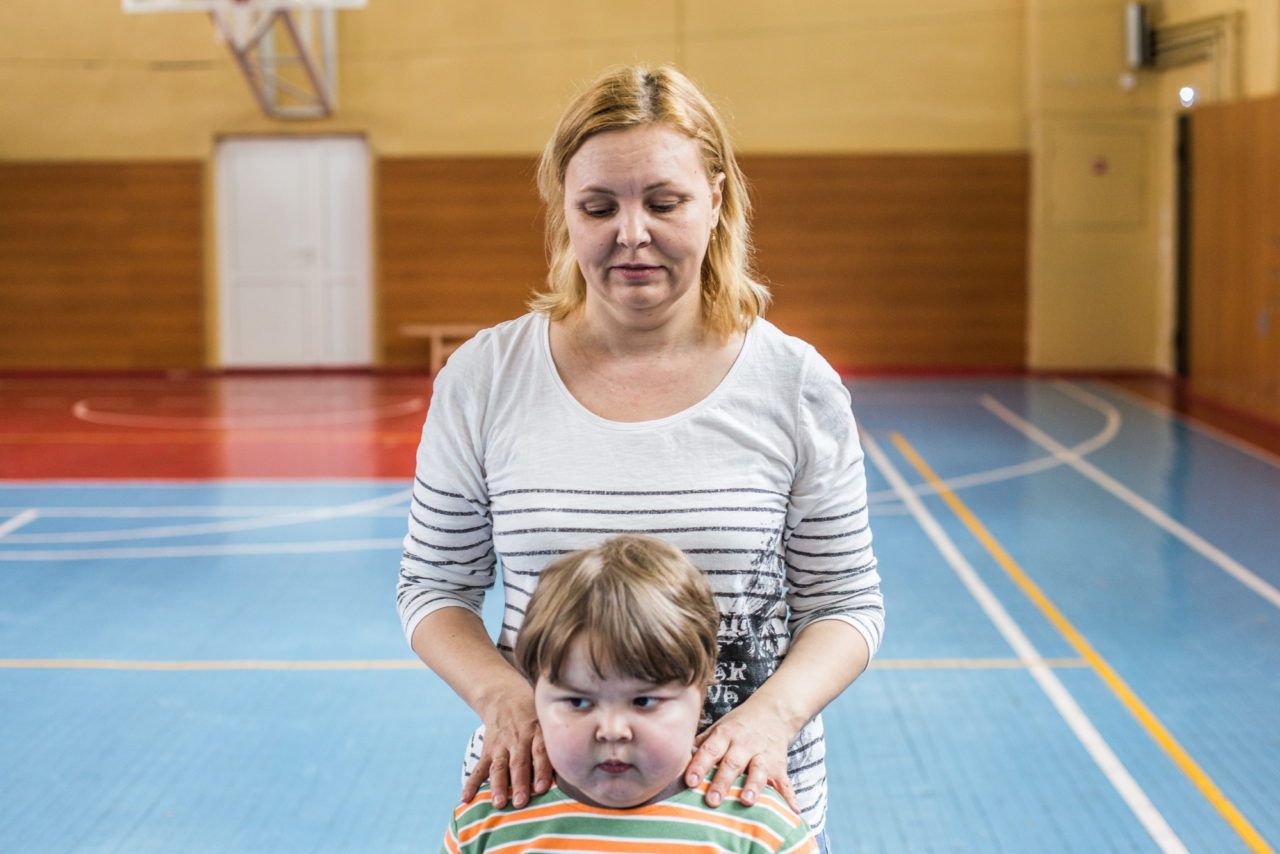 Catherine and Gleb in the gym photo: Anton Klimov for TD
At the same time, Gleb participated in the two -day project "Clinic MDD" of the MOMIO Foundation - this was the first full -fledged examination of Gleb in Russia among rare specialists in Myidstrophy Duushnena. The Fund was founded five years ago by two families - Olga and Peter Sveshnikov, who adopted the boy Alyosha with the myodistrophy of Duchenna, as well as Elena Shepard, whose son Raf also suffers from this disease. Ekaterina met Sveshnikova several years ago - accidentally found her page on Facebook. The fund began to help Ekaterina and Gleb, even when they lived in Norway - the local lawyer needed official paper that there was no Ataluren in Russia. “They immediately sent me such a letter with a seal and then held fists for us,” recalls Catherine. “God hears my prayers and helps us through people with good hearts.”
A few years later, the fund invited Gleb to a special summer camp in the suburbs, where children with a dwarked rest and rehabilitated.
“The sister of Olga Sveshnikova met at the Moscow airport,” Katya recalls with warmth and gratitude, “and took home to their mother, who celebrated her birthday that day. And everyone accepted us as relatives, we felt like some incredible family! ” In the camp, Katya and Gleb were placed in comfortable housing, and the boy was waiting for a lot of entertainment, which were previously inaccessible to him. “I wanted to live,” recalls Catherine. - We returned home with a positive attitude. We have so many new friends have appeared! They even returned money for the road. Although the husband doubted, he said: "It cannot be that someone did something for us for us."
Katya tells how gradually the internal resistance to the diagnosis of her son, with whom she lived for several years, was replaced by humility. And faith in healing: if ataluren begins to take Gleb, there is a small chance that the protein of dystrophin will, albeit in a small amount, will be produced. And the hope of the help that Momio provides.
Support Moymio
The MoMio Foundation not only provides the most diverse assistance to children with Myodistrophy Duchenne, but also works on the creation and promotion of medical care standards and supporting patients with this disease. An example of this can be the program “Clinic MDD”, within the framework of which the children are brought to Moscow clinics for a full examination - to monitor the state of health and to identify and prevent the development of concomitant diseases.
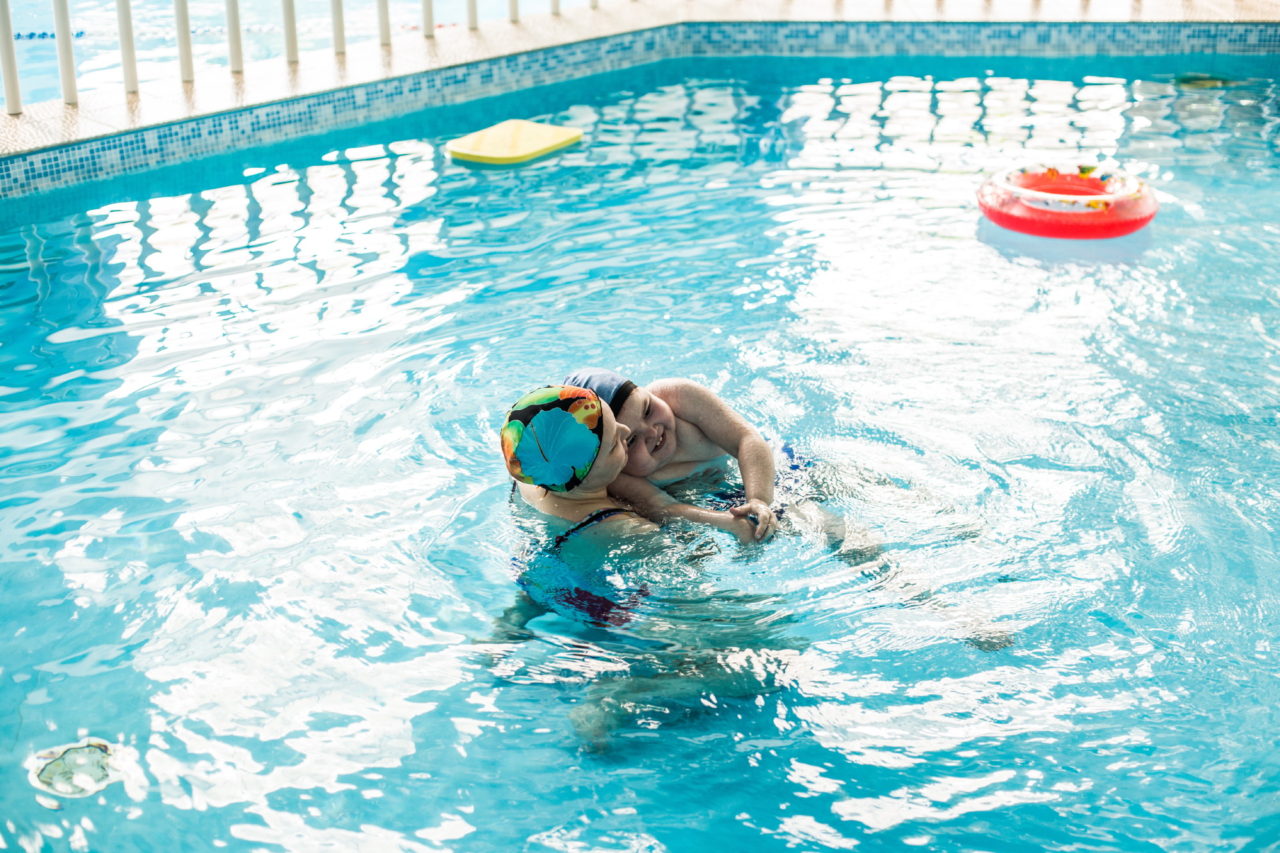 Gleb and Catherine in the pool photo: Anton Klimov for TD
The fund also has specific pressing needs. At a certain stage in life, children with a ducal need clenchers and devices of non -invasive artificial ventilation of the lungs, allowing lungs with oxygen without tubes in the throat. The fact is that when the guys stop walking, they weaken the diaphragmatic muscles. Because of this, the ability to cough is reduced-to remove sputum with a cold, you need a clearance, otherwise the child may suffocate. In order for these devices to appear in individual rehabilitation programs, it is necessary to systematically work with the authorities, to change laws and regulations.
And, of course, the psychological-rehabilitation and integration camps of the fund-they are held in the spring, summer and autumn. In the psychological and rehabilitation camps, in addition to relaxation and new acquaintances, families also receive knowledge about the disease (parents are lectured by parents in MDD), psychologists work with children and parents.Please support Momio and its program - the fund exists only on donations from private individuals. Make a monthly donation for any amount - 100, 200, 500 rubles - and it will help the fund exist and work. Or make a one -time fee. And then the boys with myodistrophy Duchenne will know that someone else needs them in this world except their parents-and therefore will live more than 18 years predicted by them.
The material uses links to publications of social networks Instagram and Facebook, as well as their names are mentioned. These web resources belong to Meta Platforms Inc. - It is recognized in Russia as an extremist organization and is prohibited.
The material uses links to publications of social networks Instagram and Facebook, as well as their names are mentioned. These web resources belong to Meta Platforms Inc. - It is recognized in Russia as an extremist organization and is prohibited.
Do you want us to send the best texts of “such cases” to you by e -mail? Subscribe to our weekly newsletter!