
Translated material
Nevilim
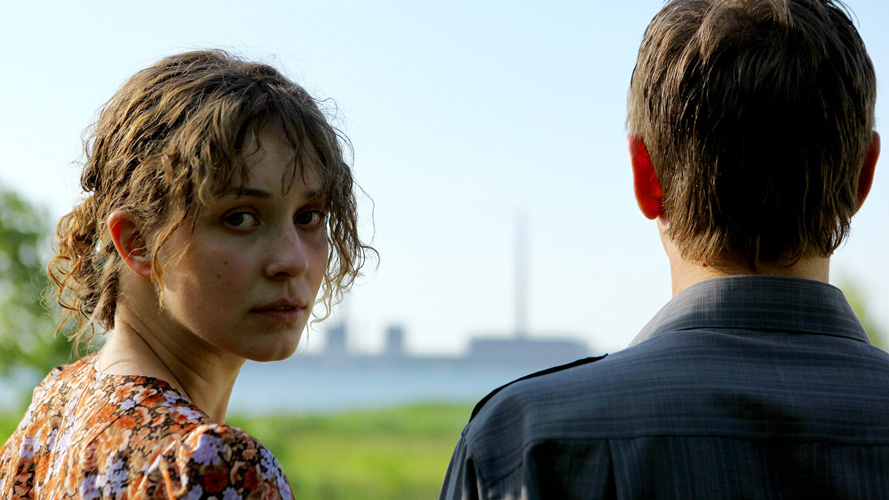
Slavutich - the youngest city in Ukraine - was built immediately after the accident at the Chernobyl nuclear power plant for those who continued to work at the station (the last power unit was stopped only in 2000, and work on the sarcophagus continues). Every day, an electric train goes to Chernobyl, going without stops and twice crossing the border with the Republic of Belarus. Thirty -five design institutes sent their applications to the All -Union Competition, according to the results of which eight republics built an ideal city of several quarters located in a circle; Among them - Riga, Tallinn, Moscow, Kiev, Leningrad (now, in the wake of desovetization, he was renamed Nevsky). In the Tbilisi Quarter, each apartment was designed for its own barbecue, in Yerevan, built of pink tuf, stationary barbecues are in the yards. Each quarter has its own kindergarten, in several-in its own sports and fitness complex. In addition to apartment buildings, cottages are designed and partially built; The most pretty, in the Finnish style, in the Estonian sector. Local residents, descendants of energy and chemists who came from different parts of the USSR, are born of spontaneous urbanists and are jealous of maintaining the image of the city; External advertising is prohibited.
Slavutich, perhaps, is the first and only city in the USSR, where the bicycle paths were originally included in the project, and the anti-human underside of the Soviet utopia does not manifest so comic-Yarko: the tracks were provided, but the races on them are not, they are separated by high borders. Nadia from the club of outdoor activities, devoting a lot of time to solving this problem, calls his hometown "reserve capital of the world."
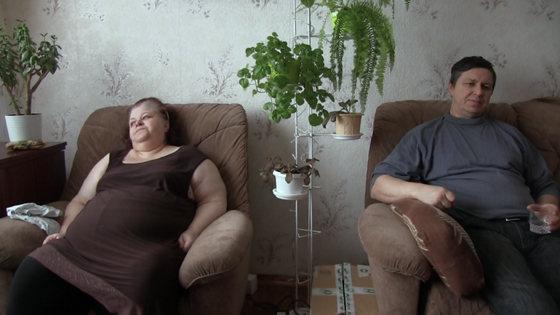 Frame from the movie "Magic Pill"
Directors from the eight post -Soviet countries who participated in the creation of Slavutich brought their films to the documentary “Palma of the North” - one of the sections of the fifth festival of cinema and urbanism with the understandable name “86” . It is necessary to make a reservation right away that the urbanism of the 86 festival and in general Ukrainian urbanism is far from that Moscow transgressive “Urbanina”, which has long turned into a curse. The through thoughts passing through the Ukrainian works of the competition sounding in the Russian film “Five” and formally the Belarusian “Magic Pill” , we inherited an homeless, dilapidated space; What should we do with him and what to do with a person who has lost at the end of utopia? This is a kind of post -Soviet variety of Heimatfilm - a German post -war cinema, in which a destroyed country tried to regain a sense of home.
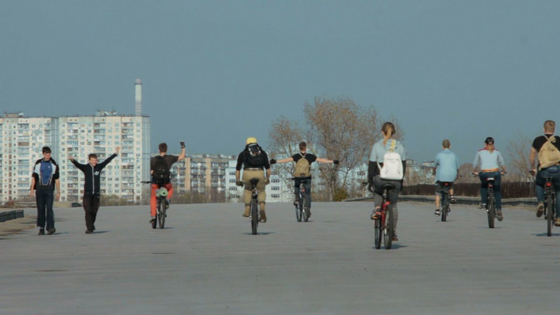 Frame from the movie "Kyiv Film"
In the Kiev film, Alexei Radinsky, adolescents jump along the ceilings of the Podolsky bridge, the construction of which has been going on since 1993, while the mayor of Kiev Vitaly Klitschko with the next promises flies by helicopter in Troeshchina cut off from civilization. Zhanna Ozirna in “Communications” goes from the capital to the province to parents-her camming out to relatives stretches for a year: will members of the same family, descended according to various civilizational layers, accept each other's normality and strangeness? Poverty, war, Chernobyl in the north and Donbass in the east, the proximity and simultaneous inaccessibility of Europe, carpet desovetization (a photographer who is engaged in the documentation of the dilapidated cultural houses in mining villages, told me that today not only frescoes or mosaics, but also the building itself, the architectural object can be considered by the authorities as an enemy) - all this turns Ukraine, where it turns Ukraine, where it turns Ukraine, where it turns Ukraine where The post -Soviet contradictions are as naked as possible. And the same creates a special energy here, which I was especially acute to feel during the night DJ sector in the sewer manifold in the middle of the Kiev quarter: out of four hatches, frightening sounds were heard and bright light made their way, and people crawled out as the Signally in Orvyoto, who were risen after the apocalypse (later came the police and drove everyone away).
Curatorial will still determines a lot. Documentary films of one of the guests of the festival, the Swedish director of Joran Olsson, - Fonko (about the musicians of the African continent) and the Black Mystood 1967-1975 (about Black Panthers) - were shown in Russia at the Beat festival and were built into the panorama of various cultural phenomena from all over the world. In Slavutic, they turn out to be films about us - about people who exist in post -colonial condition (but often do not want to admit it). And the fact that the spontaneous, independent, non -certificate culture is not a superstructure, but helps to form political subjectivity and move on to upholding political rights. And that the experience of the struggle of the black population of the United States for recognizing themselves by people can be useful even to those who are difficult to identify with a person of a different color of the skin.
The motto of the festival this year is “Nevilma”: “something elusive”, “something in the air”. Every minute, there were talk about protests in Armenia, about protests in Tbilisi, about protests against Zeman in the Czech Republic - the first post -Soviet generation has grown and begins to revise the state built over the past thirty years. Even if the utopian, like Slavutich himself, does not appear immediately, but the intentions of the organizers of the 86 festival: to simulate the perfect, never existing Soviet Union and the Eastern Bloc, see the post -Soviet space from a certain point of the future - from where there will no longer be bleeding fresh wounds (representatives of foreign funds supporting the festival, describe the relations of Russia and Ukraine in the same expressions, in the same expressions. As the relationship of Azerbaijan and Armenia - yes, everything is already so bad).
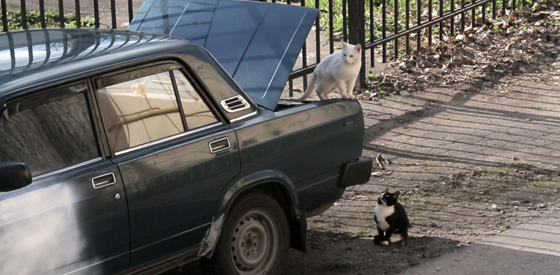 Frame from the movie "Five"
Today it is Ukraine, and not Russia can become a new point of assembly of this ideal space. The conversation in it will already go not in Russian, but in English, but for us here is still reserved a place-as for equal, sobering up after the imperial fucker, discarding the dreams of greatness, turning a look at their own injured space and injured person.
The end of the world was already - it happened in these places thirty -two years ago. Today, the Pripyat, who was overgrown with lush vegetation, where you can go on an excursion from Slavutich or Kyiv, recalls any of the late Soviet cities in which we all grew up. Coming to Pripyat for several hours is like returning home two hundred years after a nuclear disaster.
How can we return home?