
Translated material
"Saboteur" -2018
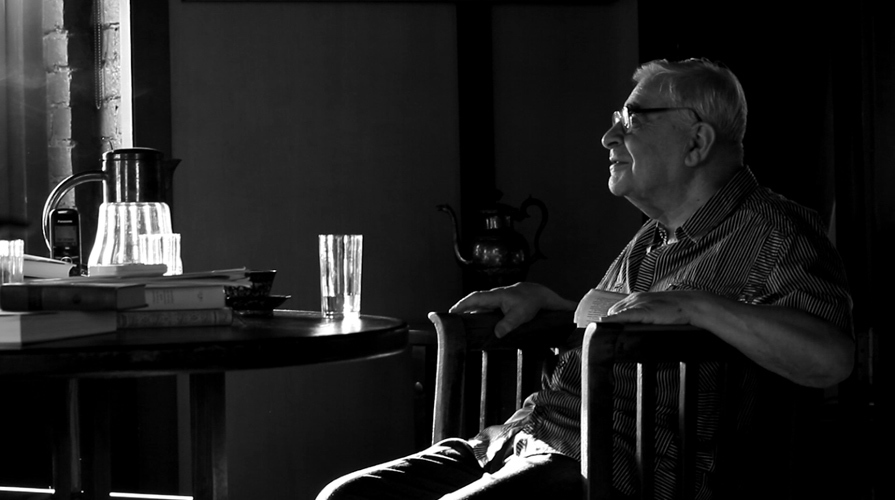
On Wednesday, May 23, at 16:00 in the “Stanislavsky Electrodeater” the presentation of the new edition of the “divertissement” Vadim Gaevsky will be held - a book that had a strong influence on a whole generation of domestic intellectuals and became an unconditional monument of Russian art culture (the presentation will be held by the editor -in -chief of the magazine “Theater.” Marina Davydova). 37 years later, through the efforts of Lyubov Arcus, Pavel Gershenzon and Publishing House "Session", "Divertissement" again returns to the reader. Today we publish the afterword on the book, written by Inna Sklyarevskaya, and the text from publishers, kindly provided to the editorial office of the Session.
Inna Sklyarevskaya
Freedom of speech
This is a book of extraordinary fate. At one time, she exploded in domestic culture, like a high -explosive bomb. It never happened for a similar resonance to the ballet book. First of all, a completely political scandal flared up around her. An active repressive campaign unfolded against the book and its publishers, the author was even instituted-and this is in the 1980s!
But this is only one side, and the other (and the main one) is the impression that the book made to readers. The authorities tried to destroy it, people to get and read it. Her audience went far beyond the borders of interest to the ballet. “Diversion” was read out by everyone who ranked themselves to the intellectuals, and some of the young people even changed their profession and took up the understanding of the choreographic theater. So here it is quite possible to talk about the generation formed by the "sabotage".
Now we have prepared a reprint of this legendary book. And today it will sound differently than then, in the era of the late Brezhnev stagnation.
The “divertissement” was published in 1981, against the background of competent and thorough Soviet literature about the theater created by the cohort of professionals, who, however, knew the boundaries of the permitted and only carefully kept Figes in the pocket. Vadim Gaevsky at that time was considered in his workshop both the brightest and white sheep, and, of course, a loser. While his peers published monographs, received academic degrees and raised students, he was still interrupted by one -time publications in the magazine Theater. All his attempts to integrate into the existing system failed: he was consistently expelled from three academic institutions, and he had no choice but to become what is now called “freelancer”. Only then there was no such word. And there was an unsafe word "parasite." And not going to work in the USSR was prohibited by the Criminal Code.
And yet, tired of fighting, he put an end to his career, settled at home and in two summer wrote his late first book.
The book was brilliant, non -trivial and not at all like others. The thought in it had acute dramaturgy, analystism expressed itself in metaphors, and the word became a full -fledged tool for research.
There was no “politicians” there, by the way,. But in the very choice of topics and in their interpretation there was completely unwinded freedom. This affected the sensitive strings of ideologists. The result was a secret denunciation and a large, for two “basements”, an article in “Soviet culture”, from which it smelled of the same times. The article was called "when the mirror is crooked."
After that, the author, as they say, woke up famous.
The book was immediately forbidden as an undermining foundation. In the libraries, she was sent to special security guards, unscrewed remains were removed from stores and launched under the knife, two KGB officers visited the communal apartment at the place of registration of the author, the director and chief editor were shot by the best publishing house of that time, and the head of the theater department was thrown out into the street with deprivation of work experience. There was such a closed article of the Labor Code, few people known. By the way, this editor dismissed under the article was none other than Sergey Nikulin, the future creator and director of the well -known now theater publishing house “Art”. It was he then, in 1981, that he published "divertissement."
It was a challenge - and a choice.
For Gaevsky himself, all this disgrace became an alarming rhyme to the long -standing events of his youth. He remembered too well in 1949, when he was expelled from the university as part of the next Stalin campaign. Then there was also a big article in the newspaper, and this was a signal for the defeat of GITIS - the Moscow Theater Institute, one of the country's theatrical culture centers. That article was called "Bezrodny Cosmopolitans in GITIS"; Of course, professors were smashed in it, but one student was also mentioned - a third -year student Gaevsky. And everyone understood well that this could end in any, the most sinister, way.
And now, in 1981, the article is again and again defeat, and the defeat this time personally because of it. Trending a sharp sense of guilt, the author was in the hospital.
But the times are not the same: yes, of course, the editors were kicked out, then the author did not print for three years anywhere, but the article aroused a frantic interest in a stunned book. Readers of "Soviet culture" massively rushed to look for "divertissement." He was taken out, dug from speculators, handed each other for one night - almost like samizdat.
But what was the author’s crime? In that, firstly, that he allowed himself a tough analysis of the ballet “Ivan the Terrible”, created by the country's chief choreographer. It was absolutely clear from the text that the ballet was impregnated with the spirit of “creeping restalinization”, as it would be named later. And secondly, the art of capitalist countries was packed in the seditious book-in the person of Balanchin, Bezhara and Dancers Flmenko. That is, the fact that the author - of course, was not attendant - was able to see in Moscow on tour. Now few people understand what audacity it was necessary to possess in order to combine our Soviet ballet under one cover, the best in the world, with their Western. And then it was a challenge - and a choice. And by the way, Gaevsky and Nikulin knew very well what they did.
But if the level of insolence in the "sabotage" is outdated, then the degree of imperative freedom of thought is not at all. But this is precisely this - the amazing sense of freedom - and captured primarily when reading the "divertissement". Freedom of thought, freedom of a sophisticated and flexible language, freedom of structure and rhythm, unexpected for an art history book. That is, freedom of words. Or freedom of speech - not only in a narrow political sense, which was so easily read in those years, but also in the wide - philological and even existential. Which now comes out, years later, to the fore.
“Metaphor,” is written in “sabotage,” is a thought intoxicated by freedom. ”
But that's not all. In the "sabotage" a special type of art history book, deliberately recruited from a number of plots, was found precisely as ballet divertissement. Hence such a name - the move, of course, is declarative, but also artistic, since there is a considerable share of the game. After all, the choice of plots, in fact, is strictly conceptual: Gaevsky notes the key points with this choice and draws the main lines of the history of the theater, building the architectonics of the book and forming the architectonics of the history of ballet.
Partly, he inherits here Andrei Levinson, an outstanding critic and historian of the first half of the twentieth century, who, in fact, laid the foundation for genuine ballet studies. Levinson also thought of wide categories and also freely operated on the whole vast sphere of culture, reducing “phenomena from distant and different rows”, as Gaevsky later wrote about him. And he also combined separately composed articles in conceptually whole books. But he did it more strictly and inside one historical layer. And Gaevsky is more relaxed and all with the same freedom: firstly, giving not only horizontal, but also vertical sections of history, and secondly, introducing fascinating theatricality into the study itself.
So “divertissement” is not only the name-game, but also the name-manifest: it encoded a structural, methodological principle.
And in this book, a special type of art critic is appealed: the art historian is not as a source or archivist, but as an interpreter analyst. Covering a huge period of artistic time from antiquity to the present, the author offers the reader not reviews, but understanding, not documents, but landmarks. It isolated the topics that permeate the history of ballet, and gives an interpretation of artistic phenomena. We can say that he treats the phenomena of art as the director treats the play: opening the internal plots, drawing unexpected parallels, exposing secret meanings. Well, the twentieth century showed that sometimes a thin interpreter can say more about the work than a scrupulous factor.
And, finally, another unexpected property of the text in "sabotage". The author’s perception, the author’s view is the subject of the book about art - as the perception and view of a person of a certain time, the bearer of a certain worldview. Which itself has historically determined roots and is also significant. Therefore, both the line drawn in the book, and the algorithm for selecting characters express not only the personality of the author, but also his time.
And with time (and with times), Gaevsky has his own, special relations. And now, when the previous theater science is rapidly decaying into newspaper journalism and the cabinet history of the theater, “divertissement” is striking in integrity, undeveloped temporary flow. Where a living theater is part of history, and history is the dynamics of a living theater.
Lyubov Arcus, Pavel Gershenzon
From publishers
In this publication, the author’s text of Vadim Gaevsky remained practically unchanged - the initials of the characters mentioned are revealed and some of their names are clarified.
In the selection of illustrations, we tried to adhere to the key visual images of the 1981 publication, especially since the author in the text often describes specific images. At the same time, we tried to be as free as possible and almost re -built the visual series of “divertissement”. This had to be done. Firstly, since 1981, global changes have occurred in the publishing business and in the information field-today we have access to that under any circumstances it would not be available in 1981. We mean, of course, wonderful collections of images of the New York Public Library, the library of Congress, the library of Hauton Harvard University, the National Library of France, the media text of the French National Dance Center, the Getty photo agent Images . Secondly, since the first edition, the years have changed our view of the art situations and heroes of the "divertissement". For the author and readers of the first edition, some of them were contemporaries, who could be seen on stage the night before. Today they are the semi -mythical characters of the legendary era of the incredible take -off of the classical dance. In part, therefore, with the approval of the author, we reduced the names of their names in the names of their names: Marina Semenova became Semenova, Galina Ulanova - Ulanova, Yuri Grigorovich - Grigorovich, and the “Situer of Maurice Bezhara” became simply “Bezhar's situation”. This is not familiarity, but just a confirmation of their presence in the pantheon of world artistic heroes, where the names are knocked out as briefly as possible. That is why we found it possible to radically increase the volume of images relative to the 1981 publication. Our task is to enable today's young readers (to whom we, in fact, are addressing this publication) not only to listen to the outstanding text of the book, but also carefully look at these faces and most importantly - to feel the lines and catch the movement of these fantastic bodies. The era of heroes behind: thirty -seven years, which have passed since the release of the "sabotage", gave only two characters worthy of the first edition - William Forsyt and Pina Bausch. Everything else is, in particular, a derivative of the main topic.