
Translated material
"Most commercial models in the media no longer work"
Interview with Emily Ramshaw, editor -in -chief of The Texas Tribune. This is a legendary publication: it lives successfully on donations

In Moscow, on June 1, the third “Storm” will host, the annual “Medus” conference on trends in the world of media. One of its participants is the editor -in -chief of the American publication The Texas Tribune Emily Ramshaw. She will tell how to build a successful media that millions of people read, with the help of donations - from philanthropists, sponsors and readers. Medusa asked the chief editor of KinoPoisk to Elizavet Surganov to talk with Ramshow on how the business model of The Texas Tribune is arranged-and whether it is applicable to Russia.
-In Russia, few people represent what non-profit media is, although in America this term is very common. Tell us how it differs from ordinary media.
-Non-Profit status in the United States means that people can sacrifice money for our work and receive tax deductions. It is believed that they support the organization that serves as a public good. Receiving tax bones, people are more motivated to support our work.
The culture of philanthropy varies in different countries. Of course, the existence of such media is largely due to the state system. When we communicate with colleagues from abroad, they admire our business model, but, as a rule, they say that they do not have such a system or there is no such culture of charity-it does not occur to anyone to sacrifice money for the work of journalists.
- In Russia, there is also such a problem. We have developed a system of charity, but it is more concerned with the help of sick or poor people. Some media tried to survive by collecting money from readers, but almost no one managed to succeed in this.
-It is important to say that we have a difficult business model, we live not only due to readers' donations. We have four main sources of income. The first is corporate sponsorship, and, probably, for an unprepared reader, this is very similar to advertising. We go to different companies and ask if they want their logo and advertising message to appear on The Texas Tribune, whether they want to be associated with our brand. Sponsorship money is about a quarter of our income.
There are simply patrons - very rich people who donate money for our work, not demanding anything in return. We go to such people and convince them that they can serve as a public good, that it is important for Texas to have such a media like ours. This is about a quarter of our income.
We provide readers with the opportunity to get The Texas Tribune membership - this is most like a subscription to the publication. Any person can become a member of our club, regardless of the amount - he contributes to $ 10 or a thousand. Now we have about 4000 members. These are people who believe that the product that we produce is quite valuable for them, and are ready to pay for it.
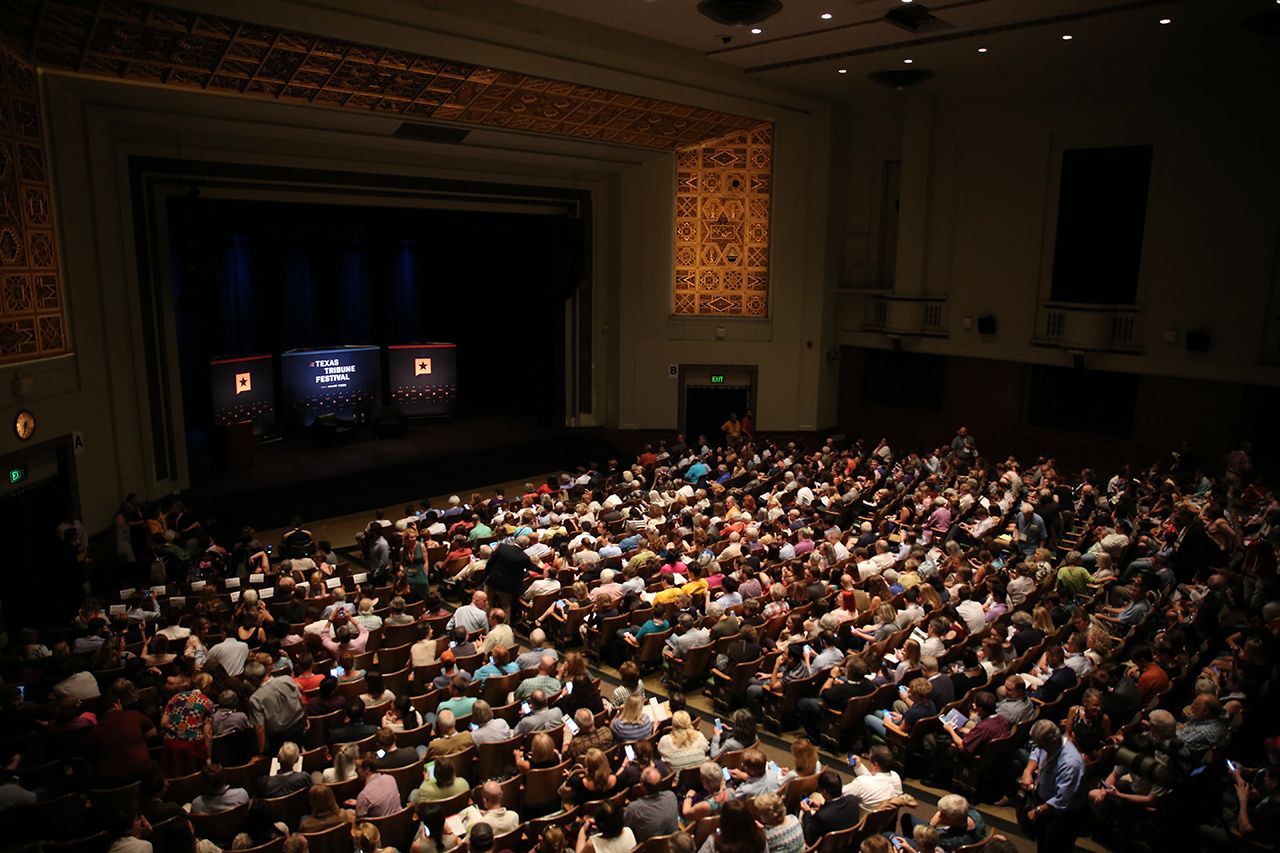
We also organize different events - this part, by the way, is easiest to reproduce in other countries and the media. We have more than 50 events a year, including a large three -day festival. Ordinary people pay for the entrance only to the festival, all other events are free. We cover the costs of them due to sponsors and ordinary advertising. In addition, we are now equipping our own room for events. And we expect to lease it for other events - so this can become another source of income.
- The Texas Tribune is a non -profit publication from the first day of existence. Why did you choose just such a model?
- When we started, we studied all the commercial models on the American media market and realized that most of them are no longer working. We launched in 2009, after the crisis of 2008, when the media was greatly reduced by the staff and the journalists were dismissed by dozens to survive. My parents are journalists, and I saw how hard it was for them to work in commercial media, how they had to fire people simply because of economic reasons. I myself, before coming to The Tehas Tribune, worked in the same Texas newspaper, and in the six years that I spent there, I watched four waves of mass dismissals. It was a rather depressed atmosphere.
Therefore, we decided that an alternative model should appear, and completely consciously became one of the first non -profit media in Texas and in the States. And while it works great. For almost ten years of the existence of The Texas Tribune, we have never had to reduce the staff, on the contrary, our state has grown from 7 people to 70.
- Local newspapers in the States always developed very violently, and in the same Texas there are many large and successful publications. What is your difference from them, besides a business model?
- I think that one of the main secrets of our success in Texas and throughout the country is that we have a rather narrow orientation. We do not try to talk about everything and for everyone. We talk deeply and in detail about politics in Texas, and this allowed us to find a very active and involved audience. In addition, this narrowed for us both the search for members of the club and the search for sponsors.
-Recently, you say that the most important part of your business model is a community of people who support you, and that you will develop it first. Why?
- In the first years, it was important for us to get wide support from the audience and ensure the quality of our journalistic work. But if earlier the core of our audience was made up of politicians, political consultants, public figures, that is, first of all, residents of Austin, the capital of the state, now our main goal is to reach a wider audience, all the inhabitants of Texas, who are interested in politics and economics.
Our strategy here is not just informing, but also the involvement of this audience in our work. We started a closed group on Facebook, which is called this is your text, and we suggest it to the participants to discuss with each other and with us the problems that excite them. Just a few days after launch, we already had more than a thousand participants. We supervise this group, very neatly modifying discussions there, but mainly we draw from there ideas for materials. And our stories are now increasingly based on the fact that ordinary Texas tell us, and on what excites them, and not lobbyists or political consultants.
- I read that you have a special reporter responsible for working with the community.
- Yes. Just for the most part, he leads this group, communicating with the audience and entertaining it. Working with a community is a direct path to increasing the number of members of our club, which is now becoming an even greater strategic priority for us. In the next couple of years, we would like to double, and ideally triple this community of 4,000 people.
We look at it. Readers are involved in our work, discussing it with us, sharing links with friends and offering ideas for materials. In response, we invite them to become friends of the publication, telling them about the wrong side of our work and introducing them to our journalists. And then we say: “We hope that interaction with our publication is so important for you that you will think about making a monetary contribution and becoming a full -fledged member of our club.”
- And what is the advantage of the club members over ordinary readers?
-Firstly, we made a special newsletter in which our journalists directly communicate with the club members, telling them what they are working on and how they create their materials. We organized a special series of events that only they can get to. We think how to make us give them an exclusive opportunity to look at large special projects before publishing. We have a lot of ideas on how to involve them even more in our work, how to make them better understand it - which means they are more willingly sharing its results and investing in it.
- You are not afraid that you will become too dependent on your audience? So much so that readers will think that they can influence what you will write about and what not?
- Of course, we are very clearly drawn here. We like to talk about the wrong side of our work, and we are glad to discuss the ideas of readers - but we always need to figure out if there is actually material for the article. And the final decision will always be behind our correspondents and journalists. There were cases when people offered us ideas, which, in our opinion, were not very valuable and did not pull on the material. Our task here is to put the beginning of this process of interaction with readers in order, on the one hand, to make our work more transparent for them, and on the other, to believe that they may have some amazing ideas that simply will not come to our minds, or they are aware of stories that do not come across our eyes. And in my opinion, it is very important that it is a mutual process in which we not only teach our audience to everything that we know, but we also learn from it.
- Can you give an example of the story that came from readers?
- Certainly. A couple of weeks ago, a fierce discussion on the topic of salaries and social payments to teachers, as well as teacher strikes that are now held in many states, erupted in our Facebook group. And one of our readers wrote: "Did you know that in Texas the law forbids teachers to arrange strikes?" Indeed, there is such an ancient law, and we have never heard about it before. One of our journalists began to dig this topic and eventually wrote huge material - the article was very popular and widely diverged over the network. But it would not have occurred to us to dig in this direction. And this happens regularly.
- The non -profit status obliges you to report on the sources of income and your expenses. How does this happen?
- We are very open in all monetary issues and talk about every cent, which we receive. And even in this we differ from other non -profit media. On our site there is a special page where there is a list of all sponsors and people who supported us. We never accept anonymous donations. And we talk not only about cash contributions, but also about other types of support. For example, if the airline provides free tickets for business trips of our journalists, we also report this.
In addition, before publishing the material, our correspondents must turn to a large sponsors base that we lead, and always report in the basement of the article that such and such a company or the person mentioned in it gave money to work The Texas Tribune. Nobody makes such notes except us. At the same time, donors and sponsors cannot affect the choice of topics or the content of articles.
As for our expenses, we have an annual report that we provide to the board of directors and publish on the site. The non -profit status also obliges us to provide a lot of documents to the tax authorities. All of them are also available to the public.
“Have you ever lost sponsors or donors because of the articles that you published?”
-Of course, someone is always dissatisfied with our publications. When we started, I thought that we would still lose sponsors. But it sincerely amazes me that in reality this is almost never happening. There were a couple of cases when some companies or people fell off for a year or even two, but they always returned. And I think they are returning because they understand that their brand is beneficial to be associated with ours. I remember when I was just a correspondent in The Texas Tribune, I wrote an article about how both legs amputated in one hospital because of a medical error. The hospital administration was very evil, and they refused to donate for a year. But the very next year they returned.
- What kind of events do you hold and which of them are the most successful?
- Our main event is the annual Texas Tribune Festival. It has already become so large that this year we first spend it right in the center of Austin and block a whole street for him. On it, ordinary people can see and listen to the main politicians of the state and even the country. The festival ceased to be a purely Texas event - for example, this year we invited several former presidential candidates. This is an expensive event, but we collect a lot of sponsors and advertising for it, and also sell input tickets, and it brings us a lot of income.
But in my opinion, the events that we spend free throughout the state during the year are even more important. We bring to small towns of politicians, people chosen by the inhabitants themselves. And in a sense we force them to report for our actions, to answer strict questions. For many politicians and voters, this is the first time they meet with each other. And this is the mission of The Texas Tribune - not only to inform people, but also to give them the opportunity to directly touch politics and become a more responsible citizen.
- And how do politicians feel at such meetings?
- Differently! Sometimes there is a difficult audience that asks tough and uncomfortable questions. But now, for the reputation of politicians, it is much worse not to come to such a meeting. Because The Texas Tribune holds these events, regardless of whether the invited guests are coming. And sometimes, if the politician himself refuses to come, his opponent may come. This is such a delicate bullying on our part - we, in fact, force politicians to meet with voters and report on work. But we make a lot of efforts to arrange such meetings - for example, we adapt to the politician schedule. Because our main goal is that they come.
- A few years ago you had a partnership with The New York Times: every weekend they printed on two special stripes your articles about Texas. Do you have partners of this level now?
- Yes. We have agreements with The Washington Post on a free exchange of content - to choose from. And last year, together with the magazine Sosmopolitan, we made a very important project about sexual slavery in the United States. They published materials on their website and in social networks, and in the end we received about a million additional readers. We also share the rate of one correspondent with the Center for Investigative Journalism in San Francisco. She works in our editorial office and makes investigations for us and for them.
In general, we have a special person in our team who is engaged in partnerships. It places our materials in other publications and is looking for interesting partners and interesting projects for us. Our task is to achieve as many Texas as possible both inside the state and beyond. And this is impossible to do without partners - we cannot hope that all these people will come to our site. Distribution is important to us, we are much more active in it than other media in Texas. But we always distribute our materials for free.
“You are almost ten years old.” What was the most difficult in your work over the years?
- I think the hardest thing was to preserve the startup culture. When you do something from scratch, the team has a lot of enthusiasm and energy, people like that they create something fundamentally new. Now we are already similar to a mature company. We have much more standards and rules, we have a personnel department, we have a strong team and budget - now it is about eight million dollars a year. And the main question is how to save the stunning energy with which we all started, how to maintain the atmosphere of the place in which people really want to work. We work a lot to ensure that people love work in The Texas Tribune.

“And you still think about yourself as a startup?”
- I personally, probably, will never stop thinking so. I have been in The Texas Tribune from the first day and I remember how we drove the cart around the store, buying paper for the printer, scissors and other little things. It was crazy and fun. We looked like a company of children who launched a school newspaper. But, of course, one cannot but admit how much the publication grew up, what a reputation has now developed. Honestly, I could not dream that we would someday find ourselves at such a level that we are recognized both in Texas and throughout the country. Or that they call me to Russia to tell about our success! I am very proud of our publication and our team.
- In Russia, there is a stereotypical idea of Texas as a staff, cowboys and oil. How would you explain to our readers why Texas is so important for American politics?
-Firstly, Texas is still a very modern and cosmopolitan state. And secondly, in short: where Texas looks, the whole country looks there. We are always a couple of steps ahead of national political trends. The massive and rapid growth of the Spanish -speaking population, an increase in the number of supporters of Donald Trump, discussions about social problems, abortions or the role of religion in politics and education - all this originated in Texas, then spread to the whole south, and from there throughout the country.
Texas is a huge state, the second largest in the United States; We have the longest border with Mexico; Here is the most headquarters of companies included in the Fortune 500 Speak; Here, most people are in prison. In one place, many factors gathered affecting the development of the whole country. Так что мы не только про ковбойские сапоги, нет.
— Можно ли считать Техас еще и местом, где зародились американские некоммерческие медиа? Наверняка же многие пытаются копировать вашу модель.
— Если не считать NPR и PBS , которые также живут за счет поддержки федерального правительства, то, наверное, да. Мы и нью-йоркское издание ProPublica считаемся двумя лучшими образцами некоммерческих медиа в стране. Свои версии The Texas Tribune есть в Вермонте, Калифорнии, Миннесоте, Теннесси, Луизиане. К нам все время приезжает кто-нибудь, кто хотел бы попробовать воспроизвести что-то похожее. And it's great. Наша миссия не только в том, чтобы рассказывать о техасской политике, мы еще и пытаемся научить других журналистов по всей стране, как сделать то, что получилось у нас.
— Тем не менее далеко не у всех некоммерческих СМИ получается выжить и добиться такого же успеха. What is needed for this?
— Очень важно иметь разветвленную бизнес-модель, в которой вы не зависите от одного источника дохода, и все время искать, как еще заработать — будь это с помощью платной рассылки, мероприятий или чего-то еще. И еще надо не стесняться призывать людей поддержать вашу работу — это делают даже такие успешные и популярные издания, как The Guardian. Очень важно напоминать читателям, как ваше издание ценно для общества. Вы, может, и не найдете сразу меценатов, которые готовы просто давать деньги, но вы найдете людей, которые вас поддержат, когда вы докажете им свою важность.
1 июня Эмили Рэмшоу расскажет об уникальной бизнес-модели The Texas Tribune на конференции «Шторм» в московском Культурном центре ЗИЛ. Помимо нее там выступят главреды американских изданий Axios и BuzzFeed News, а также Юрий Дудь (да!). Успевайте купить билеты .
Елизавета Сурганова