
Translated material
Trump twists the valve
The US President called on European partners to abandon Northern Stream-2
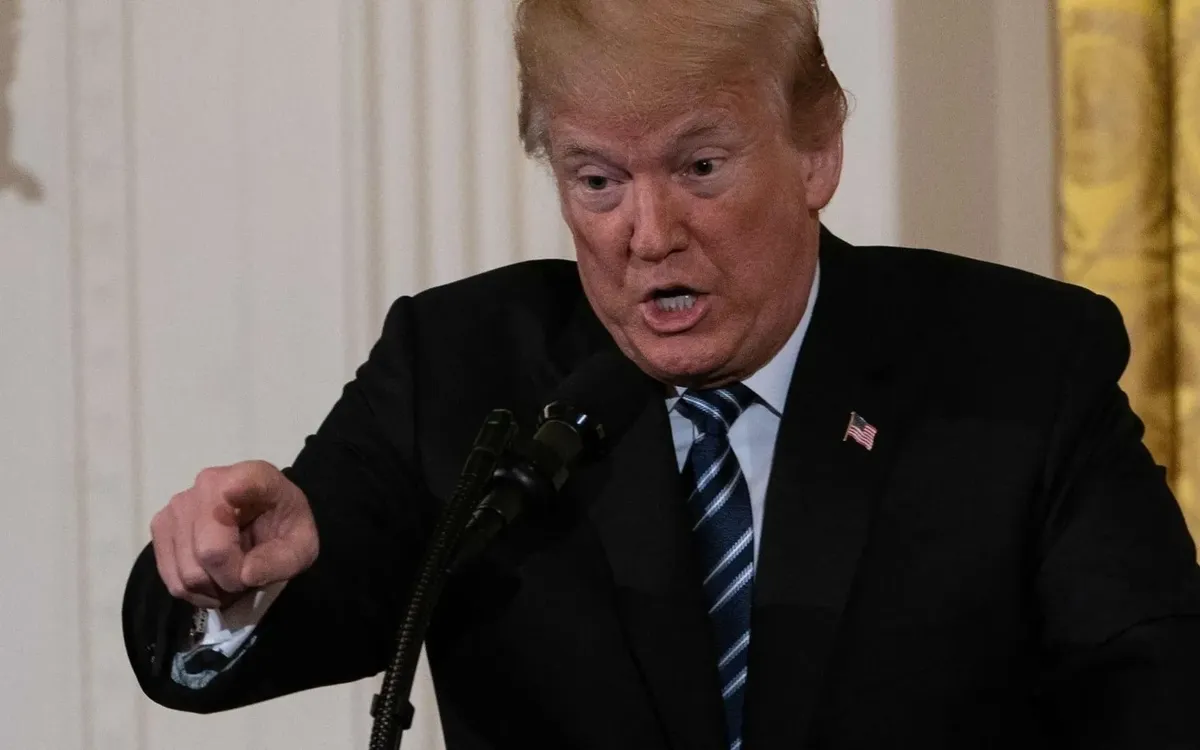
The Baltic Sea Bottom pipeline, pumping gas from Russia directly to Germany - bypassing Ukraine, the Baltic countries and Poland - has become the main trump card in the US trade negotiations and the European Union on how to agree on the issue of raising American customs barriers to steel and aluminum and not to fall under the rink of sanctions, the Forbes publication writes. Donald Trump sharply objects to the construction of a new gas pipeline parallel to the existing North Stream-1 highway. In Washington, Moscow and Berlin, they call different reasons why the American president does this once again not afraid of aggravation of relations with European allies.
Washington version: Politics and Security
In August last year, the US Congress, adopting the Law “On Countering the opponents of America through sanctions” (Caatsa), gave the Trump administration to impose sanctions against those companies that support Russian gas pipeline construction projects. “We will continue to use the influence we have in order to prevent the construction of Northern Stream-2,” said the Chancellor Merkel’s visit to Sochi Sandra Oududkirk, assistant to the US Secretary of State in Energy Security, in Berlin.
The route bypassing Ukraine will strike at the economy of this country, which received at least $ 2 billion as a fee for the transit of Russian gas to Europe, representatives of the Trump administration noted. There will be a threat that Kyiv can generally face Russia's refusal to supply gas. Energy will act as an effective “political club”, the most gloomy forecasts of Senator John McCain will come true.
However, after negotiations in Kyiv and Moscow, in which the role of an intermediary was assumed by the Minister of Economy of Germany Peter Altmeier, on the eve of the Sochi meeting, Merkel and Putin announced that it would continue to go to Europe through the territory of Ukraine. Berlin made this geostrategic guarantee for Ukraine a condition for his consent to implement the project. Moscow seemed to agree to this.
But the assistant to the American Secretary of State Sandra Oudkak announced that the “Russian guarantees are unreliable,” and Russia will continue to expand its export power “in order to strengthen political influence” in Eastern Europe.
Without going into details, she said that the construction of a highway along the bottom of the Baltic Sea “would allow the latest Russian equipment there according to wiretapping and observation”, that is, espionage.
Does this mean that the Russian special services have already taken this opportunity on the current branch of the North Stream-1?
The American side left this issue without comment.
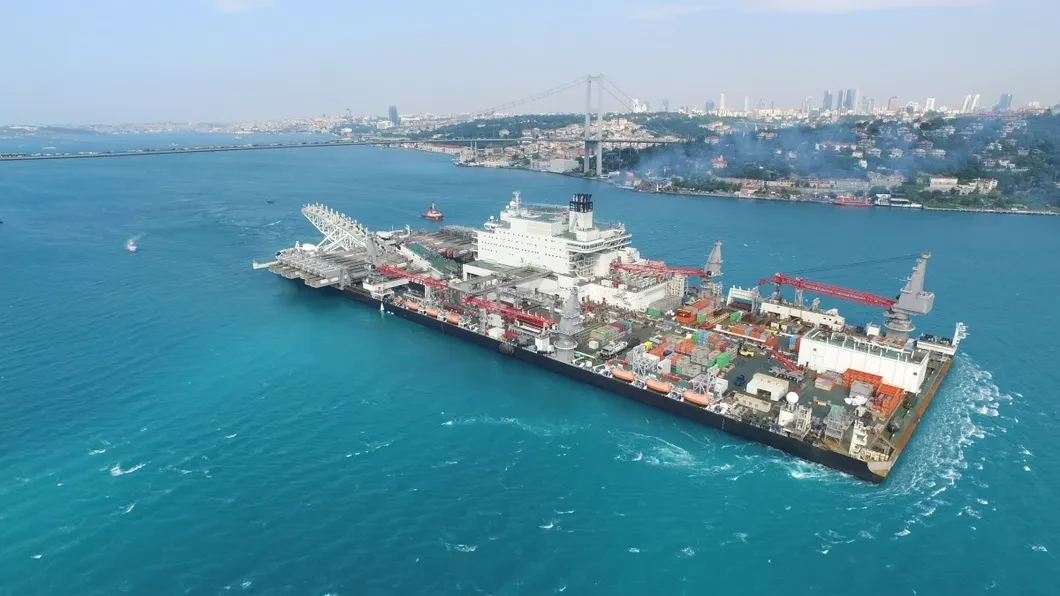
The official warned that any companies involved in this project “are in a state of increased risk” of the announcement of American sanctions, but the Trump administration prefers to look for a “diplomatic decision”. According to the American media, the sanctions threaten banks financing the project, which will make it more expensive, partners of the Russian Gazprom from Germany, Austria, France and the Netherlands: Uniper, Wintershall, Engie and Royal Dutch Shell. The construction of the second phase began last week in Germany, investors invested 5 billion euros ($ 5.9 billion) in the project. Gazprom concluded appropriate agreements with Western concerns even before the Americans adopted the sanctions law.
And what about Trump? Last month, at a meeting in the White House with the Presidents of the Baltic countries, the president said that Germany was in a wrong policy. “Now Germany spends 1%, even less than 1% ( on defense. - A.P. ). And now Germany launches a gas pipeline to Russia, where he will pay billions of dollars for energy from Russia. What is happening there? This is wrong, ”Trump said.
Version of Moscow and Berlin: pressure and blackmail from "Skeleton interest"
The American position and the next pressure on Europe are based on “purely economic interest”: to replace Russian natural gas in the European markets with American liquefied gas, despite the fact that it is 20% or even 25-30% (as they say in Russia) is more expensive than “Gazpromovsky” in value. The American Congress, adopting the law on the commissioning of sanctions against Russia for Crimea and for “interference with the American elections-2016”, demanded that the White House administration “pay priority to the export of the United States’s energy resources in order to create American workplaces, helped allies and partners of the United States and strengthen the foreign states of the United States.” The American liquefied natural gas, which so far accounts for only 5% of the total Imptions in Europe in Europe in 2017 - an alternative to Russian fuel and the political influence of the Kremlin.
The Wall Street Journal quotes the words of one of the officials of the European Union, who wished to remain anonymous: “It seems that Trump’s strategy is to force us to purchase more expensive gas, but while their liquefied natural gas is uncompetitive, Europe will not inferior to this form of extortion and will not buy at robber prices.”
A senior representative of the German government confirmed the same thing in a softer form: “In principle, we are ready to replace Russian gas with American. - A.P. ). But the question is how many gas are ready to put and at what price, ”the WSJ official quotes.
New tariffs for steel and aluminum, threats of sanctions to European companies selling Iran after the United States from the nuclear transaction, and now North Stream-2-America is pressure on European allies in different directions and at the same time offers to negotiate. It is not easy to agree if the main rule is now: “America is above all”!
The USA, said Oudkak, undoubtedly interested in exporting liquefied gas to Europe. However, she called the “wrong” assumption that it was economic interests that are behind the negative attitude of the United States towards Northern Stream-2. She noted that the United States has long and fundamentally oppose projects that will make Europe more dependent on Russian energy sources.
Bargaining is appropriate
The new duties for steel and aluminum, which were noted by Trump, as the American media noted, are aimed, first of all, to Chinese products, but at the same time they will strike a tangible blow to Europe as a whole, and the German automobile industry in particular. Referring to the unnamed “German, American and European officials”, WSJ claims that by abandoning the Northern Stream, Germany will be able to achieve Trump revising tariffs. “According to these officials, in April Trump told German Merkel’s chancellor that Germany should have stopped supporting Northern Stream-2. In return, the United States is ready to start negotiations with the EU on a new trade agreement, ”writes the author of the article Boyan Panchevski.
So far, the EU attempts to achieve a constant cancellation of new tariffs from the Trump administration were unsuccessful, but negotiations are ongoing. As Forbes notes, when representatives of the European Commission gathered in the past Wednesday in Brussels to discuss their proposals to Washington, the Nord Stream-2 was called one of the subjects of the transaction to “pacify America”. The future of the pipeline was discussed during a telephone conversation between the new US Secretary of State Mike Pompeo and the Minister of Foreign Affairs of Sweden Margot Valstrom.
As the Forbes journalist Dave Kiss notes, “on the sidelines, the EU diplomats and politicians may be ready to offer the cancellation of the Northern Stream project. Inside the European Commission, many consider the pipeline as a "political headache that will not disappear." As for relations with Russia, perhaps it would be better and more convenient for Europeans to blame America that it is tearing a deal, not the European Union itself.
Having announced possible sanctions against European companies participating in North Stream-2, the United States in its war against the project reached a new level. The consistent allies of Washington are Poland and the Baltic countries in this matter. Denmark and Sweden have not yet made a final decision.
From the consolidated response of Europe to Trump’s actions-the threat of a full-scale trade war, sanctions in connection with Iran and Northern Stream-2-the future of transatlantic relations and the general balance of forces in the world depends. “North Stream-2” is an objectively least large-scale issue that can become the subject of bargaining as part of the conclusion of a large transaction between the United States and the European Union.