
Translated material
Why Putin and Medvedev Medinsky?
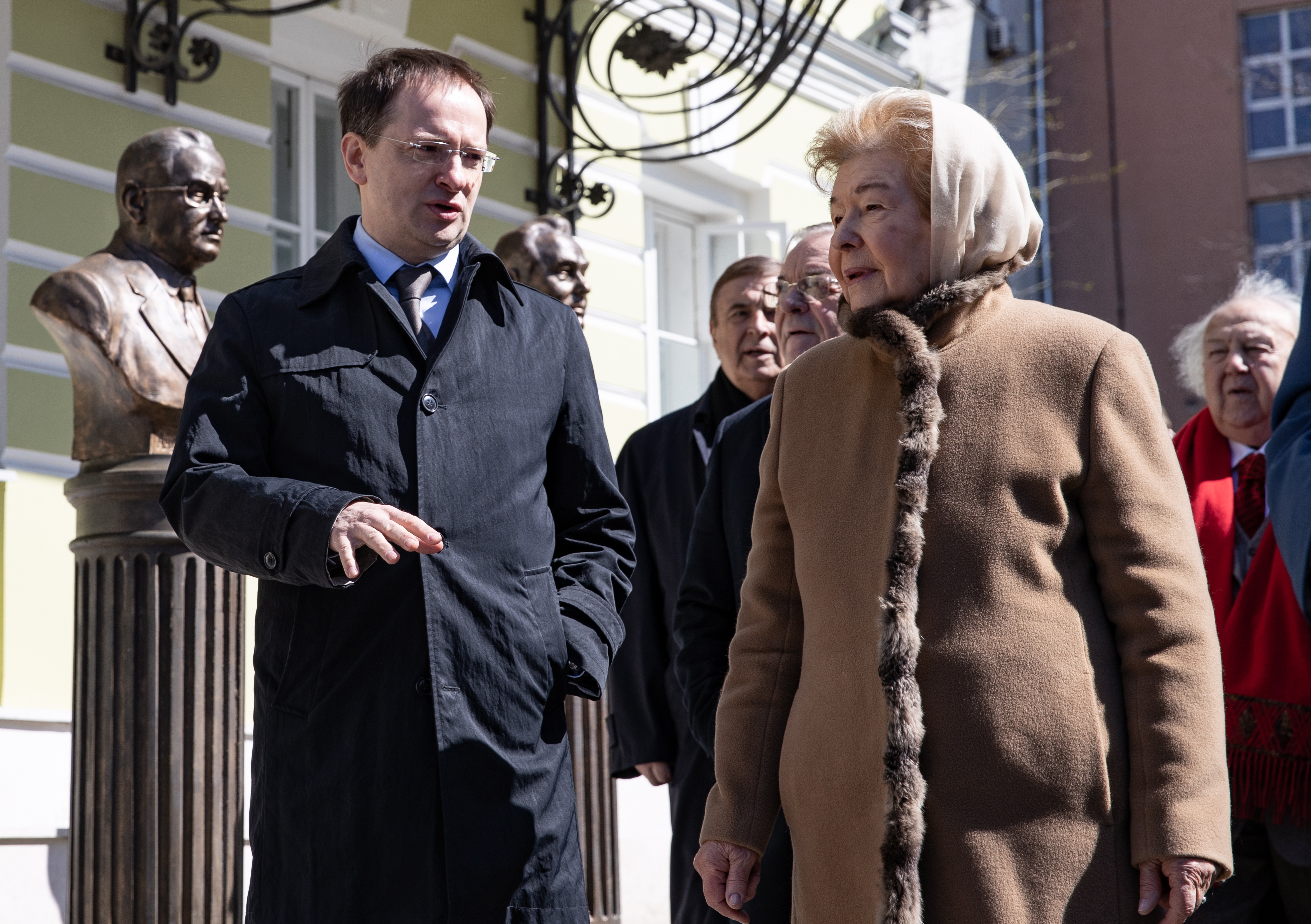
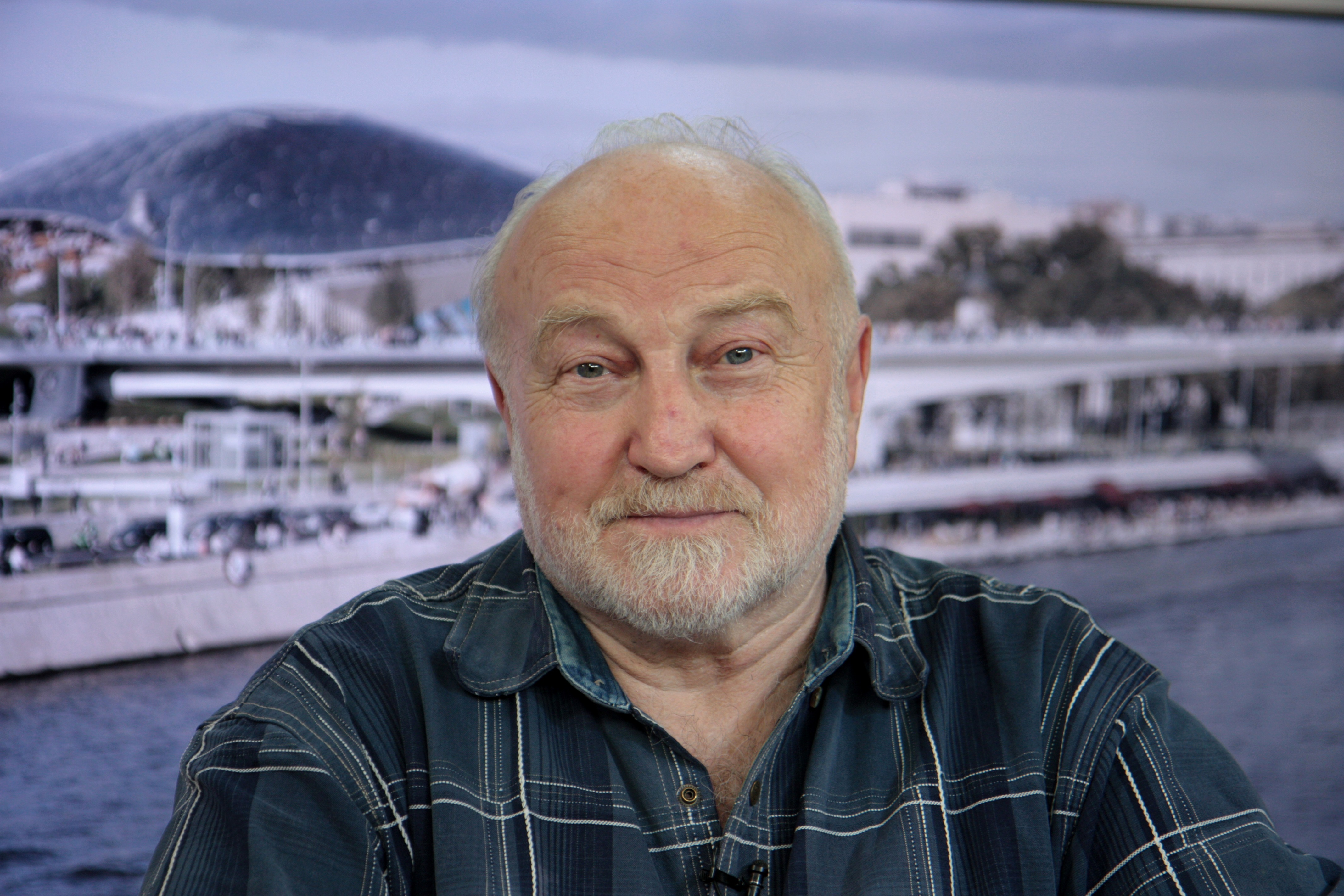
Discuss Alexey Klimenko, Julius Nisnevich
- Vladimir Medinsky was not fired, despite the conflicts related to his activities, and accusations of corruption of his immediate environment.
- Supreme authorities such as Medinsky and its employees are needed in the Ministry of Culture.
- The issues of artistic and historical value should be resolved by the professional community, the Ministry of Culture is absolutely not necessary for this.
- The task of the Ministry of Culture is the preservation and protection of historical and cultural heritage.
- Instead of maintaining and increasing human capital in the field of culture, Russia adheres to a policy leading to the emigration of creative people.
Presenter- Vladimir Kara-Murza-Senior .
Video version of the program
Vladimir Kara-Murza-Sr.: Vladimir Medinsky retained his post of Minister of Culture in the New Government of Dmitry Medvedev-despite the many conflicts related to his activities, despite the accusations of corruption of his immediate environment and contrary to sharp criticism from many representatives of the creative community of Russia.
We will discuss this topic with our guests-Alexei Klimenko, vice president of the Academy of Artistic Criticism, and the Doctor of Political Sciences Julius Nisnevich.
Alexey Alekseevich, do you think Medinsky coped with his task of the Minister of Culture in the previous composition of the government?
Alexey Klimenko: In my opinion, he brilliantly showed the justice of a wonderful notion about the laundry: "Is this the Ministry of Culture?" - and so on. Medinsky showed that this is a real Soviet laundry. And the fact that they steal there, and the fact that this is an institution that has long been necessary to disperse, and send its leaders to hell-in my opinion, he showed this remarkably. The fact that Melinsky was left as part of the Cabinet of Ministers, as well as the appointment of Mutko, very accurately characterizes those who chose it, more precisely - the one who chose it. And the fact that Vasilieva remained in its place, and the fact that now there will be single textbooks in all disciplines - this all perfectly characterizes our power.
Vladimir Kara-Murza Sr.: Julius Anatolyevich, three days ago arrested his former deputy Grigory Pirumov . Is there any logic that one person is put in prison, and his boss is exalted, making a minister?
The idea of the Ministry of Culture is a Soviet idea
Julius Nisnevich: Firstly, he was not exalted, he was a minister. He was simply not removed. And secondly, our entire system is built on the fact that each has incriminating evidence, anyone can be imprisoned.
Vladimir Kara-Murza Sr.: Did the Ministry of Culture have turned into a budget black hole over the years?
Alexey Klimenko: What became known about Pirumov is offensive: it is not known why the bell tower, Izborsk , Hermitage caught fire on the territory of the Novodevichy Monastery ... If the court established that the deputy Medinsky is a criminal who attacked such cultural heritage objects, this speaks of the administrator, about the head of Pirumov. It seems to me that from this institution with such administrators there is no benefit.
Vladimir Kara-Murza Sr.: Pirumov was responsible for the construction of the Hermitage Staff, and 450 million rubles disappeared.
Julius Nisnevich: The idea of the Ministry of Culture is a Soviet idea. And strictly speaking, this is a completely meaningless concept. Is it possible to manage culture, stately regulate culture? .. We are now talking not so much about culture as about those historical objects that need restoration, the investment of public funds and so on. The Ministry of Culture does not have to do this directly. Artistic value, historical value - this should be decided not by the ministry, but by the professional community. And what to invest in money, how to invest and in what objects is a question that relates to the priorities of the state. To do this, absolutely does not need such a body as the Ministry of Culture. The emergence of the Ministry of Culture is a landmark event that there is a certain area that the state wants to manage. In this sense, Mr. Medinsky very successfully copes with his task. He fulfills the role that was intended for him, and works according to all those laws by which the whole system of power works.

A rather funny story happened: now we have a culture and sport found ourselves in one "basket" with Mrs. Golodets. The Ministry of Culture and the Ministry of Sports obey Madame Golodets. This very clearly characterizes the attitude of modern authorities to this direction. We have a sport, that culture is approximately the same. I do not know if there are a Ministry of Culture in other states. I have not heard about the Ministry of Culture in America.
Alexey Klimenko: But the worst thing is that Medinsky, his advisers consider it possible for themselves to endlessly impose their preferences in history and culture to society. They finance what they consider correct. Everyone already knows that the story of 28 Panfilovites is a fantasy, this was not. But the film is done , financed. Continuous propaganda of patriotism. How the task is to these gentlemen, so they joyfully fulfill it.
Vladimir Kara-Murza Sr.: Partly, they took over the function of censorship, for example, as for Kirill Serebrennikov.
Julius Nisnevich: The Ministry of Culture carried out censorship functions in the USSR.
Vladimir Kara-Murza Sr.: But it seems that censorship is prohibited ...
Julius Nisnevich: We have a lot of things prohibited from the Constitution. The question is, what is the function of this ministry. Of course, this is not a function of the development of historical heritage, because a bunch of things from it simply dies before our eyes.
"Theatrical business" shows the complete impotence of this institution
Aleksey Klimenko: If the society considers it correct to some part of the budget (perhaps scanty) to culture, then it is necessary that representatives of the cultural community-Zakharov, Viktyuk and so on, and not the Lord Zhailo and Medinsky, who did not provide a single evidence of their right to talk on the topics of culture. One is a racket, and the second graduated from the journalism department of MGIMO. In general, with culture a complete catastrophe. And the " theatrical business " shows the complete impotence of this institution. Dozens, hundreds of cultural figures scream, write, ask, and people sit for a great live. This institution is only harmful.
After it became known about Medinsky, Mutko, Vasiliev, it became very sick. It became clear that there was no optimism, no hope that something would change at least to some extent for the better. There is only deep despair. The center of Moscow has become a place where vulgarity dominates. Very embarrassing and very painful for the country. As Karjakin once said: "Russia, you are foolish!" You cannot save such figures, such ministers! Under the ministry, Mr. Eater, a rocket launcher who has no moral right to talk on cultural topics. Nevertheless, he is some big person in the public council of the Ministry of Culture.
Julius Nisnevich: The question is not from what sphere a person, but how he relates to culture. There is a second layer that is not directly related to corruption - this is a problem of professionalism. Today in any field is one of the most sick problems. A person should be a professional in his business. The issue of professionalism is one of the most painful issues for the so-called new-old government. It is quite difficult with him, to put it mildly.
Alexey Klimenko: I believe that in addition to professionalism, the problem of morality is extremely important.
Julius Nisnevich: Professionals are not immoral.
Alexey Klimenko: Mikhalkov at first was both as an actor is very talented, and as a director. And what? Since the root is rotten, it turned into "Besogon". I agree that there is a very great need for professionals, especially in the field of architecture restoration. But it is very important that the ethical rod of the people who are engaged in this is strong. And we, unfortunately, are very bad about this. The restoration industry both at the design level, and at the level of study, research, and at the implementation level is a catastrophe.
Vladimir Kara-Murza Sr.: Today I was glad that they had to serve in the remote monastery of Father Tikhon (Shevkunov), because he mutilated our Sretensky monastery, glazing all with plastic windows from Spain for two rubles a square meter.
Alexey Klimenko: "Remote Skith" is Pskov, Izborsk, Pushkin Mountains. He is now Metropolitan of the Pskov diocese - huge, wonderful.
Julius Nisnevich : One of the most serious problems that exists throughout the world, but which is solved in different ways, how to combine the buildings of a religious heritage with a modern city. For example, the chapel of Saint-Shar in Paris is located in the building of the Ministry of Justice. But there the interests of the state and cultural heritage do not encounter. The solution was found. This is what the Ministry of Culture needs to do - how to combine a certain functional purpose of the building with its role as an object of cultural heritage.
Alexey Klimenko: In the television studio of the Channel "Culture" in the House of Sound Recording Tikhal Shevkunov, in an interview with the wonderful bones of Mikhailov, sang that he needed to mutilate the Sretensky monastery, build a temple to all the victims of the Lubyanka so that people see that the current Orthodox remember them. When they walked past me from the bones after his very emotional speech, I said: “Why build such a huge temple inside the monastery? If this is the memory of the victims of the Lubyanka, there is a huge empty parking lot on its connection with the Kuznetsk bridge. There was a temple of Dmitry Pozharsky, there was a militia. You can build a church in memory of the Gulag victims. Do you remember this place?” He blinked in fright, and I realized that he did not know where it was.
Vladimir Kara-Murza Sr.: The Church of Flora and Lavra, which was opposite the post office ...
Julius Nisnevich: We have lost a lot of historical buildings.
Vladimir Kara-Murza Sr.: But there was already a recovery project ...
Julius Nisnevich: I think that it is impossible to restore what is destroyed, in general. It will be to some extent profanity. The military-historical society started to erect a monument to Peter and Fevronia on the site of the Sukhareva Tower. They did not find another place. It seemed to me that there it was possible to restore a certain image and make the Museum of the Russian Navy. On Sretenka there was also an insanely interesting museum in a church. These tricks can be done.
Alexey Klimenko: In the fact that Resin is building new temples where it is impossible, there is neither beauty nor benefits, even if there are interested communities of the Orthodox. As for the Sukharev tower, I think: we must recall my unsuccessful experience of reconstructing the Cathedral of Christ the Savior as a laser vision. When there was still a pool, and it was about whether to recreate or not, the experts realized: it would be a hack, because what is needed for competent recreation is clearly not enough. Then I suggested: "Why, with the help of laser technologies, do not make sure that at the nights when the church says, the image of the temple arises in the dark sky above the pool?" I liked it, and I did the project. But since I did not have a team, it turned out to be a failure. Laser technologies are developing. It is known what Sukhareva Tower looked like. You can put this technique and at some evenings to make sure that the image of a cracker tower or any other structures arises in the sky, including temple and manor, which are destroyed. It is pretty cheap.
Yuli Nisnevich: The Ministry of Culture should solve the problems of preserving and protecting historical and cultural heritage, questions on how to restore a certain justice in relation to culture.
Alexey Klimenko: And distribute money ...
Julius Nisnevich: The ministry should not distribute money.
Alexey Klimenko: ... to the conservation of what is dying in all historical cities.
Julius Nisnevich: This applies not only to architecture. We have problems with reserves in museums.
Vladimir Kara-Murza Sr.: In Moscow, Kapkov played a controversial role when he led the culture. He commercialized this sphere.
Julius Nisnevich: Of course, it is impossible to avoid commercialization. The question is what it is aimed at: to make a profit or to create conditions in order to preserve and restore.
Alexey Klimenko: But the Culture Park precisely under Kapkov turned into a civilized place. And I even had an awkward desire to approach and say: "You are the only official to whom I am ready to shake my hand and say thanks."
Vladimir Kara-Murza Sr.: But he was cut off on take-off ...
Julius Nisnevich: As soon as financial resources appear, other interests appear, to put it mildly.
Alexey Klimenko: When we are talking about Kapkov, I want to remember Hamlet: “Here are two images: here and here ...” - Kapkov and Medinsky.
Julius Nisnevich: There was another person in the Ministry of Culture - a mile. In all questions, this person is still a person ...
Alexey Klimenko: ... an educated, normal person who had his own opinion. It was possible to talk normally, interact.
Julius Nisnevich: This is a story that occurs with our power, which goes in a certain direction. Therefore, people like Shvydky, of course, do not particularly need. We need people as Medinsky.
Alexey Klimenko: The most important thing, which enjoys popular support, needs such as Medinsky and his employees.
The preservation of Medinsky is also a significant phenomenon
Julius Nisnevich: Here we need an ideological design, which is conditionally called "conservatism". It consists in the fact that it is necessary to preserve the existing state of things - the power that is. With the appointment of a new government, there were a lot of iconic events that speak of our not very rainbow prospects, unfortunately, about how the authorities are arranged. The preservation of Medinsky is also a significant phenomenon.
Alexey Klimenko: Contrary to theft, contrary to endless immorality ...
Vladimir Kara-Murza Sr.: He also took over the function of censorship. They banned the film "Death of Stalin" , a harmless comedy.
Julius Nisnevich: He personifies the design that is built to introduce certain stereotypes into public opinion.
Alexey Klimenko: He is remarkably mirrors the highest power.
Julius Nisnevich: The highest power is not at all to culture. You overestimate our highest power. She has a more important task - to maintain her power. And then the question arises - what means is done.
Alexey Klimenko: In any case, this is very significant.
Julius Nisnevich: The preservation of a number of figures in this government is very characteristic. The preservation of Medinsky was shown to us that the function that the Ministry of Culture is now fulfilled is arranged by power. This is the position of power, which must be analyzed from this point of view.
Vladimir Kara-Murza Sr.: I think that in the near future nothing in the field of culture will change for the better.
Julius Nisnevich: The whole culture begins to actively emigrate. And just those who were previously called the color of the nation leave.
Alexey Klimenko: The most lively, most energetic.
Julius Nisnevich: Due to which modern states develop and occupy leading positions in the world is human capital. There is degradation. The task of the Ministry of Culture is also to preserve and increase this human capital in the field of culture. But this is not interested in anyone. Instead of creating conditions for creative people who can be the subject of pride in Russia, to give them the opportunity to work here, the Ministry of Medinsky is doing what is done.
Vladimir Kara-Murza Sr.: We are pushed them out, and at best, we plant here under house arrest.
Julius Nisnevich: The most famous Russian filmmakers in the world - Sokurov and so on - do not live here.
Vladimir Kara-Murza Sr.: And Zvyagintsev.
Julius Nisnevich: Zvyagintsev grew over the years in a worldwide, but he grew contrary to Mr. Medinsky and the company. And Serebrennikov, no matter how it relate to him, is a sign figure for Russian culture.
Vladimir Kara-Murza Sr.: As one smart person said: "To make a good plot on TV, you need to sit in the library for two hours."
Alexey Klimenko: This topic is extremely important. This is the direction of the aesthetics of the city landscape. The perception of the city landscape is a special direction of aesthetics and architectural creativity: perception of movement, perception in angles, proportions, and so on. This is a special discipline that needs to be studied.
Julius Nisnevich: Moscow is still the face of the country.
Vladimir Kara-Murza Sr.: And here errors are unacceptable.
Alexey Klimenko: Any historical city, including Moscow, is a giant mosaic. And the impression of the city is the sum of impressions from each element of this mosaic. A man arrived, he sees the monument to Kalashnikov, sees the monument to Vladimir next to Pashkov’s house and so on, and the sum of impressions is Moscow.
Julius Nisnevich: People who are sitting in ministerial seats should be responsible for this. But it turns out that Medinsky patronizes those, to put it mildly, of dubious quality, historical societies that disfigure Moscow.
Алексей Клименко: То же самое происходит и в области кинопроизводства, в области театра...
Юлий Нисневич: В кинопроизводстве немножко проще: зрителю не понравился фильм – он не пошел его смотреть. А Калашников стоит.
Алексей Клименко: Но на "панфиловцев" – отрядами. А Ольга Васильева с единым учебником – это катастрофа.
Юлий Нисневич: Просвещение – это база культуры. Если мы не просвещаем, то культура не будет ложиться на подготовленную почву, и будет складываться трагическая ситуация.