
Translated material
"APU is trying to consolidate positions"
May escalation of the armed conflict in the Donbass: Facts and evaluation
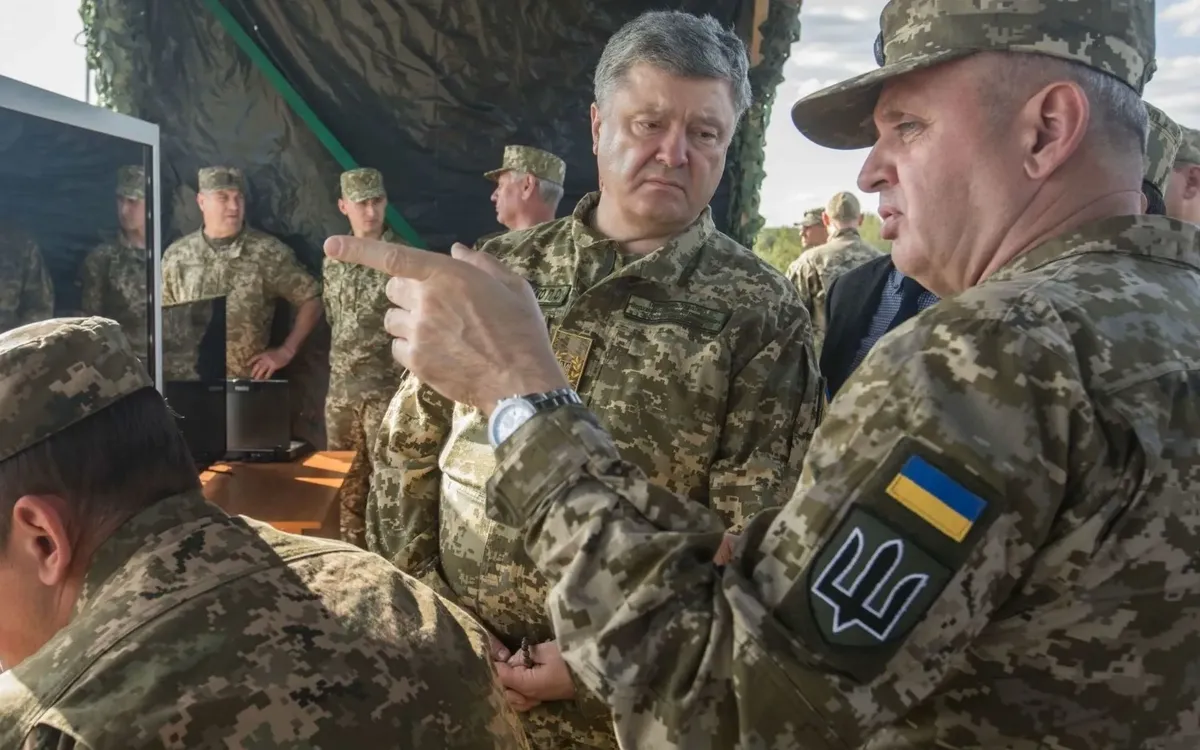
Last weeks in the combat clashes in the east of Ukraine have become the most difficult since the beginning of the year. The number of shelling, battles, dead and wounded among both military personnel and civilians on both sides of the demarcation line became a record in five months. The reference point of the next exacerbation was April 30. Why did this happen and what is happening in the Donbass now - at the request of Novaya Gazeta, Gromadskoye sorted out.
- Yana Sedova, "Gromadskoye", for "Novaya Gazeta"
On April 30, in eastern Ukraine, the anti -terrorist operation officially ended ( began in April 2014. - Ed .), The operation of the United Forces (OOS) was replaced. This happened in accordance with the Law signed by President Petro Poroshenko in February 2018 “On the features of state policy to ensure state sovereignty of Ukraine over temporarily occupied territories in the Donetsk and Lugansk regions”.
As a result of the start of the special operation of the United Forces in early May, the village of Pivdennaya (Chigiri), located in the “gray zone” ( territory, control over which is disputed by the parties to the conflict, including military means. - ed. ) In the Donetsk region, passed under the control of Ukraine.
The operation was responsible for the reconnaissance-sabotage group of the 46th separate assault battalion Donbass, which is part of the brigade of the Armed Forces of Ukraine (Armed Forces). On May 20, as a result of hostilities, one enemy was killed, three were captured.
“Thus began an exacerbation along the entire front line,” says the journalist of Gromadsky Nastya Stanko, who illuminates the armed conflict in eastern Ukraine. “The Armed Forces are trying to consolidate his position.”
In the official comments at the OOS headquarters, they do not use heavy weapons, however, the OSCE observation mission reports indicate violations on both sides of the demarcation line, most of all, where the parties to the conflict are located very close to each other, in particular, on the Svetlodar arc, near the Donetsk airport, under Gorlovka, it was these territories, according to the Minsk agreements of 2014, were assigned to the Minsk agreements, and were assigned to Ukraine.
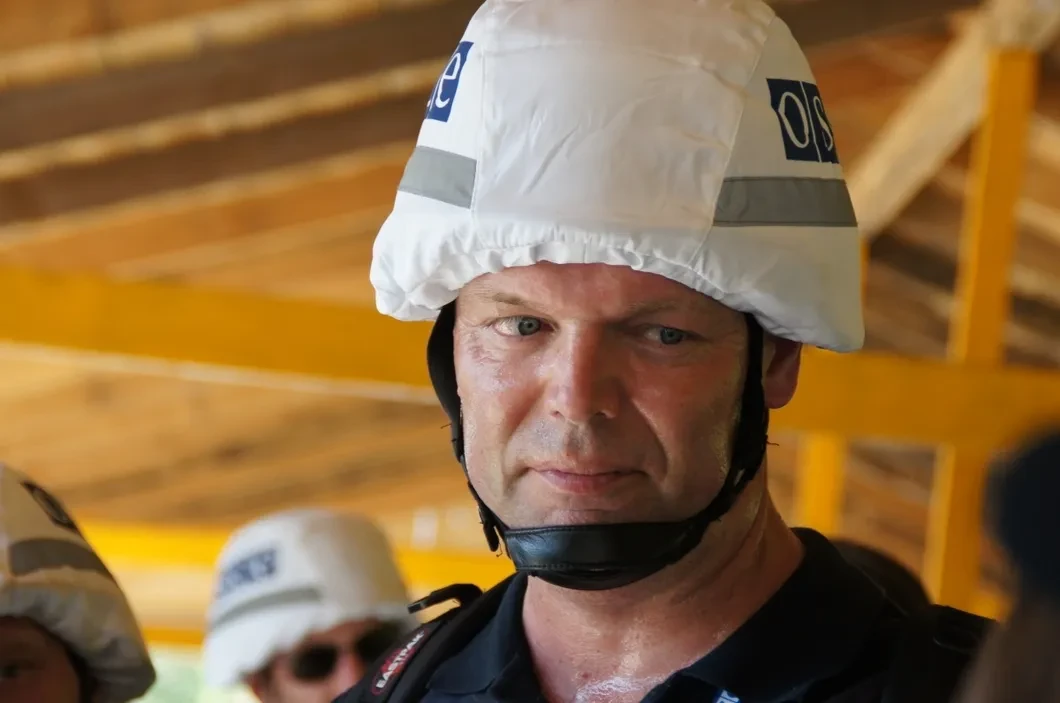
“The use of heavy artillery in these areas is always an indicator of the growth of aggression,” Alexander Khug, first deputy head of the OSCE special monitoring mission in Ukraine, said in a commentary to Gromadsky. During one of the reports of the mission, Hug called it “a meaningless and endless cycle of violence”: “Both sides claim that they are firing in response. No one knows who started, ”said Hug.
The fact of escalation is recognized by everyone: in the Armed Forces of Ukraine, and in the OSCE, and in uncontrolled territories.
So, on May 17, the speaker of the Ministry of Defense of Ukraine Dmitry Gutsulyak announced shelling with uncontrolled territories from 122 mm caliber artillery and 120 mm caliber mortars in the settlements of Troitskoye, Novoluganskoye and Zaitsevo in the Donetsk region. “Units of the United Forces are actively defended and responded 11 times from large -caliber machine guns and small arms,” Gutsulyak said. From May 12 to 19 in the east of Ukraine, two military Armed Forces were killed, 11 were injured.
The center of the May escalation, they say in the OSCE, became the throat. On May 17 and 18, near this city, representatives of the mission recorded 140 explosions, for the most part these were artillery and tank shelling.
On the morning of May 21, militants announced the shelling of Gorlovka (Donetsk region). In the Donbass battalion, Gromadsky reported that "there was a battle on the front section in the direction of the occupied Gorlovka."
At least two dozen civilians were injured, four died on the territory controlled by the Ukrainian authorities (including a 13-year-old teenager), the same-on the other side of the demarcation line.
Evgeny Kaplin, the head of the Prostysk humanitarian mission, said in a commentary to Gromadsky that, due to the aggravation of hostilities in the Donbass, more than 150 houses suffered or were destroyed.
Alexander Khug in the commentary to the American analytical center Atlantic Council has shared that since signing the Minsk agreements, the parties had not had sufficient political will to fully fulfill and comply with the points prescribed in the contract, whether it is cleared, the allocation of weapons, safe access of the observation mission of the OSCE, etc.
“A surge ( armed conflict. - Ed. ), Which we see, is a reflection of an even less political will to implement the Minsk agreements,” said Hug.
He emphasized that last week the mission recorded more than 7 thousand cases of violation of the ceasefire agreement, and this is 40% more than a week before. The mission also indicates the presence of 41 types of prohibited types of weapons, equipment and the presence of personnel near the contact line.
“Access to journalists to the conflict zone exists according to the rules that have been installed two years ago: accreditation, press card, route sheet, which should be submitted a few days before the trip. But they still may not let you go - this decides the command of the brigade or battalion, and the commander is often easier not to let in. Sometimes you have to persuade, even if you are not going to the military, but in the village to the civilian. But there are now such rules (in the front -line villages) - they are allowed only local ones with a local residence permit, ”said Anna Tokhmovchi, journalist Gromadskoye.SHID.
In Kyiv, the next escalation is not explained, journalists learn about the situation from the daily headquarters. “In connection with the start of the operation of the United Forces, there is a new rule-to introduce the“ Red Zone ”mode, which means the inability to move in a certain area, but this mode lasts several hours, for example, at the checkpoint (through the distinction line), when operational information about the possible shelling appears. Then the “Red Zone” mode is introduced and the movements are prohibited, after a few hours the “remove” mode and the checkpoint is valid in normal mode, explains Anna Tokhmhachi.
According to Ilya Ponomarenko, the reporter of the Kyivpost publication, the next escalation in the Donbass is quite fade into the script of this protracted war:
Now the struggle goes for profitable observation points, new hidden reference points or convenient sniper positions, about placing more min-traps in the strip that shares the sides.
“If you do not capture the destroyed house on a hill from which you can better consider your enemy, then this will be done by the enemy, and your units will be even more dangerous. And you need to somehow prevent it. So this is a deadly game in cat mouse, which helps to survive, but in which civilian ones inevitably suffer, ”he said in a commentary to the Atlantic Council center.