
Translated material
Transport 2.0
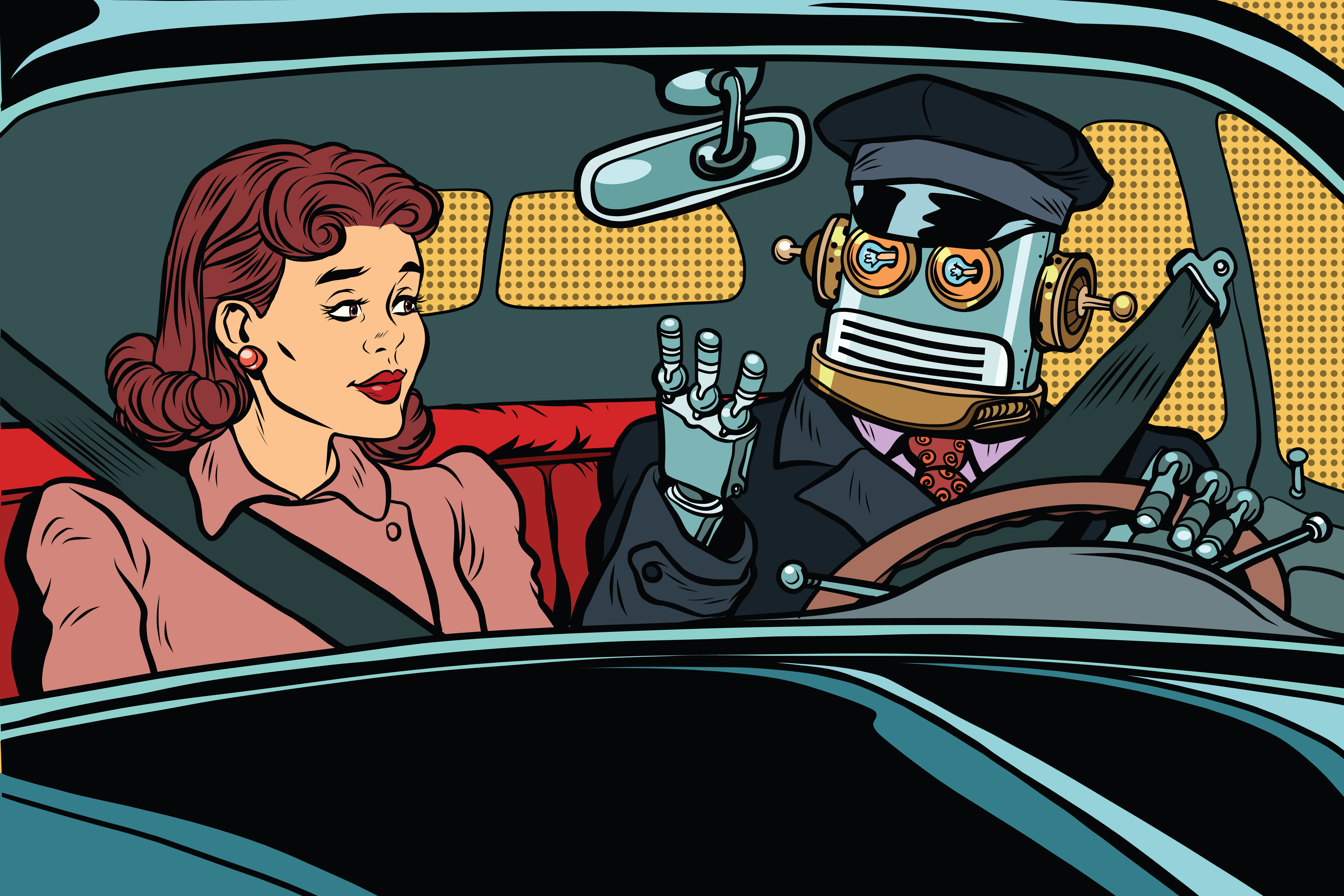
Will the cities save unmanned cars?
- In Moscow, more people began to use public transport: it is becoming increasingly difficult to drive around the city by car.
- With the advent of new residential areas, there is an increase in the Moscow Region cities in large agglomerations that are not secured by transport.
- In the new housing construction, it is necessary to take into account the capacities of transport infrastructure, as the capacities of gas networks or power supply take into account.
- Monstrous Moscow traffic jams arise due to the fact that there is no clear strategy for the development of the city and suburbs.
- When solving transport problems in Russia, it is worth using existing international experience.
Sergey Medvedev: It turns ten years of epic traffic on May 15, 2008. It was a 13-hour Moscow traffic jam, when all the rings closed and traffic jams stretched for tens and tens of kilometers. How has the traffic situation changed since that time? How can our future change new car traffic formats, traffic, unmanned vehicles, lethal cars? Details in our plot.
Correspondent: At the beginning of the year, the government commission on the digital economy announced plans to launch unmanned vehicles in five Russian cities. According to the authors of the program, drones, which are currently developed in Skolkovo, should replace people with both personal cars and hired. From the use of car sharing many, the absence of a free car nearby holds, the drone can be called to the right place through a mobile application, and after the trip it is safe to forget about it - it will go to the parking lot himself.
The automobile flows will be diluted using a special computer program, which will significantly reduce the number of plugs and harmful emissions into the atmosphere. In the film "Guest from the Future", who is beloved by Soviet children, the action of which takes place in Moscow in 2084, residents of the city use flying unmanned taxi. In reality, such a project turned out to be too expensive. But traveling drones plan to bring to the roads much earlier - in 2024.
Sergey Medvedev: We are visiting Ilya Zalovukhin , architect and urban planner, and Pavel Zyuzin , senior researcher at the Center for Research of Transport Problems of Megalopolites of the Higher School of Economics.
Has the situation with traffic jams improved?
Pavel Zyuzin: In Moscow - of course, yes: a lot has been done, invested in road construction and in the reconstruction of roads and interchanges. A significant share of these investments was made up of investments in public transport and infrastructure. Of course, transport has become much better, began to comply with the highest world standards.
Sergey Medvedev: People moved to public transport? How does public transport become an alternative at all now?
Ilya Zalivukhin: Of course, more people began to use public transport. Driving around the city by car is quite difficult. I myself use the metro more than six years ago. Sometimes you can’t drive, sometimes - ware out. There are cameras everywhere. If earlier you could go as you want, now any wrong turn is 250 and 500 rubles. You can ride quite smoothly, but you will stand.
Sergey Medvedev: If you look at the transport policy of the Moscow government, then the trend - gradually transfer all motorists to public transport?
Pavel Zyuzin: Not quite so. The fact is that the city and its roads can accommodate as many cars as they can accommodate, and no more, therefore it is more correct to talk about driving. This is the introduction of tools for increasing the payment of car at those hours when an excess of vehicles creates congestion. On weekends, we cancel the mechanisms for collecting parking fees, roads, entry, and when this demand rises during the peak hours, we redistribute these flows to other modes of transport. This is flexible management. This is not to say that this is one hundred percent unilateral restrictive measure.
Sergey Medvedev: The traffic jam has become smaller within the third transport ring, but it is taken out of the Moscow Ring Road: the concrete belt that Moscow is growing, which becomes a 50 millionth metropolis, people standing at the entrances to the city, because these suburbs are not connected by any transport.
Pavel Zyuzin: This is a discussion question. Indeed, with the advent of new residential areas that are not provided with mass transport, there is an increase in small jokes in large agglomerations that are not provided with transport. And there is a problem of traveling all these residents to the city center. The solution has already been proposed here - these are intercepting parking lots. That is, the inhabitants of such areas go to the stations of electric trains, metro and only then continue traveling by mass passenger transport, without overloading these highways with individual cars up to the very center. Flexible tools are being introduced here. The growth of the city is inevitable, it will occur further.
There should be a zoning of the city in terms of development density
Ilya Zalivukhin: Cities will grow. Here is the task of planners - to say where they can grow stable and safe for ecology, transport, and human health. There must be a zoning of the city in terms of development. This is an elementary thing that is in all world megacities. 25-30 million, which are now in the metropolis, is a huge number of people. How to resolve density in this state? It is clear that only public transport can pull out a larger number of people, the car will never do this. Therefore, people can walk to high-speed public transport and live in these mini-city, which are concentrated by public transport. There is such a zoning that there can be many people. Further at a distance of a kilometer - two and a half, where only buses, the density falls ten times, and there can only be a private sector and IZHS .
We still have no restriction. This is what I am rated for all the time: the official, legislative zoning of the city. You look at the plan and see that there is no public transport, and there can live a hundred or two people on the hectare, which means that these are no more than two floors. There you can not build multi -storey buildings, because people will not live there and work in one place - this is a concentration camp. They will still buy a car, put it in the forest and go to it to the center of Moscow or go to intercepting parking, and someone will pass by and will still go to the center. No need to build multi -storey buildings to provoke people to buy cars, and then fight traffic jams in the city center.
Sergey Medvedev: These concrete suburbs pull cars behind them.
Pavel Zyuzin: Any new housing construction should take into account the capacity of transport infrastructure, as they take into account the capacities of gas networks, power supply, ordinary network infrastructure.
Ilya Zalivukhin: The developer wants to build a district in the field - let him pull the metro branch there at his own expense. But the metro branch also does not pull a lot of people, that is, there you need to build a hub, railway, metro, create a new center, and then the developer can build.
Sergey Medvedev: Is there such an encumbrance of the developer somewhere?
Ilya Zalivukhin: In Switzerland: Do you want a new area - pull a branch of a tram. Why should the townspeople pay for this tram?
Pavel Zyuzin: either in the current body of the city, certain zones are distinguished for such a type of development, which is located directly in the traffic zone of vehicles with high passing ability.
Ilya Zalivukhin: Here is the Toronto development plan - they look, impose radii on transport and say: these industrial zones, these territories can be compacted, and these are, on the contrary, to be unfinished. In Tokyo, Singapore, too, everything is based only on this. This is the city development strategy.
Sergey Medvedev: And Moscow will never become a city like London? The city of a hundred villages ... Moscow sleeping areas will become self -sufficient hubs, and people will not need to move ...
Pavel Zyuzin: In the previous 40 years, huge sleeping areas were formed that were not secured by places of labor, in fact, these are only residential sleeping bags at a distance of 10-15 kilometers from the city center, sitting exclusively on the metro lines. This is very difficult without renovation.
Ilya Zalivukhin: We must strive for this. Now such work is underway, the creation of certain cultural centers, jobs, parks. Each area should have things that are even brighter than in the center. It’s just that in Soviet times so much was destroyed by mass residential construction that now these are whole projects, global tasks. Moscow ends with the third transport ring, and then the city of VDNH begins, the city of South-West, the city of Strogino. We must think how to tie it all. Aglomeration transport appears. Thank God, a ground metro has now appeared, which goes faster than the underground, and stops not after a kilometer, but after two and a half, and in the center - a little less often.
Transport planning should not be attached to the administrative borders of Moscow and the Moscow Region
Pavel Zyuzin: Transport planning should not be attached to the administrative borders of Moscow and the Moscow Region, when huge outskirts of cities still sit on Moscow socio-economic activity and people go there every day. In Moscow, most of the stations are deadly, so it is very difficult to make such routes through the center. In London, they are now paved underground through railway transport through the city center. This is a very expensive event. It is still unrealistic for us.
Sergey Medvedev: Now in Moscow, a trend to increase the number of road signs and dividing strips.
Pavel Zyuzin: Of course, new traffic control tools arose, including in terms of marking, in terms of additional signs, traffic patterns, markings at intersections. This turned out to be efficient.
Sergey Medvedev: Maybe on top of the street, as in American cities, to apply the highway system at the second or third level.
Pavel Zyuzin: The concept of the chord, which is now being implemented in Moscow, is the attempt to make an additional outline of speed roads, with which people could quickly leave their residential areas and quickly move within the Moscow Ring Road and other parts of Moscow. We must strive to ensure that this system is holistic, and only after that it is permissible to do such lower things as zones, where pedestrians are along with motorists. Now, unfortunately, this is unacceptable.
Ilya Zalivukhin: Now there are four chords, before that there were three. This should be in the city master planning system. The system of a common ground metro, linked to the metro, with hubs, a system of high -speed roads, which, incidentally, can pass next to these Moscow central diameters - it is not necessary to stick them through the city, they can be made through the territory of Russian Railways. To do this, you need to agree with the Russian Railways not only that they will make the Moscow central diameter, but also that they will make Hyvei for the Moscow budget. When Moscow says that we cannot make Hyvei in its territory, it is right. Any transport system should be full, multi -level and multi -tied.
Sergey Medvedev: Let's talk about the elements a few distant future. Disruptions-how much do you believe in this perspective, how much can they resolve the current traffic situations in the city?
Pavel Zyuzin: This is not a future, but quite real reality. There is the United States, there is Singapore, the Opera city, which actually represents a large landfill for the testing of drones. How much does the city unload it? The question comes down to how this transport will be unmanned. The car can adopt from the driver only part of the functions in management, to be not completely unmanned.
We are still very far from the moment when the passenger car, moving in the general stream, will be unmanned. At first, most likely, the unmanned vehicle will spread to those modes of transport that already have priority - these are railways, mass passenger transport, at a maximum - buses in the dedicated lane, and only after that - unmanned vehicles regarding the individual segment. I think such transport will optimize movement because empty, unproductive runs will decrease when people just scour around the area in search of a place for parking or travel. If he is fully navigated in the road situation, receive information, then such transport will be more productively used.
Sergey Medvedev: I read forecasts: drones will contribute to the expansion of cities.
Ilya Zalivukhin: It is clear that this can already be done on a working system - for example, on the subway, providing passengers with certain sensors so that they, God forbid, do not fall. This suggests that if there is a working system, then in it you can make tuning or drone, in general automation. Automation is always done after the transport engineering system is created.
As for the rest of the city, these engineering systems have not yet been created there, there is no clear understanding of what the city street is, what the city frivitis is, we have some kind of continuous porridge. Here you are standing at a traffic light, then flew 80 kilometers per hour, and then again 60, that is, it is not clear what is happening, this system is not. The public transport system for allocated lanes has not yet been fully made. And start the drone into this porridge - no, rather, into the air, because there your route will be read by the Internet. All unmanned automation will rather be in the air. You are standing on some floor, called the drone, he flew up, you sat in it, and then you cannot steer, because there is such a stream. And on the street - I do not know how they will go.
Ilya Zalivukhin: Unmanned flight line - drones, freight logistics - it already is. And passenger logistics in a big city is very difficult to manage all this resource. In addition, it is necessary to make stations for this type of transport. This is a more distant prospect than ground transport.
Sergey Medvedev: He called Uber-Dron, he flew out the window, took you ...
Ilya Zalivukhin: Accordingly, architecture will change, and in this sense the city can become some other. When this transport will appear after about 50 years, it seems to me that the distances will still be important: flying through the air for 15 minutes or an hour. Maybe other formats will arise, at home will be redone.
Sergey Medvedev: And people will drink beer below, and children will play with a hoop.
The cities are rapidly increasing, the population is growing, so the transport will not disappear
Ilya Zalivukhin: There will still be cars traveling on the ground. The cities are rapidly increasing, the population is growing, so the transport will not disappear. Cars will be electric, but they will not disappear.
Sergey Medvedev: As I understand it, many problems will be raised by increasing automation, an increase in the number of sensors and cameras that will lead us in traffic.
Pavel Zyuzin: This is one of the elements of smart transport - the smart infrastructure with which it interacts. This is the road, signs, regulation systems. Accordingly, the car will learn to analyze the restrictions that it has when moving, it will follow the speed mode, marking requirements, and traffic lights.
Sergey Medvedev: We, in principle, enter the post -funded era, where will there be less and less a private car?
Pavel Zyuzin: by private cars - yes, and we will use cars the same way. There will be a larger segment of public transport of individual use. He will more and more displace individual transport.
Sergey Medvedev: Carchering?
Pavel Zyuzin: car sharing, unmanned taxis, carpling, joint use of a car - this is the format that will displace private car dealership from the city.
Ilya Zalivukhin: I agree with this, but I note that gradually, with the growth of the population in the city, the number of people who need to be able to use personal, and not by public transport, will also increase. And still you need to understand how to organize all this with each other. The cities should still be more compact, there should be a crowd of people, so that it is easier to use the same car sharing. All the same, you need to take into account all other tools for the development of the city, including the density of development.
Sergey Medvedev: We need car sharing on autopilot. You went somewhere on Malaya Dmitrovka-there is no car, she’s somewhere on Mendelevskaya, you are calling, and she comes to you in five minutes.
Ilya Zalivukhin: The main thing is that she does not get confused in the markings. It is better if she arrives.
Sergey Medvedev: In general, the amount of private transport will be less, car communism occurs, if you look at 30-40 years in advance.
Павел Зюзин: В таком крупном городе, как Москва, эти практики – просто вынужденная мера, более эффективное использование имеющихся ресурсов транспорта. This is inevitable. В сельской местности такого, конечно, никогда не будет.
Сергей Медведев: В любом случае, как я понимаю, большая часть населения России будет жить в городах.
Павел Зюзин: У нас уже сейчас 70% населения живет в городах. Будут возникать, помимо Москвы, такие надрегиональные центры социально-экономической активности, как Екатеринбург, Новосибирск, Краснодар: они уже формируются. Соответственно, такие центры в макрорегионах будут испытывать такие же проблемы, как и столичный регион, и там будут применяться такие же инструменты.
Илья Заливухин: А дальше нужно понять, откуда взять деньги, как эффективно их вкладывать, какую систему делать. Это многофакторная работа экономистов, транспортников, социологов, экологов. Должна быть разработана своя стратегия для каждого города: что мы делаем, для кого, сколько и где мы строим, какой транспорт развиваем, как занимаемся экологией. Мы расширяем город, а полей у нас нет, экосистема не работает, транспорт стоит в пробках.
Павел Зюзин: Единственное, что у нас сейчас хорошо, – это то, что мы можем использовать имеющийся международный опыт, чтобы не делать ошибок, минимизировать их, видеть отличные кейсы, которые реализованы, чтобы дальше продвигать их у себя.
Сергей Медведев: Как я понимаю, будущее за общественным шеринговым и гибридным транспортом, когда мы будем ехать на своей машине, потом на скоростном поезде, а потом доставать из кармана складной самокат и ехать до работы на самокате. Будущее прекрасно и удивительно, когда оно спланировано и хорошо организовано!