
Translated material
The head of government flew in Spain
Prime Minister Rajoy finished off the corruption scandal
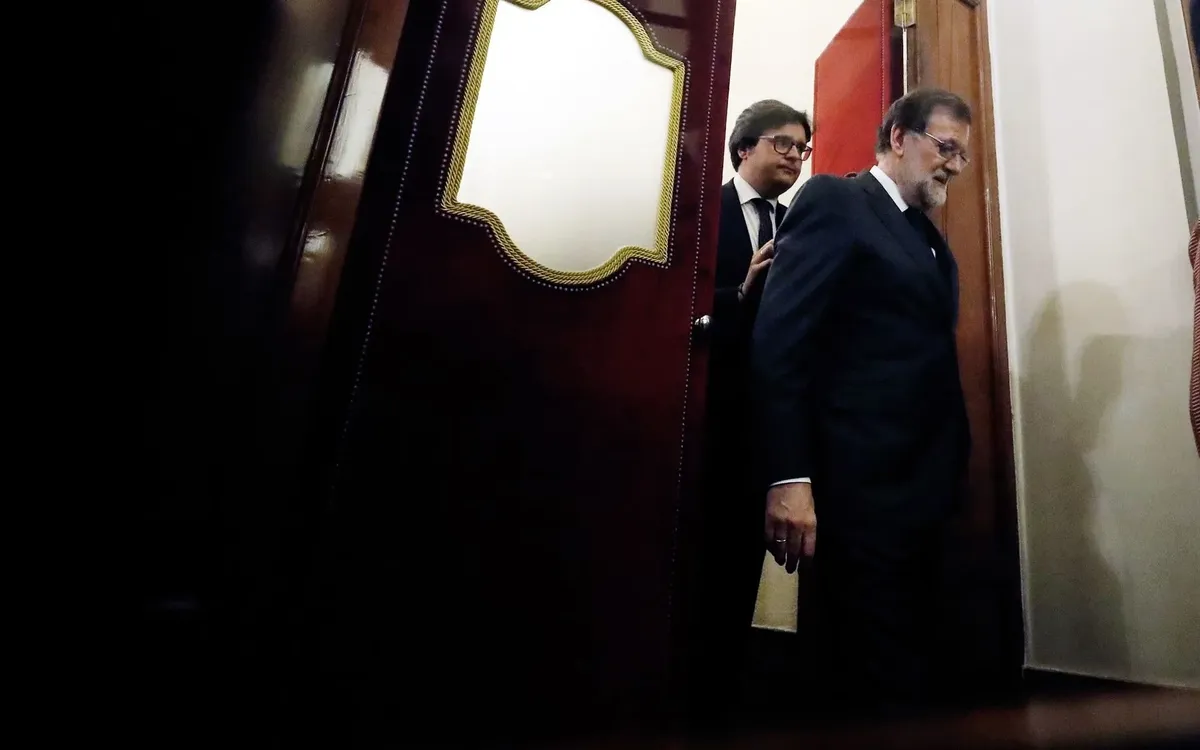
The deputies of the Spanish parliament voted for the resignation of Prime Minister Mariano Rahoy, who ruled the country for more than six years and at which it was in the deepest crisis in modern history. The new prime minister was the socialist Pedro Sanchez, who offered the deputies to consider the resignation of Rahoy immediately after the court issued severe sentences in a loud corruption case, where dozens of members of the People’s Party headed by him were involved.
180 out of 350 members of the Congress of Deputies (lower house of parliament) voted for the resignation of Rajoy.
The 63-year-old Raha, whose rule was marked by both the Catalan crisis and the deepest crisis of citizens' confidence in the country's political system, himself brought the situation to the edge, not wanting to go to any compromises.
He demonstrated stubborn “principalism” until the last day - refusing to resign on his own and, thereby, try to preserve his party in power. The Rahu remained the same fundamental in relation to the corruption case of Gürtel (the “belt”, the game from the name of one of the key defendants - the businessman Francisco Correa) , who had been drawn since 2009 and revealed the existence of the “black box office” in the ruling “folk party”, which was mainly made from dicks for state orders. Raho, who heads NP since 2004, says that he had no idea about the fraud that was turning his one -partyists.
But here there can be no complaints about him: it would be crazy to admit.
Last Thursday, May 24, the National Judicial Collegium sentenced Francisco Correa to 51 years of prison, Pablo Krypo (former Secretary of NP in Galicia)-to 37.5, Luis Barsenas (former Treasury NP)-by 33 years and 4 months and a fine of 44 million euros, Anu Mato (ex-minister of health)-to a fine in the penalty. 27.8 million euros and the “People’s Party” itself - to a symbolic amount of 245 thousand.
And the premiere of Rajoy, finally, after repeated attempts, resigned. And this is the first case in the history of the country, when the deputies manage to approve the “vote of no confidence” to the head of government.
In the morning, on the day of voting, Rahoy spoke to the deputies, admitted his defeat and left, saying that he was proud to leave the country "in the best state than he had accepted." On the eve of the outgoing prime minister, he accused the socialists eager for power of lies, since, in his opinion, they deliberately and many times exaggerate the guilt of the “people's party” in a corruption scandal.
The proposal for a votum of distrust the day after the verdict in the Gürtel case was made by the 46-year-old Pedro Sanchez, the leader of the “Spanish Socialist Working Party” (which, up to the new elections, formally remains the second political force in the country after NP). This was already his seventh attempt to resign Rajoy.
“The question is whether our democracy can afford the luxury for another two years to remain constrained by the corruption actions of the People’s Party,” said Sanchez from the rostrum of parliament, referring to the fact that the planned parliamentary elections should take place only in 2020. However, the luxury of the guaranteed two -year government for his social party Sanchez was not destined: one of the conditions for his election is to hold early elections in the next 12 months. Sanchez had to negotiate with representatives of very different forces about compromises, including deputies from the Basque and Catalonia country: the fact is that socialists have only 84 places in parliament, and at least 176 votes need at least 176 votes.
In order to persuade Basque, Sanchez promised them not to touch the budget providing for an increase in financial injections into the region, but in order to convince the Catalan deputies, he promised to “bring bridges” with the new government of Catalonia (which was able to start work today - six months after the re -election assigned to the local parliament, on which, as well as on “illegal referendum ”, the separatists defeated the period of“ direct control ”from Madrid at the same time in the region).
However, the socialist Sanchez did not give any promises about the independence of Catalonia, and he could not: firstly, in this case, he would not have received the support of other forces, and secondly, the social party itself consistently adheres to a moderate position, speaking out for the expansion of the Catalan autonomy, but categorically against the “collapse of the country”.
Moreover, in recent months, Sanchez supported the government in his actions to “tighten the nuts” in Catalonia-which today allowed the representative of the “People’s Party” to call the new prime minister “political Judah”, and to say the very rar to say that “for the sake of personal ambitions (...) is ready to unite with anyone and any kind of price.”
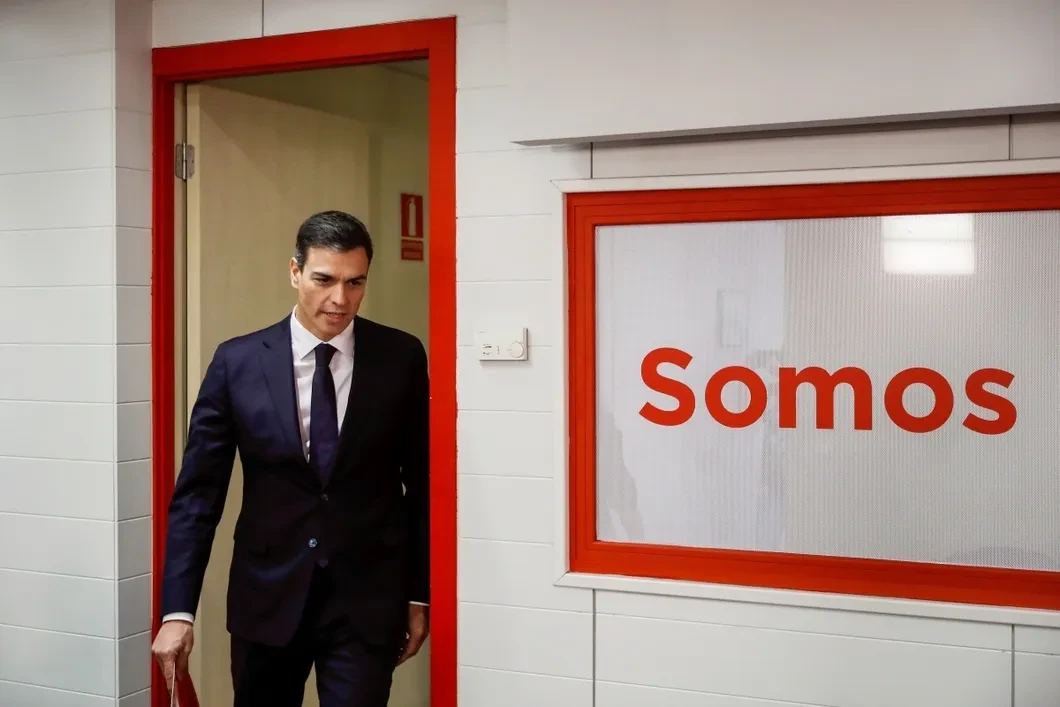
However, the political prospects of the professor of economics Sanchez (nicknamed Guapo - handsome) so far look quite vague. Firstly, under a big question, the results of the structure he headed in the next elections-in 2016, “The Spanish Socialist Working Party” showed the worst result in its history. Secondly, and inside the “ICRP” he has many opponents.
After the 2015 elections, in which none of the parties could take the majority, the king already offered the parliament of the “compromise” candidacy of Sanchez as a prime minister. After the parliament voted against, the deputies of ISRP in the majority “abstained” when voting for Rajoy. Sanchez himself, in protest in the fall of 2016, left the deputy post, and a little earlier he was shifted from the post of head of the party, where he returned only a year later, in June 2017.
Well, for the post of prime minister today he climbed, leaning on the shoulders of the "separatists." Which also does not add stability to him.
After all, many Catalan supporters of independence today criticize their deputies because they not only supported Sanchez, but also did not achieve any “intelligible guarantees” from him.
In the conditions of a deep political crisis, Sanchez will have to show the skill of the equalibrist in order to stabilize the situation in the country and prepare the elections in which his party could demonstrate a decent result.