
Translated material
The first victim of the "list of Titov"
Are the president’s assignment on the list drawn up by the business ombudsman and the dismissal of the head of the capital’s department of the Investigative Committee?
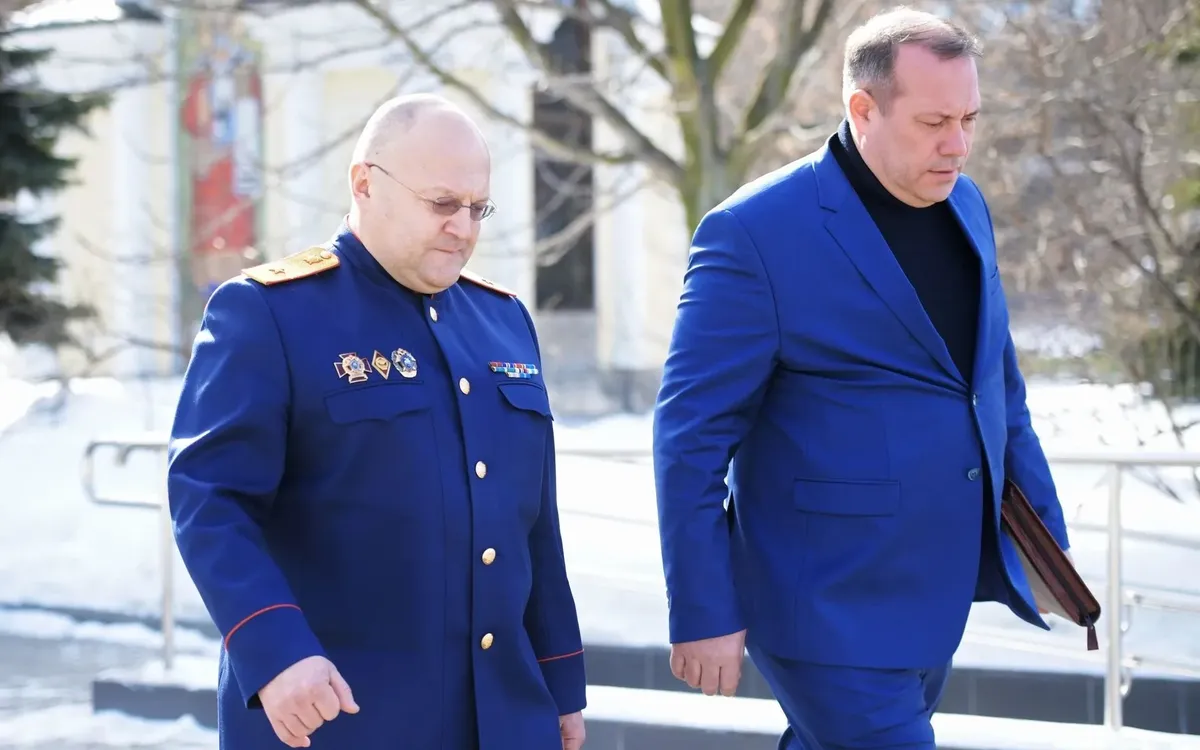
On May 28, information leaked that Russian President Vladimir Putin instructed the Prosecutor General Yuri Chaika, the chairman of the Investigative Committee Alexander Bastrykin, the FSB director Alexander Bortnikov and the Minister of the Interior Vladimir Kolokoltsev to develop “consistent decisions” for all the defendants in the list, which was prepared by the Russian business intake of Boris Titov.
We are talking about the list of Russians, defendants in criminal cases on the international wanted list, but who want to return to Russia. The sources of the “New” claim that Putin did not just instruct “to understand and report”, but demanded that the conditions be created, giving them a guarantee that none of them would be taken into custody at the airport.
According to our information, the Federal Security Service (FSO) was entrusted to coordinate the development of the “agreed decision”. Several defendants in Titov’s list at once told “New” that from mid-April it was the FSO officers who were associated with them, clarifying some details of criminal cases initiated against them. It can be assumed that the FSO prepared for the president a detailed certificate for all the defendants in the Titov List.
The first reaction to the presidential assignment has already followed. According to our information, the resignation of the head of the capital’s department of the TFR Alexander Drymanov, who filed a report on dismissal and retirement, is connected precisely with the Titov List.
Some details.
The resignation of General Drymanov had been waiting for a long time. The rumor escorted him back in July 2016, when in the building of the Moscow Directorate of the Investigative Committee on Arbat there were searches related to the case of Andrei Kochuykov, one of the closest associates of the thief in the Law of Zakharia Kalashov, much more well -known in the criminal world named Shakro Shakh. Criminal authority took measures to free his ally. He did not skimp on bribes. But in the end, he himself ended up in a prison cell.
For the first Zamov Drymanov, General Nikandrov, for the head of the Main Directorate of Interdepartmental Interaction and Security Service of the Investigative Committee of the Investigative Committee of Mikhail Maksimenko and the head of the Office of his own security, Alexander Lamonov, the Shakro Molodoy case turned into not only the dismissal of his posts, but also the arrests.
But Drymanov then managed not only not to get into the company of the defendants in the criminal case, but even to continue to manage the Moscow department of the TFR. And this despite the fact that later, in January 2018, during the court hearing, during which the indictment was announced against Maksimenko, among the persons who took part in the release of Kochuykov from the pre -trial detention center for bribes, the representative of the Prosecutor General’s Office Boris Loktionov called Alexander Drymanov.
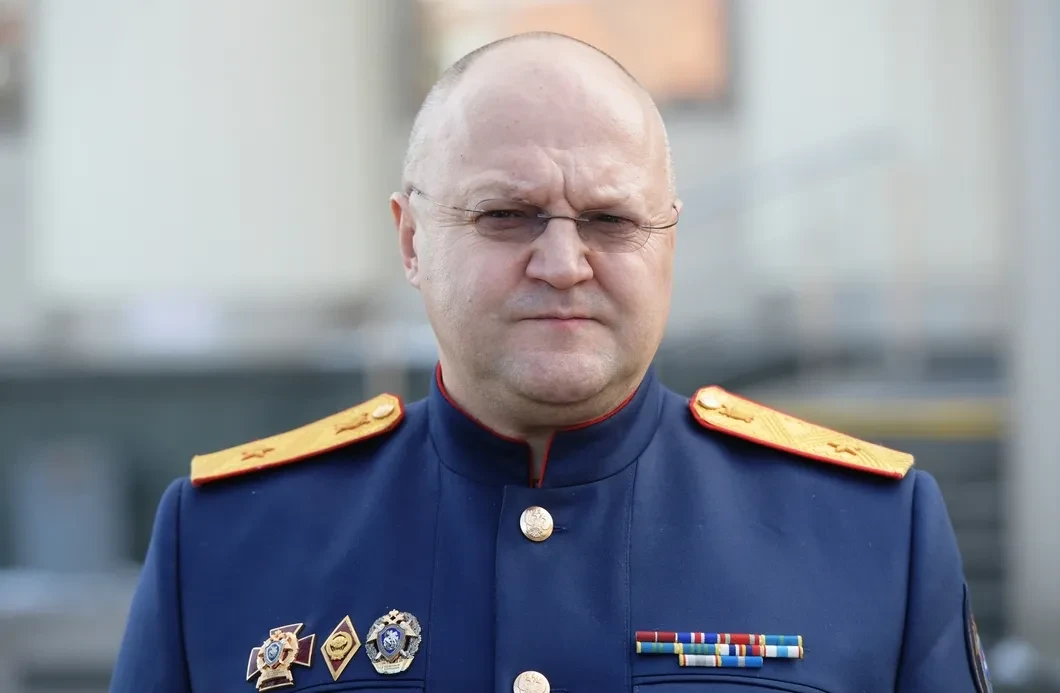
It was under the leadership of Drymanov that the “case of Nadezhda Savchenko” was “constructed”. It was Drymanov who became the key newcomaker of the TFR, who told federal channels on the progress of the investigation on the air of federal channels.
When, at the end of May 2016, Savchenko, sentenced to 22 years in prison, was pardoned, the “Shakro young case” began to unfold in Russia.
The appearance among his defendants in the key designer of the “case Savchenko” was fraught with serious reputation losses for the Russian law enforcement system.
In fairness, I must say that in addition to the “case of Savchenko”, Drymanov has other merits. It was he who brought to court the second criminal case of Mikhail Khodorkovsky and Platon Lebedev. Drymanov, on the other hand, was headed by the high -profile work of General FSKN Alexander Bulbov.
Apparently, all these merits of the general outweighed suspicions of complicity in the “Shakro Young” case. Drymanov was not dismissed even when his defendants began to testify, denouncing the head of the capital's administration of the TFR. Drymanov said that he was stipulated, but he does not condemn anyone, because “it is not known how we will behave in“ Lefortovo ”.
Drymanov had every reason to feel calm. An experienced general is well aware of unwritten hardware (or conceptual) rules: if a law enforcement officer appointed by the decree of the head of state is not able to immediately withdraw from his post and charged in the criminal case under which the arrests have already been made, this means that he is forgiven and can work calmly.
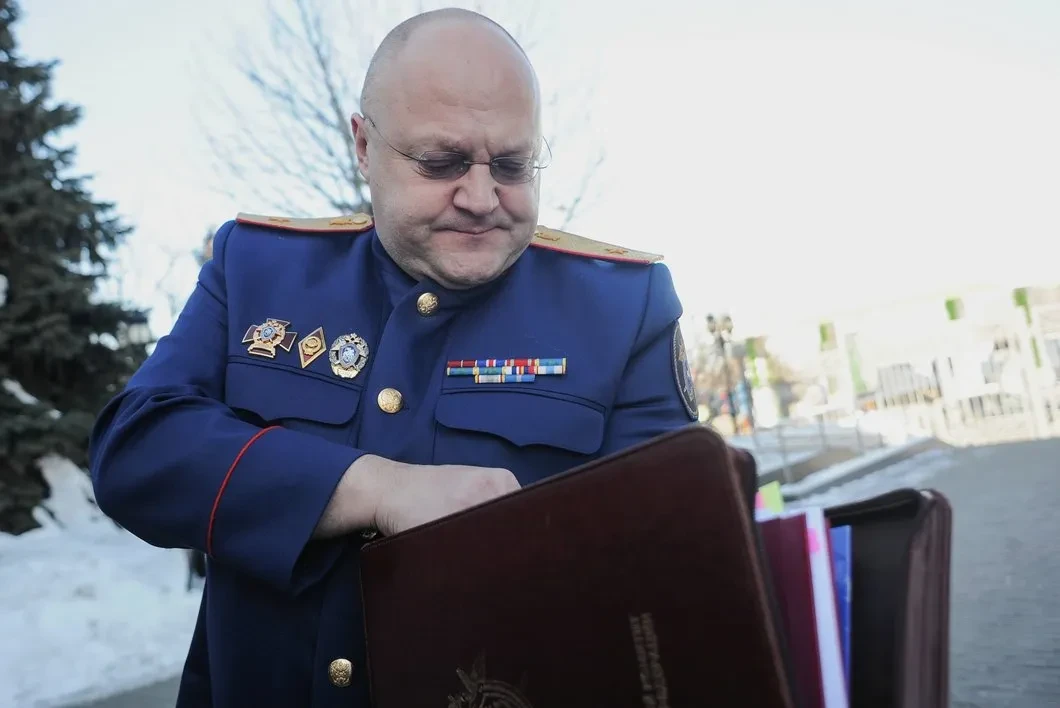
But Drymanov did not take into account that in the sleeve of the Office of the FSB there was another trump card against the head of the Moscow department of the TFR. This is a criminal case instituted by Drymanov himself on July 1, 2016. The victim in this case is the lawyer Yevgeny Ryzhov, the person involved in the Titov List, who is now living in the United States.
Ryzhov told Novye that back in 2013 he began to defend the defendants in a high -profile criminal case of the seizure of Moscow real estate (we specially do not remind the plot of this case so as not to overload the text with facts that are not directly related to the dismissal of Alexander Drymanov). At the end of 2015, Ryzhkov himself became a suspect in this case. The warrant was even written out for his arrest, but he managed to leave Russia.
In early 2016, Moscow lawyer Vladimir Kochkin contacted Ryzhov and suggested "settling all problems." He said that he has excellent “working relations” with Drymanov, who is allegedly ready to stop Ryzhov’s criminal prosecution, but counts on a reward of three million dollars. Ryzhov asked how the criminal case would be terminated if it has several more defendants. The “negotiator” replied that his case would be allocated into separate production, and after some time was terminated.
Kochkin did not deceive. The case against Evgeny Ryzhov was indeed allocated into separate production. But by that time, his representative in Russia had already filed a statement on extortion to the Office of “M” of the FSB. And all the further negotiations of Kochkin with Ryzhov and his representative were under the control of the FSB operatives.
On June 29, 2016, at about eight o’clock in the evening, Vladimir Kochkin was taken red -handed when receiving the first tranche of a bribe in the amount of one million dollars (of which 3,000 were real, and the remaining packs of money were dummies). But since Kochkin had the status of a lawyer, only the head of the capital’s department of the TFR could personally institute criminal proceedings against him. FSB operatives delivered a detainee to the building of the Investigative Committee in Moscow. But neither on June 29, nor June 30, Alexander Drymanov never signed a decision on the initiation of a criminal case. After 48 hours of the detainee with a red -handed suspect, I had to let go. And only after Kochkin was free, Drymanov signed the decision. But it was too late, Kochkin went beyond Russia.
Here we must clarify that operational-search measures at the request of Evgeny Ryzhov on extortion were carried out in April-June 2016. At the same time, the development of “Shakro young case” was underway. And as our interlocutor, familiar with the materials on Kochkin, claims, quite by chance the telephone conversations of a lawyer with the heads of the Moscow department of the TFR were recorded.
- With Drymanov? I specified.
- And with him too.
When the criminal cases of the defendants in the Titov List began, information about the solid Vladimir Kochkin was also included in the certificate of Evgeny Ryzhov, and about the possible connections of a lawyer with General Drymanov. In any case, the decision on the allocation of the criminal case against Ryzhov, promised by Kochkin, could hardly be issued without the consent of the head of the Moscow Department of the Investigative Committee.
According to our sources, it is not the “Shakro young case”, namely, the suspicion of Drymanov’s participation in the extortion of a bribe of three million dollars from the defendant of the “Titov List” Evgeny Ryzhov and caused the sudden dismissal of the head of the capital's department of the Investigative Committee.