
Translated material
Digital optimization of the people
"Direct Line" - the main institution in the country where instead of voters are viewers
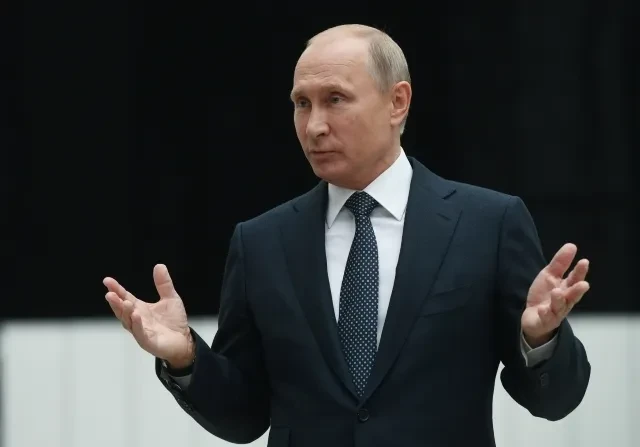
Putin has been on a straight line with the people since 2001. The innovation of this season is immediately striking: this time the people are presented on the line exclusively virtually, in the context of the development of advanced Russian technologies. In the hall, together with the president, only television people, volunteers and a million complaints from citizens collected through SMS and video calls. This virtual democracy would really look modern if it was about a country where free elections are regularly held, and politicians in power change each other all the time. But the digital optimization of the people in the seventeenth season of the direct line is more like a symbolic obstacle. Citizens and bosses from now on do not risk meeting each other face to face and prefer communication as an avatar.
A year ago, I wrote that the direct line remains the only working state institute. This is true today, but now the excess link has been removed from the scheme - voters. If the main political event in the country is the president’s performance on TV, then the main political class is viewers.
The second innovation of the current “line” also falls into this scheme: the governors who are sitting in their regions and expect the president’s call to the television cameras. The governors were warned about this form of political participation of the governors in advance, a “request” came from the Kremlin. One of the leaders of the region, they say, was still late by the appointed time and put it instead of himself under the sofits of a local television officer-so that the frame is not empty. The idea with duty governors is a good point for analyzing the political system of the fourth period.
In accordance with the Constitution and common sense in our large country, the separation of powers, in particular, local and regional authorities have their own rights and obligations. In order to achieve justice and resolve conflicts at the local level, citizens must participate in politics, put forward in power and put forward their candidates there, and then ask them about the work done. All these mechanisms, as understanding everyone, including the hot supporters of the current government, have long been broken. The political field consists in Russia from problems on the one hand and the president on the other. The intermediate fields are filled with officials leading economic activity in the entrusted territory, as the Kemerovo ex-governor Tuleyev put it. Accordingly, the only way to resolve the issue is politically - it is to get through the direct broadcast to the president. If the head of the state delves into your problem, then the corresponding instructions will be immediately given to the governor and further along the chain to the smallest performers.
By 2018, Russian federalism has developed as a special lottery. If you are lucky and the president will pay attention to your question, you can win a little democracy.
You can’t win in the lottery too often, so Putin made a dozen calls for more than four hours of communication with the virtual people. The Tomsk Governor Zhvachkin flew the task of dealing with the allocation of a plot of land for a large family. The head of the Rostov region Golubev, together with Minister Kolokoltsev, will have to understand the status of refugees from the “DPR”-“LPR”: the latter are asking for a simplified citizenship procedure. In the Stavropol Territory, the governor Vladimirov had to strain when Putin had a girl who said that after last year’s flood and complaints to the president, they still could not draw up documents about the emergency state of housing. It seems that the flow of complaints and calls of governors could go forever: why is the direct line are drawn only once a year?
Groups of issues addressed to the president show that in reality he excites Russian citizens. Foreign policy and geopolitical successes, about which Putin himself in recent years speaks more and more often, far from the first place.
The Russians are talking about their own: high cost, lawlessness, poor quality management at all levels.
Here, the president has already traditionally occupied a rhetorical line like "Let's fix what can be fixed, but we will proceed from our real possibilities."
Economic experts skeptically accepted Putin’s arguments about the “white strip” and the upcoming economic growth, but positively appreciated his promise not to raise direct taxes (VAT, apparently, would be raised, but neatly). Of the economic topics of ordinary citizens, however, the galloping prices for gasoline are most concerned about the most now, and this question was stiffly formulated: they voted for you on March 18, but you can’t stop the price, how so? Putin in response refers to errors in the government regulation of the market and immediately requires the Minister of Energy of Novak to begin to regulate more accurately.
In order not to talk only about difficulties, the presenters recall that the festival of sports, the World Cup will soon fall into the country, and the coach Valery Gazzaeva is taken to the screen. Gazzaev, unlike many other citizens, has no problems, and he uses the opening window of the opportunities for rough flattery.
In this mode, four more hours pass. And the director Sentsov will not be changed to the journalist Vyshinsky, detained in Kyiv, will not: their acts are incomparable, the president said.